
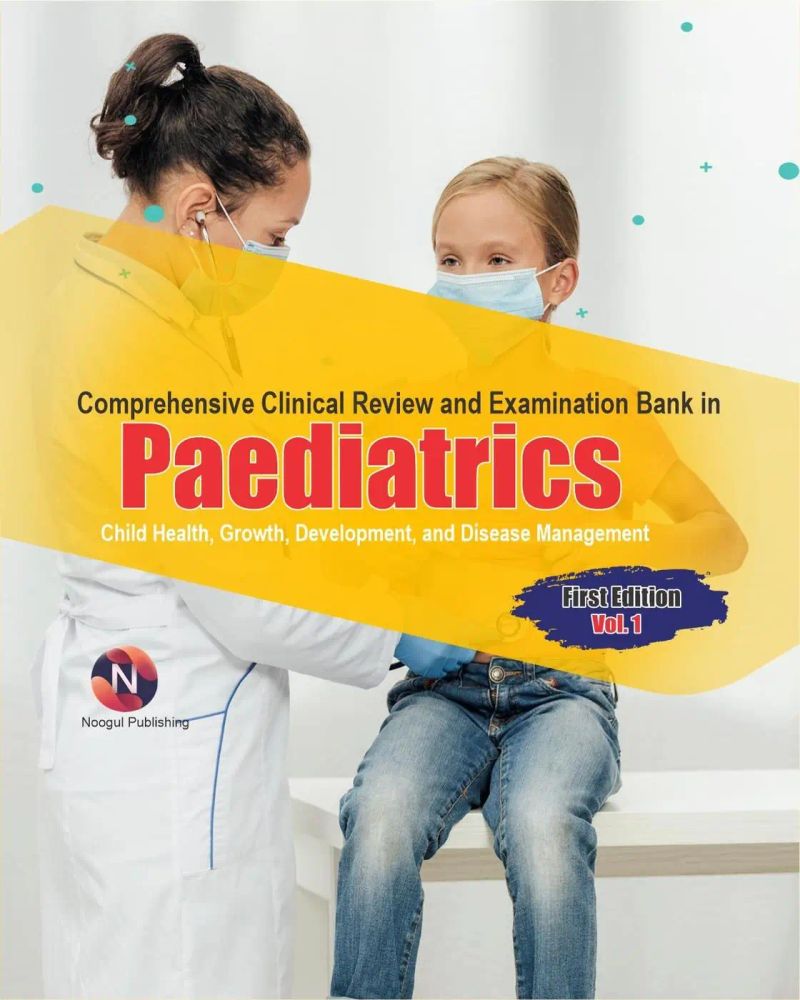
Comprehensive Clinical Review and Examination Bank in Paediatrics: Child Health, Growth, Development, and Disease Management (1, #1)
By Othniel O. Ibrahim


Length12h 33m
About this audiobook
This comprehensive pediatric review and examination resource is designed to strengthen competency in child health assessment, disease prevention, therapeutic care, and developmental monitoring. Emphasizing the unique physiological and psychosocial needs of infants, children, and adolescents, it integrates evidence-based pediatric nursing practice with public health, family-centered care, and child survival strategies. Learners are guided to master essential concepts across growth and development, nutrition, immunization schedules, community-based child health, and management of childhood illnesses. Aligned with the objectives highlighted in the course content such as enhancing child survival knowledge, disease prevention, and understanding child behavior and social needs this resource provides clinically relevant scenarios and structured learning outcomes. It fosters the ability to prioritize care, apply anticipatory guidance, deliver developmentally appropriate interventions, and engage families in promoting child well-being. Suitable for professional examinations and clinical training, this material supports nurses and allied health practitioners in delivering safe, ethical, and effective pediatric care across hospital and community settings, contributing to better health outcomes and improved child survival.
Audiobook details
GenreHealth and Wellness
Length12 hrs 33 mins
Narrated byListen with 1,000+ voices
FormateBook with Audio
Publish dateApr 23, 2026
LanguageEnglish
Table of contents
1COMPREHENSIVE CLINICAL REVIEW AND EXAMINATION BANK IN PAEDIATRICS: CHILD HEALTH, GROWTH, DEVELOPMENT, AND DISEASE MANAGEMENT.
2SECTION ONE
3Growth and Development in Children
4Growth and development constitute foundational pillars within pediatric health sciences, underpinning accurate clinical assessment, anticipatory guidance, health promotion, and the early identification of pathological deviation from typical milestones. This curated Multiple-Choice Question (MCQ) examination has been systematically designed to evaluate advanced cognitive competencies in students, clinicians, and postgraduate trainees specializing in pediatric nursing, developmental pediatrics, and related health disciplines. The question set evaluates the cognitive, motor, psychosocial, emotional, linguistic, and moral dimensions of child development from conception through late adolescence.
5The examination integrates recognized developmental theories including Piaget’s stages of cognitive development, Erikson’s psychosocial conflicts, Kohlberg’s moral reasoning framework, and Mahler’s separation-individuation model. Corresponding milestones related to growth patterns, weight progression, dentition, reflex integration, sensorimotor exploration, gross and fine motor refinement, language acquisition pathways, and social-play evolution are interrogated using clinically contextualized vignettes.
Show all chaptersShow less
6Emphasis is placed on distinguishing typical variability from genuine red flags indicating neurological impairment, sensory dysfunction, developmental delay, or socioemotional disorder. This ensures trainees develop diagnostic acuity in milestone surveillance and early referral strategies.
7SECTION TWO
8Assessment of Pediatric Hospitalization and Health Evaluation
9Pediatric hospitalization and community-based health care demand comprehensive knowledge of developmental physiology, psychosocial adaptation, communication principles, and clinical assessment competencies. This curated multiple-choice question evaluates advanced cognitive, analytical, and clinical reasoning abilities required of pediatric health professionals. The practice exam integrates practical concepts from health assessment, growth and development, physiological monitoring, safety considerations, and family-centered care placing emphasis on developmental responses to illness, behavior during hospitalization, surveillance in the community, and evidence-based pediatric nursing care models.
10Each question is accompanied by a detailed, rationale that enhances conceptual understanding, reinforces clinical judgement, and contextualizes decision-making within pediatric physiology and developmental psychology. These rationales elevate the assessment beyond rote memorization by drawing explicit connections between pathophysiology, developmental stages, psychosocial adaptation, and atraumatic nursing interventions. The inclusion of therapeutic communication strategies, anticipatory guidance, screening red flags, and safety protocols aligns the assessment with real-world pediatric practice standards.
11SECTION THREE
12Clinical Competency Examination in the Nursing Care of Children
13This multiple-choice examination evaluates core and advanced competencies in the nursing care of children, focusing on developmental, physiological, and psychosocial considerations unique to pediatric clients. Derived from key principles found in pediatric nursing practice, the questions emphasize clinical reasoning, health assessment, growth and development, safety, nutrition, pain management, and family-centered care. Learners are challenged to apply evidence-based interventions across various age groups and healthcare settings, including acute hospitalization and community environments.
14Each question is accompanied by a detailed rationale that reinforces correct option selection while clarifying why distractors are inappropriate. This approach deepens understanding, promotes clinical judgment, and strengthens decision-making in real-world scenarios. Attention is given to common pediatric stressors such as hospitalization anxiety, medication administration challenges, and developmental regressions, ensuring holistic assessment of child and family needs.
15This assessment is designed for professional and postgraduate nursing education, licensure preparation, and competency validation. By integrating developmental theory with clinical application, it prepares learners to deliver safe, atraumatic, and therapeutically effective nursing care across the pediatric continuum.
16SECTION FOUR
17Communicable and Immunological Conditions in Children
18This multiple-choice examination assesses essential and advanced competencies related to communicable and immunological conditions in pediatric populations. Focused on evidence-based nursing practice, the assessment evaluates understanding of disease transmission, infection-control precautions, immunization schedules, hypersensitivity responses, and the clinical management of both acute and chronic immune-related disorders. Scenario-based questions require learners to differentiate symptoms, prioritize nursing interventions, and apply age-appropriate safety principles to reduce risk of complications.
19Emphasis is placed on early recognition of red-flag symptoms, vaccine-preventable illnesses, outbreak surveillance in community settings, and patient-family education. Additional attention is directed toward autoimmune conditions, primary immunodeficiency disorders, and emergency responses to allergic reactions. Rationales accompanying each question strengthen clinical judgment by clarifying correct option selection and addressing common clinical misconceptions.
20Designed for professional and postgraduate nursing preparation, this assessment promotes mastery of infection prevention, immune function assessment, and atraumatic pediatric care. By integrating microbiology, immunology, and pediatric nursing principles, it prepares learners to deliver safe, timely, and effective care that improves outcomes in both hospital and community environments.
21SECTION FIVE
22Clinical Assessment in Pediatric Respiratory Conditions: Multiple-Choice Examination with Evidence-Based Rationales
23Respiratory conditions are among the most common and clinically significant health challenges encountered in pediatric practice, requiring rapid assessment, early intervention, and developmentally appropriate nursing care. This multiple-choice examination evaluates advanced knowledge of pediatric respiratory anatomy and physiology, common and emergent respiratory disorders, diagnostic assessments, and evidence-based therapeutic strategies. Topics emphasize conditions such as asthma, bronchiolitis, pneumonia, croup, airway obstruction, cystic fibrosis, and the implications of immature airway structures in infants and young children.
24Scenario-based items challenge learners to recognize early signs of respiratory distress, interpret clinical findings such as retractions and adventitious breath sounds, and prioritize interventions related to oxygen therapy, airway management, hydration, and infection control. Incorporation of health education, environmental trigger reduction, and family-centered care reinforces holistic management across hospital and community settings.
25Each question includes a detailed rationale supporting correct option selection while guiding learners away from common clinical errors. Designed for professional nursing development, this exam strengthens clinical reasoning, improves emergency preparedness, and enhances readiness for pediatric respiratory care in diverse clinical environments.
26SECTION SIX
27Gastrointestinal & Hepatic Conditions In Children
28Gastrointestinal and hepatic disorders represent a significant portion of childhood illnesses and require specialized knowledge for accurate assessment, early intervention, and coordinated family-centered care. This multiple-choice examination evaluates advanced understanding of digestive and hepatic function in children, emphasizing both acute and chronic conditions such as gastroenteritis, congenital malformations, inflammatory bowel disease, celiac disease, short-gut syndrome, liver failure, biliary atresia, and metabolic liver disorders.
29The assessment challenges learners to interpret clinical presentations, identify early warning signs such as dehydration, jaundice, malabsorption, or failure to thrive, and apply appropriate nursing interventions. Focus areas include diagnostic procedures, nutritional therapy, fluid-electrolyte balance, medication administration, and supportive measures tailored to developmental stages.
30Scenario-based questions reinforce the use of evidence-based practice, emphasizing teaching strategies for parents, prevention of complications, and multidisciplinary collaboration. Detailed rationales accompany each item to strengthen critical thinking, clarify clinical decisions, and enhance mastery of pediatric gastrointestinal and hepatic nursing care.
31This assessment supports competency building for professional certification, academic coursework, and advanced pediatric clinical training.
32SECTION SEVEN
33Integumentary Conditions in Children
34The integumentary system plays a vital role in protecting children from infection, dehydration, and temperature instability. Pediatric skin conditions differ significantly from those in adults due to developmental immaturity, greater surface area-to-body-mass ratio, and heightened sensitivity to environmental and infectious agents. This MCQ set explores the clinical spectrum of childhood integumentary disorders, including bacterial, viral, fungal, and parasitic infections; inflammatory and allergic skin diseases; burns; wound care; and dermatologic manifestations of systemic illness.
35Emphasis is placed on accurate assessment, early recognition of complications, evidence-based treatment strategies, and family-centered education. Topics include impetigo, eczema, diaper dermatitis, scabies, tinea infections, and pediatric burn management (fluid resuscitation, pain control, and infection prevention). Understanding nursing priorities—such as maintaining skin integrity, preventing transmission, and supporting comfort—ensures safe and effective care. This examination guide is designed for advanced pediatric nursing learners, providing clinically grounded scenarios that enhance critical thinking, diagnostic reasoning, and decision-making skills in managing childhood integumentary conditions.
36Sign up for Othniel O. I's Mailing List
37Further Reading: Comprehensive Ophthalmology Multiple-Choice Questions and Answers Study Guide

The Yoga Sutras of PatanjaliPatanjali4h 8m4.5 (18.5K)$6 · $0.00

The Lost VoiceGreta Morgan8h 30m4.7 (285)$26 · $0.00
Healthy Kids, Happy KidsElisa Song14h 18m4.6 (760)$33 · $0.00

Eat It!Jordan Syatt, Michael Vacanti4h 40m4.6 (1.5K)$20 · $0.00

Consent Laid BareChanel Contos7h 11m4.5 (1.7K)$24 · $0.00
How to Make Disease DisappearRangan Chatterjee5h 26m4.5 (3.5K)$24 · $0.00

The Complete Herbal (Annotated)Nicholas Culpeper29h 8m4.5 (1.4K)$2 · $0.00

A Plague Upon Our HouseScott W. Atlas MD10h 37m4.5 (3.4K)$20 · $0.00

The Cancer CodeDr. Jason Fung10h 48m4.5 (5.3K)$29 · $0.00

The Gift of TherapyIrvin Yalom7h 39m4.5 (38.8K)$26 · $0.00

EarlySarah DiGregorio9h 47m4.5 (1.3K)$29 · $0.00

Bottle of LiesKatherine Eban14h 25m4.4 (12K)$33 · $0.00
The 36-Hour DayNancy L. Mace, Peter V. Rabins17h 13m4.4 (9.2K)$28 · $0.00

FlooredSara Reardon10h 36m4.5 (1K)$29 · $0.00
Radical RemissionKelly A. Turner9h 26m4.4 (8.1K)$29 · $0.00
The Sinatra SolutionStephen T. Sinatra MD9h4.5 (899)$20 · $0.00

The Songaminute ManSimon McDermott6h 12m4.5 (280)$24 · $0.00

Sometimes BrilliantLarry Brilliant12h 27m4.5 (954)$29 · $0.00

Live Your LifeAmanda Kloots, Anna Kloots10h 54m4.4 (13.7K)$29 · $0.00

All in Her HeadElizabeth Comen13h 25m4.4 (18.2K)$33 · $0.00
You may also like

Communicate with ConfidenceMade for Success4h 51m4.1 (256)$20
Helping Teens Who Cut, Second EditionMichael Hollander PhD8h 48m4.5 (419)$20

Fast Food GenocideJoel Fuhrman, Robert Phillips8h 8m4.1 (2.1K)$26 · $0.00

How To Make Friends And Influence PeopleDale Carnegie22h 1m4.3 (1.3M)$1 · $0.00

Decoding Your DogAmer. Coll. of Veterinary Behaviorists, Debra F. Horwitz12h 23m4.1 (7.1K)$29 · $0.00
Extreme ProductivityRobert C. Pozen7h 39m3.7 (1.9K)$26 · $0.00

How to Talk to Your Child about BullyingAurora Brooks1h 14m$3.50 · $0.00
Worry-Proofing Your Anxious ChildBev Aisbett2h 9m3.3 (89)$28 · $0.00

The Nervous ChildHector Charles Cameron4h 5m$2 · $0.00

How to Prioritize Your Mental Health as a Working MomAurora Brooks1h 11m$3.50 · $0.00

Messy Husband or WifeImad Muratspahic3h 25m$12 · $0.00

The Benefits of Baby Massage- Relaxation and DigestionAurora Brooks1h 2m$3.50 · $0.00
A Deeper ConnectionJohn Sherrodd5h 30m4.1 (14)$20

Parenting the Confident TeenKirk Martin, Sharon Ballantine, Rob Lane, Cara Lane, others8h 20m3.8 (130)$55
OCD: A Practical OCD Guide and Workbook for Adults to Rewire Your Brain With Exercises (Your Guide to Avoiding Intrusive Thoughts and Controlling Obsessive & Compulsive Behaviors Using Mindfulness and Cbt)Scott Pedro1h 58m$3.50 · $0.00

Parenting Without PunishmentWyatt Q. Ashford8h 38m$4.10 · $0.00

Codependency: The Inner Anchor Technique That Stops Obsessive Thinking and End Toxic Relationship Cycles (Breaking the Chains of Codependent Behavior, Setting Boundaries Without Guilt, and Cultivating Healthier Relationships)Stanley Atkins2h 23m$3.50 · $0.00

6 Infallible Strategies For Arguing Without FightingEdivaldo Ascaneo46m$6 · $0.00

Caring for ToddlersAnthony Ekanem35m$5 · $0.00

The Truth About Mom Guilt: Letting Go and Moving OnAurora Brooks1h 2m$3.50 · $0.00