
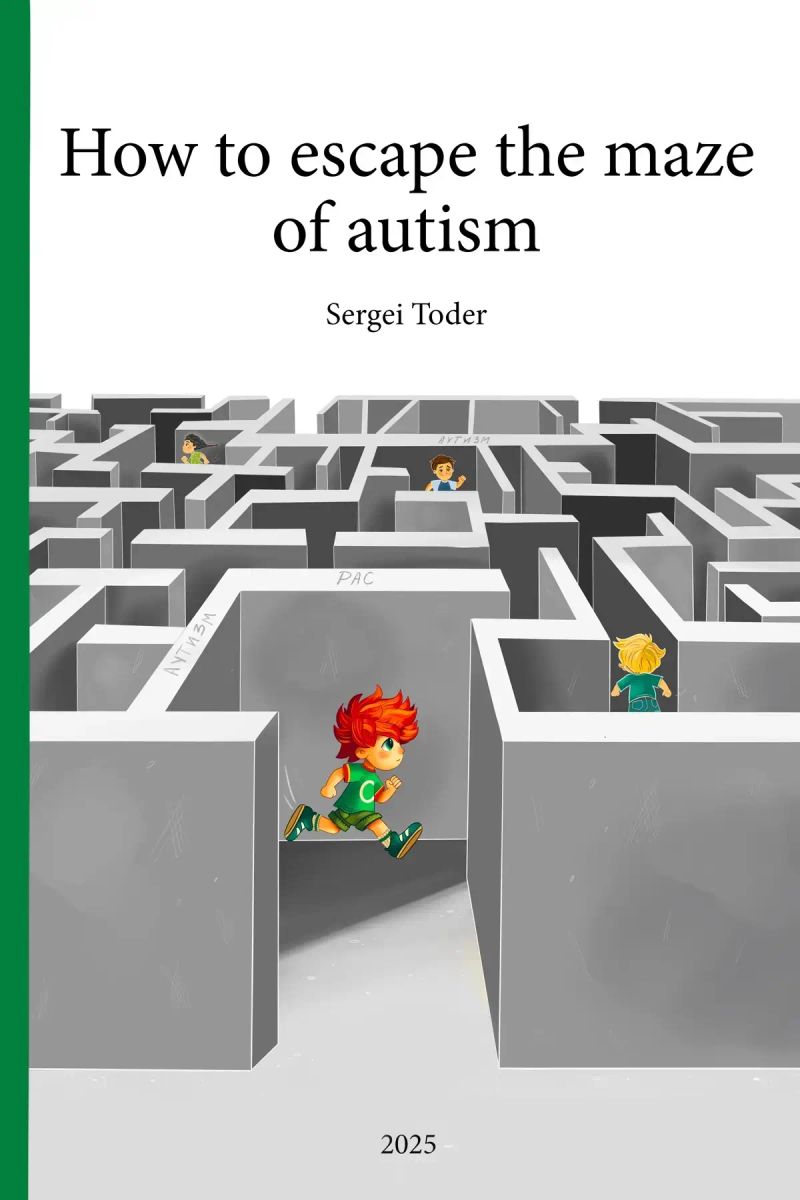
How to Escape the Maze of Autism and ASD
Sensory NONintegration: How to Escape the Maze of Autism and ASDBy Sergei Toder


Length6h 32m
About this audiobook
This book is not about autism. It’s about the child’s body.
About how the ribcage, spine, breathing, and posture affect perception, speech, and connection to life.
The author, Sergei Toder — a rehabilitation therapist and motor development specialist — has worked for over 10 years with children diagnosed with ASD and developmental delays. He believes that most of what we call “autism” is not a sentence and not a mystery of the brain, but a result of physical dysfunctions that can be assessed and improved.
This book offers a practical new approach through movement, breathing, osteopathy, and sensory integration — one that doesn’t “treat autism,” but helps bring back vitality, connection, voice, and the joy of movement.
For parents, professionals, and anyone who refuses to accept the diagnosis as the end of the road — and is searching for real, body-based answers.
Audiobook details
Rating★★★★★ 4.6 (11)
Includes Amazon
GenreEducation and Learning, Health and Wellness
Length6 hrs 32 mins
Narrated byListen with 1,000+ voices
FormateBook with Audio
Publish dateJun 26, 2025
LanguageEnglish
Table of contents
1How to Escape the Maze of Autism and ASD.docx
2Introduction
3Looks like we’ve got a new kid — and he’s Autistic.
4IV Zones of information processing:
5Chapter 1. Auditory processing and language skills: how we perceive, absorb, and express information.
Show all chaptersShow less
6Inhalation
7And now, one last crucial fact about inhalation:
8Exhalation
9Attention!
10So what’s the cause of the missing inhale — and, as a result, the shortened, dysfunctional exhale — in extraordinary children?
111.1 The breathing function — one of the body’s most vital.
121.2 The mechanism of cellular oxygen supply.
131.3 Diaphragmatic innervation.
14How is the diaphragm innervated?
15Under normal conditions:
161.4 Causes and consequences of diaphragmatic spasm.
17So, we smoothly approach the main topic of our “issue”:
181.5 Deficit of cerebral blood supply.
19Sensory NONintegration: How to escape the maze of Autism and ASD
20Chapter 2. Motor planning and the execution of sequential movements and actions. Part 1
21Chapter 2. Motor planning and the execution of sequential movements and actions. Part 2
22Chapter 3. The third zone of information processing.
23Chapter 4. Sensory modulation – the fourth zone of information processing.
244.1 Muscles of inhalation and exhalation.
254.2. Muscles and their distinctive characteristics.: Restorative exercise program for children with Autism and ASD.
264.3 Diaphragmatic breathing.
27Chapter 5. Diagnostics, multidimensional assessments, and human posture.
285.1 Diagnostics.
29Block number 2:
30Block number 3:
315.2 Diagnosis of rotational subluxation of the atlas (C1 Vertebra).
325.3 Inspection from the front (Frontal plane).
33Sagittal plane.
34Head position
355.6 Forward bend examination (Horizontal plane)
365.7 Measurement of chest circumference.
375.8 Determining pelvic position.
38Chapter 6. Differential diagnosis of various types of postural disorders.
396.1. Slouched posture.
406.2. Scoliotic posture in children with ASD.
416.3. Scoliotic disease.
426.4. Osteochondrosis with scoliotic manifestations.
43Chapter 7. Strategy for postural deformity correction.: 7.1. A note for parents of children with ASD and Autism.
44Chapter 8. Assessment of the functional state of the musculoskeletal system and physical development indicators in children with ASD.
45Chapter 9. Regulation of motor activity.
46Chapter 10. Instability and mobility of different sections of the spine.
4710.1. Instability of the cervical spine.
4810.2. Cervical spine mobility.
4910.3. Lumbar spine mobility.
50Assessed as follows:
Series


A Brief History of IntelligenceMax S. Bennett12h 18m4.6 (6.6K)$29 · $0.00

HomeschooledStefan Merrill Block7h 10m3.6 (18.5K)$28 · $0.00

Parents and Children (Annotated)Charlotte Mason9h 23m4.6 (988)$2 · $0.00

Children Under FireJohn Woodrow Cox10h 17m4.5 (1.6K)$29 · $0.00

The State Must ProvideAdam Harris7h 15m4.5 (775)$24 · $0.00

The Call of the Wild and FreeAinsley Arment9h 7m4.4 (21.2K)$29 · $0.00
The Freelance WayRobert Vlach19h 48m4.5 (528)$40 · $0.00

Race to the BottomLuke Rosiak9h 20m4.5 (600)$29 · $0.00

They Came for the SchoolsMike Hixenbaugh9h 5m4.5 (2.6K)$8 · $0.00

Find Me UnafraidKennedy Odede, Jessica Posner11h 11m4.5 (2.7K)$29 · $0.00

Asking for ItKate Harding8h 55m4.4 (5.3K)$20 · $0.00

Defining Moments in Black HistoryDick Gregory7h 37m4.4 (6K)$26 · $0.00

The Emerald Tablets of Thoth the AtlanteanMaurice Doreal3h 4m4.4 (8.8K)$6 · $0.00

Learning AmericaLuma Mufleh6h 37m4.4 (564)$24 · $0.00

Math-ishJo Boaler7h 21m4.4 (588)$24 · $0.00
It Worked For MeColin Powell7h 42m4.3 (9.8K)$26 · $0.00

Little SoldiersLenora Chu11h 30m4.3 (3.1K)$29 · $0.00

Financial FeministTori Dunlap8h 3m4.2 (22.2K)$8 · $0.00

Grammar-land; Or, Grammar in Fun for the Children of Schoolroom-shireM. L. Nesbitt2h 36m4.4 (487)$1 · $0.00

DarkwaterWilliam Edward Burghardt Du Bois6h 40m4.3 (1.4K)$11 · $0.00

The Complete Herbal (Annotated)Nicholas Culpeper29h 8m4.5 (1.4K)$2 · $0.00

A Plague Upon Our HouseScott W. Atlas MD10h 37m4.5 (3.4K)$20 · $0.00

The Cancer CodeDr. Jason Fung10h 48m4.5 (5.3K)$29 · $0.00

The Gift of TherapyIrvin Yalom7h 39m4.5 (38.8K)$26 · $0.00

EarlySarah DiGregorio9h 47m4.5 (1.3K)$29 · $0.00

Bottle of LiesKatherine Eban14h 25m4.4 (12K)$33 · $0.00
The 36-Hour DayNancy L. Mace, Peter V. Rabins17h 13m4.4 (9.2K)$28 · $0.00

FlooredSara Reardon10h 36m4.5 (1K)$29 · $0.00

Radical RemissionKelly A. Turner9h 26m4.4 (8.1K)$29 · $0.00

The Sinatra SolutionStephen T. Sinatra MD9h4.5 (899)$20 · $0.00

The Songaminute ManSimon McDermott6h 12m4.5 (280)$24 · $0.00

Sometimes BrilliantLarry Brilliant12h 27m4.5 (954)$29 · $0.00

Live Your LifeAmanda Kloots, Anna Kloots10h 54m4.4 (13.7K)$29 · $0.00

All in Her HeadElizabeth Comen13h 25m4.4 (18.2K)$33 · $0.00
The Wisdom of Your BodyHillary McBride9h 14m4.4 (6.7K)$29 · $0.00

The Alzheimer's SolutionDean Sherzai, Ayesha Sherzai9h 47m4.4 (1.9K)$29 · $0.00
Rewire Your MindsetBrian Keane6h 49m4.5 (896)$23 · $0.00

Tuning The Human Biofield: Healing With Vibrational MedicineCENTER FOR SOUND THERAPY13h 28m4.4 (2.5K)$35 · $0.00

VaccinatedPaul A. Offit8h 30m4.4 (3.7K)$26 · $0.00

Hot and UnbotheredYana Tallon-Hicks10h 44m4.5 (600)$29 · $0.00
You may also like

The FieldLynne McTaggart10h 13m4.2 (8.8K)$29 · $0.00
Think Like A FreakSteven D. Levitt, Stephen J. Dubner7h 5m3.9 (64.7K)$24 · $0.00
Questions Are the AnswerHal Gregersen8h 45m4.1 (682)$29 · $0.00
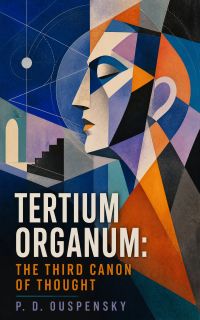
Tertium Organum: The Third Canon of ThoughtP. D. Ouspensky14h 48m4.3 (688)$1.99 · $0.00

The Subtle Art of Not Giving a F*ck JournalMark Manson1h 21m4.2 (1.6K)$16 · $0.00
Hot and UnbotheredYana Tallon-Hicks10h 44m4.5 (600)$29 · $0.00

Hormone IntelligenceAviva Romm15h 18m4.4 (3.1K)$33 · $0.00

The Tantra ExperienceOSHO16h 18m4.4 (1.4K)$20 · $0.00

Pep Talks for WritersGrant Faulkner5h 38m4.3 (978)$20
A Minute to ThinkJuliet Funt7h 2m4.2 (1.6K)$24 · $0.00

How to Be EverythingEmilie Wapnick5h4.0 (6.2K)$20 · $0.00
The New RulebookDr Chris Cheers3h 44m4.1 (1.2K)$18 · $0.00

Body LoveKelly LeVeque5h 18m4.0 (6.6K)$6 · $0.00
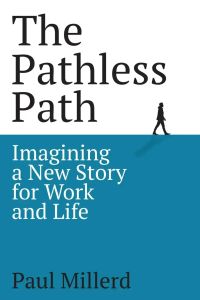
The Pathless PathPaul Millerd6h 14m4.2 (8K)$9.99 · $0.00

WomanCodeAlisa Vitti7h 50m4.1 (16.6K)$26 · $0.00

What's the Point?Anthony Peters3h 20m$10 · $0.00
InspiredMatt Richtel11h 33m3.8 (312)$29 · $0.00

The Modern Guide To SexGeorgia Grace7h 55m4.2 (63)$26 · $0.00

E - Ludic AdministrationRobson Paniago / Marília Bestani4h 20m$10 · $0.00

A Logic of Facts; Or, Every-day ReasoningGeorge Jacob Holyoake4h 30m3.5 (10)$1 · $0.00