


Length4h 16m
About this audiobook
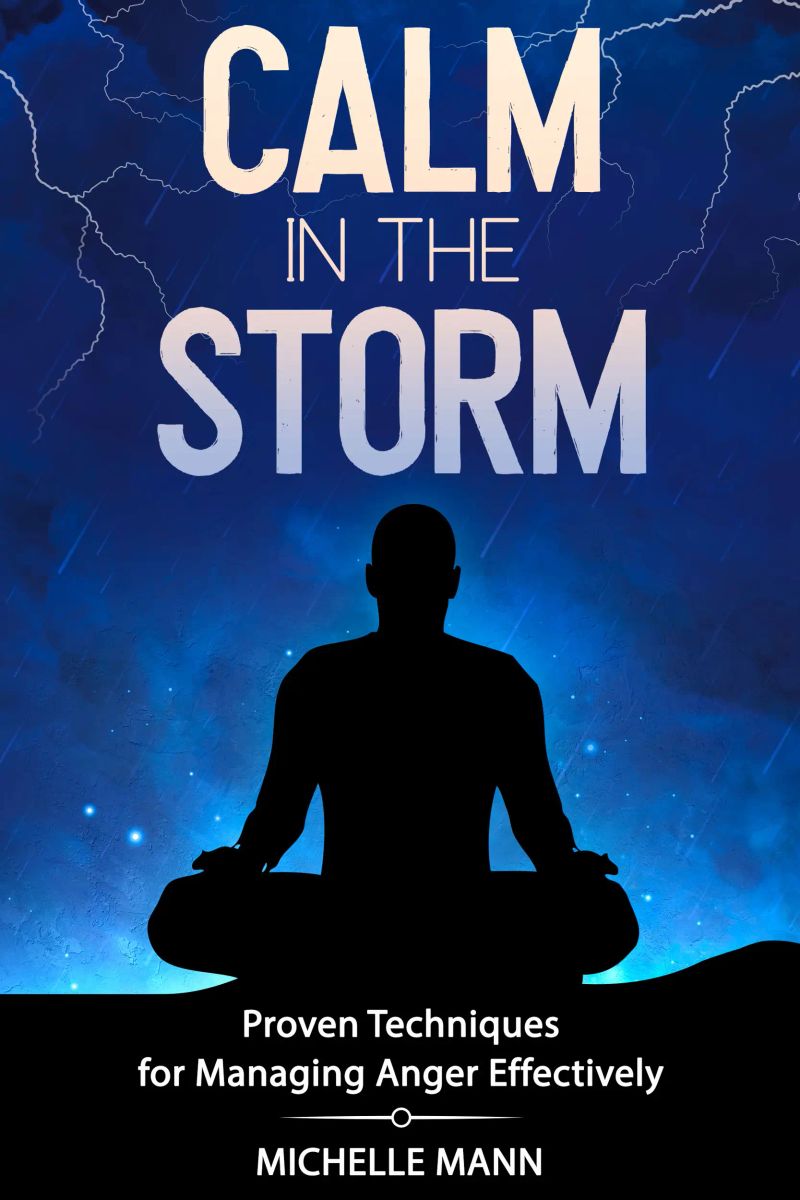
Do you ever feel your anger rising before you even realize it? Left unchecked, anger can damage relationships, harm your health, and keep you from living a peaceful life. But with the right tools, you can take control—before anger takes control of you.
Calm in the Storm offers a proven, practical approach to understanding and managing anger. Drawing from cognitive behavioral therapy (CBT), mindfulness, and emotional regulation strategies, this guide helps you identify your triggers, manage intense emotions in the moment, and respond with clarity instead of reaction.
Through step-by-step exercises, self-reflection prompts, and real-world techniques, you’ll learn how to break the cycle of frustration, communicate more effectively, and rebuild trust in your relationships. Whether your goal is to reduce conflict, improve emotional balance, or simply feel more in control, this book gives you the roadmap to lasting change.
Don’t let anger define you—take the first step toward a calmer, more empowered life with Calm in the Storm today.
Audiobook details
GenreSelf-Help, Psychology
Length4 hrs 16 mins
Narrated byListen with 1,000+ voices
FormateBook with Audio
Publish dateAug 28, 2025
LanguageEnglish
Table of contents
1Chapter 1: Understanding Anger
2The Nature of Anger
3Triggers of Anger
4The Purpose of Anger
5The Expression of Anger
Show all chaptersShow less
6The Cost of Unchecked Anger
7Chapter 2: Preparing for Change
8Accepting Anger
9Commitment to Change
10Building a Support System
11Understanding Your Anger Style
12The Role of Self-Care
13Chapter 3: Mindfulness and Relaxation Techniques
14Breathing Exercises
15Progressive Muscle Relaxation
16Visualization Techniques
17Meditation for Anger Management
18Cultivating Mindfulness
19Chapter 4: Cognitive Behavioral Techniques
20Identifying Cognitive Distortions
21The ABC Model (Antecedent, Belief, Consequence)
22Thought Records
23Problem-Solving Strategies
24Assertiveness Training
25Chapter 5: Emotional Intelligence and Anger
26Understanding Emotions
27Managing Emotional Responses
28Communicating Emotions Effectively
29The Role of Empathy
30Building Emotional Resilience
31Chapter 6: Lifestyle Adjustments for Anger Control
32Diet and Anger
33Exercise as an Outlet
34The Impact of Sleep
35Time Management and Stress Reduction
36Hobbies and Relaxation
37Chapter 7: Anger in Relationships
38The Dynamics of Anger in Relationships
39Communication Skills for Conflict Resolution
40Setting Boundaries
41Forgiveness and Letting Go
42Building a Culture of Appreciation
43Chapter 8: Long-Term Strategies for Anger Management
44Monitoring and Maintaining Progress
45When to Seek Professional Help
46Joining Support Groups
47Continuing Education on Anger Management
48Paying It Forward
49Conclusion

Raising Calm KidsMichelle Mann4h 40m$5
Raising Focused KidsMichelle Mann3h 37m$5

Not ‘Him’ Or ‘Her’Supporting My Non-Binary ChildMichelle Mann3h 18m4.4 (13)$10

Journey to ConfidenceMichelle Mann3h 55m$10

Professional ConfidenceMichelle Mann4h 57m$7

The Anxiety AntidoteMichelle Mann2h 44m$5

Rewiring Your BrainMichelle Mann3h 6m$5

Mindfulness and Mental HealthMichelle Mann1h 43m$3

Conquering PhobiasMichelle Mann3h 22m$3

Creating Safe SpacesMichelle Mann3h 55m$5

Courageous ComfortMichelle Mann17h 22m$10

Reignite Your PassionMichelle Mann2h 8m$4

Raising Strong-Willed ToddlersMichelle Mann3h 2m$10
Breaking Free from AnxietyMichelle Mann4h 13m$10

Natural RemediesMichelle Mann4h 29m$5

The Crying BabyMichelle Mann1h 57m$3

Embracing Your Inner ChildMichelle Mann2h 57m$3

A New ChapterMichelle Mann3h 26m$3
How to Set BoundariesMichelle Mann2h 22m$3

How to be CharismaticMichelle Mann3h 3m$3
Learning to PrayJames Martin13h 24m4.5 (3.4K)$33 · $0.00

Finding MeViola Davis9h 15m4.6 (256.4K)$29 · $0.00

Spiritual AnatomyDaaji Kamlesh D. Patel9h 47m4.7 (319)$29 · $0.00

The Dangerous Truth about Today’s MarijuanaLaura Stack CSP, MBA9h 57m4.7 (384)$20 · $0.00

Birdie & HarlowTaylor Wolfe7h 50m4.6 (6.5K)$26 · $0.00

CrossroadsKaleb Dahlgren7h 56m4.6 (4.9K)$26 · $0.00

Life on the BridgeKaelynn Partlow5h 40m4.6 (1.1K)$24 · $0.00

Keep Your Love OnDanny Silk9h 4m4.6 (8.1K)$10 · $0.00

The Tao of Joy Every DayDerek Lin10h 24m4.6 (762)$20 · $0.00

UndividedVicky Beeching9h 2m4.6 (1.3K)$29 · $0.00
Level UpRob Dial7h 42m4.6 (3.3K)$26 · $0.00

Burn the HaystackJennie Young, PhD9h 30m4.6 (543)$29 · $0.00

ACRES OF DIAMONDS: Our Every-day Opportunities (Wisdom & Empowerment Series) (Annotated)Russell Conwell2h 26m4.6 (1K)$2 · $0.00

Good InsideBecky Kennedy9h 55m4.5 (59.3K)$29 · $0.00

The Lost VoiceGreta Morgan8h 30m4.7 (285)$26 · $0.00

Stripped DownBunnie Xo8h 25m4.5 (32.9K)$26 · $0.00

UnthinkableJamie Raskin15h 8m4.5 (9.3K)$8 · $0.00

Wallace D. Wattles Ultimate Collection Wallace D. Wattles16h 53m4.6 (1.3K)$1 · $0.00

Inquire WithinIn-Q2h 18m4.6 (993)$16 · $0.00

Under His WingsEmily Compagno7h 16m4.6 (848)$22 · $0.00
What to Make of a LifeJim Collins13h 31m4.4 (793)$33 · $0.00

TerraformPropaganda5h 39m4.7 (594)$24 · $0.00

Southern Horrors: Lynch Law in All Its Phases (Annotated)Ida B. Wells-Barnett2h 44m4.6 (1.3K)$2 · $0.00

Hour of the HeartIrvin D. Yalom, Benjamin Yalom8h 19m4.6 (2.3K)$26 · $0.00

Braving the TruthRachel Held Evans11h 31m4.7 (359)$29 · $0.00
Level UpRob Dial7h 42m4.6 (3.3K)$26 · $0.00

As a JewSarah Hurwitz8h 36m4.6 (1.2K)$26 · $0.00
Burn the HaystackJennie Young, PhD9h 30m4.6 (543)$29 · $0.00

Woman and the New Race (Annotated)Margaret Sanger6h 30m4.6 (1K)$1.99 · $0.00
Good InsideBecky Kennedy9h 55m4.5 (59.3K)$29 · $0.00

Du Bois: EssaysW.E.B. Du Bois6h 22m4.6 (1.5K)$1 · $0.00

The North American Indian (Illustrated Edition)Edward S. Curtis, Frederick Webb Hodge5h 59m4.6 (1.4K)$2 · $0.00

Valley of the BirdtailAndrew Stobo Sniderman, Douglas Sanderson10h 1m4.6 (2.4K)$29 · $0.00

Lies My Therapist Told MeGreg E. Gifford9h 3m4.6 (503)$29 · $0.00

Disturbed in Their NestsAlephonsion Deng, Judy A. Bernstein11h 22m4.6 (595)$23 · $0.00

No Name in the StreetJames Baldwin5h4.5 (8.5K)$20 · $0.00

Magic SeasonWade Rouse6h 41m4.6 (855)$24 · $0.00

Consent Laid BareChanel Contos7h 11m4.5 (1.7K)$24 · $0.00

The Big RevealSasha Velour6h 15m4.5 (2.1K)$24 · $0.00

Pastoral SongJames Rebanks8h 35m4.5 (12K)$26 · $0.00
You may also like
Fear and Other Uninvited GuestsHarriet Lerner3h 45m4.1 (1.7K)$17 · $0.00

Heart 411Marc Gillinov MD, Steven Nissen MD19h 52m4.3 (349)$30 · $0.00
The Compound EffectDarren Hardy4h 44m4.4 (161.2K)$15
How Will You Measure Your Life?Clayton M. Christensen, James Allworth, Karen Dillon5h 29m4.1 (55.4K)$24 · $0.00

Sound MedicineKulreet Chaudhary7h 26m4.2 (892)$24 · $0.00
Intuitive Eating, 3rd EditionEvelyn Tribole MS, RDN, CEDRD-S, Elyse Resch MS, RDN, CEDRD-S, FAND13h 51m4.3 (26.1K)$20

InvestedDanielle Town, Phil Town10h 19m4.2 (5.1K)$29 · $0.00

The Attachment Parenting BookWilliam Sears MD, Martha Sears RN10h 1m4.3 (5K)$20

The Saad Truth about HappinessGad Saad7h 10m4.1 (791)$17

Men Are from Mars, Women Are from VenusJohn Gray9h 28m3.7 (698K)$29 · $0.00
NeuroWisdomMark Robert Waldman, Chris Manning PhD7h 47m4.1 (563)$17

PoserClaire Dederer11h 24m3.7 (7.3K)$21 · $0.00
The Productivity RevolutionMarc Reklau2h 31m4.2 (886) Only with Ultra

Real Life OrganizingCassandra Aarssen4h 7m4.1 (4.9K)$20

KaizenSarah Harvey5h 4m3.8 (3.4K)$15 · $0.00
It's Not Me, It's YouJohn Kim, Vanessa Bennett6h 43m3.9 (1.6K)$24 · $0.00

Buddha’s DietTara Cottrell, Dan Zigmond4h 33m3.8 (1.4K)$20

Body Love Every DayKelly LeVeque8h 24m4.3 (1.9K)$26 · $0.00
Fit2Fat2FitDrew Manning4h 11m3.7 (2.5K)$20 · $0.00

Stop Being Toxic And End Trauma BondingVincent McDaniel5h 15m4.4 (18)$2.99 · $0.00