
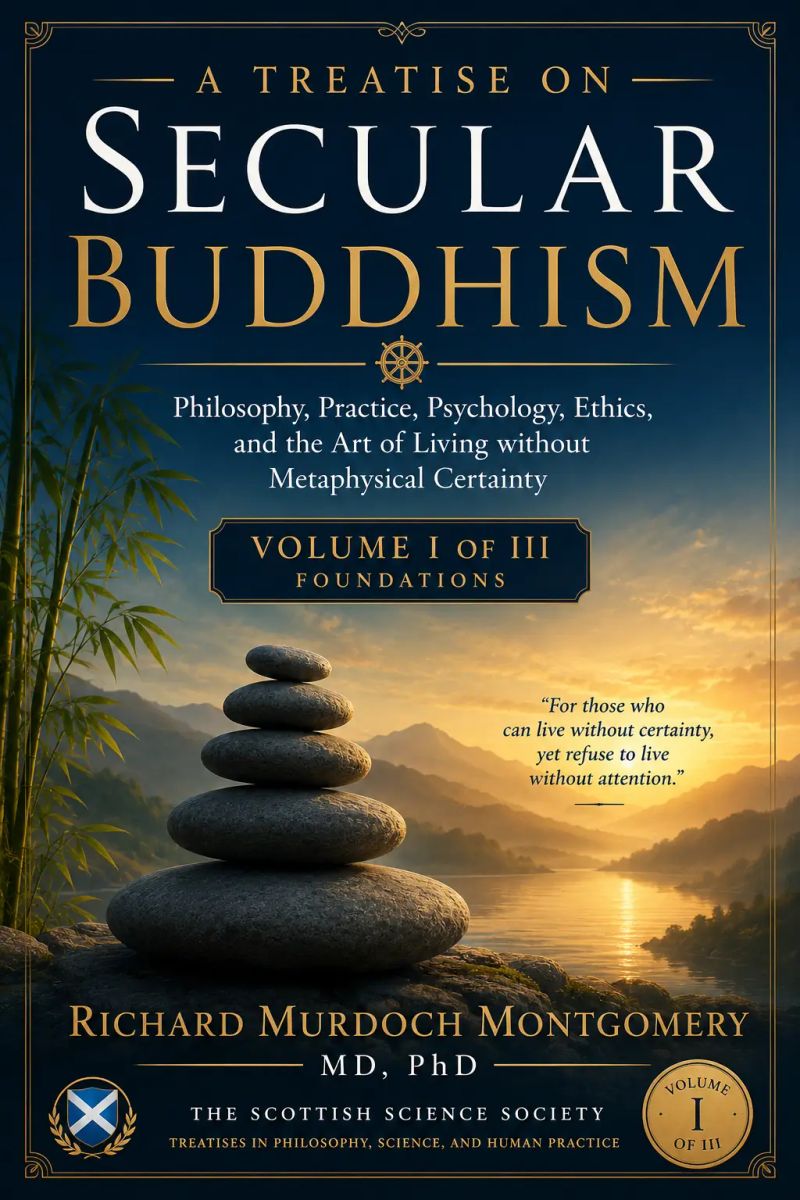
A TREATISE ON SECULAR BUDDHISM VOLUME I OF III
Philosophy, Practice, Psychology, Ethics, and the Art of Living without Metaphysical CertaintyBy Richard Murdoch Montgomery


Length9h 31m
About this audiobook
A Treatise on Secular Buddhism is a rigorous, accessible exploration of Buddhist philosophy for readers who value evidence, intellectual honesty, and practical wisdom. Richard Murdoch Montgomery examines the historical Buddha, the Four Noble Truths, the Eightfold Path, impermanence, not-self, karma, rebirth, meditation, ethics, psychology, and the modern secular reconstruction of Buddhist thought. Respectful of traditional Buddhism without requiring metaphysical certainty, the work distinguishes historical claims, personal experience, scientific evidence, and philosophical interpretation. Volume I of III establishes the foundations of the complete treatise, guiding readers from the human problem and early Buddhist history to mind, emotion, consciousness, and sustainable contemplative practice.
Audiobook details
GenrePhilosophy, Health and Wellness
Length9 hrs 31 mins
Narrated byListen with 1,000+ voices
FormateBook with Audio
Publish dateAug 20, 2026
LanguageEnglish
Table of contents
1Introduction
2Copyright and Publication Information
3Preface: Why Secular Buddhism Requires a Treatise
4Editorial correction: lineage, secularisation, and evidence
5Preface to Volume I
Show all chaptersShow less
6Acknowledgements
7Note on Names, Languages, and Transliteration
8Note on the Use of Buddhist Texts
9Chronological Table
10Introduction: Buddhism after Belief
11PART I: Before Buddhism: The Human Problem
12Chapter 1 - Why Buddhism, and Why Secular?
13The contemporary attraction of Buddhism
14Religion, philosophy, psychology, and practice
15What “secular” can and cannot mean
16Secularism, naturalism, agnosticism, and atheism
17The danger of reducing Buddhism to relaxation
18The danger of treating antiquity as infallible
19A provisional definition of secular Buddhism
20How to use this treatise
21A first experiment in attention
22Examples
23Example 1 — Is a workplace mindfulness session secular Buddhism?
24Example 2 — A practitioner suspends judgement about rebirth
25Exercises with full resolutions
26Exercise 1 — Classification without simplification
27Exercise 2 — Distinguishing four secular positions
28Exercise 3 — Detecting reduction
29Exercise 4 — Testing antiquity
30Exercise 5 — Applying the provisional definition
31Exercise 6 — The three-minute observation
32End-of-chapter direction check
33Chapter 2 - The Problem of Being Human
34Pleasure, pain, dissatisfaction, and instability
35The wish for permanence in an impermanent world
36Identity and the fear of dissolution
37Habit, craving, and self-deception
38The conflict between experience and expectation
39Why intelligence does not abolish suffering
40Existential, psychological, and social forms of distress
41Examples
42Example 1 — The promotion that became ordinary
43Example 2 — Pain, interpretation, and justice
44Exercises with full resolutions
45Exercise 1 — Pleasure without indictment
46Exercise 2 — Permanence and responsibility
47Exercise 3 — Identity as function
48Exercise 4 — Mapping a habit
49Exercise 5 — Expectation or value?
50Exercise 6 — Why explanation is insufficient
More from Richard Murdoch Montgomery
ADHDRichard Murdoch Montgomery, MD, PhD23h 51m Only with Ultra
A TREATISE ON SECULAR BUDDHISM Volume III of III.Richard Murdoch Montgomery, MD, PhD19h 49m$9.99
Secular Buddhism Volume II of IIIRichard Murdoch Montgomery, MD, PhD20h 48m$9.99

São Paulo: A Social and Environmental History of the City That Transformed BrazilRichard Murdoch Montgomery39h 10m$14.99

China, Five Thousands Years of Power, Culture and Reinvention.Richard Murdoch Montgomery, MD, PhD17h 49m$14.99
That Bird Has My WingsJarvis Jay Masters9h 49m4.4 (13.7K)$29 · $0.00

Tâo Teh KingLaozi2h 34m4.4 (230.9K)$2 · $0.00
SymposiumPlato3h 26m4.4 (97.9K)$1.20 · $0.00

Buddhist Boot CampTimber Hawkeye2h 39m4.4 (8.4K)$18 · $0.00
Enchiridion & The Discourses of Epictetus (Annotated)Arrian Epictetus18h 9m4.4 (3.5K)$2 · $0.00

The Meditations of the Emperor Marcus Aurelius AntoninusEmperor of Rome Marcus Aurelius5h 41m4.4 (1.8M)$1 · $0.00
Crime and PunishmentFyodor Dostoevsky23h 11m4.4 (1.3M)$12 · $0.00

MeditationsMarcus Aurelius5h 52m4.4 (433.7K)$1 · $0.00
Everyday DharmaSuneel Gupta5h 2m4.5 (761)$20 · $0.00
The Joyful Wisdom ("La Gaya Scienza")Friedrich Wilhelm Nietzsche11h 37m4.4 (26.6K)$1 · $0.00
The Art of LivingEpictetus, Sharon Lebell3h 16m4.4 (50.1K)$18 · $0.00
MeditationsEmperor Of Rome Marcus Aurelius7h 23m4.3 (477.5K)$1.20 · $0.00

The Imitation of ChristThomas à Kempis6h 27m4.3 (84.6K)$21 · $0.00

Sadhana: the realisation of lifeRabindranath Tagore3h 49m4.4 (8.6K)$6 · $0.00
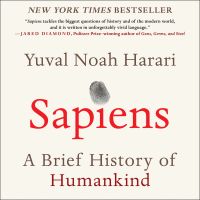
SapiensYuval Noah Harari15h 18m4.3 (1.4M) · 1205$33 · $0.00
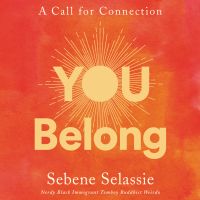
You BelongSebene Selassie8h 35m4.4 (2.7K)$26 · $0.00

The Song Celestial; Or, Bhagavad-Gîtâ (from the Mahâbhârata)Anonymous2h 18m4.4 (3.2K)$2 · $0.00
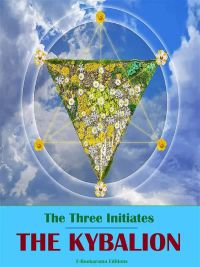
The KybalionThe Three Initiates3h 47m4.3 (58.7K)$20 · $0.00

Chuang Tzu: Mystic, Moralist, and Social ReformerZhuangzi14h 42m4.4 (1.2K)$1 · $0.00

High-RisersBen Austen13h 33m4.4 (2.8K)$33 · $0.00

A Plague Upon Our HouseScott W. Atlas MD10h 37m4.5 (3.4K)$20 · $0.00

The Cancer CodeDr. Jason Fung10h 48m4.5 (5.3K)$29 · $0.00

The Gift of TherapyIrvin Yalom7h 39m4.5 (38.8K)$26 · $0.00

EarlySarah DiGregorio9h 47m4.5 (1.3K)$29 · $0.00

Bottle of LiesKatherine Eban14h 25m4.4 (12K)$33 · $0.00
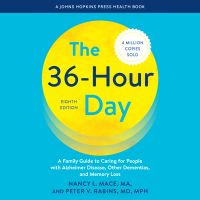
The 36-Hour DayNancy L. Mace, Peter V. Rabins17h 13m4.4 (9.2K)$28 · $0.00

FlooredSara Reardon10h 36m4.5 (1K)$29 · $0.00

Radical RemissionKelly A. Turner9h 26m4.4 (8.1K)$29 · $0.00
The Sinatra SolutionStephen T. Sinatra MD9h4.5 (899)$20 · $0.00

The Songaminute ManSimon McDermott6h 12m4.5 (280)$24 · $0.00
Sometimes BrilliantLarry Brilliant12h 27m4.5 (954)$29 · $0.00

Live Your LifeAmanda Kloots, Anna Kloots10h 54m4.4 (13.7K)$29 · $0.00

All in Her HeadElizabeth Comen13h 25m4.4 (18.2K)$33 · $0.00
The Wisdom of Your BodyHillary McBride9h 14m4.4 (6.7K)$29 · $0.00

The Alzheimer's SolutionDean Sherzai, Ayesha Sherzai9h 47m4.4 (1.9K)$29 · $0.00
Rewire Your MindsetBrian Keane6h 49m4.5 (896)$23 · $0.00

Tuning The Human Biofield: Healing With Vibrational MedicineCENTER FOR SOUND THERAPY13h 28m4.4 (2.5K)$35 · $0.00

VaccinatedPaul A. Offit8h 30m4.4 (3.7K)$26 · $0.00

Hot and UnbotheredYana Tallon-Hicks10h 44m4.5 (600)$29 · $0.00

MetabolicalRobert H. Lustig12h 4m4.4 (12.8K)$29 · $0.00
You may also like

The Greatest Works of James AllenJames Allen29h 7m4.5 (2.5K)$1.99 · $0.00
The power of awareness (translated)Neville Goddard2h 23m4.5 (25K)$4.70 · $0.00
Ananga RangaSir Richard Francis Burton (translator)2h 29m3.6 (1.3K)$16 · $0.00
The 12 Powers of Man (Annotated)Charles Fillmore5h 31m4.4 (368)$1.99 · $0.00

The Science of Wallace D. Wattles (Complete Trilogy)Wallace D. Wattles8h 1m4.4 (2K)$2 · $0.00
In Tune with the Infinite; or, Fullness of Peace, Power, and PlentyRalph Waldo Trine4h 11m4.3 (8.2K)$2 · $0.00
Life of God in the Soul of Man (Annotated)Henry Scougal3h 15m4.6 (1.9K)$2 · $0.00

Sei come pensi di essere (Tradotto)James Allen58m4.4 (1.1K)$2.30 · $0.00
The Complete Works of Thomas Troward (Annotated)Thomas Troward29h 28m$2 · $0.00

I Am Ishvara PranidhanaWalter Berger10m$2 · $0.00
Lotus Lake Dragon PoolTrevor Leggett3h 19m$6 · $0.00
The Keys Of HecateValen Aethyr / Virginia Santos5h 39m$9 · $0.00
Letting Go Of AngerYOGESH SHARDA55m$4 · $0.00

Ash WednesdayJaxon R. Stone1h 29m$6.40 · $0.00

In Search of Enlightenment: 50 Spiritual MasterworksLeo Tolstoy, William Blake, Kahlil Gibran, John of the Cross, Saint Augustine, U. G. Krishnamurti, C. H. Spurgeon, Ignatius of Loyola, Ralph Waldo Emerson, Thomas Browne, Basil the Great, Gregory of Nyssa, St. Teresa of Ávila, Thomas à Kempis, Thomas More, Blaise Pascal, George Müller, Ludwig Feuerbach, Jonathan Edwards, Evelyn Underhill, Charles Spurgeon, G. K. Chesterton, Fyodor Dostoyevsky, George MacDonald, Miguel de Unamuno, Reynold A. Nicholson, Frances Ridley Havergal, H. Emilie Cady, Anne Catherine Emmerich, Henry Scougal, Florence Scovel Shinn, Andrew Murray, Henry Drummond, Epictetus, Mahatma Gandhi, William James, Emanuel Swedenborg, William Walker Atkinson, Joseph Benner, Charles Fillmore, Edwin Sir Arnold, Ignatius of Antioch, John Donne, John Wesley, Helena Blavatsky481h 12m4.4 (17)$1.99

Face Yoga RevolutionMei Lin Zhang9h 20m$6.40 · $0.00
The Goddess SolutionLisa Marie Rankin8h 43m4.4 (104)$26 · $0.00
From the Boxing Ring to the AshramDeborah Charnes6h 17m4.7 (64)$14.99

The Collected Works of H. Emilie CadyH. Emilie Cady7h 59m4.7 (73)$2 · $0.00
Psyche’s AwakeningDr. Gillian O'Shea Brown, LCSW7h 50m$26 · $0.00