
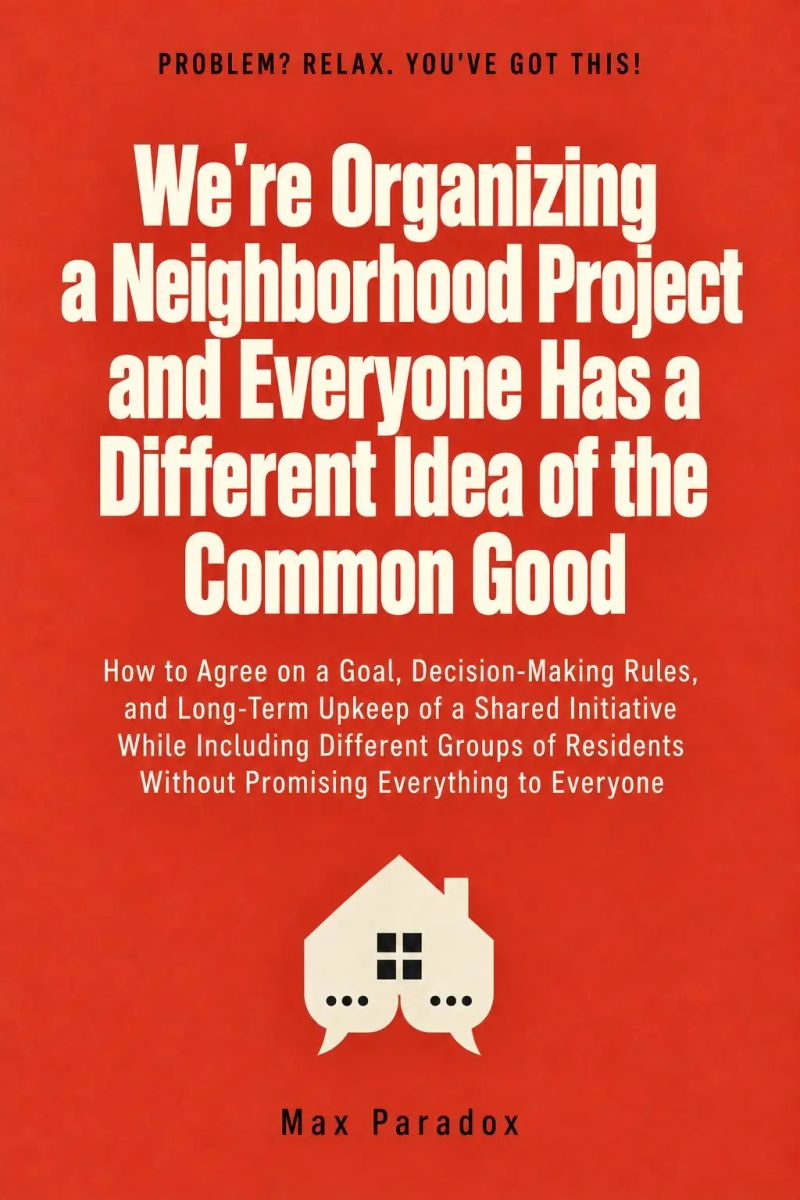
We're Organizing a Neighborhood Project and Everyone Has a Different Idea of the Common Good - How to Agree on a Goal, Decision-Making Rules, and Long-Term Upkeep of a Shared Initiative While Including Different Groups of Residents Without Promising
De Max Paradox

Duração6h 19m
Sobre este audiolivro
One neighborhood. One community project. Fifty competing ideas. And a meeting that somehow ends with three new committees and absolutely no decisions.
Welcome to community organizing, where everybody wants to improve the neighborhood, nobody agrees on what improvement means, and the person who volunteers to help suddenly becomes responsible for everything from budgets to missing storage keys.
You had a simple idea. Maybe a shared garden, a community activity, a better use of communal space, or an initiative to bring residents together.
Then reality arrived.
One neighbor wants something bigger. Another wants it cheaper. Somebody insists the original plan is completely wrong. A particularly enthusiastic resident has already designed a logo for a project that hasn't been approved.
And somehow, you're expected to make everyone happy.
Max Paradox presents a practical, entertaining guide to organizing neighborhood projects without losing your patience, your weekends, or your ability to greet the neighbors afterward.
We're Organizing a Neighborhood Project and Everyone Has a Different Idea of the Common Good explores what happens when good intentions meet competing priorities, limited resources, unclear responsibilities, and ordinary human behavior.
Inside, you'll discover how to identify what residents actually need instead of immediately committing to the loudest proposal. You'll learn how to establish meaningful goals, compare alternatives fairly, involve people with different circumstances, and distinguish consultation from decisions that require proper authority.
The book also tackles the practical challenges that rarely appear in enthusiastic project announcements.
How do you divide responsibilities when everybody offers to help but nobody is available on Saturday? What should you do when rumors spread faster than official information? How can you respond to objections without treating every concerned resident as an enemy of progress?
And what happens when the project is complete, the opening photographs have been published, and somebody finally asks who's responsible for maintenance?
Through relatable situations, sharp observational humor, and realistic explanations, Max Paradox explores budgeting, scheduling, shared-use rules, accountability, volunteer fatigue, difficult disagreements, and projects that gradually drift away from their original purpose.
You'll also learn to recognize when an apparently fair compromise produces something nobody can actually use, when an initiative needs to change direction, and when saying no is more responsible than promising another exciting future development.
This book is for residents, community volunteers, neighborhood associations, local organizers, and anyone who has ever said, "We should do something together," without fully appreciating the consequences of the word "together."
It doesn't promise universal agreement, endless enthusiasm, or miraculous cooperation.
Instead, it offers practical ways to make clearer decisions, protect volunteers, explain limitations honestly, and create projects that remain useful after the initial excitement disappears.
Because the common good isn't about giving everybody everything.
It's about understanding different needs, making responsible choices, and building something people can genuinely share.
Less neighborhood drama. More useful results. And fewer meetings whose only achievement is scheduling another meeting.
This publication was prepared using tools that support the creative process, including artificial intelligence solutions. The final concept, structure and editing are the responsibility of the author.
Detalhes do audiolivro
GêneroPsychology
Duração6 h 19 min
Narrado porOuça com mais de 1.000 vozes
FormatoeBook com áudio
Data de publicação9 de nov. de 2026
IdiomaInglês
Sumário
1INTRO
2Chapter 1 - Same Neighborhood, Different Destinations: Finding a Goal Worth Sharing
3Chapter 2 - The People Who Didn't Show Up Still Live Here
4Chapter 3 - Who Gets to Decide? Neighborhood Democracy Without a Constitutional Crisis
5Chapter 4 - The Compromise Nobody Wanted: When Everyone Gets a Little and Nothing Works
Mostrar todos os capítulosVer menos
6Chapter 5 - Everyone Wants to Help, Nobody Has Tuesday Free: Escaping the Volunteer Trap
7Chapter 6 - The Rumor Has Already Reached Building Three: Communication Before the Neighborhood Invents Its Own Facts
8Chapter 7 - The Neighbor Who Says No: Understanding Resistance Without Starting a War
9Chapter 8 - Wonderful Idea, Terrible Location: Checking Reality Before Reality Sends the Invoice
10Chapter 9 - Forty Brilliant Ideas, One Actual Budget: Choosing What Works Instead of What Wins Applause
11Chapter 10 - The Budget Doesn't Run on Good Intentions: Paying for the Project and Keeping It Alive
12Chapter 11 - The Schedule Looked Perfect Until Saturday Happened: Turning Plans Into Finished Projects
13Chapter 12 - Shared by Everyone, Controlled by Who? Rules That Keep Community Resources Usable
14Chapter 13 - The Grand Opening Was Wonderful. Did Anything Actually Improve?
15Chapter 14 - The Ribbon Is Gone, the Weeds Are Back: Who Keeps the Project Alive?
16Chapter 15 - The Project Is Falling Apart: Saving What Matters Without Saving Your Pride
17Chapter 16 - Who Owns the Community Microphone? When a Shared Project Becomes a Private Club
18Chapter 17 - When the Neighborhood Takes Sides: Keeping Old Grudges From Destroying New Projects
19Chapter 18 - The Enthusiasm Has Left the Group Chat: Keeping a Community Project Useful After the Honeymoon
20Chapter 19 - The Warning Signs Nobody Notices: Catching Trouble Before the Project Falls Apart Again
21Chapter 20 - The Neighborhood Can Handle It: Building a Community That Doesn't Need a Hero

Partner zachorował, a ja zostałem całym działem obsługi życia - Jak układać obowiązki i wsparcie po poważnej chorobie partnera, rozmawiać o zmianie ról oraz zachować relację partnerską obok zadań opiekuńczychMax Paradox6h 24min$5.10
I Don't Have One Employer, I Have Seven Little Ones - How to Coordinate Availability, Deadlines, and Commitment Boundaries Across Multiple Sources of Work Without Promising Everyone Full-Time AvailabilityMax Paradox6h 48min$5.10

Firma proponuje mi akcje, a ja chciałem po prostu pensję - Jak porównywać składniki wynagrodzenia, rozumieć warunki nabywania uprawnień i ryzyko koncentracji oraz przygotować pytania do doradców bez uznawania wyceny na prezentacji za pieniądze na konMax Paradox6h 9min$5.10

My Company Is Offering Me Shares, and All I Wanted Was a Paycheck - How to Compare Compensation Components, Understand Vesting Conditions and Concentration Risk, and Prepare Questions for Advisors Without Mistaking a Presentation Valuation for MoneyMax Paradox6h 21min$5.10

I Live Alone and Nobody Knows Whom to Contact If I Get Sick - How to Build a Support Plan for Illness, Arrange Contacts and Access to Important Information, and Prepare Practical Help Before the First CrisisMax Paradox6h 46min$5.10

Mieszkam sam i nikt nie wie, kogo powiadomić, gdy zachoruję - Jak zbudować plan wsparcia na czas choroby, ustalić kontakty i dostęp do ważnych informacji oraz przygotować praktyczną pomoc bez czekania na pierwszy kryzysMax Paradox6h 5min$5.10

Chcę się uczyć po pięćdziesiątce, a system widzi tylko studentów - Jak wybierać dostępne formy kształcenia dorosłych, sprawdzać warunki udziału i planować naukę z własnym rytmem życia bez kupowania kolejnego kursu dla dwudziestoletniej wersji siebieMax Paradox6h 9min$5.10

Jedno z nas ma niepełnosprawność, a formularze widzą tylko opiekuna - Jak organizować wspólne życie, rozmowy z instytucjami i potrzebne wsparcie z poszanowaniem sprawczości obojga partnerów bez sprowadzania związku do funkcji opiekuńczejMax Paradox6h 15min$5.10

I Want to Learn After Fifty, but the System Only Sees Students - How to Choose Available Adult Education Options, Check Eligibility Requirements, and Plan Learning Around Your Own Pace of Life Without Buying Another Course Designed for Your Twenty-YeMax Paradox6h 41min$5.10

I Have a Degree from Another Country, and Here I’m Back to “Please Bring Your Documents” - How to Prepare Your Documents, Find the Right Path to Recognition of Qualifications, and Plan Your Entry into the Profession with Support from the Right InstitMax Paradox6h 37min$5.10

Nie mam jednego pracodawcy, tylko siedmiu małych - Jak uzgadniać dostępność, terminy i granice zobowiązań przy kilku równoległych źródłach pracy oraz porządkować współpracę bez obiecywania każdemu pełnego etatuMax Paradox6h 2min$5.10

I Work Abroad, Live in Poland, and My Paperwork Is Everywhere - How to Organize Your Cross-Border Calendar, Documents, and Specialist Contacts, and Keep Everyday Services Running Without Assuming Two Countries Automatically Share EverythingMax Paradox6h 49min$5.10

I Can't Work from Home in My Line of Work, and I Want Flexibility Too - How to Prepare for Conversations About Schedules, Shift Swaps, and Predictable Working Hours in a Job That Requires You to Be There, and Find Realistic Solutions Without PretendiMax Paradox7h 5min$5.10

W moim zawodzie nie da się pracować z domu i też chcę elastyczności - Jak przygotować rozmowy o grafiku, zamianach i przewidywalności czasu pracy w zawodzie wymagającym obecności oraz szukać realnych rozwiązań bez udawania, że każda elastyczność oznaMax Paradox6h 17min$5.10
My Partner Got Sick, and I Became the Entire Life Admin Department - How to Organize Responsibilities and Support After Your Partner's Serious Illness, Talk About Changing Roles, and Preserve Your Partnership Beyond CaregivingMax Paradox7h 2min$5.10

Zostałem związkowcem i nie chcę tylko rozdawać ulotek - Jak porządkować potrzeby reprezentowanych osób, przygotowywać rzeczowe rozmowy i współpracować z doświadczonym wsparciem bez obiecywania, że każdą sprawę rozwiąże jedna głośna interwencjaMax Paradox6h 29min$5.10

Zgłosiłem nieprawidłowość i nagle to ja mam problem - Jak porządkować dokumentację, chronić poufność i dobierać niezależną pomoc po zgłoszeniu nieprawidłowości w organizacji bez samotnego prowadzenia całego postępowaniaMax Paradox6h 17min$5.10

I Joined the Union, and I Don't Want to Just Hand Out Leaflets - How to Organize the Needs of the People You Represent, Prepare Fact-Based Conversations, and Work with Experienced Support Without Promising That One Loud Intervention Will Solve EveryMax Paradox6h 57min$5.10

Pracuję za granicą, żyję w Polsce, dokumenty żyją wszędzie - Jak uporządkować kalendarz spraw transgranicznych, dokumenty i właściwe kontakty do specjalistów oraz planować ciągłość codziennych usług bez zakładania, że dwa kraje automatycznie wymieniaMax Paradox6h 7min$5.10

Pracuję na zmiany, a moja rodzina żyje w innej strefie czasowej - Jak planować domowe obowiązki, kontakty i regenerację wokół zmiennego grafiku oraz uzgadniać potrzebne warunki pracy bez porównywania własnego tygodnia z etatem od dziewiątej do siedemMax Paradox6h 13min$5.10

Black AF HistoryMichael Harriot15h 43min4.7 (14.6K)$33 · $0.00

Bad Fat Black GirlSesali Bowen6h 32min4.7 (2.8K)$24 · $0.00

Invisible StormJason Kander6h 48min4.7 (3.2K)$24 · $0.00

I Am The StormJanice Dean9h4.6 (1.5K)$8 · $0.00

On Democracies and Death CultsDouglas Murray10h 38min4.6 (6.5K)$29 · $0.00

TerraformPropaganda5h 39min4.7 (594)$24 · $0.00

Southern Horrors: Lynch Law in All Its Phases (Annotated)Ida B. Wells-Barnett2h 44min4.6 (1.3K)$2 · $0.00

Hour of the HeartIrvin D. Yalom, Benjamin Yalom8h 19min4.6 (2.3K)$26 · $0.00

Braving the TruthRachel Held Evans11h 31min4.7 (359)$29 · $0.00
Level UpRob Dial7h 42min4.6 (3.3K)$26 · $0.00

As a JewSarah Hurwitz8h 36min4.6 (1.2K)$26 · $0.00

Saint Joan (Annotated)George Bernard Shaw6h 20min4.6 (1.2K)$1.20 · $0.00

Burn the HaystackJennie Young, PhD9h 30min4.6 (543)$29 · $0.00

Woman and the New Race (Annotated)Margaret Sanger6h 30min4.6 (1K)$1.99 · $0.00

Good InsideBecky Kennedy9h 55min4.5 (59.3K)$29 · $0.00

The Mis-Education of the NegroCarter Godwin Woodson5h 4min4.5 (29.4K)$1.20 · $0.00

Du Bois: EssaysW.E.B. Du Bois6h 22min4.6 (1.5K)$1 · $0.00

The North American Indian (Illustrated Edition)Edward S. Curtis, Frederick Webb Hodge5h 59min4.6 (1.4K)$2 · $0.00

Valley of the BirdtailAndrew Stobo Sniderman, Douglas Sanderson10h 1min4.6 (2.4K)$29 · $0.00

Lies My Therapist Told MeGreg E. Gifford9h 3min4.6 (503)$29 · $0.00
Você também pode gostar

Little Blue TruckAlice Schertle5min4.5 (65.7K)$4 · $0.00

Pinkalicious: Pink or Treat!Victoria Kann8min4.1 (2.8K)$4 · $0.00

Little Blue Truck's ValentineAlice Schertle4min4.4 (17.3K)$4 · $0.00

The Town That Food SavedBen Hewitt7h 44min3.7 (1.4K)$17

The Oaken HeartMargery Allingham10h 24min4.1 (633)$1.99 · $0.00

The Building Association Raises the Repair Fund, and I Raise My Blood Pressure - How to Read Your Building's Budget, Ask Questions About Repairs, and Take Part in Building Decisions Without Voting Based Solely on the Latest Argument at the Owners' MeMax Paradox6h 47min$5.10
We Want to Help Our Neighbor, but We Don't Know Who Has the Keys - How to Organize a Neighborhood Network for Small Acts of Help With Everyone's Consent, Agree on Contacts and Responsibilities, and Protect Privacy Without an Improvised Care Command CMax Paradox6h 33min$5.10

The Bus Has Left, and the Next One Is Practically Tomorrow - How to Organize Trips to Work, Medical Appointments, and Public Offices with Limited Public Transport and Create Local Shared Solutions Without Relying on One Driver for EverythingMax Paradox6h 21min$5.10
I Joined the Board of an Association and Everyone Is Looking at Me - How to Organize Roles, Documentation, and Responsibilities in a Small Community Organization and Get Professional Support Without Assuming Enthusiasm Alone Can Handle the AccountingMax Paradox6h 42min$5.10

Derelicts Of The Hills and two more StoriesW. C. Tuttle2h 50min$2

FrostAnton Chekhov15min$1 · $0.00

Feluś the Firefly. A Little Light, a Big Heart - Feluś and the Rainy Surprise - Part 5Lena Świetlińska7min$5.10

Animal NeuteringHilário Dos Santos49min$10 · $0.00

How to Plan a Baby Shower in a Hurry- Quick Tips and IdeasAurora Brooks1h 2min$3.50 · $0.00

Social Security for Future GenerationsJohn A. Turner, Serena E. McCarthy9h 4min$15

Social Rights and DutiesLeslie Stephen13h 16min$0.99 · $0.00

Trash Truck: Donny & Walter's Surprising DayMax Keane4min3.7 (62)$4 · $0.00

Rural Life and the Rural SchoolJoseph Kennedy5h 4min$2 · $0.00

Where Is the Fire Extinguisher, and Why Am I Only Asking Now? - How to Prepare Your Home for Emergencies, Power Outages, and Other Surprises Before You Actually Need Plan BMax Paradox5h 8min$5.10

Village Improvements and Farm VillagesGeorge E. Waring2h 47min$2 · $0.00