
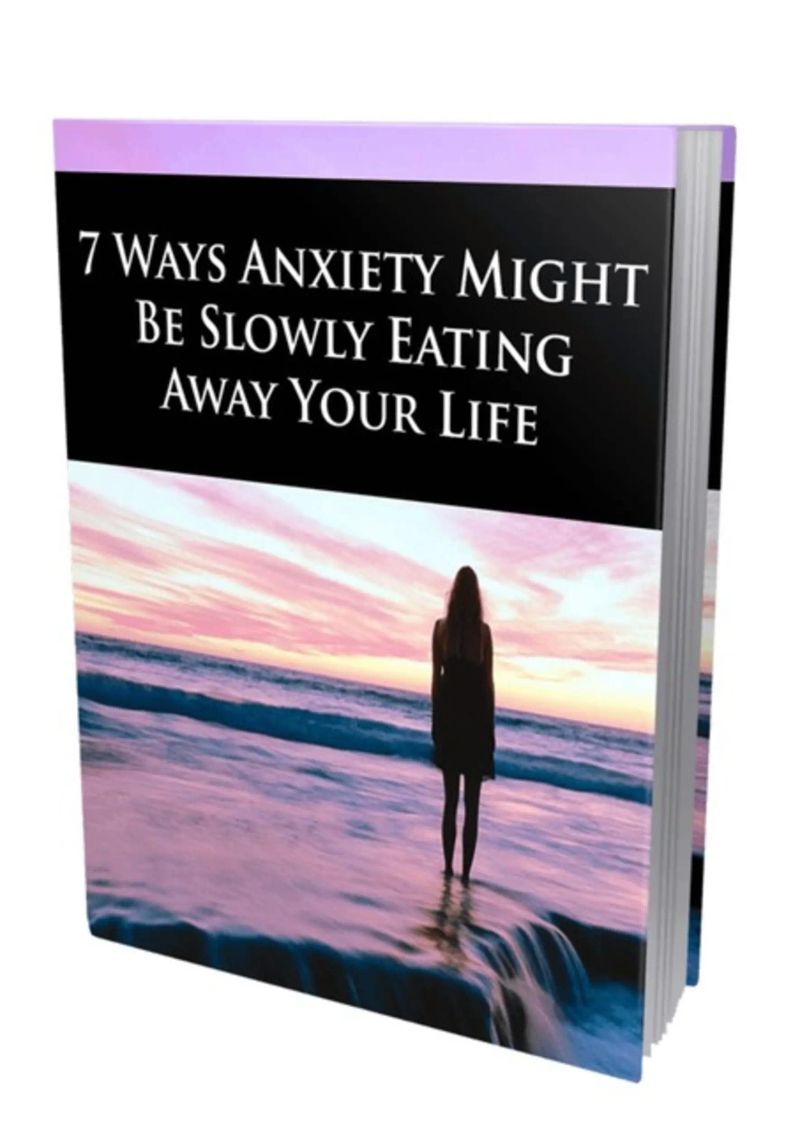
7 Ways Anxiety Might Be Slowly Eating Away Your Life
De Dani Carazzato


Duração41m
Sobre este audiolivro
Introduction It Is Natural to Feel Anxious There's a good chance that we've all experienced feelings of anxiety in response to real or perceived threats at one time or another. For most people, these feelings are normal as the brain is hard-wired to caution you at times of danger, change and the unknown. In fact, in many situations, experiencing a certain level of anxiety and stress can help boost your performance in specific tasks. For instance, a person might experience a heightened level of anxiety the days leading up to a public event and that's a completely normal reaction. Psychologists believe that anxiety is your body's natural response to stress and that this stress triggers a system in the brain that accentuates your performance. So, a little anxiety now and then is okay and might be your body's way of preparing for an impending change.
Detalhes do audiolivro
GêneroSpirituality and Religion, Children's Literature
Duração41 min
Narrado porOuça com mais de 1.000 vozes
FormatoeBook com áudio
Data de publicação18 de mar. de 2024
IdiomaInglês
Sumário
1Introduction
2normal reaction.
3That Said, Not Every Anxious Feeling Is Normal
4and Understanding It Too
5expansive subject one book at a time.
Mostrar todos os capítulosVer menos
6Chapter 1 - Overthinking and
7your immediate realm of collective thoughts?
8Our bodies, in response to the flight-or-fight response, trigger
9Negative and Unwanted Thoughts
10Chapter 2 - Lack of Self-Esteem and
11comfortable in your own skin and with the structures that
12Self-Esteem and The Fear of Rejection
13with their love and support.
14Chapter 3 - Phobias and Traumas
15Anxiety Doesn’t Exist in Isolation
16Chapter 4 - Workplace Anxiety
17Too Much, Too Soon
18The Workplace is no Exception
19them to the point of breakdown.
20The key element to the psychotherapy of anxiety, stress and
21Patterns.
22Coping with Anxiety at Work
23Work at Creating a Work-Life Balance
24Chapter 5 - Social Anxiety
25Cognitive Behavioral Therapy and its Role on
26SAD
27their anxiety. Replace these traits with self-assuring habits
28Chapter 6 - Eating Disorder
29instance:
30taste for food.
31Yoga in combination with breathing and meditation techniques
32Chapter 7 - Anxiety and its Ill-Effects
33on Sleep
34worries, panic attacks, trauma, phobia, emotional and/or
35emergency crisis. Insomnia and poor sleep come with the
36Focus on Your Breath
37Conclusion
Mais de Dani Carazzato

Learning to PrayJames Martin13h 24min4.5 (3.4K)$33 · $0.00

Mere ChristianityC. S. Lewis7h 7min4.4 (519.7K)$24 · $0.00

The Pursuit of GodA. W. Tozer3h 38min4.4 (96.8K)$2 · $0.00

Her Daily BreadKate Wood12h 57min4.6 (153)$33 · $0.00

A Severe MercySheldon Vanauken8h 23min4.4 (31.5K)$26 · $0.00

STREAMS OF LIVING WATERRichard J. Foster3h 2min4.4 (5.2K)$18 · $0.00

On Earth as in HeavenN. T. Wright12h 27min4.5 (318)$29 · $0.00

A Different WayChristopher A. Hall10h 45min4.5 (165)$29 · $0.00

Through My EyesTim Tebow10h 18min4.3 (16.1K)$29 · $0.00

The High PriestessMaya Daniels5h4.6 (54) · 1376Grátis
10% Happier 10th AnniversaryDan Harris9h 28min4.1 (137.1K)$29 · $0.00
The AlchemistPaulo Coelho4h 1min4.1 (3.9M) · 1326$23 · $0.00

CommunionJ. D. Vance7h 50min2.6 (53)$26 · $0.00

Autoimmunity and the Good GirlsSara Hirsh Bordo7h 51min$26 · $0.00

The Heart of ChristianityMarcus J. Borg7h 59min$26 · $0.00
Prayer SelectionsRichard J. Foster3h 26min4.5 (38)$18 · $0.00

Loved BabySarah Philpott4h 51min4.8 (1.4K)$10 · $0.00

The QuranAllah23h 7min4.7 (136.1K)$1 · $0.00

The Secret of the RosaryLouis de Montfort6h 1min4.7 (16K)$2 · $0.00

The Holy Qur-an: Text, Translation and CommentaryAbdullah Yusuf Ali22h 16min4.7 (133K)$1 · $0.00

Hidden Figures Young Readers' EditionMargot Lee Shetterly4h 11min4.2 (25.7K)$20 · $0.00
The Magician's NephewC. S. Lewis3h 56min4.2 (627.9K)$20 · $0.00

If You Were HereAbigail Johnson8h 24min$26 · $0.00

The Violet Fairy Book (Annotated)Andrew Lang11h 39min4.7 (304)$2 · $0.00

Little Lord Fauntleroy (Annotated)Frances Hodgson Burnett7h 56min4.6 (1.5K)$1.99 · $0.00

The Nutcracker and The Mouse King (Annotated)E.T.A. Hoffmann4h 4min4.6 (1.5K)$2 · $0.00

The House at Pooh CornerAlan Alexander Milne2h 44min4.5 (107.8K)$4 · $0.00

REBECCA OF SUNNYBROOK FARM & NEW CHRONICLES OF REBECCA (Children's Book Classics) (Annotated)Kate Douglas Wiggin15h 32min4.6 (1.4K)$1.99 · $0.00

Just William (Illustrated) (Annotated)Richmal Crompton6h 30min4.6 (1.2K)$2 · $0.00

The Labors of Hercules BealGary D. Schmidt8h 17min4.6 (10.4K)$8 · $0.00

Clancy of the Overflow (The Matilda Saga, #9)Jackie French14h 24min4.6 (471)$33 · $0.00

The Great Fairy Tales - Oscar Wilde Edition (Illustrated) (Annotated)Oscar Wilde6h 31min4.6 (1.1K)$2 · $0.00

Alice's Adventures in WonderlandLewis Carroll3h4.5 (5.9K)$7.99 · $0.00

The Boy Who Followed His Father into AuschwitzJeremy Dronfield6h 54min4.5 (28.5K)$24 · $0.00

Bat and the End of EverythingElana K. Arnold2h 40min4.6 (2.3K)$18 · $0.00

Chronicles of Ancient Darkness #6: Ghost HunterMichelle Paver6h 20min4.5 (11.7K)$24 · $0.00

Masterminds: PaybackGordon Korman6h 51min4.5 (5.8K)$24 · $0.00

The House at Pooh CornerA. A. Milne, E. H. Shepard3h 6min4.5 (107.8K)$2 · $0.00

Anne of Green Gables (Annotated)Lucy Maud Montgomery13h 1min4.5 (2.8K)$2 · $0.00

The Guardian Herd: StormboundJennifer Lynn Alvarez6h 19min4.5 (2.3K)$24 · $0.00
Você também pode gostar
The Mental EquivalentEmmet fox46min4.6 (728)$1.20 · $0.00
The Science of Being WellWallace D. Wattles2h 24min4.1 (725)$2 · $0.00
Binaural Beats for Emotional Mastery and High-Performance Resilience – 3-in-1 Premium CollectionBinaural Beats Studios Berlin21h 18min$29 · $0.00

Why Worry?George Lincoln Walton3h 40min3.2 (26)$1 · $0.00
Heal Your Qi SubliminalMiss Smilla51min$3 · $0.00

Obesity UnraveledUnknown Author52min$17 · $0.00

How To Eat Everything And Still Lose WeightEdivaldo Ascaneo20min$6 · $0.00
Positive thinking and living in the Here and Now through hypnosisMichael Bauer45min$35 · $0.00

How to Heal Oneself and Others - Mental Therapeutics (Unabridged) (Annotated)William Walker Atkinson7h 1min4.6 (12)$2 · $0.00
Insight, Influence, and FlowDavid Waldas5h 7min$15

You Against YourselfLuciana Priscila4h 35min$6.20 · $0.00
How to Silence Your Inner Critic - How to Stop Beating Yourself Up, Find Peace, and Take Action Without Constantly Judging YourselfMax Paradox7h 6min$7.50
The Neuroscience of MindfulnessStan Rodski5h 28min3.9 (535)$24 · $0.00
Personal Confidence Hypnosis SystemLiv Montgomery1h 1min$5
Aura-MeditationAndy Schwab1h 17min$14 · $0.00
Learning to Pay Attention: A Beginner's Guide to Mindfulness Practice in Everyday LifeRichard Johnson2h 36min$3.30 · $0.00
The Mind CureChristian D. Larson1h 42min3.9 (15)$1.20 · $0.00
How To Overcome AnxietyReginald Rivers1h 52min$7 · $0.00

Pay Off and ProsperPenelope B. Wellington4h 12min$4 · $0.00
Quick Stress Relief Techniques (a Book in the "Quick Solutions for Life" Series)Ai Percy10min5.0 (1)$4 · $0.00