

ElevenReader Brings Frankenstein to Life with a Full Cast and Original Score
Frankenstein, the first cinematic audiobook created with Eleven v4, is coming just in time for Halloween
Your first month. Just $1. Start listening for less this month.
We look at three strong alternatives to Speechify — our own ElevenReader app, Veed.io, and Murf.ai. Here’s how they compare to Speechify.
By ElevenReader Team
Updated

Speechify is a well-known, high-quality text-to-speech app used by individuals and businesses. However, since there are several other similar platforms on the market, it's no surprise that many users find themselves exploring alternatives.
Whether it's seeking a different set of features, pricing options, or better voice quality, the abundance of choices in the TTS app market can leave you wondering if there’s something “better” out there. Naturally, it’s important to remember that what’s "better" is subjective — it all depends on your specific needs and preferences.
In this article, we look at three strong alternatives — our own ElevenReader app, Veed.io, and Murf.ai. Here’s how they compare to Speechify.
Speechify’s free plan limits users to 100 minutes of voice generation per month, which can be restrictive for daily listeners of articles, PDFs, or emails. For example, an average audiobook lasts 6–12 hours, meaning free users can't even finish one book.
Students and professionals may also find this frustrating, especially since unused minutes don't roll over. This often leads users to upgrade to Speechify Premium for unlimited voice generation, but the price is high.
A monthly plan costs $29. There’s a more affordable yearly subscription of $139 ($11.58/month), but not all free plan users are ready for such a long-term commitment. That’s why some search for other text to speech apps like Speechify instead.
Speechify offers natural-sounding voices, particularly in its premium plan, which includes AI-enhanced voices that mimic human speech well. However, some users have noted that the free-tier voices can sound robotic compared to more advanced AI options.
Though Speechify offers multiple accents and languages, a few users feel that intonation and pacing can seem unnatural, especially in complex sentences.
One user shared their frustration, saying, “Speechify does have a top limit for the premium voices, which I hit at the 3-week mark. The whole point of premium is to access the voices. I won’t be renewing.”
In comparison, Speechify competitors like ElevenLabs use deep learning models, offering smoother intonation and emotional depth. These platforms allow for more customization, including tone, speed, and style adjustments. While Speechify remains a solid choice, those in need of more lifelike, realistic AI voices might find these alternatives better suited for professional or long-form content.
One major inconvenience of Speechify’s 100-minute monthly limit is the waiting period before the listening time resets. Once users hit the cap, they must wait until the next billing cycle to regain access — unless they upgrade to a paid plan.
This can be particularly frustrating for students, professionals, or audiobook listeners who rely on text-to-speech regularly. If they run out of minutes mid-task, they either have to switch to another tool or pause their workflow until the reset.
Unlike some alternatives that offer daily or weekly refreshes, Speechify’s rigid monthly limit leaves users without flexibility. This restriction often forces those who need continuous access to consider upgrading or seeking a tool with a more generous free-tier structure.
Beyond the 100-minute limit, Speechify’s free plan also locks several other key features behind a paywall. This can frustrate users expecting more from a basic version. Playback speed control, for example, is restricted, meaning free users can’t adjust reading speed beyond a certain limit. This is something Speechify competitors often provide for free.
Other premium-only features, like camera-based text import and access to higher-quality voices, further limit the free experience.
Here’s an opinion from a former Speechify user: “Speechify used to be my go-to app to get required readings done, but the app doesn’t even work for me anymore. Ever since everything has been paywalled the app will constantly lag and freeze over. Needless to say, I don’t want to pay a small fortune just for an app that I can’t even use.”
While searching for an app that is better than Speechify, consider the following factors:
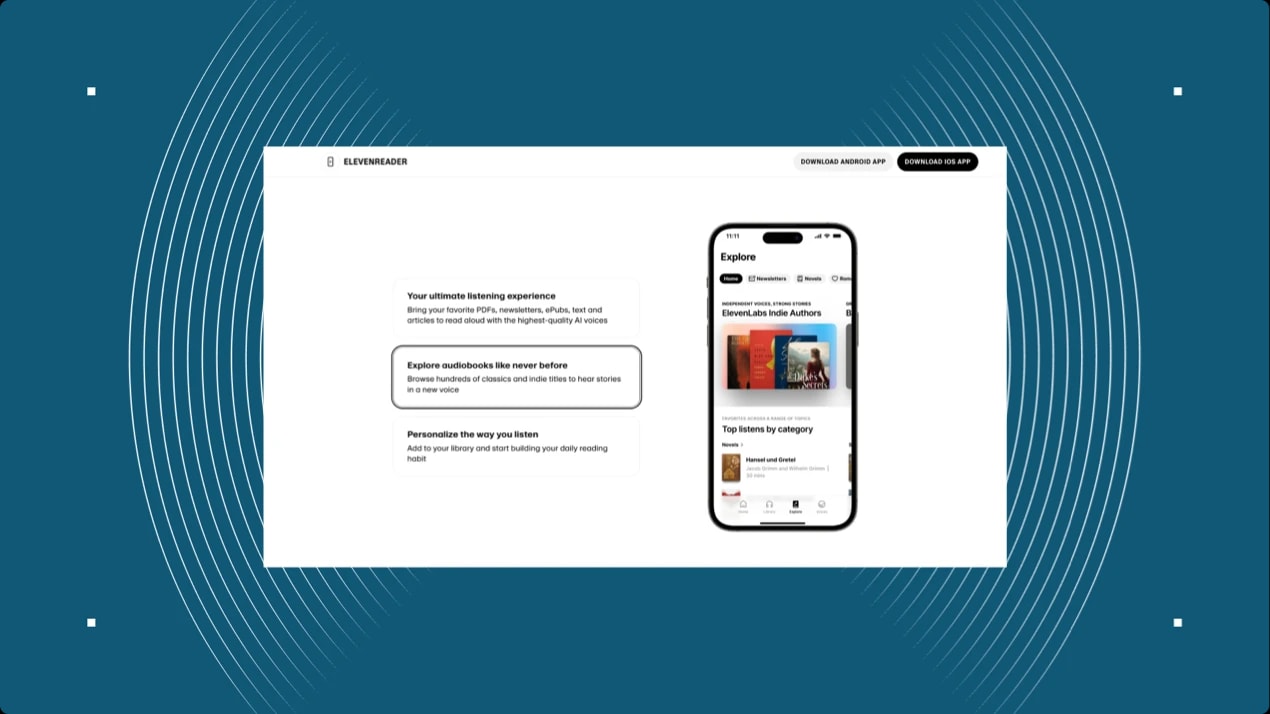
Strengths:
Weaknesses:
Key features:
Pricing:
The ElevenReader app is currently 100% free. We do plan to eventually launch some premium version of the app, but even them we’ll maintain a generous free plan. All paid plans will also be crafted so that they offer significantly more usage value than Speechify, at a lower price.
Strengths:
Weaknesses:
Key features:
Pricing:
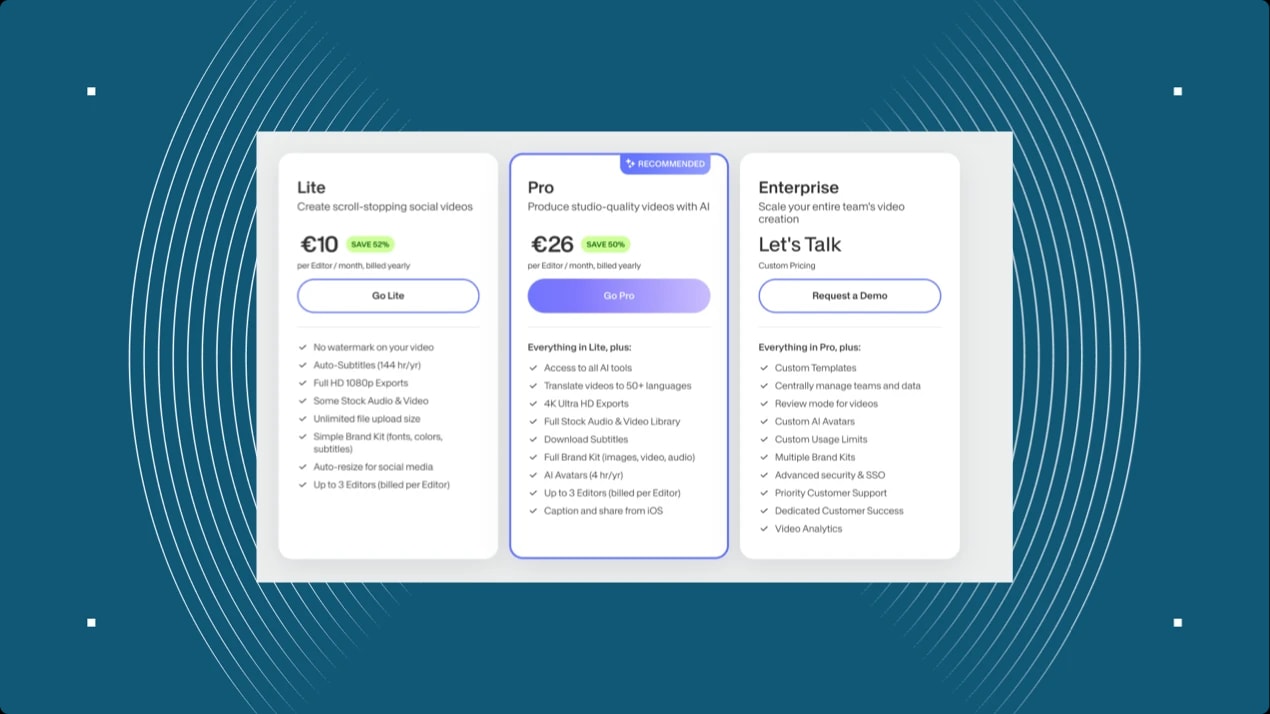
VEED offers 3 pricing packages. Lite, the most basic one starts at $12 per month if billed yearly, or $24 on a monthly renewal plan.
Strengths:
Weaknesses:
Key features:
Pricing:
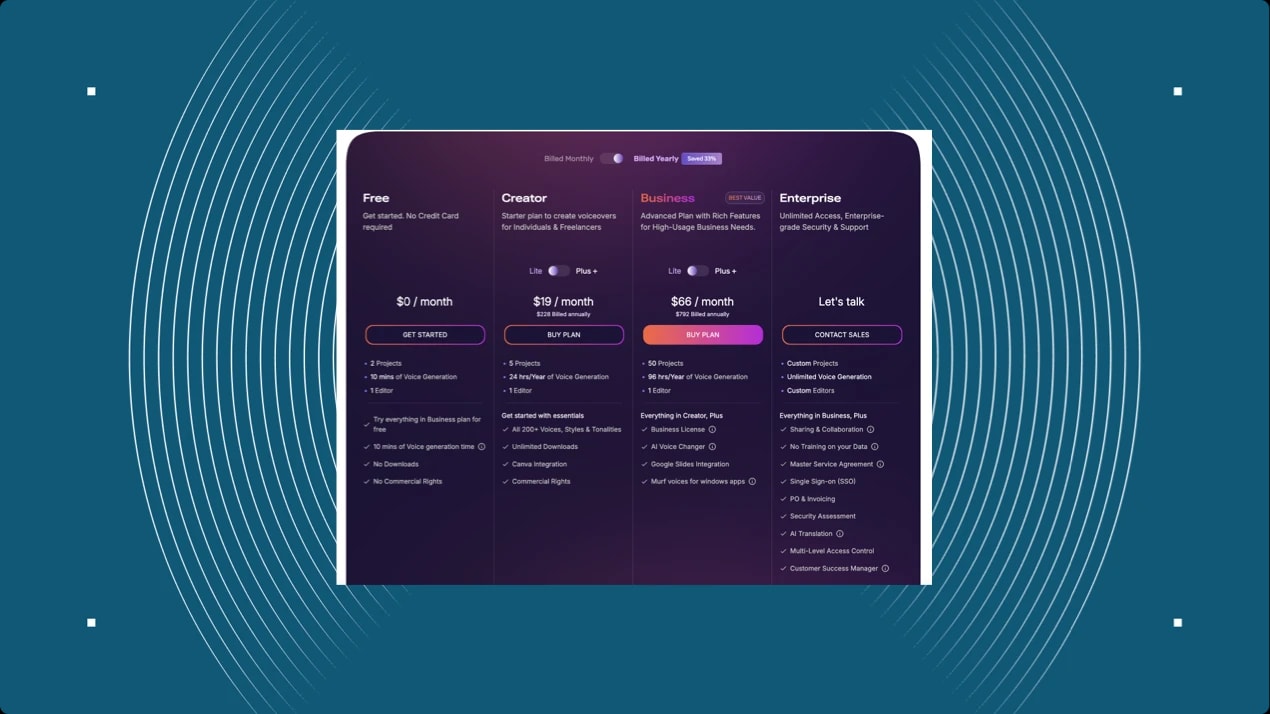
Murf offers a free plan, which is similar in value to what Speechify offers. You can use the AI voice generator for 10 minutes/month, and you can’t download the audio. If you wanted access to unlimited audio capabilities, then you’d have to upgrade to a $19/month plan.
Here is a quick overview of the platforms that might be better than Speechify.
| Feature | Speechify | ElevenReader | VEED.io | Murf.ai |
|---|---|---|---|---|
| Voice Quality | Capable of high-quality, but premium voices have limits. | Superior AI voice quality with expressive and natural intonation. | Customizable AI voices with control over tone and pace. | Professional-grade voices with customization options. |
| Free Plan Limitations | Voice quality becomes low (robotic) after users hit the free limit. | Currently 100% free to use; in the future, the free plan will always be generous. | Free tier is limited; many features are paywalled. | Limited free tier but offers better customization. |
| Paywalls on Features | Faster playback, camera import, high-quality voices. | Right now, there’s no paywall. | Many advanced features require payment. | Voice cloning and advanced editing locked behind paywall. |
| Ease of Use | User-friendly, optimized for consuming articles and documents. | Friendly user interface, with a lot of powerful customization features. Designed for both document import and podcasts. | Designed for podcast creation, not optimized for document reading. | Requires learning curve due to advanced features. |
| Platform Availability | Available on web, iOS, Android, and browser extensions. | Designed for on-the-go, mobile use. Available on iOS and Android. | Web-based, primarily for video and podcast use. | Web-based, focused on content creation. |
| Additional Features | Text highlighting, multiple accents and languages, article reading. | Free content library, advanced voice customization options. | Text-to-podcast conversion, multilingual support. | Voice cloning, team collaboration, audio editing. |
| Pricing | $29/month or $139/year. | Free to use (attractively-priced subscriptions planned further into 2025). | $24/month or $144/year. | $0-$66 per month. |
When choosing the best Speechify alternative, consider your individual needs and priorities. First, check voice quality — if you need lifelike, natural-sounding voices with control over tone, pitch, and speed, focus on alternatives that offer advanced voice customization.
If you’re on a budget, look for solutions with free or affordable plans that still provide solid quality and functionality. However, keep in mind that higher-quality voices and additional features often come with premium plans.
Next, think about the features you require. Do you need basic text-to-speech for documents, or are you looking for more advanced tools like audio editing, voice cloning, or multilingual support?
For casual listening and study, simple features may suffice, but for professional content creation, you may need more robust capabilities. Finally, consider the platform availability and ease of use to ensure the solution fits seamlessly into your workflow.
While Speechify is a good option for audio content listeners, it’s worth knowing what other options you can choose from.
ElevenReader, Veed.io, and Murf.ai are all strong alternatives to Speechify. However, what’s best for you depends on your exact needs, i.e., the volume of audio content you want to listen to and the voice quality that you find sufficient.
In short:
Right now, we’re offering the ElevenReader for free — but this might change, so be sure to give it a try. Explore the features we offer and download the iOS and Android app on our site.
Frankenstein, the first cinematic audiobook created with Eleven v4, is coming just in time for Halloween

How to read Google Docs aloud when the Audio option is missing, with built-in Google tools and ElevenReader.