
J
11
Books
J Krishnamurti
JIDDU KRISHNAMURTI (18951986) is regarded internationally as one of the great educators and philosophers of our time. Born in South India, he was educated in England, and traveled the world, giving public talks, holding dia logues, writing, and founding schools until the end of his life at the age of ninety. He claimed allegiance to no caste, nationality, or religion and was bound by no tradition. Time magazine named Krishnamurti, along with Mother Teresa, “one of the five saints of the 20th century,” and the Dalai Lama calls Krishnamurti “one of the greatest thinkers of the age.” His teachings are published in 75 books, 700 audiocas settes, and 1200 videocassettes. Thus far, over 4,000,000 copies of his books have been sold in over thirty languages. The rejection of all spiritual and psychological authority, including his own, is a fundamental theme. He said human beings have to free themselves of fear, conditioning, authority, and dogma through selfknowledge. He suggested that this will bring about order and real psychological change. Our violent, conflictridden world cannot be transformed into a life of goodness, love, and compassion by any political, social, or economic strategies. It can be transformed only through mutation in individuals brought about through their own observation without any guru or organized religion. Krishnamurti’s stature as an original philosopher attracted traditional and also creative people from all walks of life. Heads of state, eminent scientists, prominent leaders of the United Nations and various religious organizations, psychiatrists and psychologists, and university professors all engaged in dialogue with Krishnamurti. Students, teachers, and millions of people from all walks of life read his books and came to hear him speak. He bridged science and reli gion without the use of jargon, so scientists and lay people alike could understand his discussions of time, thought, insight, and death. During his lifetime, Krishnamurti established foundations in the United States, India, England, Canada, and Spain. Their defined role is the preservation and dissemination of the teachings, but without any authority to interpret or deify the teachings or the person. Krishnamurti also founded schools in India, England, and the United States. He envisioned that education should emphasize the understanding of the whole human being, mind and heart, not the mere acquisition of academic and intellectual skills. Education must be for learning skills in the art of living, not only the technology to make a living. Krishnamurti said, “Surely a school is a place where one learns about the totality, the wholeness of life. Academic excellence is absolutely necessary, but a school includes much more than that. It is a place where both the teacher and the taught explore, not only the outer world, the world of knowledge, but also their own thinking, their behavior.” He said of his work, “There is no belief demanded or asked, there are no followers, there are no cults, there is no persuasion of any kind, in any direction, and therefore only then we can meet on the same platform, on the same ground, at the same level. Then we can together observe the extraor dinary phenomena of human existence.”Books
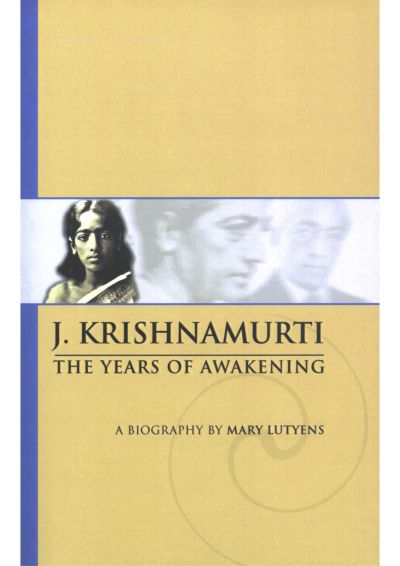
The Years of AwakeningJ Krishnamurti13h 33m$7 · $0.00
The World Within; You Are The Story of HumanityJ Krishnamurti6h 27m$7 · $0.00
The Mirror of RelationshipJ Krishnamurti17h 19m$7 · $0.00
Insights Into EducationJ Krishnamurti5h 22m$7 · $0.00
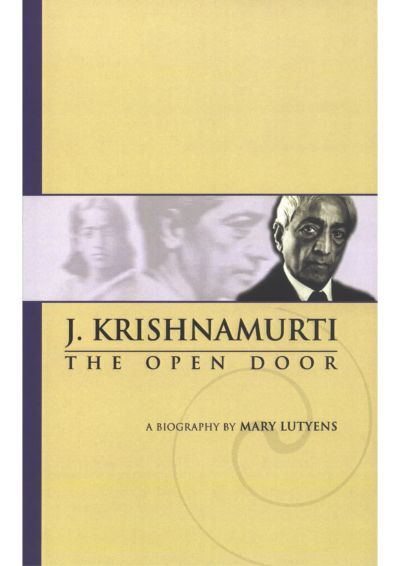
Mary Lutyens - 3. Krishnamurti. The Open DoorJ Krishnamurti, Mary Lutyens7h$7 · $0.00
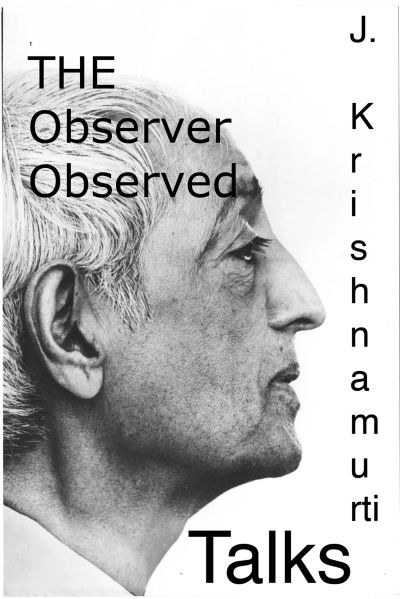
The Observer ObservedJ Krishnamurti2h 50m$7 · $0.00
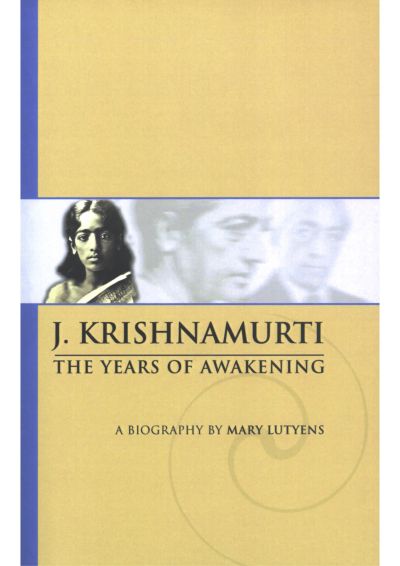
Mary Lutyens - 1. Krishnamurti. The Years of AwakeningJ Krishnamurti, Mary Lutyens13h 33m$7 · $0.00
What Are You Seeking ?J Krishnamurti15h 6m$7 · $0.00
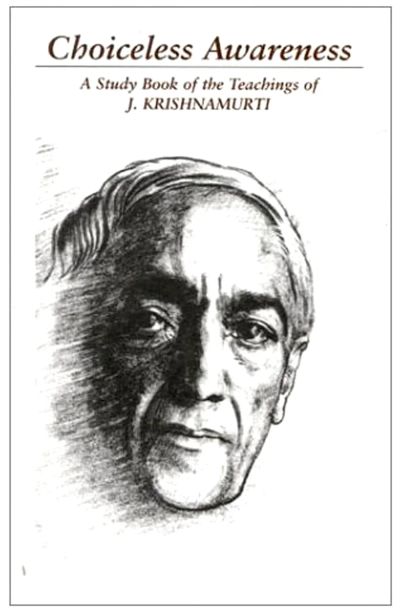
Choiceless AwarenessJ Krishnamurti5h 10m$7 · $0.00
What is Right Action ?J Krishnamurti16h 29m$7 · $0.00
What Are You Seeking ?J Krishnamurti24h 50m$7 · $0.00