


Length2h 36m
About this audiobook
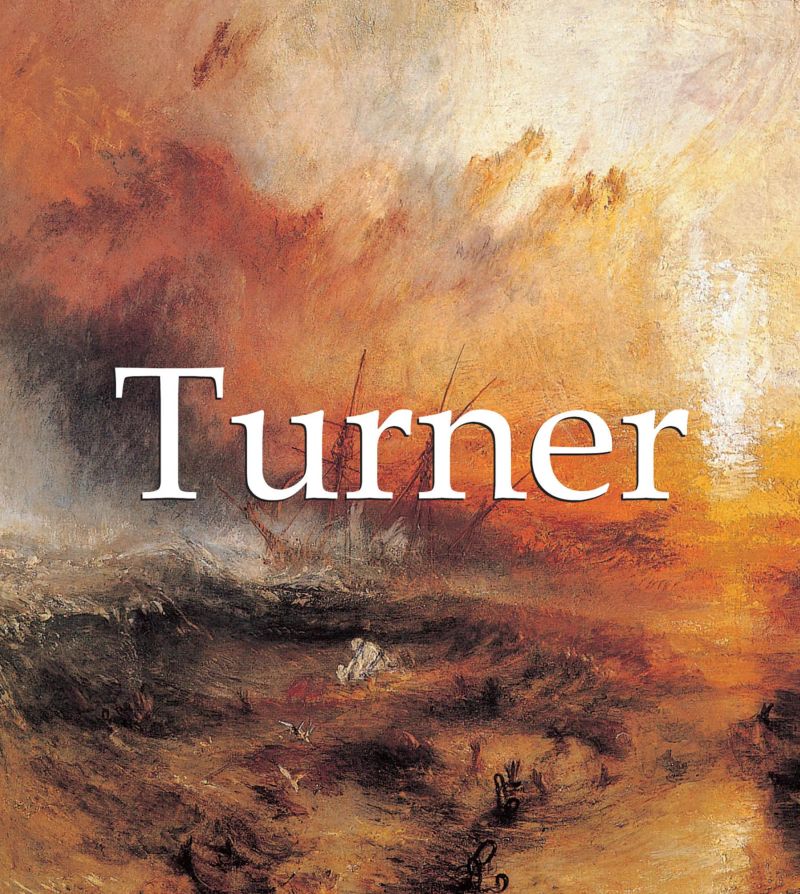
At fifteen, Turner was already exhibiting View of Lambeth. He soon acquired the reputation of an immensely clever watercolourist. A disciple of Girtin and Cozens, he showed in his choice and presentation of theme a picturesque imagination which seemed to mark him out for a brilliant career as an illustrator. He travelled, first in his native land and then on several occasions in France, the Rhine Valley, Switzerland and Italy. He soon began to look beyond illustration. However, even in works in which we are tempted to see only picturesque imagination, there appears his dominant and guiding ideal of lyric landscape. His choice of a single master from the past is an eloquent witness for he studied profoundly such canvases of Claude as he could find in England, copying and imitating them with a marvellous degree of perfection. His cult for the great painter never failed. He desired his Sun Rising through Vapour and Dido Building Carthage to be placed in the National Gallery side by side with two of Claude's masterpieces. And, there, we may still see them and judge how legitimate was this proud and splendid homage. It was only in 1819 that Turner went to Italy, to go again in 1829 and 1840. Certainly Turner experienced emotions and found subjects for reverie which he later translated in terms of his own genius into symphonies of light and colour. Ardour is tempered with melancholy, as shadow strives with light. Melancholy, even as it appears in the enigmatic and profound creation of Albrecht Dürer, finds no home in Turner's protean fairyland – what place could it have in a cosmic dream? Humanity does not appear there, except perhaps as stage characters at whom we hardly glance. Turner's pictures fascinate us and yet we think of nothing precise, nothing human, only unforgettable colours and phantoms that lay hold on our imaginations. Humanity really only inspires him when linked with the idea of death – a strange death, more a lyrical dissolution – like the finale of an opera.
Audiobook details
Rating★★★★ 4.1 (56)
Includes Goodreads, Amazon, LibraryThing
GenreOther
Length2 hrs 36 mins
Narrated byListen with 1,000+ voices
FormateBook with Audio
Publish dateJul 1, 2011
LanguageEnglish
Table of contents
1Turner
2© Sirrocco, London, UK © Confidential Concepts, worldwide, USA
3John Ruskin, 1843
4Biography
5Tours Belgium, Germany and Holland.
Show all chaptersShow less
6principally in Rome.
7From darkness to light: perhaps no painter in the history
8with part of Thomas-à-Becket's crown, Canterbury Cathedral of
9Folly Bridge and Bacon’s Tower, Oxford
10Joseph Mallord William Turner was born at 21 Maiden
11Harewood House from the South-East
12The Archbishop’s Palace, Lambeth
13Interior of King John’s Palace, Eltham
14painters such as James Barry RA and Henry Fuseli RA whose
15RA 1792 watercolour, 39.5 x 51.5 cm Turner Bequest, Tate Britain, London
16dramatically and that the stage positionings of actors and
171792 watercolour, 27.2 x 21.5 cm Turner Bequest, Tate Britain, London
18At the 1792 Royal Academy Exhibition Turner also received
19RA 1794 watercolour, 51.7 x 37.4 cm Whitworth Art Gallery, Manchester, U.K
20Fishermen at Sea
21production of large numbers of watercolours, this procedure
22tonalist in world art.
23RA 1796 watercolour, 31.8 x 41.9 cm Art Gallery and Museum, Wolverhampton
24inventive colourists in European painting. That development
25private lessons. And on winter evenings between 1794 and
26young watercolourist, Thomas Girtin (1775-1802) – at the
27influence of all these painters, and the breadth of Cozens's
28(1741-1825) and Richard Wilson RA
291798 watercolour, 45.6 x 61 cm York City Art Gallery
30View of Salisbury Cathedral from the Bishop’s Garden
31Abergavenny Bridge, Monmouthshire, Clearing up after a Showery Day
32'Decorum' in the aesthetic literature familiar to Reynolds and
331842 watercolour, 30.4 x 45.4 cm York City Art Gallery
34particularly ingenious observance of Decorum, Pope's Villa at
35Twickenham of 1808 and a far better-known later example, The
36specific meanings; puns or plays upon the similarity of
37appearances; similes or direct comparisons between forms; and
381800 watercolour, 21.7 x 36.7 cm Ruskin School Collection
39Reynolds's admonition that artists should not concern
401794 watercolour of St Anselm's Chapel, Canterbury. In works
41of the Riechenbach, in the valley of Hasle, Switzerland of
42hydrodynamics. The Fishermen at Sea of 1796 demonstrates
43South View from the Cloisters, Salisbury Cathedral
44the 'qualities and causes' of arboreal forms, and thereafter
451803 oil on canvas, 68.5 x 100.3 cm Lloyd Collection
46Richmond Hill
47Reynolds (so much so that often his representations of places
48around 1810:
49The Shipwreck
50the inessential.
J.M.W. TurnerEric Shanes5h 15m4.3 (42)$13 · $0.00
J.M.W. TurnerEric Shanes5h 19m4.7 (34)$13 · $0.00
DalíEric Shanes1h 15m4.3 (257)$8 · $0.00
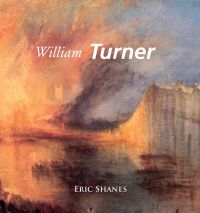
TurnerEric Shanes52m3.9 (30)$8 · $0.00
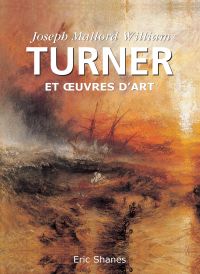
Joseph Mallord William Turner et œuvres d'artEric Shanes2h 34m4.2 (45)$15 · $0.00
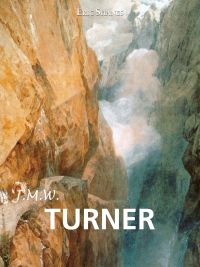
J.M.W. TurnerEric Shanes5h 10m4.1 (69)$13 · $0.00
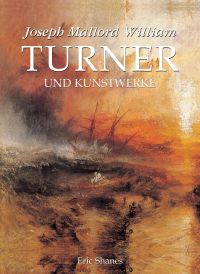
Joseph Mallord William Turner und KunstwerkeEric Shanes1h 54m4.4 (50)$15 · $0.00
DalíEric Shanes4h 40m4.3 (148)$16 · $0.00
Salvador DalíEric Shanes1h 17m4.3 (312)$8 · $0.00
Salvador DalíEric Shanes6h 33m4.1 (307)$18 · $0.00

Tradición del Arte Pop - Respuesta a la Cultura de MasasEric Shanes8h 28m3.8 (20)$18 · $0.00
DalíEric Shanes4h 48m4.3 (227)$16 · $0.00
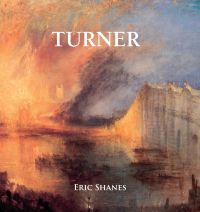
TurnerEric Shanes56m4.3 (57)$8 · $0.00
DalíEric Shanes4h 50m4.2 (197)$16 · $0.00
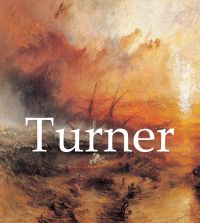
TurnerEric Shanes2h 42m4.2 (55)$13.50 · $0.00
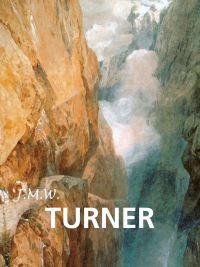
TurnerEric Shanes5h 51m4.2 (46)$13 · $0.00
J.M.W. TurnerEric Shanes6h 3m4.4 (51)$13 · $0.00
DalíEric Shanes1h 21m4.2 (72)$7 · $0.00
Salvador DalíEric Shanes6h 28m4.3 (43)$18 · $0.00
Mere ChristianityC. S. Lewis7h 7m4.4 (519.7K)$24 · $0.00

Her Daily BreadKate Wood12h 57m4.6 (153)$33 · $0.00
The Holy Bible - 1 SamuelKing James2h 13m4.8 (1.6K)$3 · $0.00
The American Standard Bible — The Gospel of MatthewMatthew3h 56m4.7 (3K)$2 · $0.00

Bad Fat Black GirlSesali Bowen6h 32m4.7 (2.8K)$24 · $0.00
The King James Audio Bible New Testament CompleteChristopher Glyn20h 2m4.7 (2.6K)$12 · $0.00
Faiths CheckbookCharles Spurgeon12h 44m4.7 (3.2K)$11 · $0.00

Ten Things I Wish You Knew About Your Child's Mental HealthDr. Billy Garvey4h 53m4.7 (2.4K)$20 · $0.00

Designing Terry Pratchett’s DiscworldPaul Kidby3h 52m4.7 (343)$20 · $0.00
The Chosen Book OneAmanda Jenkins, Kristen Hendricks, Dallas Jenkins3h 8m4.6 (4.9K)$10 · $0.00
The Lives of BrianBrian Johnson9h 45m4.6 (3.5K)$29 · $0.00
Expository Thoughts on the Gospel of LukeJ.C. Ryle27h 13m4.7 (536)$18 · $0.00

CrossroadsKaleb Dahlgren7h 56m4.6 (4.9K)$26 · $0.00

Across the RiverKent Babb11h 40m4.6 (927)$29 · $0.00

Brain Training for RidersAndrea Monsarrat Waldo5h 56m4.7 (550)$19 · $0.00
My Effin' LifeGeddy Lee17h 11m4.6 (13.1K)$40 · $0.00

Kings and PawnsHoward Bryant10h 9m4.6 (678)$29 · $0.00

The Elementia Chronicles #2: The New OrderSean Fay Wolfe11h 17m4.6 (841)$29 · $0.00
The ActsLuke2h 55m4.6 (19.7K)$12 · $0.00
New Testament - Easy NavigationWorld English Bible19h 35m4.6 (1.3K)$1.30 · $0.00
You may also like
Auguste RodinRainer Maria Rilke3h 26m4.2 (922)$16 · $0.00

The Book of TeaOkakura Kakuzo1h 59m4.3 (42.6K)$1.20 · $0.00
Leaves of Grass (Complete Edition)Walt Whitman19h 40m4.3 (143.7K)$1.99 · $0.00
The Rubaiyat of Omar KhayyamOmar Khayyam2h 28m4.3 (136.3K)$1 · $0.00
WaldenHenry David Thoreau13h 32m3.9 (237.8K)$5 · $0.00
Auguste RodinRainer María Rilke3h 14m4.2 (973)$13 · $0.00

The Search for the GenuineJim Harrison12h 2m4.3 (387)$23
Rubáiyát of Omar Khayyam, Rendered into English Verse (Annotated)Omar Khayyam3h 19m4.2 (23.6K)$2 · $0.00
Leaves of GrassWalt Whitman13h 21m4.3 (348.9K)$1.20 · $0.00
Poems of Nature (Annotated)Henry David Thoreau2h 30m4.2 (1.2K)$2 · $0.00

Meander, Spiral, ExplodeJane Alison5h 50m4.2 (3.2K)$20 · $0.00
WaldenHenry David Thoreau10h 26m3.9 (241.4K)$17 · $0.00
Auguste RodinRainer Maria Rilke1h 40m4.2 (1K)$2 · $0.00
Essays — Second SeriesRalph Waldo Emerson7h 10m4.3 (1.8K)$1 · $0.00
The Stones of VeniceJohn Ruskin49h 48m4.1 (3.4K)$1.99 · $0.00

More Translations from the ChineseAnonymous2h 10m4.1 (62)$2 · $0.00
Lewesdon Hill, with other poemsWilliam Crowe2h 57m$2 · $0.00
The Poet Li PoArthur David Waley1h 40m3.9 (30)$1 · $0.00
Birds, Beasts and FlowersD. H. Lawrence2h 56m$2.30
Poems of NatureHenry David Thoreau2h 9m4.2 (62)$1 · $0.00