
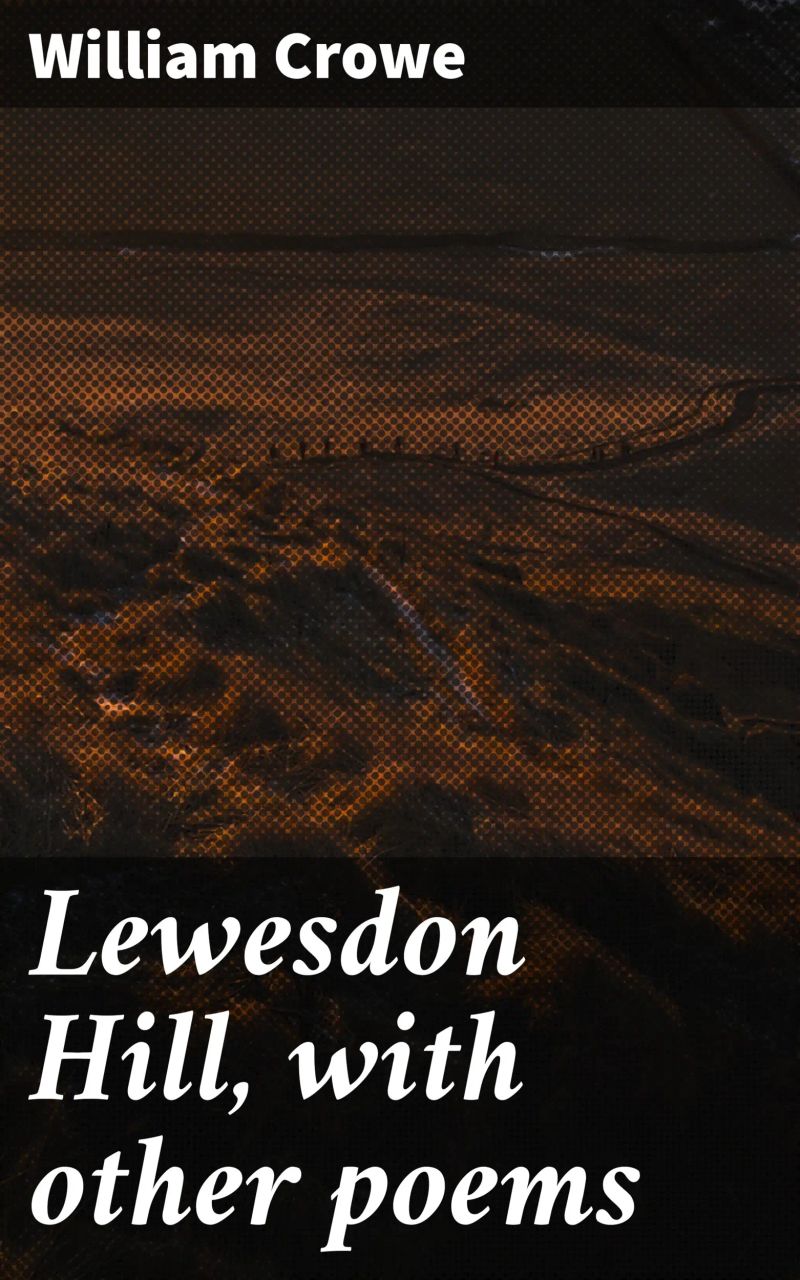
Lewesdon Hill, with other poems
Capturing the essence of nature and human experience through timeless poetryBy William Crowe


Length2h 56m
About this audiobook
In "Lewesdon Hill, with Other Poems," William Crowe showcases an evocative blend of Romantic sensibilities and early 19th-century English poetic tradition. The collection is notable for its pastoral imagery, reflecting Crowe's deep appreciation for the natural landscape'Äîparticularly the captivating vistas of Dorset. With a lyrical style characterized by rich descriptions and contemplative themes, Crowe captures the interplay between nature and human emotion. His verse not only solicits an aesthetic appreciation of the environment but also engages with prevailing philosophical questions of identity and existence, positioning Crowe as a crucial figure in the transition between the neoclassical and the Romantic movements. William Crowe, often overshadowed by contemporaries, was deeply rooted in the English countryside, which significantly influenced his poetic voice. His formative years spent in the lush scenery of Dorset provided both inspiration and material for his work. A fellow of Oriel College, Oxford, Crowe'Äôs intellectual pursuits in literature and philosophy, coupled with his fondness for nature, embody his desire to convey the sublime beauty of the English landscape and its emotional resonance. "Lewesdon Hill, with Other Poems" is highly recommended for readers interested in the nuances of Romantic poetry and the exploration of the human spirit in dialogue with nature. Crowe's ability to evoke profound imagery and meditative reflections invites readers to immerse themselves in the pastoral beauty of his verses, making it a significant addition to any poetry enthusiast'Äôs collection.
Audiobook details
GenrePoetry
Length2 hrs 56 mins
Narrated byListen with 1,000+ voices
FormateBook with Audio
Publish dateJul 9, 2023
LanguageEnglish
Table of contents
1LEWESDON HILL.
2Note 1, page 4, line 10.
3Note 2, p. 10, line 7.
4Note 3, page 16, line 4.
5Note 4, page 16, line 10.
Show all chaptersShow less
6Note 5, page 18, line 6.
7Note 6, page 22, line 1.
8Note 7, page 23, lines 5 and 6.
9Note 8, page 23, line 10.
10Note 9, page 24, line 2.
11Note 10, page 25, line 3.
12Note 11, page 27, line 11.
13Note 12, page 33, line 2.
14Note 13, page 34, line 1.
15Note 14, page 34, line 11.
16POEMS.
17INSCRIBED BENEATH THE PICTURE OF AN ASS.
18ODE TO THE LYRIC MUSE. SPOKEN IN THE THEATRE AT THE INSTALLATION OF LORD NORTH, CHANCELLOR OF THE UNIVERSITY OF OXFORD.
19VERSES INTENDED TO HAVE BEEN SPOKEN IN THE THEATRE TO THE DUKE OF PORTLAND, AT HIS INSTALLATION AS CHANCELLOR OF THE UNIVERSITY OF OXFORD, IN THE YEAR 1793.
20ON THE DEATH OF CAPTAIN COOK.
21ELEGY TO THE MEMORY OF DR. W. HAYES, PROFESSOR OF MUSIC IN THE UNIVERSITY OF OXFORD.
22THE WORLD[16]. INTENDED AS AN APOLOGY FOR NOT WRITING. BY A LADY.
23THE BRITISH THEATRE. WRITTEN IN 1775.
24ON TWO PUBLICATIONS, ENTITLED EDITIONS OF TWO OF OUR POETS.
25THE SPLEEN.
26LINES WRITTEN WITH A PENCIL IN A LADY’S ALMANAC.
27TO A YOUNG GENTLEWOMAN, WITH THOMSON’S SEASONS, DOUBLED DOWN AT THE STORY OF PALEMON AND LAVINIA.
28SONNET.
29SONNET TO PETRARCH.
30TO A LADY, WHO DESIRED SOME SPECIMENS OF THE AUTHOR’S POETRY.
31EPITAPH ON A CHILD WHO DIED OF A SCARLET FEVER IN THE FIFTEENTH MONTH OF HIS AGE. 1802.
32EPITAPH ON SIR CHARLES TURNER, BART. IN THE FAMILY MAUSOLEUM AT KIRK LEATHAM, YORKSHIRE.
33LINES WRITTEN AT THE TOMB OF WILLIAM OF WYKEHAM, IN WINCHESTER CATHEDRAL.
34TRANSLATION OF A GREEK INSCRIPTION UPON A FOUNTAIN[21].
35FROM LUCRETIUS.
36FROM LUCRETIUS.
37FROM LUCRETIUS.
38PSALM LXXII. ABRIDGED, AND ADAPTED[22] TO A PARTICULAR TUNE.
39MIDNIGHT DEVOTION. WRITTEN IN THE GREAT STORM, 1822.
40SILBURY HILL[23].
41TO THE DAISY.
42FRAGMENT.
43FROM PURCHASE’S PILGRIMAGE, VERSIFIED AND DESIGNED AS A MOTTO TO “VOYAGES FOR THE DISCOVERY OF A N. W. PASSAGE.”
44FRAGMENT.
45THE RAPE OF PROSERPINE.
46SONNET.
47SONG.
48SONG.
49SONG.
50SONG. TO A LADY GOING TO HER FAMILY IN IRELAND.

Maybe You Never Cry AgainBernie Mac4h 25m4.6 (3K)$20 · $0.00
Inquire WithinIn-Q2h 18m4.6 (993)$16 · $0.00
The Complete Poetry (The Classic Illustrated Edition)Samuel Taylor Coleridge26h 23m4.6 (1.3K)$1.99 · $0.00

The Weary Blues (Annotated)Langston Hughes2h 13m4.5 (4.6K)$2 · $0.00
The Complete Poetical Works of Edgar Allan Poe (Illustrated)Edgar Allan Poe18h 27m4.5 (4.2K)$2 · $0.00

The Complete Poetry (Annotated)Oscar Wilde6h 44m4.5 (15.5K)$2 · $0.00

Saundarya LahariUnknown Author3h 16m4.6 (256)$18 · $0.00
The Mesnevi (Annotated)Maulana Jalal al-Din Rumi18h 41m4.5 (4.2K)$2 · $0.00
Songs of a SourdoughRobert W. Service2h 13m4.5 (13.6K)$1 · $0.00
Little Flower of Jesus (Annotated)Thérèse of Lisieux5h 4m4.5 (1.4K)$1.99 · $0.00
The Poems of LeopardiGiacomo Leopardi3h 9m4.5 (3.6K)$2 · $0.00

Nikki Giovanni: Love Poems & A Good CryNikki Giovanni2h 44m4.6 (405)$18 · $0.00
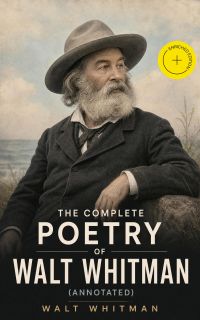
The Complete Poetry of Walt Whitman (Annotated)Walt Whitman19h 58m4.5 (4.2K)$1.99 · $0.00
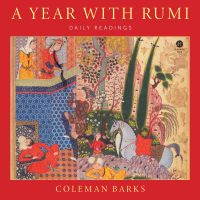
A Year with RumiColeman Barks5h 56m4.5 (2.6K)$24 · $0.00
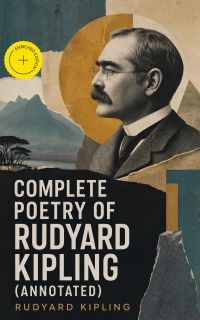
Complete Poetry of Rudyard Kipling (Annotated)Rudyard Kipling22h 50m4.5 (2.6K)$3.99 · $0.00
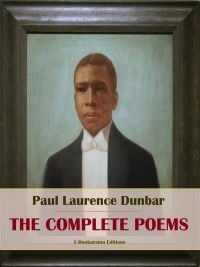
The Complete PoemsPaul Laurence Dunbar12h 40m4.5 (1.5K)$21 · $0.00
The Odes of John Keats - Complete CollectionJohn Keats22h 16m4.5 (1.3K)$1 · $0.00
SonnetsWilliam Shakespeare2h 39m4.4 (128.3K)$3 · $0.00
PoemsEdna St. Vincent Millay2h 39m4.5 (1.3K)$2 · $0.00
PoemsW. B. Yeats5h 6m4.4 (46.9K)$1 · $0.00
You may also like
Auguste RodinRainer María Rilke3h 14m4.2 (973)$13 · $0.00
Auguste RodinRainer Maria Rilke1h 40m4.2 (1K)$2 · $0.00

The Book of TeaOkakura Kakuzo1h 59m4.3 (42.6K)$1.20 · $0.00
Auguste RodinRainer Maria Rilke3h 26m4.2 (922)$16 · $0.00
Essays — Second SeriesRalph Waldo Emerson7h 10m4.3 (1.8K)$1 · $0.00
PoemsJohn Clare2h 11m4.2 (2.2K)$1 · $0.00
The Search for the GenuineJim Harrison12h 2m4.3 (387)$23
The Complete Works of Ralph Waldo EmersonRalph Waldo Emerson96h 49m4.5 (352)$2 · $0.00

Emily DickinsonEmily Dickinson5h 23m4.5 (142.8K)$16
The Poems of LeopardiGiacomo Leopardi3h 9m4.5 (3.6K)$2 · $0.00
Leaves of Grass (Complete Edition)Walt Whitman19h 40m4.3 (143.7K)$1.99 · $0.00
Poems of Nature (Annotated)Henry David Thoreau2h 30m4.2 (1.2K)$2 · $0.00
Auguste RodinRainer Maria Rilke3h 26m4.2 (1K)$16 · $0.00
WaldenHenry David Thoreau13h 32m3.9 (237.8K)$5 · $0.00
Auguste RodinRainer Maria Rilke3h 9m4.2 (973)$13 · $0.00
Leaves of GrassWalt Whitman13h 21m4.3 (348.9K)$1.20 · $0.00
Stray BirdsRabindranath Tagore40m4.3 (3.4K)$3.50 · $0.00
Isaac Levitan - Poet of the Russian LandscapeAlexei Fiodorov-Davydov2h 25m4.7 (12)$16 · $0.00
Weeds by the Wall: VersesMadison Julius Cawein$2 · $0.00
Fishing with a WormBliss Perry28m$2 · $0.00