


Length23h 48m
About this audiobook
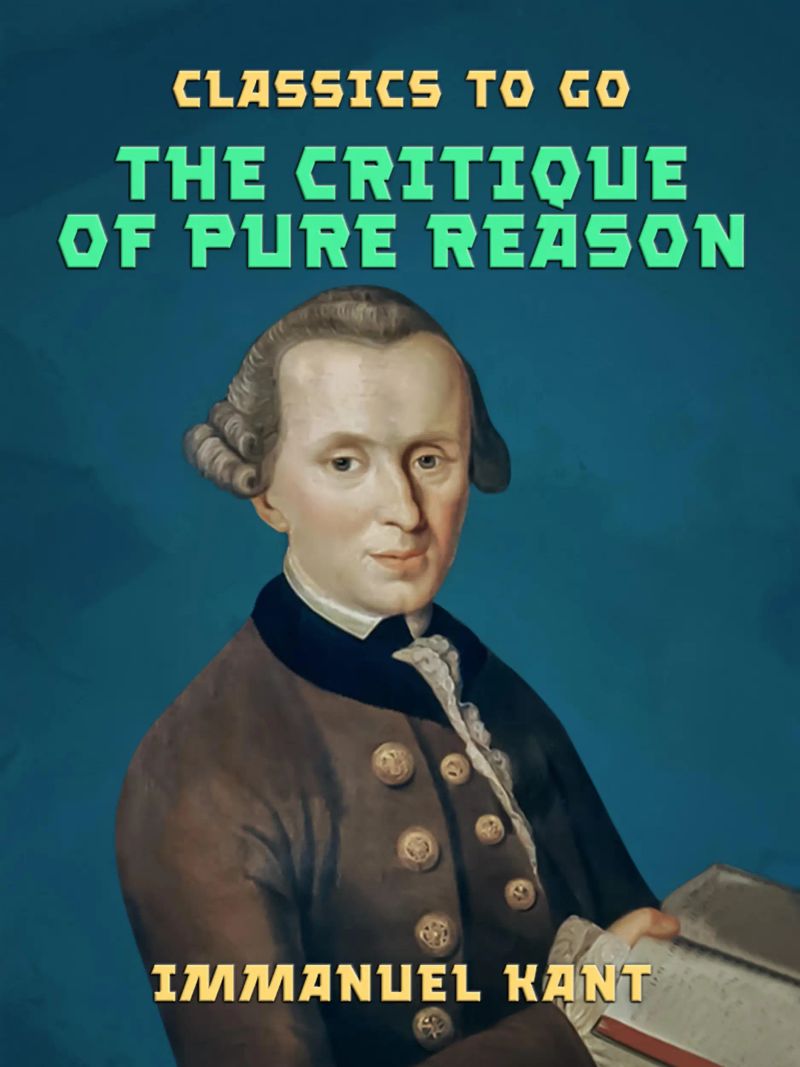
The Critique of Pure Reason was a critique of the pretensions of pure theoretical reason to attain metaphysical truths beyond the ken of applied theoretical reason. Its conclusion was that pure theoretical reason must be restrained, because it produces confused arguments when applied outside its sphere.
Audiobook details
Rating★★★★ 4.2 (50.9K)
Includes Goodreads, LibraryThing, Amazon, StoryGraph
GenrePhilosophy
Length23 hrs 48 mins
Narrated byListen with 1,000+ voices
FormateBook with Audio
Publish dateMay 10, 2022
LanguageEnglish
Table of contents
1PREFACE TO THE FIRST EDITION 1781
2PREFACE TO THE SECOND EDITION 1787
3Introduction
4I. Of the difference between Pure and Empirical Knowledge
5II. The Human Intellect, even in an Unphilosophical State, is in Possession of Certain Cognitions “à priori”.
Show all chaptersShow less
6III. Philosophy stands in need of a Science which shall Determine the Possibility, Principles, and Extent of Human Knowledge “à priori”
7IV. Of the Difference Between Analytical and Synthetical Judgements.
8V. In all Theoretical Sciences of Reason, Synthetical Judgements “à priori” are contained as Principles.
9VI. The Universal Problem of Pure Reason.
10VII. Idea and Division of a Particular Science, under the Name of a Critique of Pure Reason.
11I. TRANSCENDENTAL DOCTRINE OF ELEMENTS.
12FIRST PART. TRANSCENDENTAL ÆSTHETIC.
13I. Introductory.
14SECTION I. Of Space.
152. Metaphysical Exposition of this Conception.
163. Transcendental Exposition of the Conception of Space.
174. Conclusions from the foregoing Conceptions.
18SECTION II. Of Time.
195. Metaphysical Exposition of this Conception.
206 Transcendental Exposition of the Conception of Time.
217. Conclusions from the above Conceptions.
228. Elucidation.
239. General Remarks on Transcendental Æsthetic.
2410. Conclusion of the Transcendental Æsthetic.
25Second Part—TRANSCENDENTAL LOGIC
26INTRODUCTION. Idea of a Transcendental Logic.
27I. Of Logic in General.
28II. Of Transcendental Logic.
29III. Of the Division of General Logic into Analytic and Dialectic.
30IV. Of the Division of Transcendental Logic into Transcendental Analytic and Dialectic.
31FIRST DIVISION. TRANSCENDENTAL LOGIC. TRANSCENDENTAL ANALYTIC. 1
32BOOK I. Analytic of Conceptions. 2
33Chapter I. Of the Transcendental Clue to the Discovery of all Pure Conceptions of the Understanding
34Introductory 3
35Section I. Of the Logical Use of the Understanding in General 4
36Section II. Of the Logical Function of the Understanding in Judgements 5
37Section III. Of the Pure Conceptions of the Understanding, or Categories 6
38Chapter II. Of the Deduction of the Pure Conceptions of the Understanding
39Section I. Of the Principles of a Transcendental Deduction in general 9
40Transition to the Transcendental Deduction of the Categories 10
41Section II Transcendental Deduction of the pure Conceptions of the Understanding
42Of the Possibility of a Conjunction of the manifold representations given by Sense 11.
43Of the Originally Synthetical Unity of Apperception 12
44The Principle of the Synthetical Unity of Apperception is the highest Principle of all exercise of the Understanding 13
45What Objective Unity of Self-consciousness is 14
46The Logical Form of all Judgements consists in the Objective Unity of Apperception of the Conceptions contained therein 15
47All Sensuous Intuitions are subject to the Categories, as Conditions under which alone the manifold Content of them can be united in one Consciousness 16
48Observation 17
49In Cognition, its Application to Objects of Experience is the only legitimate use of the Category 18
50Of the Application of the Categories to Objects of the Senses in general 20
Series
More from Immanuel Kant

Kritik der reinen Vernunft - 1. AuflageImmanuel Kant23h 4m4.2 (48.3K)$3

Kritik der praktischen VernunftImmanuel Kant7h 32m4.1 (17K)$3
Kant's Prolegomena to Any Future MetaphysicsImmanuel Kant5h 2m4.1 (12.3K)$2.30

Die Metaphysik der SittenImmanuel Kant8h 39m4.1 (18.3K)$3

Zum ewigen Frieden Ein Philosophischer EntwurfImmanuel Kant2h 4m4.0 (4.4K)$2.30

Immanuel Kant: Kritik der reinen Vernunft - 2. AuflageImmanuel Kant24h 9m4.3 (37.1K)$3

Beobachtungen über das Gefühl des Schönen und ErhabenenImmanuel Kant2h 31m3.8 (1.3K)$3
The Critique of Practical ReasonImmanuel Kant6h 51m4.1 (14.3K)$2.30
Fundamental Principles of the Metaphysics of MoralsImmanuel Kant3h 20m4.0 (28K)$2.30

Kritik der UrteilskraftImmanuel Kant14h 20m4.1 (12.5K)$3
Perpetual Peace A Philosophical EssayImmanuel Kant4h3.9 (3.1K)$2.30
Kant's Critique of JudgementImmanuel Kant13h 54m4.2 (10K)$2.30

Kritik der reinen VernunftImmanuel Kant23h 57m4.1 (36K)$2.30

Grundlegung zur Metaphysik der SittenImmanuel Kant3h 31m4.1 (39.3K)$3

Zum ewigen FriedenImmanuel Kant2h 48m4.1 (15.3K)$3

Lessons in TruthH. Emilie Cady3h 50m4.5 (2.4K)$20 · $0.00
The Discourses of EpictetusP. E. MATHESOM12h 47m4.4 (17.7K)$1.20 · $0.00
IlluminationsWalter Benjamin10h 12m4.4 (16.2K)$20 · $0.00

That Bird Has My WingsJarvis Jay Masters9h 49m4.4 (13.7K)$29 · $0.00

Tâo Teh KingLaozi2h 34m4.4 (230.9K)$2 · $0.00
SymposiumPlato3h 26m4.4 (97.9K)$1.20 · $0.00

Buddhist Boot CampTimber Hawkeye2h 39m4.4 (8.4K)$18 · $0.00
Enchiridion & The Discourses of Epictetus (Annotated)Arrian Epictetus18h 9m4.4 (3.5K)$2 · $0.00

The Meditations of the Emperor Marcus Aurelius AntoninusEmperor of Rome Marcus Aurelius5h 41m4.4 (1.8M)$1 · $0.00
Crime and PunishmentFyodor Dostoevsky23h 11m4.4 (1.3M)$12 · $0.00

MeditationsMarcus Aurelius5h 52m4.4 (433.7K)$1 · $0.00

Everyday DharmaSuneel Gupta5h 2m4.5 (761)$20 · $0.00

The Joyful Wisdom ("La Gaya Scienza")Friedrich Wilhelm Nietzsche11h 37m4.4 (26.6K)$1 · $0.00
The Art of LivingEpictetus, Sharon Lebell3h 16m4.4 (50.1K)$18 · $0.00
MeditationsEmperor Of Rome Marcus Aurelius7h 23m4.3 (477.5K)$1.20 · $0.00

The Imitation of ChristThomas à Kempis6h 27m4.3 (84.6K)$21 · $0.00

Sadhana: the realisation of lifeRabindranath Tagore3h 49m4.4 (8.6K)$6 · $0.00
SapiensYuval Noah Harari15h 18m4.3 (1.4M) · 1210$33 · $0.00

You BelongSebene Selassie8h 35m4.4 (2.7K)$26 · $0.00

The Song Celestial; Or, Bhagavad-Gîtâ (from the Mahâbhârata)Anonymous2h 18m4.4 (3.2K)$2 · $0.00
You may also like
Limitless MindJo Boaler6h 22m4.1 (3.7K)$24 · $0.00

Feel It AllCasey Tanner6h 20m4.3 (1.1K)$24 · $0.00
UnlearnHumble the Poet3h 55m4.3 (4.5K)$20 · $0.00
BounceMatthew Syed7h 51m4.2 (21.8K)$26 · $0.00

The Art of ThinkingErnest Dimnet6h 21m4.1 (587)$2 · $0.00

The Heart of ChristianityMarcus J. Borg7h 59m4.2 (7.6K)$26 · $0.00

Buy What You Love Without Going BrokeJen Smith, Jill Sirianni6h 17m3.9 (1.1K)$24 · $0.00
The Ending Of TimeJiddu Krishnamurti19h 4m4.3 (938)$24 · $0.00

The Bulletproof DietDave Asprey9h 19m4.0 (10.5K)$20
An Essay Concerning Humane UnderstandingJohn Locke15h 22m4.0 (19.5K)Free

Next!Joanne Lipman9h 20m4.0 (355)$29 · $0.00
Brockwood Park 1969 - Public Talk 3 - Knowing what love isJ. Krishnamurti1h 11m$6 · $0.00

Madras (Chennai) 1977 78 - Public Talk 2 - Observing the content of consciousnessJiddu Krishnamurti1h 9m$6 · $0.00
Senility and the brain cellsJiddu Krishnamurti1h 31m$4 · $0.00
Of the Conduct of the Understanding (Annotated)John Locke4h 52m4.4 (104)$1.99 · $0.00

The Power to Choose YourselfDanniel Silva3h 55m$1.80 · $0.00

Living with a sustained seriousnessJiddu Krishnamurti1h 29m$4 · $0.00

Thomas Reid (Annotated)Alexander Campbell Fraser4h 11m$1.99 · $0.00

Walk Without Feet, Fly Without Wings and Think Without MindOsho13h 52m4.6 (74)$20 · $0.00
What is Right Action ?J Krishnamurti16h 29m4.5 (33)$7 · $0.00