
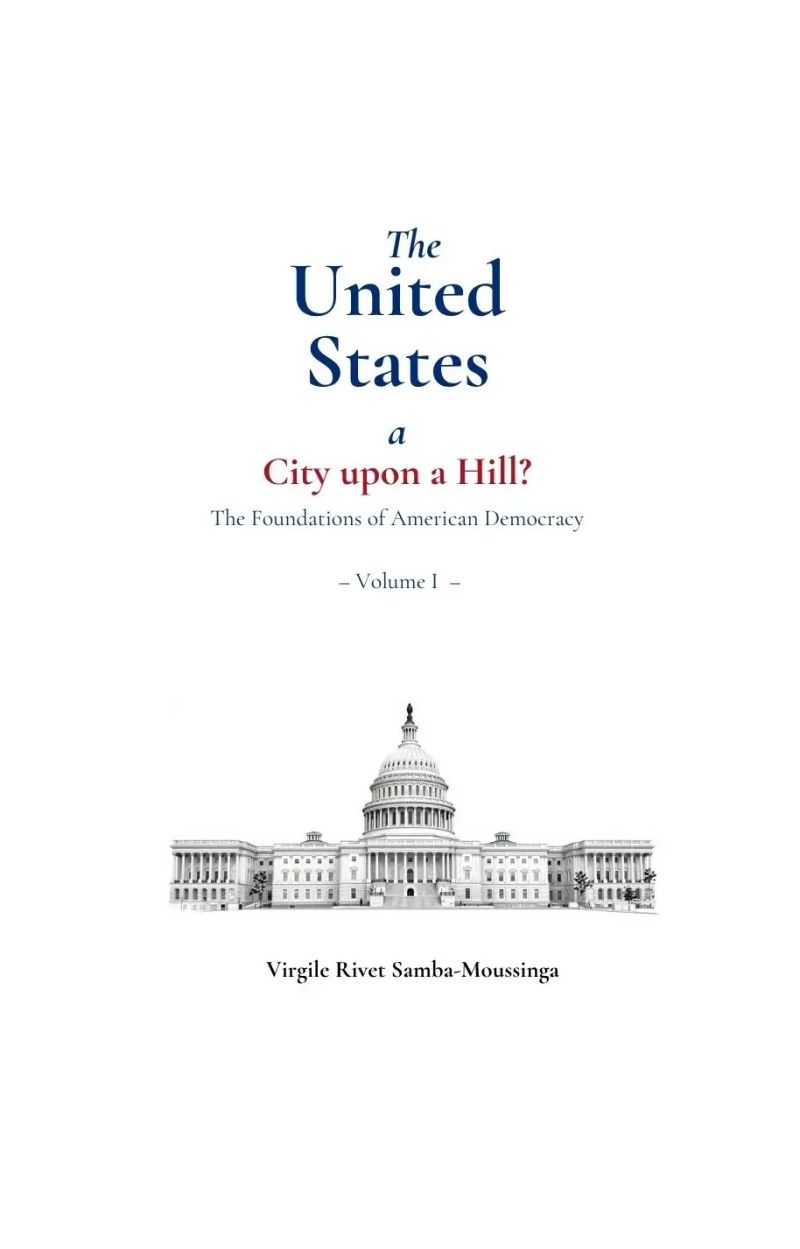
The United States, a City upon a Hill?
The Foundations of American DemocracyBy Virgile Rivet Samba-Moussinga


Length5h 41m
About this audiobook
For nearly four centuries, the idea of America as a “city upon a hill” has shaped the nation’s self-understanding and inspired generations worldwide. But has the United States truly lived up to this lofty vision? In The United States, A City upon a Hill? Virgile Rivet Samba-Moussinga offers a sweeping, penetrating exploration of the moral, philosophical, and political foundations of the American experiment, and the enduring tensions that define it.
Drawing on the Puritan covenantal tradition, classical natural law, Enlightenment political philosophy, and the debates of the Founding era, this book traces how ideals of liberty, virtue, and self-government took root in the early colonies and evolved into the constitutional order that still governs the nation today.
Audiobook details
Rating★★★★★ 5.0 (1)
GenreHistory, Education and Learning
Length5 hrs 41 mins
Narrated byListen with 1,000+ voices
FormateBook with Audio
Publish dateNov 13, 2020
LanguageEnglish
Table of contents
1DEDICATION
2ACKNOWLEDGMENTS
3Part I
4CHAPTER ONE
5Section 1.1: The Puritan Migration to New England (1629-1640)
Show all chaptersShow less
6Democratic Participation and Town Meetings
7Biblical Law and Natural Law in Puritan Governance
8Puritan Influence on American Constitutional Principles
9Section 1.2: The Royalist South and Virginia Colony (1640-1675)
10Natural Law and Property Rights
11The Paradox of Liberty and Slavery
12Virginia’s Contribution to Constitutional Principles
13Section 1.3: Quaker Delaware Valley and Religious Tolerance (1675-1725)
14Democratic Participation and Merchant Culture
15Natural Law and Religious Liberty
16Quaker Influence on Constitutional Principles
17Section 1.4: Scots-Irish Backcountry (1718-1775)
18Honor Culture and Local Autonomy
19Natural Law and Frontier Justice
20Scots-Irish Contribution to Constitutional Principles
21Section 1.5: How These Folkways Shaped American Constitutionalism
22Relevance to Federalism Debates
23Conclusion
24CHAPTER TWO
25Section 2.1: Classical Foundations—Plato and Aristotle
26Aristotle’s Human Nature as Political Animal
27The Classical Legacy: Reason, Nature, and Justice
28Section 2.2: Roman Contributions—Cicero’s Universal Law
29Roman Law and Christian Synthesis
30Section 2.3: Augustine and the Christianization of Natural Law
31Divine Law as the Foundation of Natural Law
32Natural Law and the Problem of Slavery
33Augustine’s Legacy for American Constitutionalism
34Section 2.4: Thomas Aquinas—Synthesis of Classical and Christian Thought
35Natural Law as Participation in Eternal Law
36Reason Reflecting God’s Law
37Aquinas’s Influence on the American Founding
38Section 2.5: Reformation Thinkers and Natural Law
39John Calvin and God’s Sovereignty in Law
40Richard Hooker and the Anglican Via Media
41Section 2.6: Reformation Impact on American Constitutional Thought
42Limited Government as a Christian Principle
43Individual Conscience and Liberty
44Conclusion
45CHAPTER THREE
46Section 3.1: The Declaration of Independence as a Natural Law Document
47The Preamble: Self-Evident Truths
48Unalienable Rights and Their Foundation
49The Indictment of King George III
50Section 3.2: Revolutionary War and Constitutional Necessity

A Brief History of IntelligenceMax S. Bennett12h 18m4.6 (6.6K)$29 · $0.00

The Happiest Man on EarthEddie Jaku3h 48m4.6 (178K)$7 · $0.00

MotherlandJulia Ioffe17h 52m4.7 (2.5K)$40 · $0.00

Where Cowards Go to DieBenjamin Sledge8h 42m4.7 (351)$20 · $0.00

RevolutionariesSanjeev Sanyal11h 23m4.6 (2.6K)$29 · $0.00
Days of Love and Rage: A Story of RevolutionAnand Gopal22h 36m4.7 (584)$34 · $0.00
We Crossed a Bridge and It TrembledWendy Pearlman6h4.6 (5.2K)$24 · $0.00

Unbroken Bonds of BattleJohnny Joey Jones8h 31m4.6 (2.6K)$8 · $0.00

The Daughter of AuschwitzTova Friedman, Malcolm Brabant7h 54m4.6 (16.7K)$26 · $0.00
Lily's PromiseLily Ebert, Dov Forman8h 54m4.6 (16.1K)$29 · $0.00
On Democracies and Death CultsDouglas Murray10h 38m4.6 (6.5K)$29 · $0.00

Across the RiverKent Babb11h 40m4.6 (927)$29 · $0.00
Balcony Over Jerusalem: A Middle East Memoir - Israel, Palestine and BeyondJohn Lyons12h 37m4.6 (1.4K)$33 · $0.00
BeyondStephen Walker15h 39m4.6 (3.2K)$33 · $0.00
Kings and PawnsHoward Bryant10h 9m4.6 (678)$29 · $0.00

No EscapeNury Turkel9h 30m4.6 (809)$28 · $0.00
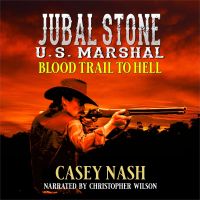
Jubal Stone: U.S. Marshal: Blood Trail To Hell: A Western Adventure NovelCasey Nash3h 42m4.6 (3.2K)$18 · $0.00
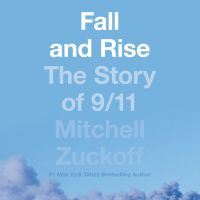
Fall and RiseMitchell Zuckoff17h 23m4.6 (9.8K)$40 · $0.00
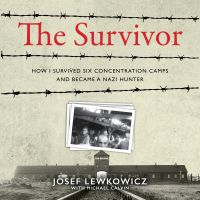
The SurvivorJosef Lewkowicz, Michael Calvin9h 22m4.6 (2.5K)$29 · $0.00

Always FaithfulThomas Schueman, Zainullah Zaki12h 12m4.6 (977)$29 · $0.00
A Brief History of IntelligenceMax S. Bennett12h 18m4.6 (6.6K)$29 · $0.00
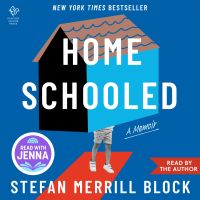
HomeschooledStefan Merrill Block7h 10m3.6 (18.5K)$28 · $0.00

EducationEllen G. White9h 41m4.6 (1.5K)$2 · $0.00

Parents and Children (Annotated)Charlotte Mason9h 23m4.6 (988)$2 · $0.00

Children Under FireJohn Woodrow Cox10h 17m4.5 (1.6K)$29 · $0.00

The State Must ProvideAdam Harris7h 15m4.5 (775)$24 · $0.00
The Call of the Wild and FreeAinsley Arment9h 7m4.4 (21.2K)$29 · $0.00
The Freelance WayRobert Vlach19h 48m4.5 (528)$40 · $0.00
Race to the BottomLuke Rosiak9h 20m4.5 (600)$29 · $0.00

They Came for the SchoolsMike Hixenbaugh9h 5m4.5 (2.6K)$8 · $0.00

Find Me UnafraidKennedy Odede, Jessica Posner11h 11m4.5 (2.7K)$29 · $0.00

Asking for ItKate Harding8h 55m4.4 (5.3K)$20 · $0.00
Defining Moments in Black HistoryDick Gregory7h 37m4.4 (6K)$26 · $0.00

The Emerald Tablets of Thoth the AtlanteanMaurice Doreal3h 4m4.4 (8.8K)$6 · $0.00

Learning AmericaLuma Mufleh6h 37m4.4 (564)$24 · $0.00
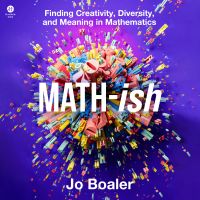
Math-ishJo Boaler7h 21m4.4 (588)$24 · $0.00

Daddy-Long-LegsJean Webster12h 18m4.2 (91K)$1.99 · $0.00
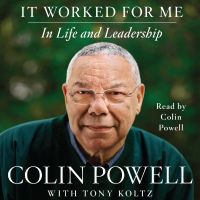
It Worked For MeColin Powell7h 42m4.3 (9.8K)$26 · $0.00

Little SoldiersLenora Chu11h 30m4.3 (3.1K)$29 · $0.00

Grammar-land; Or, Grammar in Fun for the Children of Schoolroom-shireM. L. Nesbitt2h 36m4.4 (488)$1 · $0.00
You may also like
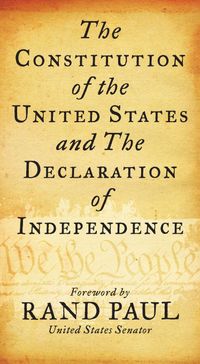
The Constitution of the United States and The Declaration of IndependenceDelegates of The Constitutional Convention1h 7m4.6 (12.3K)Free
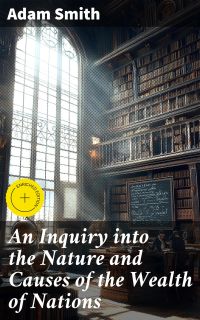
An Inquiry into the Nature and Causes of the Wealth of NationsAdam Smith43h 7m4.1 (120.2K)$2 · $0.00
The Story of the Volsungs (Volsunga Saga); with Excerpts from the Poetic EddaAnonymous5h 55m4.1 (2.4K)$2 · $0.00
The Magnificent Century (Annotated)Thomas Bertram Costain16h 8m4.2 (2K)$2 · $0.00

The State of Society in France Before the Revolution of 1789 (Annotated)Alexis de Tocqueville17h 25m4.6 (1.2K)$2 · $0.00
The Republic (Annotated)Plato25h 27m4.1 (261K)$2 · $0.00
Great StateTimothy Brook18h 17m4.1 (612)$40 · $0.00

The State of Society in France Before the Revolution of 1789Alexis de Tocqueville15h 47m4.3 (12.1K)$2 · $0.00
The New World (Complete Edition)Winston Churchill14h 25m4.4 (2.5K)$1 · $0.00
The Story of LibertyCharles Carleton Coffin10h 56m4.4 (522)$1.99 · $0.00
Rio de Janeiro at the Turn of the MillenniumIngo Latotzki, Klaus. H Carl1h 25m$8 · $0.00

The Memoirs of Victor HugoVictor Hugo8h 45m4.0 (113)$2.30 · $0.00

Historic ParisJetta Sophia Wolff9h 28m$2 · $0.00
Persia Revisited (Annotated)Thomas Edward Sir Gordon4h 40m$1.99 · $0.00

The Old Inns of England (Vol. 1&2)Charles G. Harper13h 12m$1 · $0.00

History of Lace (Annotated)Mrs. Bury Palliser23h 32m4.0 (52)$2 · $0.00
The Development of Religious Liberty in ConnecticutM. Louise Greene10h 56m$2 · $0.00
York MinsterArthur P. Purey-Cust52m$1 · $0.00

The Cathedral Church of Canterbury [2nd ed.]Hartley Withers4h 12m$1 · $0.00
Mentone, Cairo, and CorfuConstance Fenimore Woolson6h 36m$2 · $0.00