
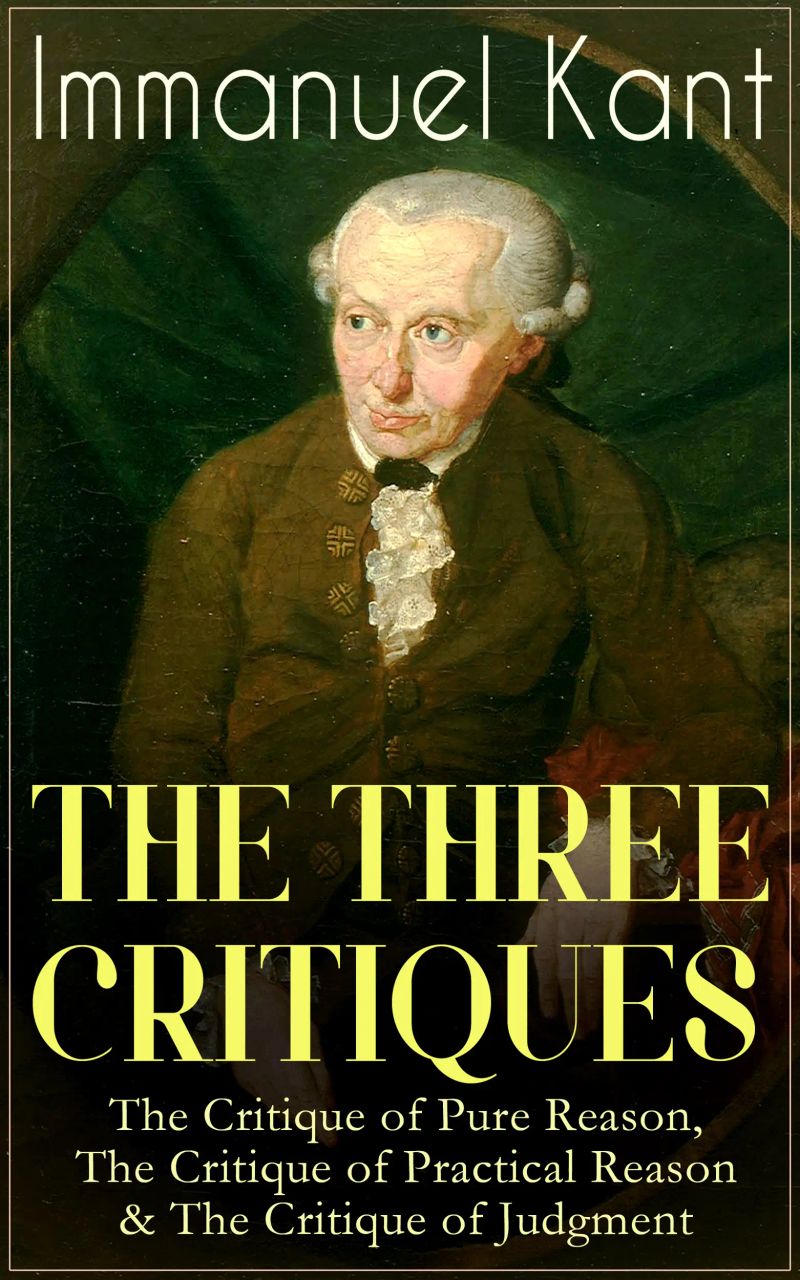
THE THREE CRITIQUES: The Critique of Pure Reason, The Critique of Practical Reason & The Critique of Judgment
A Copernican Turn in Reason, Ethics, AestheticsBy Immanuel Kant


Length46h 7m
About this audiobook
This carefully crafted ebook: "THE THREE CRITIQUES: The Critique of Pure Reason, The Critique of Practical Reason & The Critique of Judgment" is formatted for your eReader with a functional and detailed table of contents.
The Critique of Pure Reason is one of the most influential works in the history of philosophy. Kant here explains what he means by a critique of pure reason: "I do not mean by this a critique of books and systems, but of the faculty of reason in general, in respect of all knowledge after which it may strive independently of all experience."
The Critique of Practical Reason is the second of Immanuel Kant's three critiques and it deals with his moral philosophy. The second Critique exercised a decisive influence over the subsequent development of the field of ethics and moral philosophy, beginning with Johann Gottlieb Fichte's Doctrine of Science.
The Critique of Judgment, also translated as the Critique of the Power of Judgment completes the Critical project begun in the Critique of Pure Reason. The book is divided into two main sections: the Critique of Aesthetic Judgment and the Critique of Teleological Judgment, and also includes a large overview of the entirety of Kant's Critical system, arranged in its final form.
Immanuel Kant (1724-1804) was a German philosopher, who, according to the Stanford Encyclopedia of Philosophy is "the central figure of modern philosophy." Kant argued that fundamental concepts of the human mind structure human experience, that reason is the source of morality, that aesthetics arises from a faculty of disinterested judgment, that space and time are forms of our understanding, and that the world as it is "in-itself" is unknowable. Kant took himself to have effected a Copernican revolution in philosophy, akin to Copernicus' reversal of the age-old belief that the sun revolved around the earth.
Table of Contents:
THE CRITIQUE OF PURE REASON
THE CRITIQUE OF PRACTICAL REASON
THE CRITIQUE OF JUDGMENT
Audiobook details
Rating★★★★ 4.2 (1.6K)
Includes Goodreads, Amazon, LibraryThing, StoryGraph
GenrePhilosophy
Length46 hrs 7 mins
Narrated byListen with 1,000+ voices
FormateBook with Audio
Publish dateOct 1, 2015
LanguageEnglish
Table of contents
1THE THREE CRITIQUES: The Critique of Pure Reason, The Critique of Practical Reason & The Critique of Judgment
2Preface to the First Edition, 1781
3Preface to the Second Edition, 1787
4Introduction
5I. Of the difference between Pure and Empirical Knowledge
Show all chaptersShow less
6II. The Human Intellect, even in an Unphilosophical State, is in Possession of Certain Cognitions “a priori”
7III. Philosophy stands in need of a Science which shall Determine the Possibility, Principles, and Extent of Human Knowledge “a priori”
8IV. Of the Difference Between Analytical and Synthetical Judgements
9V. In all Theoretical Sciences of Reason, Synthetical Judgements “a priori” are contained as Principles
10VI. The Universal Problem of Pure Reason
11VII. Idea and Division of a Particular Science, under the Name of a Critique of Pure Reason
12I. Transcendental Doctrine of Elements
13First Part. Transcendental Aesthetic
14Section I. Of Space
15Section II. Of Time
16Second Part. Transcendental Logic
17Introduction. Idea of a Transcendental Logic
18I. Of Logic in General
19II. Of Transcendental Logic
20III. Of the Division of General Logic into Analytic and Dialectic
21IV. Of the Division of Transcendental Logic into Transcendental Analytic and Dialectic
22Transcendental Logic. First Division. Transcendental Analytic
23Book I. Analytic of Conceptions
24Chapter I. Of the Transcendental Clue to the Discovery of all Pure Conceptions of the Understanding
25Introductory
26Section I. Of defined above Use of understanding in General
27Section II. Of the Logical Function of the Understanding in Judgements
28Section III. Of the Pure Conceptions of the Understanding, or Categories
29Chapter II. Of the Deduction of the Pure Conceptions of the Understanding
30Section I. Of the Principles of a Transcendental Deduction in general
31Section II. Transcendental Deduction of the pure Conceptions of the Understanding
32Book II. Analytic of Principles
33Introduction. Of the Transcendental Faculty of judgement in General
34Chapter I. Of the Schematism of the Pure Conceptions of the Understanding
35Chapter II. System of all Principles of the Pure Understanding
36Section I. Of the Supreme Principle of all Analytical Judgements
37Section II. Of the Supreme Principle of all Synthetical Judgements
38Section III. Systematic Representation of all Synthetical Principles of the Pure Understanding (pt. 1)
39Section III. Systematic Representation of all Synthetical Principles of the Pure Understanding (pt. 2)
40Chapter III. Of the Ground of the Division of all Objects into Phenomena and Noumena
41Appendix
42Transcendental Logic. Second Division. Transcendental Dialectic
43Introduction
44I. Of Transcendental Illusory Appearance
45II. Of Pure Reason as the Seat of Transcendental Illusory Appearance
46Book I. Of the Conceptions of Pure Reason
47Section I. Of Ideas in General
48Section II. Of Transcendental Ideas
49Section III. System of Transcendental Ideas
50Book II. Of the Dialectical Procedure of Pure Reason

The Greatest Works of Immanuel KantImmanuel Kant83h 28m4.4 (142)$1.99 · $0.00

Kant: Kritik der praktischen Vernunft, Kritik der reinen Vernunft & Kritik der UrteilskraftImmanuel Kant46h 31m4.5 (1.4K)$1 · $0.00
The Critique of Pure ReasonImmanuel Kant25h 41m4.1 (49.5K)$1.99 · $0.00
The Three Critiques: The Critique of Pure Reason, Practical Reason and JudgmentImmanuel Kant46h 6m4.3 (15.5K)$1.99 · $0.00

Physische GeographieImmanuel Kant13h 54m3.9 (47)$1 · $0.00
THE CRITIQUE OF JUDGMENTImmanuel Kant15h 35m4.1 (11.8K)$1.99 · $0.00

Schriften zur physischen GeographieImmanuel Kant26h 23m4.4 (11)$1 · $0.00

Kritik der Urteilskraft: Die dritte KritikImmanuel Kant16h 25m4.1 (16.7K)$1 · $0.00
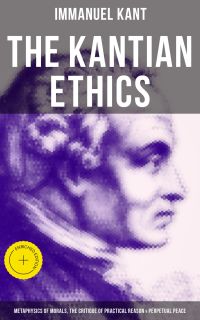
The Kantian Ethics: Metaphysics of Morals, The Critique of Practical Reason & Perpetual PeaceImmanuel Kant23h 29m$1.99 · $0.00
THE CRITIQUE OF PURE REASONImmanuel Kant25h 39m4.1 (51.3K)$1.99 · $0.00
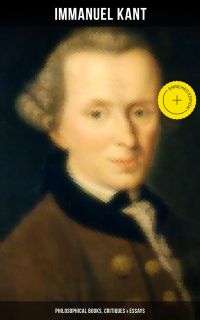
IMMANUEL KANT: Philosophical Books, Critiques & EssaysImmanuel Kant83h 15m4.4 (143)$1.99 · $0.00
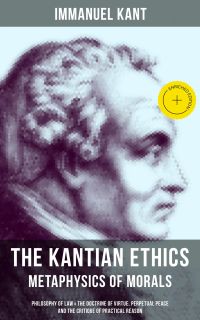
The Kantian Ethics: Metaphysics of MoralsImmanuel Kant23h 30m4.1 (5.1K)$1.99 · $0.00

Crítica de la Razón PuraImmanuel Kant26h 12m4.1 (51.4K)$11 · $0.00

Schriften zur Geschichtsphilosophie, Ethik und Politik (Kommentiert)Immanuel Kant9h 3m4.5 (11)$1 · $0.00
Kritik der reinen Vernunft (Kommentiert)Immanuel Kant25h 32m4.4 (1.2K)$1 · $0.00

Untersuchung über die Deutlichkeit der Grundsätze der natürlichen Theologie und der Moral (Kommentiert)Immanuel Kant2h 46m4.1 (113)$1 · $0.00

IMMANUEL KANT: Philosophical Books, Critiques & Essays (Annotated)Immanuel Kant83h 49m4.4 (143)$2 · $0.00

Immanuel Kant: Schriften Zur physischen Geographie (Kommentiert)Immanuel Kant26h 32m4.4 (11)$1 · $0.00

Über Pädagogik (Kommentiert)Immanuel Kant4h 34m4.0 (1.7K)$2 · $0.00
Kant's Prolegomena to Any Future Metaphysics (Annotated)Immanuel Kant6h 3m4.1 (12.9K)$2 · $0.00

WitnessAriel Burger8h 1m4.6 (1.3K)$20 · $0.00
The Magic PresenceGodfré Ray King10h 21m4.6 (307)$1.20 · $0.00

The Art of LivingThich Nhat Hanh5h 1m4.5 (14.2K)$24 · $0.00
Moral Letters to LuciliusLucius Annaeus Seneca24h 26m4.5 (71.7K)$1.99 · $0.00

Lessons in TruthH. Emilie Cady3h 50m4.5 (2.4K)$20 · $0.00
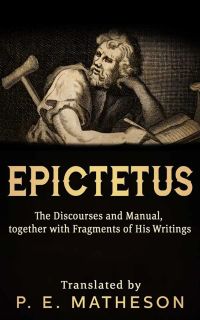
The Discourses of EpictetusP. E. MATHESOM12h 47m4.4 (17.7K)$1.20 · $0.00
IlluminationsWalter Benjamin10h 12m4.4 (16.2K)$20 · $0.00

That Bird Has My WingsJarvis Jay Masters9h 49m4.4 (13.7K)$29 · $0.00

Tâo Teh KingLaozi2h 34m4.4 (230.9K)$2 · $0.00
SymposiumPlato3h 26m4.4 (97.9K)$1.20 · $0.00

Buddhist Boot CampTimber Hawkeye2h 39m4.4 (8.4K)$18 · $0.00
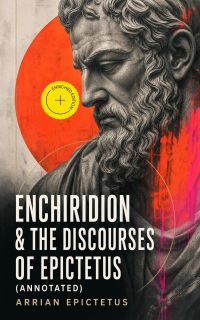
Enchiridion & The Discourses of Epictetus (Annotated)Arrian Epictetus18h 9m4.4 (3.5K)$2 · $0.00

The Meditations of the Emperor Marcus Aurelius AntoninusEmperor of Rome Marcus Aurelius5h 41m4.4 (1.8M)$1 · $0.00
Crime and PunishmentFyodor Dostoevsky23h 11m4.4 (1.3M)$12 · $0.00

MeditationsMarcus Aurelius5h 52m4.4 (433.7K)$1 · $0.00

Everyday DharmaSuneel Gupta5h 2m4.5 (761)$20 · $0.00

The Joyful Wisdom ("La Gaya Scienza")Friedrich Wilhelm Nietzsche11h 37m4.4 (26.6K)$1 · $0.00
The Art of LivingEpictetus, Sharon Lebell3h 16m4.4 (50.1K)$18 · $0.00
MeditationsEmperor Of Rome Marcus Aurelius7h 23m4.3 (477.5K)$1.20 · $0.00

The Imitation of ChristThomas à Kempis6h 27m4.3 (84.6K)$21 · $0.00
You may also like

The CategoriesAristotle2h 41m4.0 (2.2K)$1 · $0.00
THE CRITIQUE OF PURE REASONImmanuel Kant25h 39m4.1 (51.3K)$1.99 · $0.00
Introduction to Mathematical PhilosophyBertrand Russell9h4.1 (2.8K)$1 · $0.00

The Hot HandBenjamin Cohen8h 39m3.9 (1.6K)$26 · $0.00
Tractatus Logico-PhilosophicusLudwig Wittgenstein4h 57m4.2 (31.9K)$1.99 · $0.00
An Enquiry Concerning Human UnderstandingDavid Hume5h 22m4.1 (18.7K)$1 · $0.00
Fundamental Principles of the Metaphysics of MoralsImmanuel Kant3h 20m4.0 (28K)$2.30
Tertium OrganumP. D. Ouspensky14h 49m4.3 (1.1K)$20 · $0.00
Kant's Prolegomena to Any Future Metaphysics (Annotated)Immanuel Kant6h 3m4.1 (12.9K)$2 · $0.00
Bertrand Russell: Problems of PhilosophyBertrand Russell4h 51m4.1 (25.1K)$1.99 · $0.00
The Problem of TruthHerbert Wildon Carr2h 47m$2 · $0.00

The Principles of AestheticsDe Witt H. Parker10h 3m3.9 (56)$1 · $0.00

The Game of LogicLewis Carroll2h 54m3.9 (613)$1 · $0.00

The Craft of FictionPercy Lubbock8h 7m3.7 (109)$2 · $0.00

Selected Mathematical WorksLewis Carroll7h 5m$2 · $0.00

The Science of GeniusScientific American6h 14m3.9 (13)$17
Speaking and Thinking - A Conversation with Victor FerreiraHoward Burton2h 32m$3 · $0.00
A Record of Study in Aboriginal American LanguagesDaniel G. Brinton42m$2 · $0.00
Mind Reading How To Read People's ThoughtsW. E. Skinner21m$2.40
HumoristsPaul Johnson6h 59m3.3 (175)$17 · $0.00