
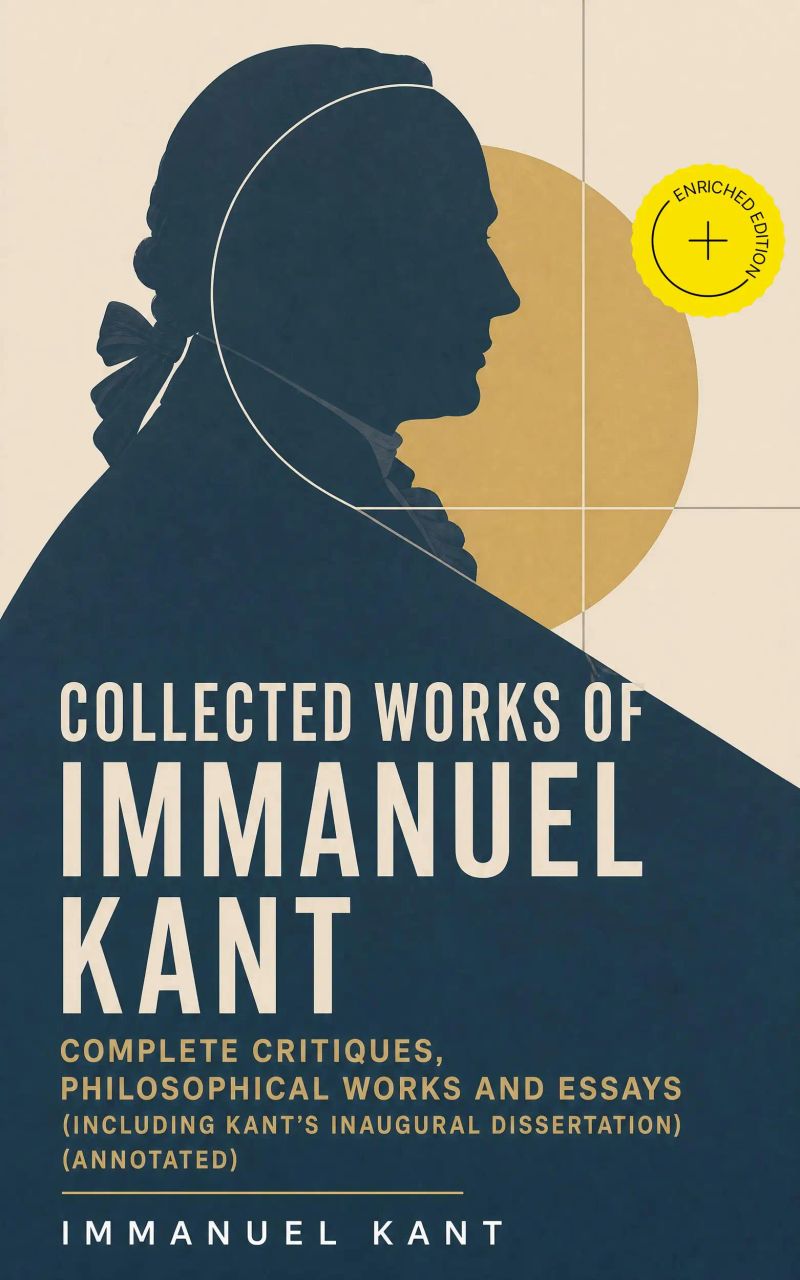
Collected Works of Immanuel Kant: Complete Critiques, Philosophical Works and Essays (Including Kant's Inaugural Dissertation) (Annotated)
Enriched Edition. Three Critiques and Major EssaysBy Immanuel Kant

Length83h 45m
About this audiobook
Collected Works of Immanuel Kant gathers the architectonic range of Kant's philosophy: the three Critiques, major moral, political, religious, and aesthetic writings, shorter essays, and the Inaugural Dissertation that marks his transition toward critical philosophy. Taken together, these works trace the disciplined prose, rigorous distinctions, and systematic ambition through which Kant redefined metaphysics after empiricism and rationalism, placing human cognition, freedom, judgment, and duty at the center of modern thought. Immanuel Kant (1724–1804), the Königsberg philosopher whose outwardly quiet life concealed one of the most consequential intellectual revolutions in Europe, wrote in response to Newtonian science, Leibniz-Wolffian metaphysics, Rousseau's moral vision, and Hume's skeptical challenge. His mature project sought to determine the conditions and limits of reason itself, explaining how knowledge is possible, how morality binds rational beings, and how enlightenment requires intellectual autonomy. This collection is essential for readers seeking not isolated doctrines but the full movement of Kant's mind. Philosophers, historians of ideas, theologians, political theorists, and serious general readers will find here the foundations of German Idealism, modern ethics, aesthetics, and epistemology. Demanding yet inexhaustibly rewarding, it is a landmark library of critical reason.
This enriched edition has been carefully crafted to add value to your reading experience.
- An Introduction draws the threads together, discussing why these diverse authors and texts belong in one collection.
- Historical Context explores the cultural and intellectual currents that shaped these works, offering insight into the shared (or contrasting) eras that influenced each writer.
- A combined Synopsis (Selection) briefly outlines the key plots or arguments of the included pieces, helping readers grasp the anthology's overall scope without giving away essential twists.
- A collective Analysis highlights common themes, stylistic variations, and significant crossovers in tone and technique, tying together writers from different backgrounds.
- Reflection questions encourage readers to compare the different voices and perspectives within the collection, fostering a richer understanding of the overarching conversation.
Audiobook details
Rating★★★★ 4.3 (18)
Includes Goodreads, Amazon
GenrePhilosophy
Length83 hrs 45 mins
Narrated byListen with 1,000+ voices
FormateBook with Audio
Publish dateOct 1, 2015
LanguageEnglish
Table of contents
1Introduction
2Introduction
3Author Biography
4Historical Context
5Synopsis (Selection)
Show all chaptersShow less
6Introduction
7IMMANUEL KANT by Robert Adamson
8KANT’S INAUGURAL DISSERTATION OF 1770
9The Three Critiques
10THE CRITIQUE OF PURE REASON
11Preface to the First Edition, 1781
12Preface to the Second Edition, 1787
13Introduction.
14I. Transcendental Doctrine of Elements.
15First Part. Transcendental Aesthetic.
16Second Part. Transcendental Logic. (pt. 1)
17Second Part. Transcendental Logic. (pt. 2)
18Second Part. Transcendental Logic. (pt. 3)
19Second Part. Transcendental Logic. (pt. 4)
20Second Part. Transcendental Logic. (pt. 5)
21Second Part. Transcendental Logic. (pt. 6)
22Second Part. Transcendental Logic. (pt. 7)
23II. Transcendental Doctrine of Method. (pt. 1)
24II. Transcendental Doctrine of Method. (pt. 2)
25THE CRITIQUE OF PRACTICAL REASON
26First Part. Elements of Pure Practical Reason.
27Book I. The Analytic of Pure Practical Reason. (pt. 1)
28Book I. The Analytic of Pure Practical Reason. (pt. 2)
29Book II. Dialectic of Pure Practical Reason.
30Second Part. Methodology of Pure Practical Reason.
31THE CRITIQUE OF JUDGEMENT
32EDITOR’S INTRODUCTION
33GLOSSARY OF KANT’S PHILOSOPHICAL TERMS
34PREFACE
35INTRODUCTION
36THE CRITIQUE OF JUDGEMENT (pt. 1)
37THE CRITIQUE OF JUDGEMENT (pt. 2)
38THE CRITIQUE OF JUDGEMENT (pt. 3)
39THE CRITIQUE OF JUDGEMENT (pt. 1)
40THE CRITIQUE OF JUDGEMENT (pt. 2)
41THE CRITIQUE OF JUDGEMENT (pt. 3)
42Critical Works
43PROLEGOMENA TO ANY FUTURE METAPHYSICS (pt. 1)
44PROLEGOMENA TO ANY FUTURE METAPHYSICS (pt. 2)
45PROLEGOMENA TO ANY FUTURE METAPHYSICS (pt. 3)
46FUNDAMENTAL PRINCIPLES OF THE METAPHYSIC OF MORALS (pt. 1)
47FUNDAMENTAL PRINCIPLES OF THE METAPHYSIC OF MORALS (pt. 2)
48THE METAPHYSICS OF MORALS
49Translator's preface
50Bibliographical note

Kritik der Urteilskraft: Die dritte KritikImmanuel Kant16h 25m4.1 (16.7K)$1 · $0.00
Crítica de la Razón PuraImmanuel Kant26h 12m4.1 (51.4K)$11 · $0.00

Schriften zur Geschichtsphilosophie, Ethik und Politik (Kommentiert)Immanuel Kant9h 3m4.5 (11)$1 · $0.00
Kritik der reinen Vernunft (Kommentiert)Immanuel Kant25h 32m4.4 (1.2K)$1 · $0.00

Untersuchung über die Deutlichkeit der Grundsätze der natürlichen Theologie und der Moral (Kommentiert)Immanuel Kant2h 46m4.1 (113)$1 · $0.00
IMMANUEL KANT: Philosophical Books, Critiques & Essays (Annotated)Immanuel Kant83h 49m4.4 (143)$2 · $0.00

Immanuel Kant: Schriften Zur physischen Geographie (Kommentiert)Immanuel Kant26h 32m4.4 (11)$1 · $0.00

Über Pädagogik (Kommentiert)Immanuel Kant4h 34m4.0 (1.7K)$2 · $0.00
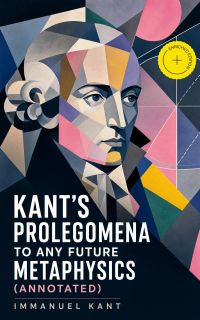
Kant's Prolegomena to Any Future Metaphysics (Annotated)Immanuel Kant6h 3m4.1 (12.9K)$2 · $0.00
Meisterwerke der Weltphilosophie (Kommentiert)Immanuel Kant, Søren Kierkegaard, Edmund Husserl, Ludwig Wittgenstein, Friedrich Nietzsche, Konfuzius, Platon, Xenophon, Aristoteles, Laotse, Marcus Tullius Cicero, Marcus Aurelius, Plotin, Thomas von Aquin, Niccolò Machiavelli, Thomas Morus, Giordano Bruno, Michel de Montaigne, René Descartes, Francis Bacon, Blaise Pascal, Baruch Spinoza, Gottfried Wilhelm Leibniz, David Hume, Jean Jacques Rousseau, Friedrich Schelling, John Locke, Georg Wilhelm Friedrich Hegel, John Stuart Mill, Karl Marx452h 31m4.4 (18)$2 · $0.00
Die größten Klassiker der Philosophie (Kommentiert)Immanuel Kant, Søren Kierkegaard, Edmund Husserl, Ludwig Wittgenstein, Friedrich Nietzsche, Konfuzius, Platon, Xenophon, Aristoteles, Laotse, Marcus Tullius Cicero, Marcus Aurelius, Plotin, Thomas von Aquin, Niccolò Machiavelli, Thomas Morus, Giordano Bruno, Michel de Montaigne, René Descartes, Francis Bacon, Blaise Pascal, Baruch Spinoza, Gottfried Wilhelm Leibniz, David Hume, Jean Jacques Rousseau, Friedrich Schelling, John Locke, Georg Wilhelm Friedrich Hegel, John Stuart Mill, Karl Marx452h 28m4.5 (114)$2 · $0.00

Anthropologie in pragmatischer Hinsicht (Kommentiert)Immanuel Kant11h 19m4.1 (1.5K)$2.50 · $0.00

The Greatest Works of Immanuel Kant (Annotated)Immanuel Kant83h 52m$2 · $0.00
Kritik der praktischen Vernunft (Kommentiert)Immanuel Kant9h 24m4.1 (12.8K)$1 · $0.00
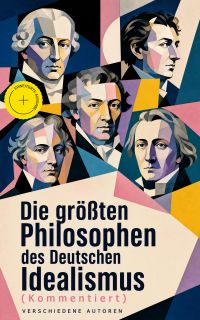
Die größten Philosophen des Deutschen Idealismus (Kommentiert)Immanuel Kant, Johann Gottlieb Fichte, Georg Wilhelm Friedrich Hegel, Friedrich Schelling, Friedrich Schleiermacher138h 36m$1.50 · $0.00

Beobachtungen über das Gefühl des Schönen und Erhabenen (Kommentiert)Immanuel Kant4h 4m4.2 (155)$2 · $0.00
Logik - Ein Handbuch zu Vorlesungen (Kommentiert)Immanuel Kant7h 11m4.0 (1.4K)$2 · $0.00

Träume eines Geistersehers, erläutert durch Träume der Metaphysik (Kommentiert)Immanuel Kant4h 1m$2 · $0.00
Groundwork of the Metaphysics of Morals (Annotated)Immanuel Kant5h 5m$2 · $0.00
The Art of LivingThich Nhat Hanh5h 1m4.5 (14.2K)$24 · $0.00
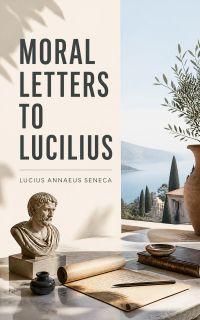
Moral Letters to LuciliusLucius Annaeus Seneca24h 26m4.5 (71.7K)$1.99 · $0.00
Lessons in TruthH. Emilie Cady3h 50m4.5 (2.4K)$20 · $0.00
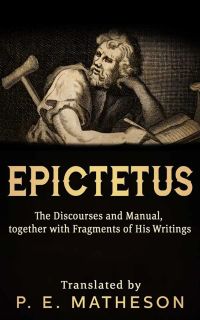
The Discourses of EpictetusP. E. MATHESOM12h 47m4.4 (17.7K)$1.20 · $0.00
IlluminationsWalter Benjamin10h 12m4.4 (16.2K)$20 · $0.00
That Bird Has My WingsJarvis Jay Masters9h 49m4.4 (13.7K)$29 · $0.00

Tâo Teh KingLaozi2h 34m4.4 (230.9K)$2 · $0.00
SymposiumPlato3h 26m4.4 (97.9K)$1.20 · $0.00

Buddhist Boot CampTimber Hawkeye2h 39m4.4 (8.4K)$18 · $0.00
Enchiridion & The Discourses of Epictetus (Annotated)Arrian Epictetus18h 9m4.4 (3.5K)$2 · $0.00
The Meditations of the Emperor Marcus Aurelius AntoninusEmperor of Rome Marcus Aurelius5h 41m4.4 (1.8M)$1 · $0.00
Crime and PunishmentFyodor Dostoevsky23h 11m4.4 (1.3M)$12 · $0.00
MeditationsMarcus Aurelius5h 52m4.4 (433.7K)$1 · $0.00

Everyday DharmaSuneel Gupta5h 2m4.5 (761)$20 · $0.00

The Joyful Wisdom ("La Gaya Scienza")Friedrich Wilhelm Nietzsche11h 37m4.4 (26.6K)$1 · $0.00
The Art of LivingEpictetus, Sharon Lebell3h 16m4.4 (50.1K)$18 · $0.00
MeditationsEmperor Of Rome Marcus Aurelius7h 23m4.3 (477.5K)$1.20 · $0.00
The Imitation of ChristThomas à Kempis6h 27m4.3 (84.6K)$21 · $0.00

Sadhana: the realisation of lifeRabindranath Tagore3h 49m4.4 (8.6K)$6 · $0.00
SapiensYuval Noah Harari15h 18m4.3 (1.4M) · 1177$33 · $0.00
You may also like
The Critique of Judgment: Theory of the Aesthetic Judgment and Theory of the Teleological Judgment (Annotated)Immanuel Kant15h 31m4.1 (15.7K)$1.99 · $0.00

The Tao Teh KingLaozi1h 11m4.4 (228.4K)$2.30

The Piazza TalesHerman Melville9h 3m4.0 (2.8K)$2.30
Leonardo da Vinci: Thoughts on Art & LifeLeonardo da Vinci5h 10m4.1 (1.1K)$1 · $0.00

The Piazza TalesHerman Melville9h 3m4.1 (1.1K)$2.30 · $0.00
DiscourseDescartes2h 24m4.0 (71.5K)$2.30
The Critique of Judgment (Theory of the Aesthetic Judgment & Theory of the Teleological Judgment)Immanuel Kant14h 54m4.1 (13.4K)$2 · $0.00
THE THREE CRITIQUES: The Critique of Pure Reason, The Critique of Practical Reason & The Critique of JudgmentImmanuel Kant46h 10m4.5 (1.4K)$1 · $0.00

Pilgrim at Tinker CreekAnnie Dillard10h 31m4.2 (40.7K)$8 · $0.00
Esoteric ChristianityAnnie Besant7h 23m4.2 (552)$1.20 · $0.00

The Simple Beauty of the Unexpected, Second EditionMarcelo Gleiser6h 16m4.1 (354)$17
The Evolution of EverythingMatt Ridley13h 10m4.0 (4.9K)$33 · $0.00
NatureRalph Waldo Emerson1h 38m4.0 (9K)$2.30
A Series of Lessons in Gnani Yoga: The Yoga of WisdomWilliam Walker8h 20m4.2 (297)$3.50 · $0.00

An Altar in the WorldBarbara Brown Taylor6h 57m4.4 (9.9K)$24 · $0.00
The Critique of Practical ReasonImmanuel Kant6h 45m4.1 (15K)Free

The Piazza TalesHerman Melville9h 3m4.0 (9.5K)$21 · $0.00
The quantum postulate and the recent development of atomic theoryNiels Bohr1h 14m$1 · $0.00
PsychologyAristotle4h$4 · $0.00

Beauty and the BeastStewart Andrew McDowall2h 16m$2 · $0.00