
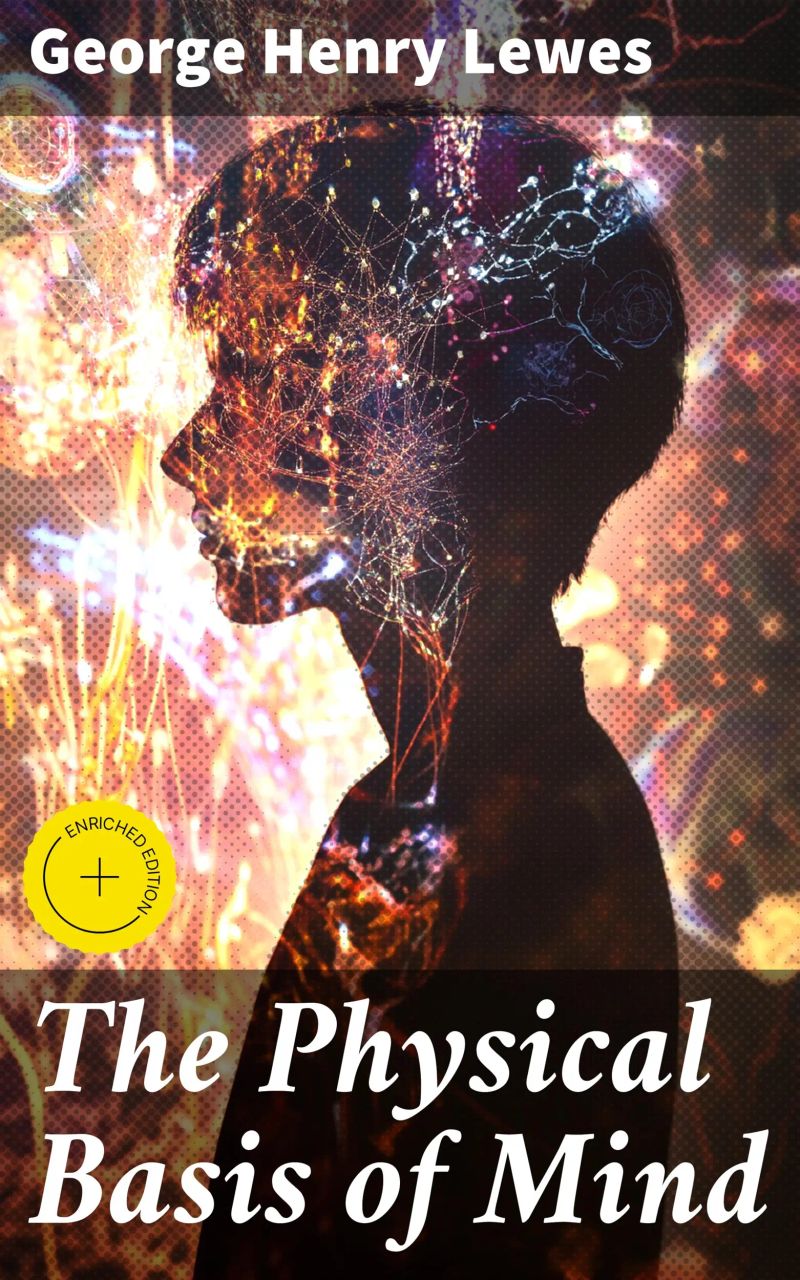
The Physical Basis of Mind
Enriched edition. Being the Second Series of Problems of Life and MindBy George Henry Lewes


Length19h 4m
About this audiobook
In 'The Physical Basis of Mind,' George Henry Lewes embarks on a meticulous exploration of the intricate relationship between the mind and the body, positing that mental phenomena emerge from physical processes. Lewes utilizes a scientific lens, drawing on contemporary advances in physiology and psychology, and integrates a philosophical discourse that reflects the spirit of 19th-century empiricism. The text is rich in rigorous argumentation, combining empirical observation with theoretical inquiry, and serves as a remarkable precursor to the developmental fields of psychology and neuroscience. George Henry Lewes, a prominent philosopher and critic of the Victorian era, was significantly influenced by the scientific milieu of his time, advocating for a materialistic understanding of mental processes. His diverse intellectual pursuits, ranging from literary criticism to philosophy and science, provided him with a unique perspective on the interplay of psychological theories and physical realities. Lewes's significant contributions to the field of psychology and his close association with notable contemporaries, including George Eliot, further enriched his views on the connection between the physical and the mental. This thought-provoking work is recommended for readers interested in psychology, philosophy, and the historical evolution of mind-body discourse. Lewes's nuanced examination invites contemporary scholars and laypersons alike to reconsider the foundations of consciousness, making it an essential read for anyone intrigued by the dialogue between science and philosophy.
In this enriched edition, we have carefully created added value for your reading experience:
- A succinct Introduction situates the work's timeless appeal and themes.
- The Synopsis outlines the central plot, highlighting key developments without spoiling critical twists.
- A detailed Historical Context immerses you in the era's events and influences that shaped the writing.
- A thorough Analysis dissects symbols, motifs, and character arcs to unearth underlying meanings.
- Reflection questions prompt you to engage personally with the work's messages, connecting them to modern life.
- Hand‐picked Memorable Quotes shine a spotlight on moments of literary brilliance.
- Interactive footnotes clarify unusual references, historical allusions, and archaic phrases for an effortless, more informed read.
Audiobook details
GenrePhilosophy
Length19 hrs 4 mins
Narrated byListen with 1,000+ voices
FormateBook with Audio
Publish dateNov 19, 2019
LanguageEnglish
Table of contents
1Introduction
2Introduction
3Synopsis
4Historical Context
5The Physical Basis of Mind
Show all chaptersShow less
6PREFACE.
7PROBLEM I. THE NATURE OF LIFE.
8THE NATURE OF LIFE.
9CHAPTER II. DEFINITIONS OF LIFE.
10CHAPTER III. ORGANISM, ORGANIZATION, AND ORGANIC SUBSTANCE.
11CHAPTER IV. THE PROPERTIES AND FUNCTIONS.
12CHAPTER V. EVOLUTION.
13RECAPITULATION.
14PROBLEM II. THE NERVOUS MECHANISM.
15THE NERVOUS MECHANISM.
16CHAPTER II. THE FUNCTIONAL RELATIONS OF THE NERVOUS SYSTEM.
17CHAPTER III. NEURILITY.
18CHAPTER IV. SENSIBILITY.
19CHAPTER V. ACTION WITHOUT NERVE-CENTRES.
20CHAPTER VI. WHAT IS TAUGHT BY EMBRYOLOGY?
21CHAPTER VII. THE ELEMENTARY STRUCTURE OF THE NERVOUS SYSTEM.
22RECAPITULATION.
23CHAPTER VIII. THE LAWS OF NERVOUS ACTIVITY.
24PROBLEM III. ANIMAL AUTOMATISM.
25ANIMAL AUTOMATISM.
26CHAPTER II. THE VITAL MECHANISM.
27CHAPTER III. THE RELATION OF BODY AND MIND.
28CHAPTER IV. CONSCIOUSNESS AND UNCONSCIOUSNESS.
29CHAPTER V. VOLUNTARY AND INVOLUNTARY ACTIONS.
30CHAPTER VI. THE PROBLEM STATED.
31CHAPTER VII. IS FEELING AN AGENT?
32PROBLEM IV. THE REFLEX THEORY.
33THE REFLEX THEORY.
34CHAPTER II. DEDUCTIONS FROM GENERAL LAWS.
35CHAPTER III. INDUCTIONS FROM PARTICULAR OBSERVATIONS.
36ACQUISITION.
37CHAPTER IV. NEGATIVE INDUCTIONS.
38Analysis
39Reflection
40Memorable Quotes
More from George Henry Lewes


Sceptical Essays (Annotated)Bertrand Russell9h 16m4.6 (1K)$2 · $0.00

WitnessAriel Burger8h 1m4.6 (1.3K)$20 · $0.00
The Magic PresenceGodfré Ray King10h 21m4.6 (307)$1.20 · $0.00

The Art of LivingThich Nhat Hanh5h 1m4.5 (14.2K)$24 · $0.00

Moral Letters to LuciliusLucius Annaeus Seneca24h 26m4.5 (71.7K)$1.99 · $0.00

Lessons in TruthH. Emilie Cady3h 50m4.5 (2.4K)$20 · $0.00
The Discourses of EpictetusP. E. MATHESOM12h 47m4.4 (17.7K)$1.20 · $0.00

IlluminationsWalter Benjamin10h 12m4.4 (16.2K)$20 · $0.00

That Bird Has My WingsJarvis Jay Masters9h 49m4.4 (13.7K)$29 · $0.00

Tâo Teh KingLaozi2h 34m4.4 (230.9K)$2 · $0.00

SymposiumPlato3h 26m4.4 (97.9K)$1.20 · $0.00

Buddhist Boot CampTimber Hawkeye2h 39m4.4 (8.4K)$18 · $0.00
Enchiridion & The Discourses of Epictetus (Annotated)Arrian Epictetus18h 9m4.4 (3.5K)$2 · $0.00

The Meditations of the Emperor Marcus Aurelius AntoninusEmperor of Rome Marcus Aurelius5h 41m4.4 (1.8M)$1 · $0.00

Crime and PunishmentFyodor Dostoevsky23h 11m4.4 (1.3M)$12 · $0.00

MeditationsMarcus Aurelius5h 52m4.4 (433.7K)$1 · $0.00

Everyday DharmaSuneel Gupta5h 2m4.5 (761)$20 · $0.00

The Joyful Wisdom ("La Gaya Scienza")Friedrich Wilhelm Nietzsche11h 37m4.4 (26.6K)$1 · $0.00
The Art of LivingEpictetus, Sharon Lebell3h 16m4.4 (50.1K)$18 · $0.00

MeditationsEmperor Of Rome Marcus Aurelius7h 23m4.3 (477.5K)$1.20 · $0.00
You may also like

David Hume: The Collected WorksDavid Hume37h 13m4.5 (261)$1 · $0.00

Creative EvolutionHenri Bergson13h4.2 (2.4K)$20 · $0.00
The ShallowsNicholas Carr10h 6m4.0 (43.2K)$20

Your Mind and How to Use It: A Manual of Practical Psychology (Unabridged)William Walker Atkinson5h 55m4.2 (1.8K)$2 · $0.00

An Essay Concerning Human UnderstandingJohn Locke30h 12m4.0 (18K)$1.20 · $0.00

UnthinkableHelen Thomson7h 19m4.1 (6.4K)$24 · $0.00

The Predictably IrrationalDan Ariely7h 24m4.2 (370.5K)$24 · $0.00

The Honest Truth About DishonestyDan Ariely8h 36m4.0 (20.9K)$26 · $0.00

The Complete Poetry (Annotated)Robert Browning72h 52m4.4 (316)$2 · $0.00

On the Improvement of the UnderstandingBenedictus de Spinoza1m4.0 (1.1K)$2.30

The NegroWilliam Edward Burghardt Du Bois6h 26m4.3 (378)$1.20 · $0.00

The Lives and Theories of Eminent PhilosophersDiogenes Laertius20h 31m4.2 (5.8K)$1.99 · $0.00

ListenMichel Faber12h 49m3.5 (534)$33 · $0.00
The Foundations of Normal and Abnormal Psychology (Annotated)Boris Sidis12h 47m$1.99 · $0.00

The Physical Basis of MindGeorge Henry Lewes20h 14m$2 · $0.00

THE UNSEENAmir Ahmed 1h 12m4.8 (18)Free

Children and Their BooksJames Hosmer Penniman40m$2 · $0.00

The Essence of Hume's PhilosophyDavid Hume37h 30m$2 · $0.00

Analysis of the Phenomena of the Human MindJames Mill24h 22m$1 · $0.00

Psychoanalysis and LoveAndré Tridon7h 27m$1 · $0.00