
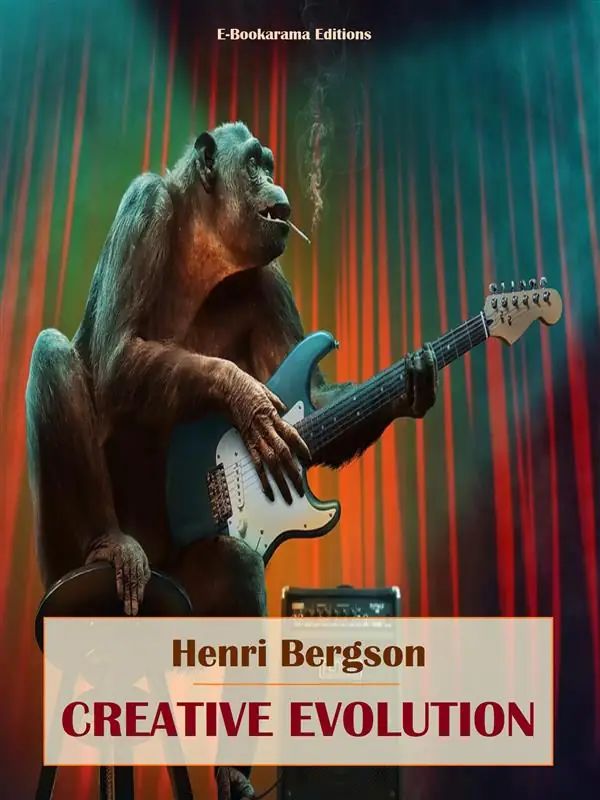
Audio only


Length13h
About this audiobook
Henri Bergson was a French philosopher and Nobel Prize winner in Literature, whose third major work, "Creative Evolution", first published in 1907, provided an alternate explanation for Darwin's mechanism of evolution included in his theory of the same name.
The book focuses on four key steps: that there must be a vital impulse which explains the creation of all living things; that there must also be an impulse accounting for diversity and differentiation; that these tendencies can be defined as instinct and intelligence; and that intuition allows us to place ourselves back in the original vital impulse. Bergson addresses concepts of time, human intelligence and intuition, all of which illustrate his ideas on the meaning of life.
"Creative Evolution" was very popular in the first half of the 20th Century, and held a significant influence on modernist writers. Today, we read Bergson's work because of its profound contribution to the philosophical discussion of evolution.
Audiobook details
Rating★★★★ 4.2 (2.4K)
Includes Goodreads, LibraryThing, Amazon, StoryGraph
GenreScience and Nature, Philosophy, Psychology
Length13 hrs
Narrated byListen with 1,000+ voices
FormateBook with Audio
Publish dateJun 10, 2020
LanguageEnglish
Table of contents
1Introduction
2Chapter 1. The Evolution Of Life—Mechanism And Teleology (pt. 1)
3Chapter 1. The Evolution Of Life—Mechanism And Teleology (pt. 2)
4Chapter 2. The Divergent Directions Of The Evolution Of Life. Torpor, Intelligence, Instinct (pt. 1)
5Chapter 2. The Divergent Directions Of The Evolution Of Life. Torpor, Intelligence, Instinct (pt. 2)
Show all chaptersShow less
6Chapter 3. On The Meaning Of Life—The Order Of Nature And The Form Of Intelligence (pt. 1)
7Chapter 3. On The Meaning Of Life—The Order Of Nature And The Form Of Intelligence (pt. 2)
8Chapter 4. The Cinematographical Mechanism Of Thought And The Mechanistic Illusion—A Glance At The History Of Systems—Real Becoming And False Evolutionism (pt. 1)
9Chapter 4. The Cinematographical Mechanism Of Thought And The Mechanistic Illusion—A Glance At The History Of Systems—Real Becoming And False Evolutionism (pt. 2)

A Brief History of IntelligenceMax S. Bennett12h 18m4.6 (6.6K)$29 · $0.00
The Story of BirdsSteve Brusatte11h 49m4.6 (401)$29 · $0.00

Craig & FredCraig Grossi8h 6m4.5 (9.6K)$26 · $0.00

Celebrating BirdsNatalia Rojas, Ana Maria Martinez6h 47m4.6 (330)$24 · $0.00

Saving JemimaJulie Zickefoose4h 59m4.5 (749)$20 · $0.00

Will's Red CoatTom Ryan8h 23m4.5 (2.3K)$26 · $0.00

Of Time and TurtlesSy Montgomery10h 34m4.5 (5K)$29 · $0.00

Zen and the Art of Saving the PlanetThich Nhat Hanh9h 20m4.5 (3.9K)$29 · $0.00

BLACK BEAUTY (With Original Illustrations)Anna Sewell7h 31m4.5 (1.3K)$1.99 · $0.00

Bottle of LiesKatherine Eban14h 25m4.4 (12K)$33 · $0.00
IngrainedCallum Robinson8h 10m4.5 (1.1K)$26 · $0.00

The Lion Tracker's Guide To LifeBoyd Varty3h 1m4.4 (4.8K)$18 · $0.00

Born for LoveBruce D. Perry, Maia Szalavitz11h 42m4.4 (4K)$29 · $0.00

The Mountains of California (With Original Drawings & Photographs) (Annotated)John Muir11h 35m4.5 (1.1K)$2 · $0.00

The New GuysMeredith Bagby16h 50m4.4 (1.2K)$40 · $0.00

Blue PasturesMary Oliver3h 23m4.4 (3.8K)$18 · $0.00
The Rise and Reign of the MammalsSteve Brusatte13h 26m4.4 (11.1K)$33 · $0.00

VaccinatedPaul A. Offit8h 30m4.4 (3.7K)$26 · $0.00

The Light EatersZoë Schlanger10h 57m4.4 (22.8K)$29 · $0.00

Where the Lost Dogs GoSusannah Charleson11h 7m4.5 (699)$23 · $0.00
IlluminationsWalter Benjamin10h 12m4.4 (16.2K)$20 · $0.00
That Bird Has My WingsJarvis Jay Masters9h 49m4.4 (13.7K)$29 · $0.00

Tâo Teh KingLaozi2h 34m4.4 (230.9K)$2 · $0.00

SymposiumPlato3h 26m4.4 (97.9K)$1.20 · $0.00

Buddhist Boot CampTimber Hawkeye2h 39m4.4 (8.4K)$18 · $0.00
Enchiridion & The Discourses of Epictetus (Annotated)Arrian Epictetus18h 9m4.4 (3.5K)$2 · $0.00

The Meditations of the Emperor Marcus Aurelius AntoninusEmperor of Rome Marcus Aurelius5h 41m4.4 (1.8M)$1 · $0.00

Crime and PunishmentFyodor Dostoevsky23h 11m4.4 (1.3M)$12 · $0.00

MeditationsMarcus Aurelius5h 52m4.4 (433.7K)$1 · $0.00

Everyday DharmaSuneel Gupta5h 2m4.5 (761)$20 · $0.00
The Joyful Wisdom ("La Gaya Scienza")Friedrich Wilhelm Nietzsche11h 37m4.4 (26.6K)$1 · $0.00
The Art of LivingEpictetus, Sharon Lebell3h 16m4.4 (50.1K)$18 · $0.00
MeditationsEmperor Of Rome Marcus Aurelius7h 23m4.3 (477.5K)$1.20 · $0.00

The Imitation of ChristThomas à Kempis6h 27m4.3 (84.6K)$21 · $0.00

Sadhana: the realisation of lifeRabindranath Tagore3h 49m4.4 (8.6K)$6 · $0.00
SapiensYuval Noah Harari15h 18m4.3 (1.4M) · 1193$33 · $0.00
You BelongSebene Selassie8h 35m4.4 (2.7K)$26 · $0.00

The Song Celestial; Or, Bhagavad-Gîtâ (from the Mahâbhârata)Anonymous2h 18m4.4 (3.2K)$2 · $0.00

The KybalionThe Three Initiates3h 47m4.3 (58.7K)$20 · $0.00

Chuang Tzu: Mystic, Moralist, and Social ReformerZhuangzi14h 42m4.4 (1.2K)$1 · $0.00
What to Make of a LifeJim Collins13h 31m4.4 (794)$33 · $0.00

Braving the TruthRachel Held Evans11h 31m4.7 (359)$29 · $0.00
Level UpRob Dial7h 42m4.6 (3.3K)$26 · $0.00

As a JewSarah Hurwitz8h 36m4.6 (1.2K)$26 · $0.00

Saint Joan (Annotated)George Bernard Shaw6h 20m4.6 (1.2K)$1.20 · $0.00

Burn the HaystackJennie Young, PhD9h 30m4.6 (543)$29 · $0.00

Woman and the New Race (Annotated)Margaret Sanger6h 30m4.6 (1K)$1.99 · $0.00

Good InsideBecky Kennedy9h 55m4.5 (59.3K)$29 · $0.00

The Mis-Education of the NegroCarter Godwin Woodson5h 4m4.5 (29.4K)$1.20 · $0.00

Du Bois: EssaysW.E.B. Du Bois6h 22m4.6 (1.5K)$1 · $0.00

The North American Indian (Illustrated Edition)Edward S. Curtis, Frederick Webb Hodge5h 59m4.6 (1.4K)$2 · $0.00

Valley of the BirdtailAndrew Stobo Sniderman, Douglas Sanderson10h 1m4.6 (2.4K)$29 · $0.00

Lies My Therapist Told MeGreg E. Gifford9h 3m4.6 (503)$29 · $0.00

Disturbed in Their NestsAlephonsion Deng, Judy A. Bernstein11h 22m4.6 (595)$23 · $0.00

No Name in the StreetJames Baldwin5h4.5 (8.5K)$20 · $0.00
Narrative of the Life of Frederick DouglassFrederick Douglass4h 13m4.5 (309.9K)$1.20 · $0.00

Magic SeasonWade Rouse6h 41m4.6 (855)$24 · $0.00

Consent Laid BareChanel Contos7h 11m4.5 (1.7K)$24 · $0.00

The Big RevealSasha Velour6h 15m4.5 (2.1K)$24 · $0.00

EssaysGeorge Orwell26h 38m4.5 (8.4K)$4 · $0.00
You may also like

THE PRINCIPLES OF PSYCHOLOGY (Complete Edition In 2 Volumes)William James62h 58m4.3 (895)$1 · $0.00

An Essay Concerning Human UnderstandingJohn Locke30h 12m4.0 (18K)$1.20 · $0.00
The Critique of Practical ReasonImmanuel Kant6h 30m4.1 (24.6K)$1.20 · $0.00

The Lives and Theories of Eminent PhilosophersDiogenes Laertius20h 31m4.2 (5.8K)$1.99 · $0.00
The Critique of Practical ReasonImmanuel Kant6h 52m4.2 (14.9K)$3.50 · $0.00

UnthinkableHelen Thomson7h 19m4.1 (6.4K)$24 · $0.00

On the Improvement of the UnderstandingBenedictus de Spinoza1m4.0 (1.1K)$2.30

David Hume: The Collected WorksDavid Hume37h 13m4.5 (261)$1 · $0.00

SucceedHeidi Grant Halvorson PhD8h 25m4.4 (4.4K)$17 · $0.00
The CurtainMilan Kundera4h 40m4.0 (3.8K)$20 · $0.00

Philosophy in the Last Forty YearsRudolf Hermann Lotze1h 56m$2 · $0.00

The Gentle ReaderSamuel McChord Crothers6h 50m4.0 (144)$2 · $0.00
A common-sense view of the mind-cureLAURA M.1h 58m$3.50 · $0.00
How to Study and Teaching How to Study (Annotated)Frank M. McMurry9h 12m3.7 (33)$1.99 · $0.00
The Pragmatic Philosophy of John Dewey – Premium Collection: 20+ Books in One Volume (Annotated)John Dewey88h 49m4.5 (17)$1.99 · $0.00

Handbook of Summer Athletic SportsVarious3h 21m$1 · $0.00

HENRY BERGSON Premium CollectionHenri Bergson27h 58m$2 · $0.00

Methods of AuthorsHugo Erichsen3h 47m3.8 (20)$2 · $0.00

Turn the TablesJ.M. Snyder18m3.9 (17)$1 · $0.00
Neuroscience for LeadershipTara Swart MD, PhD, Kitty Chisholm, Paul Brown7h 40m4.0 (283)$17