
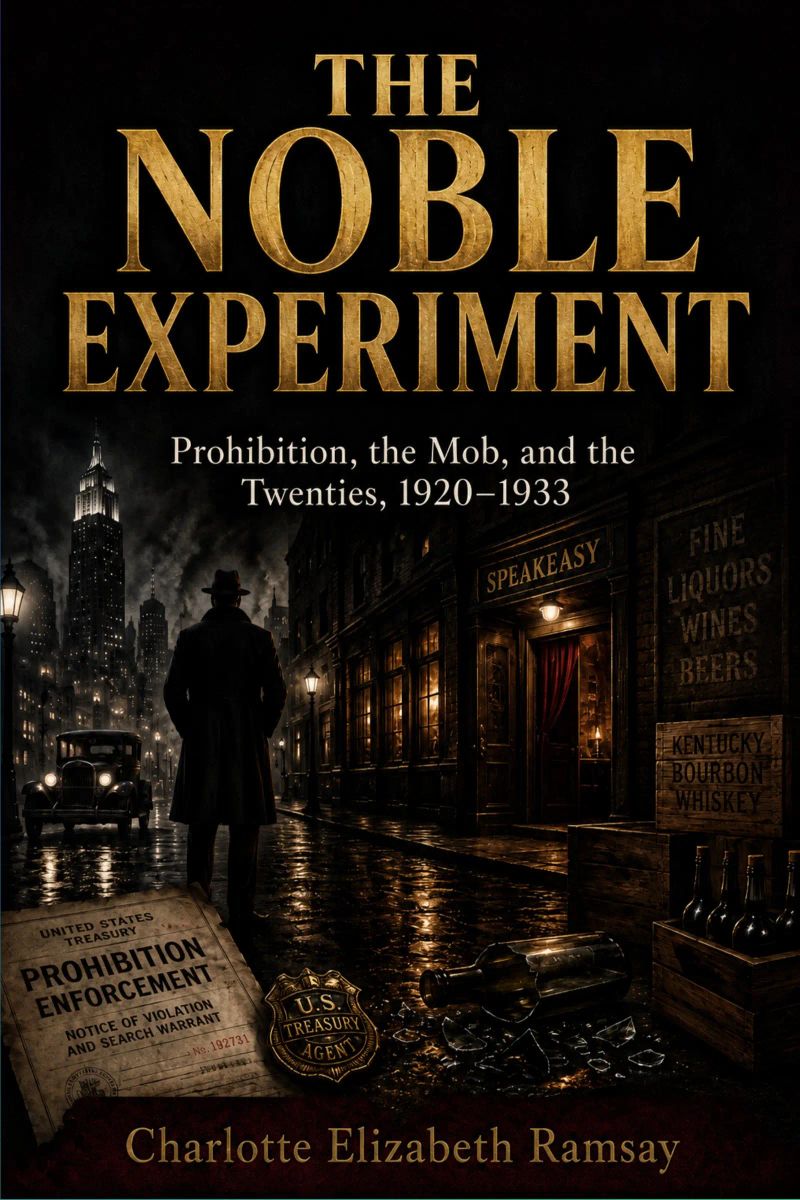
THE NOBLE EXPERIMENT
Prohibition, the Mob, and the Twenties, 1920-1933By Charlotte Elizabeth Ramsay


Length6h 48m
About this audiobook
Prohibition history: Al Capone, speakeasies, the Anti-Saloon League, and the complete narrative of the Noble Experiment — how America went dry in 1920, what came instead, and why the Eighteenth Amendment was repealed in 1933.
At midnight on January 17, 1920, the United States went dry. The Anti-Saloon League and the Women's Christian Temperance Union had spent decades organizing for exactly this moment — the Eighteenth Amendment ratified in thirteen months, the Volstead Act signed into law, the saloon abolished. The reformers had imagined a sober, productive, morally elevated America. What came instead was Al Capone.
This is the full story of America's most ambitious social experiment. Ramsay traces the arc from the evangelical crusades of the 1820s through Frances Willard's WCTU and Wayne Wheeler's Anti-Saloon League — the most effective single-issue lobbying operation in American history — to the wartime patriotism that turned anti-German sentiment against the Pabst and Schlitz brewing families. Then she follows the consequences: Duke Ellington at the Cotton Club, Fitzgerald's Gatsby parties as portraits of bootleg wealth, and the class-differentiated enforcement that raided working-class speakeasies while hotel bars serving politicians stayed open.
The Noble Experiment failed to make America sober. It succeeded magnificently in building organized crime — structures that RICO statutes enacted in 1970 were specifically designed to dismantle, fifty years after Prohibition created them.
Inside this Prohibition history:
• Wayne Wheeler and the ASL machine — the political operative who tracked every legislator's wet or dry record, mobilized church networks in targeted districts, and achieved a constitutional amendment (Chapter 3)
• Al Capone and Chicago — how bootlegging profits built an organization that outlasted Prohibition by generations, and what the St. Valentine's Day Massacre revealed about gang warfare (Chapters 9, 11)
• The Jazz Age underground — the Cotton Club, the speakeasy as cultural institution, F. Scott Fitzgerald's Gatsby as portrait of bootleg wealth, and the cocktail culture Prohibition accidentally created (Chapter 13)
• Class and Prohibition — wealthy cellars stocked before 1920, working-class neighborhoods raided, Izzy Einstein's selective enforcement, and why the law corroded respect for itself (Chapter 14)
• Women on both sides — Frances Willard's WCTU, the flapper in the speakeasy, and Pauline Sabin's Women's Organization for National Prohibition Reform, which eventually claimed more members than the WCTU (Chapter 15)
• Repeal and its lessons — the Wickersham Commission's findings, the Depression-era economic arguments, the Twenty-First Amendment, and December 5, 1933 (Chapters 17-20)
The Noble Experiment is the story of what happens when democratic government tries to legislate virtue against the preferences of millions of its citizens — and discovers that prohibition creates criminal markets rather than eliminating demand. Its lessons have never stopped being relevant.
For readers of Daniel Okrent's LAST CALL and Erik Larson's THE DEVIL IN THE WHITE CITY.
Audiobook details
GenreTrue Crime, History
Length6 hrs 48 mins
Narrated byListen with 1,000+ voices
FormateBook with Audio
Publish dateJun 2, 2026
LanguageEnglish
Table of contents
1Introduction
2Prologue: The Dry Nation
3PART ONE: THE ROAD TO PROHIBITION (1840-1919)
4Chapter 1: The Temperance Movement — Religion, Reform, and the Anti-Saloon League
5Chapter 2: The Women's Christian Temperance Union — Frances Willard and the Female Crusade
Show all chaptersShow less
6Chapter 3: The Anti-Saloon League — The Most Effective Pressure Group in American History
7Chapter 4: The Eighteenth Amendment — Ratification and the Volstead Act
8PART TWO: THE LAW AND ITS EVASION (1920-1929)
9Chapter 5: Speakeasies and Bootleggers — The Underground Alcohol Economy
10Chapter 6: Rum Running — The Coast Guard, the Bahamas, and the Smuggling Networks
11Chapter 7: The Corruption of Enforcement — Police, Politicians, and the Payoff
12Chapter 8: Home Brew and Bathtub Gin — Prohibition and the American Home
13PART THREE: ORGANIZED CRIME'S RISE
14Chapter 9: Al Capone and Chicago — The Gangster as American Icon
15Chapter 10: New York's Five Families — The Mafia and Urban Crime
16Chapter 11: The St. Valentine's Day Massacre — Gang War and Public Horror
17Chapter 12: Bootlegging and Business — How Prohibition Built Organized Crime
18PART FOUR: SOCIETY UNDER PROHIBITION
19Chapter 13: The Jazz Age and Liquor — Culture, Music, and the Wet Underground
20Chapter 14: Class and Prohibition — Who Suffered and Who Didn't
21Chapter 15: Women and the Speakeasy — Gender and the Changing Social Drinking Culture
22Chapter 16: The Rural Dry — Small-Town America and Genuine Support for Prohibition
23PART FIVE: THE UNRAVELING AND REPEAL
24Chapter 17: The Wickersham Commission — Evaluating Prohibition's Failure
25Chapter 18: The Depression and Repeal — Economic Arguments Against the Noble Experiment
26Chapter 19: The Twenty-First Amendment — The Only Amendment to Repeal Another
27Chapter 20: The Last Days — December 5, 1933, and What Came After
28PART SIX: LEGACIES
29Chapter 21: Organized Crime's Permanent Legacy — The Mob After Prohibition
30Chapter 22: The Regulatory State — Liquor Control After Repeal
31Chapter 23: Prohibition's Lessons — Government, Morality, and American Policy
32Chapter 24: The Prohibition Debate Today — Drug Policy and the Noble Experiment's Echo
33Epilogue: Repeal and Its Lessons
34Acknowledgments
35Selected Bibliography
36About the Author
More from Charlotte Elizabeth Ramsay
The Cause of DeathCynric Temple-Camp8h 59m4.4 (1.4K)$29 · $0.00
GanglandJared Savage9h 21m4.4 (1.4K)$29 · $0.00
Riding with EvilKen Croke, Dave Wedge9h 42m4.3 (3.4K)$29 · $0.00
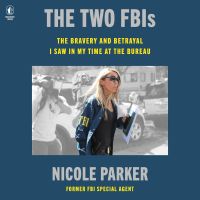
The Two FBIsNicole Parker10h 8m4.4 (499)$29 · $0.00
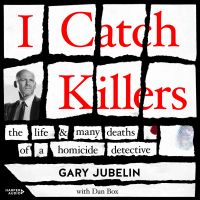
I Catch KillersGary Jubelin15h 32m4.3 (6.6K)$33 · $0.00
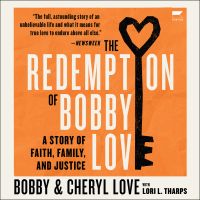
The Redemption Of Bobby LoveBobby Love, Cheryl Love9h 13m4.4 (956)$29 · $0.00
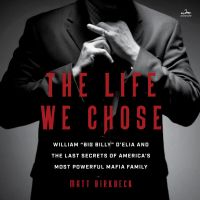
The Life We ChoseMatt Birkbeck8h 57m4.4 (1K)$29 · $0.00
The Truth About AaronJonathan Hernandez5h 15m4.3 (2.5K)$24 · $0.00
No Ordinary BirdArtis Henderson6h 23m4.4 (597)$24 · $0.00
I'll Be Gone in the DarkMichelle McNamara10h 7m4.3 (302.5K)$29 · $0.00
Beyond the Body FarmBill Bass, Jon Jefferson6h 17m4.3 (10.2K)$24 · $0.00
The Killer Across the TableJohn E. Douglas, Mark Olshaker11h 7m4.3 (37.5K)$8 · $0.00
Inside the CartelMartin Suarez, Ian Frisch10h 50m4.4 (583)$29 · $0.00

White Hot HateDick Lehr12h 27m4.3 (1.4K)$29 · $0.00
Scarface and the UntouchableMax Allan Collins, A. Brad Schwartz18h 35m4.3 (2.4K)$40 · $0.00
Hack AttackNick Davies18h 7m4.3 (2.4K)$23 · $0.00
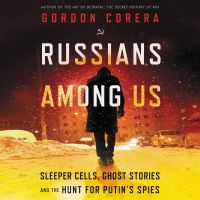
Russians Among UsGordon Corera12h 48m4.3 (4.1K)$33 · $0.00
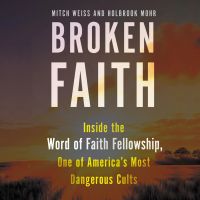
Broken FaithMitch Weiss, Holbrook Mohr12h 19m4.2 (5K)$27 · $0.00
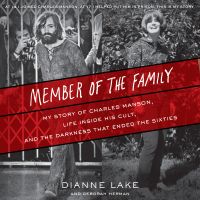
Member of the FamilyDianne Lake, Deborah Herman12h 30m4.2 (11.8K)$33 · $0.00
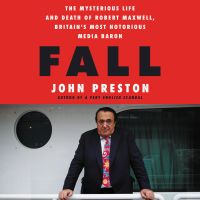
FallJohn Preston11h 24m4.2 (6.3K)$29 · $0.00
A Brief History of IntelligenceMax S. Bennett12h 18m4.6 (6.6K)$29 · $0.00
Ghosts of HiroshimaCharles Pellegrino8h 59m4.5 (877)$23
Unbroken Bonds of BattleJohnny Joey Jones8h 31m4.6 (2.6K)$8 · $0.00
The Daughter of AuschwitzTova Friedman, Malcolm Brabant7h 54m4.6 (16.7K)$26 · $0.00
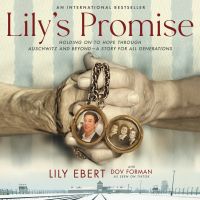
Lily's PromiseLily Ebert, Dov Forman8h 54m4.6 (16.1K)$29 · $0.00
On Democracies and Death CultsDouglas Murray10h 38m4.6 (6.5K)$29 · $0.00

Across the RiverKent Babb11h 40m4.6 (927)$29 · $0.00
Balcony Over Jerusalem: A Middle East Memoir - Israel, Palestine and BeyondJohn Lyons12h 37m4.6 (1.4K)$33 · $0.00
BeyondStephen Walker15h 39m4.6 (3.2K)$33 · $0.00
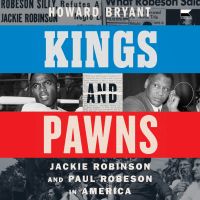
Kings and PawnsHoward Bryant10h 9m4.6 (678)$29 · $0.00
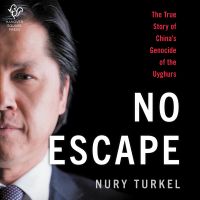
No EscapeNury Turkel9h 30m4.6 (809)$28 · $0.00
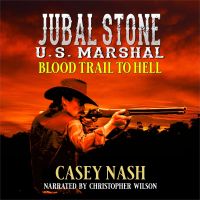
Jubal Stone: U.S. Marshal: Blood Trail To Hell: A Western Adventure NovelCasey Nash3h 42m4.6 (3.2K)$18 · $0.00
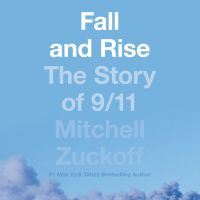
Fall and RiseMitchell Zuckoff17h 23m4.6 (9.8K)$40 · $0.00
The SurvivorJosef Lewkowicz, Michael Calvin9h 22m4.6 (2.5K)$29 · $0.00
Always FaithfulThomas Schueman, Zainullah Zaki12h 12m4.6 (977)$29 · $0.00
The State of Society in France Before the Revolution of 1789 (Annotated)Alexis de Tocqueville17h 25m4.6 (1.2K)$2 · $0.00
All the Gallant MenDonald Stratton, Ken Gire5h 55m4.6 (11.8K)$24 · $0.00
Saint Joan (Annotated)George Bernard Shaw6h 20m4.6 (1.2K)$1.20 · $0.00
Medgar and MyrlieJoy-Ann Reid10h 52m4.5 (27.8K)$29 · $0.00
The History of the Peloponnesian War (Annotated)Thucydides24h 3m4.6 (1.1K)$2 · $0.00
You may also like
The Joy of Home DistillingMorris, Rick6h 33m4.2 (1.3K)Free
Losing GroundCharles Murray9h 27m4.0 (1.2K)$25
The Third CoastThomas Dyja17h 45m3.8 (2K)$23
TabooWilfred Reilly8h 43m4.1 (1.6K)$20
How to Test Negative for StupidJohn Kennedy8h 13m4.7 (9.7K)$28 · $0.00
Conspiracy of Catiline and the Jurgurthine War (Annotated)Sallust7h 45m4.1 (2.9K)$2 · $0.00
Opium Inc.Thomas Manuel9h 27m4.2 (263)$29 · $0.00
The Ten-Cent PlagueDavid Hajdu11h 50m4.1 (4.7K)$23 · $0.00
The Savage CityT. J. English10h 18m4.1 (1.6K)$29 · $0.00
When You Come at the KingElie Honig11h 6m4.3 (334)$29 · $0.00
The InquisitionE. Vacandard3h 22m3.9 (67)$1 · $0.00
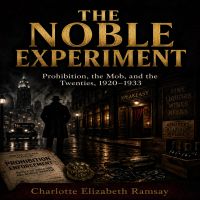
THE NOBLE EXPERIMENTCharlotte Elizabeth Ramsay5h 48m$10 · $0.00
Vaccination a Delusion: Its Penal Enforcement a CrimeAlfred Russel Wallace5h 14m$1 · $0.00
Second State of the Nation AddressDiosdado Macapagal1h 38m$2 · $0.00

The Thames and its docksAlexander Forrow1h 46m$1 · $0.00
Chicago and its cess-pools of infamySamuel Paynter Wilson4h 14m$2 · $0.00
United Nations Convention Against Illicit Traffic in Narcotic Drugs and Psychotropic SubstancesUnited Nations1h 36m$2 · $0.00
A Basic History of the United States, Vol. 6Clarence B. Carson9h 9m3.5 (27)$20
Everybody's Business Is Nobody's BusinessDaniel Defoe48m3.0 (55)$2.30
Heathen Slaves and Christian RulersElizabeth Wheeler Andrew, Katharine C. Bushnell7h 13m$2 · $0.00