
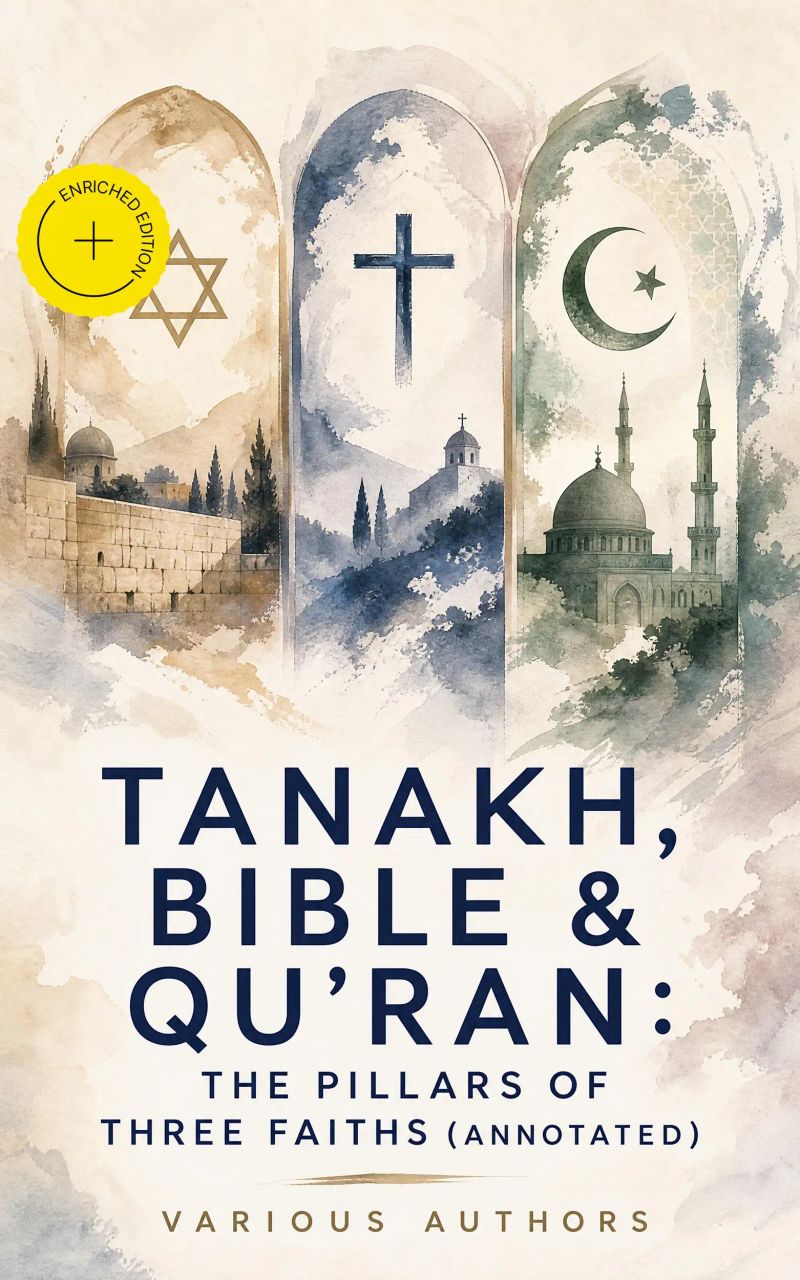
Tanakh, Bible & Qu'ran: The Pillars of Three Faiths (Annotated)
Enriched Edition. The Most Sacred Books of Judaism, Christianity and IslamBy Various Authors


Length159h
About this audiobook
Tanakh, Bible & Qu'ran: The Pillars of Three Faiths presents the foundational scriptural traditions of Judaism, Christianity, and Islam in a comparative frame, inviting readers to encounter sacred history, law, prophecy, wisdom, and revelation across three intertwined religious civilizations. Its literary range is extraordinary: terse narrative, covenantal legislation, psalmic poetry, prophetic rebuke, gospel testimony, apostolic exhortation, and Qur'anic proclamation stand beside one another, illuminating both shared motifs and profound theological distinctions. The volume belongs to the long tradition of interreligious textual study, where scripture is read not only devotionally but historically, literarily, and culturally. Attributed here to Various Authors, the book necessarily reflects many voices: ancient Israelite scribes, prophetic schools, evangelists, apostles, early faith communities, and the Qur'anic revelation received by Muhammad and preserved within Islamic tradition. Its composite authorship is central to its significance, for these texts emerged from communities seeking to understand divine command, human destiny, moral order, suffering, justice, and redemption. This book is recommended for readers seeking a serious introduction to the scriptural pillars of the Abrahamic faiths. Students, clergy, historians, and thoughtful general readers will find it a valuable gateway to traditions that continue to shape ethics, culture, worship, and world history.
This enriched edition has been carefully crafted to add value to your reading experience.
- An Introduction draws the threads together, discussing why these diverse authors and texts belong in one collection.
- Historical Context explores the cultural and intellectual currents that shaped these works, offering insight into the shared (or contrasting) eras that influenced each writer.
- A combined Synopsis (Selection) briefly outlines the key plots or arguments of the included pieces, helping readers grasp the anthology's overall scope without giving away essential twists.
- A collective Analysis highlights common themes, stylistic variations, and significant crossovers in tone and technique, tying together writers from different backgrounds.
- Reflection questions encourage readers to compare the different voices and perspectives within the collection, fostering a richer understanding of the overarching conversation.
Audiobook details
GenreSpirituality and Religion
Length159 hrs
Narrated byListen with 1,000+ voices
FormateBook with Audio
Publish dateMar 1, 2021
LanguageEnglish
Table of contents
1Table of Contents
26OLD TESTAMENT (pt. 1)
2Introduction
27OLD TESTAMENT (pt. 2)
3Historical Context
28OLD TESTAMENT (pt. 3)
4Synopsis (Selection)
29OLD TESTAMENT (pt. 4)
5Tanakh, Bible & Qu’ran: The Pillars of Three Faiths
30OLD TESTAMENT (pt. 5)
Show all chaptersShow less
6Table of Contents (pt. 1)
31OLD TESTAMENT (pt. 6)
7Table of Contents (pt. 2)
32OLD TESTAMENT (pt. 7)
8Table of Contents (pt. 3)
33OLD TESTAMENT (pt. 8)
9Table of Contents (pt. 4)
34OLD TESTAMENT (pt. 9)
10Table of Contents (pt. 5)
35OLD TESTAMENT (pt. 10)
11Table of Contents (pt. 6)
36OLD TESTAMENT (pt. 11)
12Table of Contents (pt. 7)
37OLD TESTAMENT (pt. 12)
13Table of Contents (pt. 8)
38OLD TESTAMENT (pt. 13)
14Table of Contents (pt. 9)
39OLD TESTAMENT (pt. 14)
15Table of Contents (pt. 10)
40OLD TESTAMENT (pt. 15)
16Table of Contents (pt. 11)
41OLD TESTAMENT (pt. 16)
17Table of Contents (pt. 12)
42OLD TESTAMENT (pt. 17)
18Table of Contents (pt. 13)
43OLD TESTAMENT (pt. 18)
19Table of Contents (pt. 14)
44OLD TESTAMENT (pt. 19)
20Table of Contents (pt. 15)
45OLD TESTAMENT (pt. 20)
21Table of Contents (pt. 16)
46OLD TESTAMENT (pt. 21)
22Table of Contents (pt. 17)
47OLD TESTAMENT (pt. 22)
23Table of Contents (pt. 18)
48OLD TESTAMENT (pt. 23)
24Table of Contents (pt. 19)
49OLD TESTAMENT (pt. 24)
25The Bible
50OLD TESTAMENT (pt. 25)
The Swedish Fairytale BookVarious Authors5h 18m$1.99 · $0.00

The Investigation of the Murder of Martin Luther KingVarious Authors8h 34m4.5 (12)$1.99 · $0.00
The Characteristics of American HumourVarious Authors19h 52m$1.99 · $0.00

The BibleVarious Authors82h 22m4.5 (828.8K)$1.99 · $0.00

Asian Literature Children Books CollectionVarious Authors2h 27m$12 · $0.00
Tanakh, Bible & Qu'ran (Annotated)Various Authors92h 25m$1.99 · $0.00
Reliques of Ancient English Poetry (Vol. 1-3) (Annotated)Various Authors40h 21m4.2 (1.4K)$1.99 · $0.00
Baptist Confession of FaithVarious Authors1h 54m4.7 (4K)$0.99 · $0.00
The True Message of Jesus ChristVarious Authors26h 28m4.4 (102)$0.99 · $0.00
KUBARK Counterintelligence InterrogationVarious Authors4h 29m3.8 (241)$0.99 · $0.00
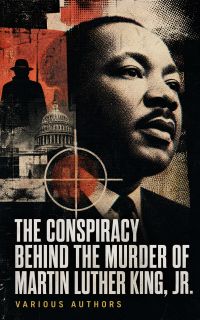
The Conspiracy Behind the Murder of Martin Luther King, Jr.Various Authors8h 1m4.0 (54)$0.99 · $0.00
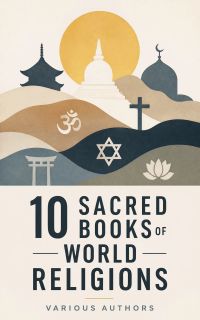
10 Sacred Books of World ReligionsVarious Authors341h 17m4.4 (40)$0.99

Vienna Convention on the Law of TreatiesVarious Authors1h 27m4.3 (55)$0.99 · $0.00

The History of the World War IVarious Authors39h 49m4.2 (19)$0.99 · $0.00
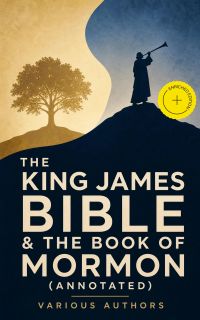
The King James Bible & The Book of Mormon (Annotated)Various Authors124h 32m$2 · $0.00

Oxford Poetry 1917-1921 (Annotated)Various Authors5h$2 · $0.00

Abortion in the United States - Judicial History and Legislative Battle (Annotated)Various Authors18h 9m$2 · $0.00

World's War Events (Vol. 1-3) (Annotated)Various Authors40h 28m$2 · $0.00
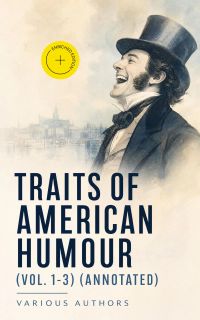
Traits of American Humour (Vol. 1-3) (Annotated)Various Authors20h 28m$2 · $0.00
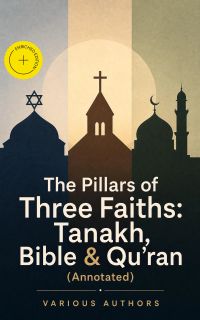
The Pillars of Three Faiths: Tanakh, Bible & Qu'ran (Annotated)Various Authors92h 26m$2 · $0.00

Proud Police WifeRebecca Lynn4h 52m4.8 (14K)$10 · $0.00
I Hear His Whisper 365 Daily Devotions (Gift Edition)Brian Simmons, Gretchen Rodriguez9h 23m4.8 (2K)$10 · $0.00
A Little God Time for Women Morning & Evening DevotionalBroadStreet Publishing Group LLC15h 15m4.9 (1.2K)$10 · $0.00
The Chosen Presents: A Blended Harmony of the GospelsSteve Laube, Amanda Jenkins, Dallas Jenkins7h 8m4.9 (823)$10 · $0.00
Prayers from the Throne RoomBrian Simmons8h 55m4.9 (256)$10 · $0.00
31 Decrees of Blessing for Your LifePatricia King2h 38m4.8 (1.4K)$10 · $0.00
Loved BabySarah Philpott4h 51m4.8 (1.4K)$10 · $0.00
The QuranAllah23h 7m4.7 (136.1K)$1 · $0.00
The Secret of the RosaryLouis de Montfort6h 1m4.7 (16K)$2 · $0.00
The Holy Qur-an: Text, Translation and CommentaryAbdullah Yusuf Ali22h 16m4.7 (133K)$1 · $0.00
All of Grace (Annotated)Charles Spurgeon5h 1m4.7 (1.3K)$0.99 · $0.00
Steps to ChristEllen G. White3h 12m4.7 (13.8K)$2 · $0.00
The Doctrine and Selected CovenantsJoseph Smith13h 53m4.7 (10.4K)$1.99 · $0.00
Sinners in the Hands of an Angry God & Other Sermons (Annotated)Jonathan Edwards7h 51m4.7 (1.5K)$2 · $0.00
Swayam Ki AwaazPrem Rawat8h 34m4.7 (1.1K)$26 · $0.00
Behind the BadgeAdam Davis10h 18m4.7 (2.7K)$10 · $0.00
The New Human Revolution, vol. 1Daisaku Ikeda7h 46m4.7 (669)$12 · $0.00

You Are Worth ItKyle Carpenter, Don Yaeger8h 53m4.7 (4.8K)$29 · $0.00
Praying GraceDavid A. Holland3h 2m4.7 (658)$10 · $0.00
Evidence Not SeenDarlene Deibler Rose11h 11m4.6 (11.9K)$29 · $0.00
You may also like
LOST IN TRANSLATIONDaniel Schwartz3h 34m4.6 (1.4K)$2.99 · $0.00
Torah (Annotated)Max Margolis, JPS16h 48m4.4 (3.2K)$2 · $0.00
TanakhVarious Authors231h 33m4.5 (9.4K)$1 · $0.00
The Light and the GloryPeter Marshall, David Manuel15h 16m4.3 (4.7K)$25
The Doctrine and Covenants of the Church of Jesus Christ of Latter Day Saints (Annotated)Joseph Smith13h 57m4.7 (575)$2 · $0.00
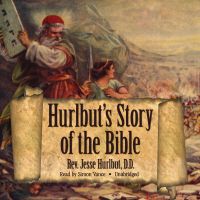
Hurlbut’s Story of the BibleRev. Jesse Hurlbut DD19h 31m4.5 (5.3K)$32
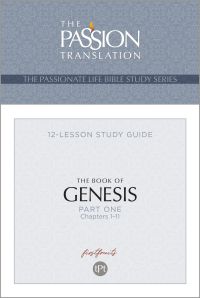
TPT The Book of Genesis—Part 1Brian Simmons4h 27m4.8 (1.2K)$10 · $0.00
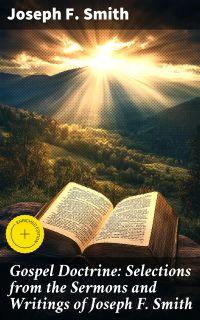
Gospel Doctrine: Selections from the Sermons and Writings of Joseph F. SmithJoseph F. Smith21h 40m4.6 (524)$1 · $0.00
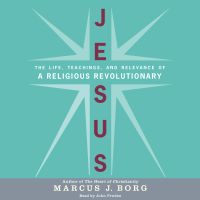
JesusMarcus J. Borg12h 11m4.3 (6.3K)$29 · $0.00
Paradise RegainedJohn Milton2h 26m3.9 (5K)$1.20 · $0.00
The Legends of Judaism (Vol. 1-4)Louis Ginzberg53h 10m4.4 (386)$2 · $0.00
Tanakh, Bible & Qu'ran (Annotated)Various Authors92h 25m$1.99 · $0.00
The TorahMax Margolis16h 36m$2 · $0.00
FINDING CHRIST IN THE PASSOVERDaniel Schwartz2h 29m4.6 (50)$2.99 · $0.00
The Tanakh (Annotated)Various Authors47h 7m4.2 (40)$0.99 · $0.00
The Torah (Annotated)Max Margolis16h 45m4.6 (33)$0.99 · $0.00
The Three Bibles (Annotated)Various Authors282h 2m$0.99 · $0.00

Outline Studies in the Old Testament for Bible TeachersJesse Lyman Hurlbut4h 21m3.8 (43)$1 · $0.00
The Collected Works of Joseph SmithJoseph Smith Jr.253h 42m4.6 (65)$1.99 · $0.00
The Memoirs of St. PeterMichael Pakaluk9h 54m4.6 (235)$20 · $0.00