
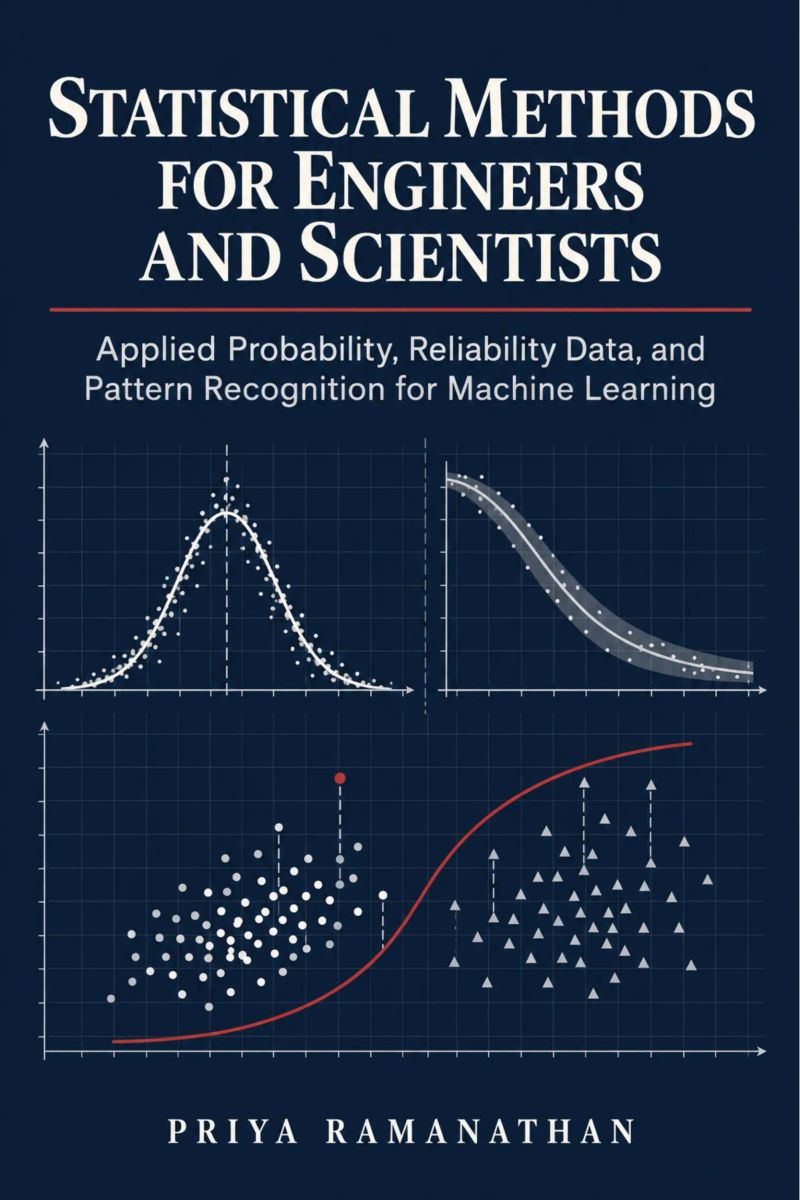
Statistical Methods for Engineers and Scientists
Applied Probability, Reliability Data, and Pattern Recognition for Machine LearningBy Priya Ramanathan


Length15h 5m
About this audiobook
Stop forcing clean textbook data onto messy engineering reality.
Real engineering data arrives censored, correlated, and far from normal. Inspection records stop at the detection limit. Failure times are truncated by test schedules. Measurements carry uncertainty that propagates through every downstream calculation. Statistical Methods for Engineers and Scientists teaches inference on the data you actually have, not the idealized samples in a classroom example.
Priya Ramanathan builds each method from an engineering problem, then shows the mathematics that makes it work. You will construct probability models from inspection and failure data, fit Weibull and lognormal distributions by probability plotting and maximum likelihood, and propagate measurement uncertainty through a tolerance stack. The book treats interval estimation, sample size, and power as design decisions rather than afterthoughts, and it insists on residual diagnostics instead of an R-squared value alone.
Later chapters move into the methods that quality, reliability, and machine learning work depend on: control charts and capability indices, life data analysis with censoring and accelerated testing, system reliability, and the classification, cross-validation, and mixture-model ideas behind pattern recognition. Each topic connects to the one before it, so the book reads as a single argument about how to reason from data under engineering constraints.
What you will learn:
• Build probability models from inspection and failure problems, including conditioning and Bayes' theorem
• Fit Weibull and lognormal distributions by probability plotting and maximum likelihood
• Propagate measurement uncertainty through a tolerance stack using joint distributions
• Construct confidence, prediction, and tolerance intervals, and choose a sample size that gives real power
• Run analysis of variance and factorial experiments, then check regression models with residual diagnostics
• Apply statistical process control, capability indices, and measurement systems analysis
• Analyze life data with censoring and accelerated testing, and compute system reliability
• Use classification, cross-validation, and mixture models as pattern recognition tools
• Connect classical inference to modern machine learning without skipping the assumptions
Who it is for: Engineering students who need a statistics text grounded in practice, quality and reliability engineers who work with censored and non-normal data, and applied scientists who want the probabilistic foundations behind machine learning methods. If your data never matches the textbook example, this book is written for you.
Audiobook details
GenreTechnology, Science and Nature
Length15 hrs 5 mins
Narrated byListen with 1,000+ voices
FormateBook with Audio
Publish dateSep 27, 2026
LanguageEnglish
Table of contents
1Statistical Methods for Engineers and Scientists
2Foreword
3Preface
4About This Book
5Chapter 1: Engineering Data and Descriptive Statistics
Show all chaptersShow less
61.1 Populations, Samples and Engineering Data Types
71.2 Frequency Distributions and Histograms
81.3 Measures of Location and Spread
91.4 Box Plots, Quantiles and Resistant Statistics
101.5 Probability Plots and Normality Checks
111.6 Data Screening, Rounding and Reporting
12Chapter 2: Probability, Conditioning and Bayes’ Theorem
132.1 Sample Spaces, Events and the Axioms of Probability
142.2 Counting Rules and Combinatorial Probability
152.3 Conditional Probability and Independence
162.4 Total Probability and Bayes’ Theorem
172.5 Reliability of Simple Systems by Probability Rules
18Chapter 3: Discrete Random Variables
193.1 Probability Mass Functions and Cumulative Distribution Functions
203.2 Expectation, Variance and Moment Generating Functions
213.3 Binomial and Geometric Distributions
223.4 Hypergeometric and Negative Binomial Distributions
233.5 The Poisson Process and Poisson Distribution
243.6 Fitting Discrete Models and Checking Fit
25Chapter 4: Continuous Random Variables
264.1 Density and Distribution Functions
274.2 Expectation, Variance and the Uniform Distribution
284.3 The Normal Distribution and Standardization
294.4 Exponential and Gamma Distributions
304.5 Weibull and Lognormal Distributions
314.6 Quantiles, Percentiles and Probability Plotting for Continuous Models
32Chapter 5: Joint Distributions and Error Propagation
335.1 Joint, Marginal and Conditional Distributions
345.2 Covariance, Correlation and Linear Combinations
355.3 Tolerance Stack-Up and Worst-Case Analysis
365.4 Propagation of Measurement Uncertainty
375.5 Bivariate Normal and Conditional Prediction
38Chapter 6: Sampling Distributions and the Central Limit Theorem
396.1 Random Samples and Statistics
406.2 The Central Limit Theorem and the Distribution of the Sample Mean
416.3 Chi-Square, $t$ and $F$ Distributions
426.4 Distribution of the Sample Variance and the Variance Ratio
436.5 Simulating Sampling Distributions
44Chapter 7: Point Estimation
457.1 Estimators, Bias and Mean Squared Error
467.2 Efficiency, Consistency and Sufficiency
477.3 Method of Moments Estimation
487.4 Maximum Likelihood Estimation
497.5 Standard Errors, Information and the Bootstrap
50Chapter 8: Interval Estimation

Operation PedestalMax Hastings12h 29m4.4 (5.2K)$29 · $0.00

When the Heavens Went on SaleAshlee Vance18h 20m4.4 (3K)$40 · $0.00

Everybody Has a Podcast (Except You)Justin McElroy, Travis McElroy, Griffin McElroy5h 9m4.3 (2.3K)$24 · $0.00

Hands of TimeRebecca Struthers8h 8m4.4 (1.3K)$26 · $0.00
Never Lost AgainBill Kilday10h 1m4.4 (805)$29 · $0.00

How the Internet HappenedBrian McCullough13h 28m4.3 (2.7K)$23 · $0.00

Collected Writings of Nikola TeslaNikola Tesla, Thomas Commerford Martin21h 50m4.3 (1.7K)$1 · $0.00

Just AspireAjai Chowdhry9h 13m4.4 (260)$29 · $0.00

The Little Book of AliensAdam Frank8h 20m4.3 (1.3K)$26 · $0.00
The inventions, researches and writings of Nikola Tesla (Annotated)Thomas Commerford Martin16h 59m4.3 (1.3K)$2 · $0.00

KargilV.P. Malik15h 18m4.3 (2K)$24 · $0.00
Experiments with Alternating CurrentsNikola Tesla9h 16m4.3 (874)$1.99 · $0.00

Fire on the HorizonTom Shroder, John Konrad8h 23m4.3 (858)$26 · $0.00

The Smell of Kerosene (Annotated)National Aeronautics and Space Administration, Donald L. Mallick, Peter W. Merlin11h 32m4.3 (523)$2 · $0.00

The Boy Who Harnessed the WindWilliam Kamkwamba, Bryan Mealer10h 5m4.2 (78.9K)$29 · $0.00

Across the Airless WildsEarl Swift10h 8m4.3 (1.3K)$29 · $0.00

Console WarsBlake J. Harris20h 41m4.2 (13.7K)$46 · $0.00

Improvised Munitions HandbookU.S. Department of Defense4h 49m4.3 (1.6K)$0.99 · $0.00
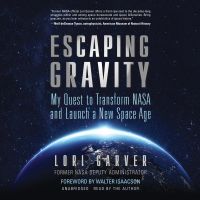
Escaping GravityLori Garver10h 54m4.2 (2.2K)$20 · $0.00

Wireless WarsJonathan Pelson8h 2m4.3 (418)$20 · $0.00
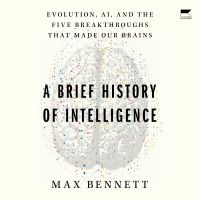
A Brief History of IntelligenceMax S. Bennett12h 18m4.6 (6.6K)$29 · $0.00
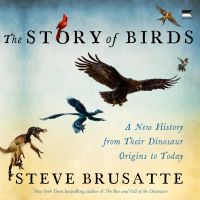
The Story of BirdsSteve Brusatte11h 49m4.6 (401)$29 · $0.00
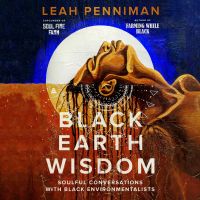
Black Earth WisdomLeah Penniman11h 54m4.6 (577)$8 · $0.00

Total Cat MojoJackson Galaxy10h 13m4.5 (8.4K)$23 · $0.00

My Life Among the UnderdogsTia Torres5h 51m4.5 (4K)$24 · $0.00

What It Takes to Save a LifeKwane Stewart6h4.6 (556)$24 · $0.00

Pastoral SongJames Rebanks8h 35m4.5 (12K)$26 · $0.00
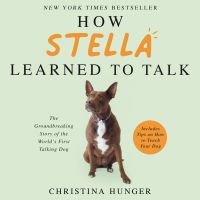
How Stella Learned to TalkChristina Hunger7h4.5 (10.9K)$24 · $0.00

Craig & FredCraig Grossi8h 6m4.5 (9.6K)$26 · $0.00
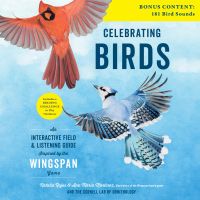
Celebrating BirdsNatalia Rojas, Ana Maria Martinez6h 47m4.6 (330)$24 · $0.00

Saving JemimaJulie Zickefoose4h 59m4.5 (749)$20 · $0.00

Will's Red CoatTom Ryan8h 23m4.5 (2.3K)$26 · $0.00

Of Time and TurtlesSy Montgomery10h 34m4.5 (5K)$29 · $0.00

THE WOLF TRILOGY: Call of the Wild, White Fang & The Son of the WolfJack London17h 31m4.5 (2.4K)$1.99 · $0.00

Zen and the Art of Saving the PlanetThich Nhat Hanh9h 20m4.5 (3.9K)$29 · $0.00

BLACK BEAUTY (With Original Illustrations)Anna Sewell7h 31m4.5 (1.3K)$1.99 · $0.00

Bottle of LiesKatherine Eban14h 25m4.4 (12K)$33 · $0.00
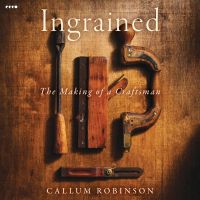
IngrainedCallum Robinson8h 10m4.5 (1.1K)$26 · $0.00

The Lion Tracker's Guide To LifeBoyd Varty3h 1m4.4 (4.8K)$18 · $0.00

Born for LoveBruce D. Perry, Maia Szalavitz11h 42m4.4 (4K)$29 · $0.00
You may also like

Algorithms in Java, Coded and TestedBianca Zielinski7h 25m$5 · $0.00
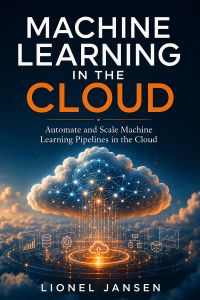
Machine Learning in the CloudLionel Jansen8h 21m$5 · $0.00

The AI Advantage for Restaurant OwnersMiles Draper4h 21m$5

Build a 2.5D RPG with Godot 4 and C#Gregory Whitlock7h 8m$5 · $0.00
Bio-Inspired AI in C++Zoe Becker7h 10m$5 · $0.00
Python Programming Made PracticalAustin Gray7h 21m5.0 (1)$6.50 · $0.00

Ethical Hacking Practice LabAaron Blake7h 51m$6.50 · $0.00

The AI Advantage for LandlordsMiles Draper3h 59m$9

Smart TV Guide for BeginnersWalter Hemsley4h 12m$7

ElevenLabs Made SimpleMiles Draper4h 27m$6

A High-Performance Adaptive Filter Instantiated from the GAADT Algorithm for Electrocardiogram Signal ProcessingAndrilene Ferreira Maciel2h 55m$13 · $0.00

Target Date FundsPenelope I. Westwood4h 32m$4 · $0.00

Monetize your content with NFTsUnknown Author1h 5m$17 · $0.00
THE CLAUDE AI BIBLE FOR BEGINNERSSheldon Caldwell4h 42m$17.50 · $0.00

How to Profit from Google AdSenseAnthony Ekanem37m$4 · $0.00

From Zero To AutomaticSara Melo1h 25m$1.80 · $0.00

n8n Automation Made SimpleMiles Draper3h 54m$7

The AI Advantage for Property ManagersMiles Draper4h 23m$8

The AI Advantage for PharmacistsMiles Draper4h 23m$8
Trello for Beginners Made SimpleRuth Callender4h 7m$7