
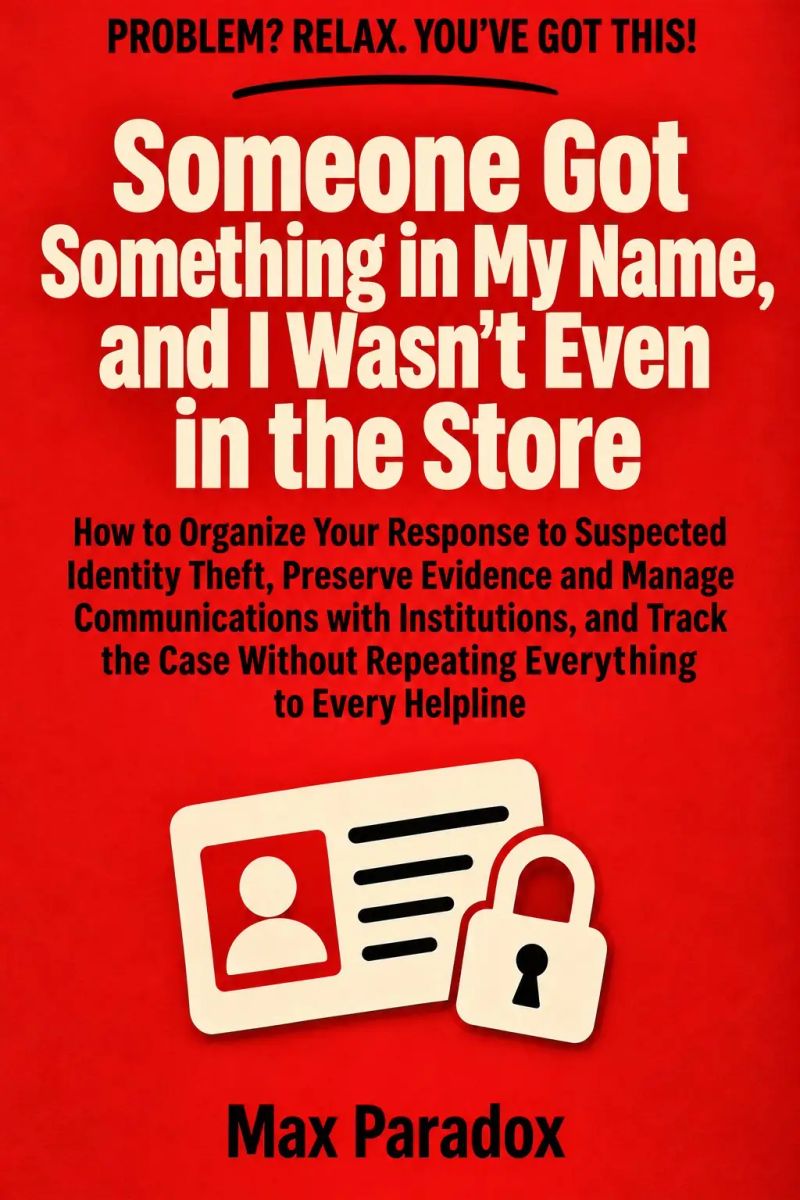
Someone Got Something in My Name, and I Wasn't Even in the Store - How to Organize Your Response to Suspected Identity Theft, Preserve Evidence and Manage Communications with Institutions, and Track the Case Without Repeating Everything to Every Help
By Max Paradox


Length6h 33m
About this audiobook
Someone bought something in your name. The company wants payment. You weren't even in the store.
Congratulations! Apparently, your identity has developed a shopping habit, signed a financing agreement, and arranged delivery to an address you've never heard of. Unfortunately, the bills are coming to you.
Now the retailer wants you to contact the lender. The lender suggests speaking to the retailer. The collection agency insists that the debt exists, and every customer service representative wants you to explain the entire situation from the beginning.
Welcome to the administrative nightmare of suspected identity theft.
In Someone Got Something in My Name, and I Wasn't Even in the Store, Max Paradox combines practical guidance, sharp observations, and intelligent humor to help you navigate a problem that nobody should have to solve alone.
This book shows you how to respond when your personal information appears in transactions, agreements, or financial records you don't recognize.
You'll learn how to distinguish genuine warning signs from misleading notifications, separate confirmed facts from speculation, and identify situations requiring immediate protective action.
Discover how to preserve useful evidence, organize correspondence, and create a clear record of events without turning your computer into a digital warehouse of mysterious screenshots.
Understand how different organizations fit into an identity-related dispute. Retailers, lenders, delivery companies, collection agencies, credit reporting services, and investigative authorities may all have different responsibilities. Knowing who can address a particular question can save you from spending your entire afternoon being transferred between departments.
The book also explores how to challenge unfamiliar agreements, examine disputed financial information, request corrections to inaccurate records, and communicate your position without accidentally accepting somebody else's allegations as established facts.
What happens when a collection letter arrives? When the company refuses to explain its verification process? When important evidence disappears? Or when a formal document introduces a deadline you cannot safely ignore?
You'll find realistic approaches to these situations, along with guidance on recognizing when qualified legal or technical assistance is necessary.
More difficult circumstances receive attention too, including suspected misuse involving family members, transactions connected with foreign companies, and cases that remain unresolved despite repeated efforts.
And when the immediate crisis ends, you'll learn how to maintain reasonable protection, recognize genuinely new warning signs, and stop treating every unexpected email as the opening scene of another financial disaster.
This is not a collection of magical phrases that automatically cancel debts or guarantee that fraudsters will be caught. It's a practical guide to making informed decisions, understanding procedural limits, and protecting your time as well as your identity.
Because someone may have used your name without permission, but that doesn't mean they should also control your calendar, your finances, and your peace of mind.
Your name. Your rights. Your decisions. Definitely not your purchases.
This publication was prepared using tools that support the creative process, including artificial intelligence solutions. The final concept, structure and editing are the responsibility of the author.
Audiobook details
GenreBusiness and Economics, Self-Help
Length6 hrs 33 mins
Narrated byListen with 1,000+ voices
FormateBook with Audio
Publish dateNov 9, 2026
LanguageEnglish
Table of contents
1INTRO
2Chapter 1 - Someone Bought It in Your Name. What Actually Happened?
3Chapter 2 - The First Hours: Stop the Damage Before You Investigate
4Chapter 3 - How Did They Get My Details? The Unremarkable Machinery Behind Identity Theft
5Chapter 4 - Terrible Ideas That Feel Brilliant When You're Panicking
Show all chaptersShow less
6Chapter 5 - Evidence Doesn't Organize Itself: Building a Case File That Actually Helps
7Chapter 6 - Please Explain Everything Again: Escaping the Customer Service Loop
8Chapter 7 - One Fraudulent Purchase or Something Bigger? Finding the Boundaries of the Threat
9Chapter 8 - The Debt That Won't Stay Dead: Dealing with Collection Letters and Escalating Demands
10Chapter 9 - Who Is Responsible for What? Finding the Right Organization for Every Part of Your Case
11Chapter 10 - Prove That I Agreed: Challenging a Contract You Never Authorized
12Chapter 11 - Reporting Suspected Identity Theft: How to Tell the Authorities What Happened Without Writing a Crime Novel
13Chapter 12 - My Information, Your Database: Finding Out What Companies Know and Correcting What They Got Wrong
14Chapter 13 - The Debt That Follows You: Correcting Fraudulent Entries in Your Financial Records
15Chapter 14 - When You Need Professional Help: Getting Legal Advice Without Losing Control
16Chapter 15 - What If It's Someone Close to You? When Identity Theft Enters the Family
17Chapter 16 - Identity Theft Without Borders: When the Company, the Documents, or the Money Is Abroad
18Chapter 17 - When the Trail Goes Cold: Silence, Missing Records, and Answers That Lead Nowhere
19Chapter 18 - Case Closed: How to Keep the Protection Without Becoming Your Own Full-Time Security Guard
20Chapter 19 - Is It Happening Again? Recognizing New Warning Signs Without Starting from Scratch
21Chapter 20 - Your Name, Your Decisions: Taking Back Control Without Becoming a Professional Fraud Investigator

Mam sąsiada z innego kraju i więcej obaw niż wspólnych słów - Jak nawiązywać zwyczajne kontakty, uzgadniać sprawy budynku i sprawdzać własne założenia w wielokulturowym sąsiedztwie bez robienia z różnicy pochodzenia gotowego konfliktuMax Paradox6h 9m$5.10

Ktoś wziął coś na moje nazwisko, a ja nawet nie byłem w sklepie - Jak uporządkować działania po podejrzeniu kradzieży tożsamości, zabezpieczać dowody i kontakt z instytucjami oraz śledzić sprawę bez chaotycznego powtarzania wszystkiego każdej infolinMax Paradox5h 53m$5.10

I Want to Sell My Own Food, Not Collect Inspection Surprises - How to Prepare Questions for the Right Authorities, Plan Costs, Organize a Small Food Business, and Verify Requirements Before Launch Without Treating a Family Recipe as a Complete BusineMax Paradox6h 45m$5.10

I'm the Only One Without a Partner on the Family Vacation - How to Agree on the Destination, Costs, and Responsibilities in a Group Made Up Mostly of Couples and Families, and Plan Your Own Part Without Becoming the Unpaid Helper or the Permanent RolMax Paradox6h 30m$5.10

We're a Couple, But We Don't Want to Live Together - How to Build an Intentional Relationship Across Two Homes, Share Time and Responsibility, and Talk to Others Without Treating One Address as the Only Proof of CommitmentMax Paradox6h 42m$5.10

Ktoś chce kupić moją firmę, a ja nie wiem, co właściwie sprzedaję - Jak przygotować dane i pytania do doradców, rozumieć etapy rozmów oraz porównywać warunki wyjścia z małego biznesu bez mylenia pierwszej oferty z gotowym przelewemMax Paradox6h 19m$5.10

The City Is Changing, but My Neighborhood Missed the Consultations - How to Check Local Plans, Take Part in Public Consultations, and Build Well-Founded Arguments About Public Space Instead of Finding Out Only After the Fence Goes UpMax Paradox6h 51m$5.10

Internet sprzedaje moje prace, chociaż mnie nikt nie pytał - Jak dokumentować nieuprawnione wykorzystanie własnych materiałów, porządkować zasady licencjonowania i dobierać pomoc specjalistyczną bez samodzielnego ścigania całego internetuMax Paradox6h 10m$5.10

Someone Close to Me Is Getting Sober, but I'm Still Living on High Alert - How to Work With Available Professional Support to Clarify Your Boundaries, Rebuild Everyday Agreements, and Return Responsibility to the Person in Recovery Without Taking OveMax Paradox6h 34m$5.10

Jestem jedyną osobą bez partnera na rodzinnych wakacjach - Jak uzgadniać miejsce, koszty i podział obowiązków w grupie złożonej głównie z par i rodzin oraz organizować własny udział bez przyjmowania roli darmowego pomocnika i wiecznego dostawianego łMax Paradox6h 23m$5.10

Miasto się zmienia, a moje osiedle nie było na konsultacjach - Jak sprawdzać lokalne plany, uczestniczyć w konsultacjach i zbierać rzeczowe argumenty w sprawach przestrzeni publicznej bez dowiadywania się o wszystkim dopiero po ustawieniu płotuMax Paradox6h 21m$5.10

I Have an ROD Allotment and Run a Tiny Country with a Garden Shed - How to Organize the Season, Manage Water and Expenses, Share Responsibility for the Plot, and Check the Rules Before the First DisputeMax Paradox6h 28m$5.10

Faktura jest po terminie, a klient nadal pisze „Już puszczam” - Jak porządkować należności, dokumentować ustalenia i stopniować działania z pomocą odpowiednich specjalistów bez finansowania działalności klienta własną cierpliwościąMax Paradox6h 13m$5.10

I Want to Help by Donating Things, but Nobody Needs My Old Printer - How to Check What Organizations and Recipients Actually Need, Prepare Useful Donations, and Plan the Handover Without Passing the Costs of Your Own Decluttering on to OthersMax Paradox6h 42m$5.10

Chcemy pomóc sąsiadce, ale nie wiemy, kto ma klucze - Jak za zgodą zainteresowanych zorganizować sąsiedzką sieć drobnej pomocy, ustalić kontakty i odpowiedzialności oraz chronić prywatność bez improwizowanego sztabu opiekiMax Paradox6h$5.10

A Customer Gave Me One Star, and Now My Whole Day Is One Star - How to Respond to Public Reviews, Separate Legitimate Complaints from Abuse, and Improve Customer Service Without Turning Your Business Profile into a Personal BattlegroundMax Paradox6h 49m$5.10

We Want Shared Tools, Not a Shared Fight Over the Drill - How to Organize Neighborhood Tool Sharing, Arrange Reservations and Repair Responsibilities, and Decide Whether Joint Purchases Are Worth It Without Creating a Library of Lost ItemsMax Paradox6h 24m$5.10

I Have a Neighbor from Another Country and More Worries Than Words We Share - How to Make Everyday Connections, Agree on Building Matters, and Question Your Own Assumptions in a Multicultural Neighborhood Without Turning Different Origins into an AutMax Paradox6h 31m$5.10

We Love Each Other, But We Experience Faith Differently - How to Talk About Religious Practices, Family Celebrations, and Raising Children as a Couple with Different Religious Beliefs Without Trying to Convert Your Partner Whenever an Important DecisMax Paradox6h 54m$5.10

Never Split the DifferenceChris Voss, Tahl Raz8h 7m4.4 (277.7K)$26 · $0.00

The Intelligent Investor Rev Ed.Benjamin Graham17h 48m4.3 (191.5K)$40 · $0.00

The Hard Thing About Hard ThingsBen Horowitz7h 57m4.2 (134.3K)$26 · $0.00

Boundaries for LeadersHenry Cloud7h 36m4.3 (3.6K)$26 · $0.00
Level UpRob Dial7h 42m4.6 (3.3K)$26 · $0.00

Eat It!Jordan Syatt, Michael Vacanti4h 40m4.6 (1.5K)$20 · $0.00

Progress and Poverty, Volumes I and II (Annotated)Henry George19h 21m4.6 (574)$1.99 · $0.00

Not Everything Counts but Everything Matters: The powerful and inspirational new book about leadership and achieving success from the visionary multi-premiership winning Panthers coachIvan Cleary6h 1m4.6 (680)$24 · $0.00

BuildTony Fadell11h 5m4.5 (14.3K)$8 · $0.00

The Joys Of CompoundingGautam Baid17h 34m4.5 (2.5K)$18 · $0.00
Basic EconomicsThomas Sowell18h 32m4.5 (29.3K)$28 · $0.00

The Ambuja StoryNarotam Sekhsaria13h 59m4.5 (830)$33 · $0.00

The Secret Door to SuccessFlorence Scovel Shinn2h 25m4.5 (2.1K)$1.20 · $0.00

This Is Going to HurtAdam Kay5h 47m4.4 (444.7K)$24 · $0.00

Big TrustShadé Zahrai, Fayçal Sekkouah8h 36m4.6 (406)$26 · $0.00

The Intelligent Investor Third EditionBenjamin Graham, Jason Zweig20h4.4 (156.6K)$46 · $0.00

Bottle of LiesKatherine Eban14h 25m4.4 (12K)$33 · $0.00

The Antiracist Business BookTrudi Lebrón6h 10m4.6 (275)$17 · $0.00

The FormulaJoshua Robinson, Jonathan Clegg10h 41m4.4 (6.9K)$29 · $0.00

Let Them LeadJohn U. Bacon7h 10m4.5 (1.4K)$24 · $0.00
Learning to PrayJames Martin13h 24m4.5 (3.4K)$33 · $0.00

Truth Without ApologyAcharya Prashant6h 41m4.8 (2.2K)$18 · $0.00

Autism Out Loud: the instant New York Times Bestseller. Moving Stories and Parenting Lessons Learned from Three Mothers of Children with AutismKate Swenson, Carrie Cariello, Adrian Wood8h 41m4.8 (2.1K)$26 · $0.00

The StepsSylvester Stallone9h 4m4.8 (637)$29 · $0.00

Swayam Ki AwaazPrem Rawat8h 34m4.7 (1.1K)$26 · $0.00

Forever BoyKate Swenson9h 27m4.7 (5K)$29 · $0.00

You Are Worth ItKyle Carpenter, Don Yaeger8h 53m4.7 (4.8K)$29 · $0.00

The Happiest Man on EarthEddie Jaku3h 48m4.6 (178K)$7 · $0.00

Finding MeViola Davis9h 15m4.6 (256.4K)$29 · $0.00

Spiritual AnatomyDaaji Kamlesh D. Patel9h 47m4.7 (319)$29 · $0.00

The Dangerous Truth about Today’s MarijuanaLaura Stack CSP, MBA9h 57m4.7 (385)$20 · $0.00

The Gospel according to Spiritualism (Translated)Allan Kardec14h 39m4.6 (3.9K)$5.70 · $0.00

Birdie & HarlowTaylor Wolfe7h 50m4.6 (6.5K)$26 · $0.00

CrossroadsKaleb Dahlgren7h 56m4.6 (4.9K)$26 · $0.00

Life on the BridgeKaelynn Partlow5h 40m4.6 (1.1K)$24 · $0.00

Keep Your Love OnDanny Silk9h 4m4.6 (8.1K)$10 · $0.00

The Tao of Joy Every DayDerek Lin10h 24m4.6 (762)$20 · $0.00

UndividedVicky Beeching9h 2m4.6 (1.3K)$29 · $0.00

HE CAN WHO THINKS HE CAN & OTHER BOOKS ON SUCCESSOrison Swett Marden5h 54m4.6 (1.2K)$0.99 · $0.00
Level UpRob Dial7h 42m4.6 (3.3K)$26 · $0.00