
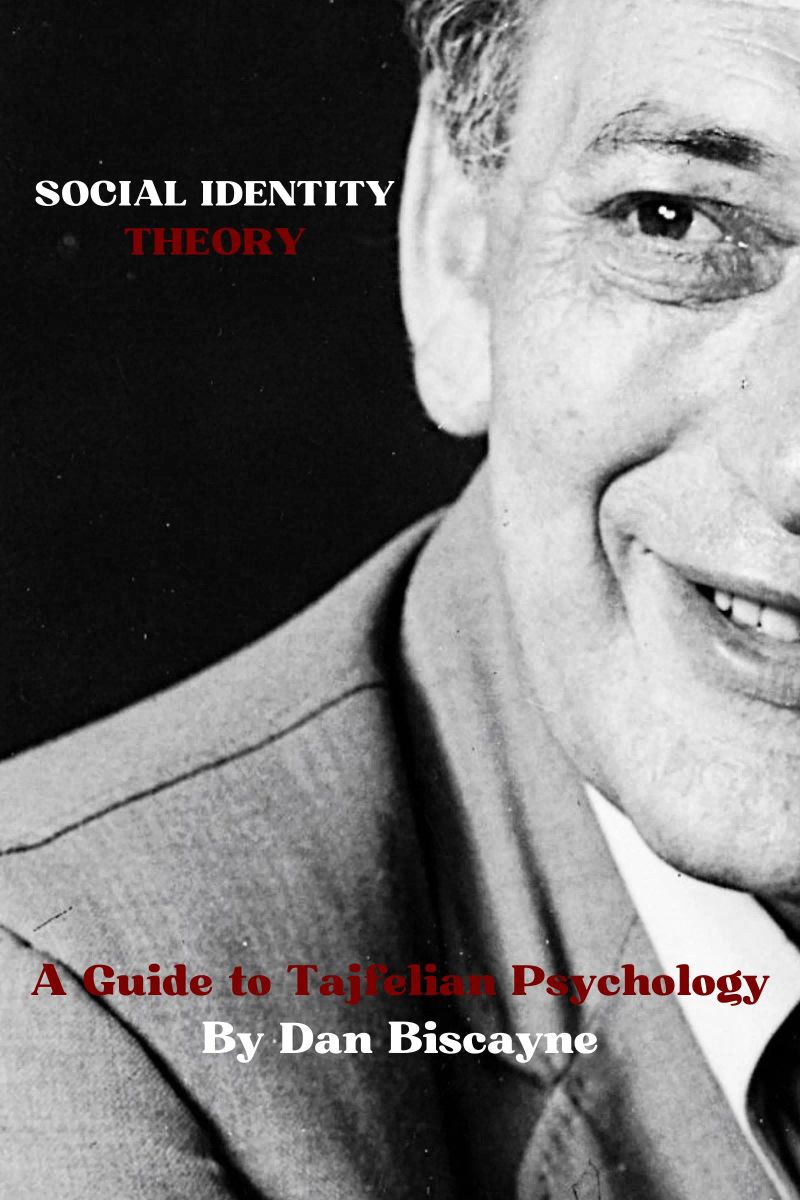
Social Identity Theory
A Guide to Tajfelian PsychologyBy Dan Biscayne


Length7h 2m
About this audiobook
Understanding human behavior requires more than examining individuals in isolation; it demands attention to the social contexts that shape identity, perception, and action. Henri Tajfel’s Social Identity Theory (SIT) offers a landmark framework for this understanding, emphasizing that a significant part of the self-concept emerges from group membership. Developed in the 1970s and 1980s through rigorous empirical studies, SIT challenges the notion that intergroup bias and discrimination are solely products of personal animosity. Instead, it highlights the psychological processes through which individuals seek positive social identity, often favoring their in-group while differentiating or even derogating out-groups.
Tajfel’s insights were forged in response to pressing social concerns, including the persistence of prejudice, stereotyping, and intergroup conflict. By focusing on the dynamics of categorization, identification, and comparison, SIT illuminates why ordinary individuals may engage in seemingly irrational or hostile behaviors toward those outside their social group. The theory also bridges micro-level psychological processes with broader societal patterns, offering a conceptual lens applicable across domains such as organizational behavior, politics, education, and digital communities.
This book presents a systematic exploration of Social Identity Theory, tracing its theoretical origins, empirical foundations, and contemporary extensions. It examines the ways in which social identities are constructed, maintained, and negotiated, while considering their implications for cooperation, conflict, and social change. By situating Tajfel’s contributions within the broader landscape of social psychology, the work aims to provide both scholars and students with a rigorous, accessible understanding of the interplay between self and society. Ultimately, it is an invitation to reflect on how our identities are shaped not only by who we are as individuals, but also by the groups to which we belong, and how this duality continues to influence human thought and behavior.
Audiobook details
GenrePsychology, Self-Help
Length7 hrs 2 mins
Narrated byListen with 1,000+ voices
FormateBook with Audio
Publish dateMar 20, 2026
LanguageEnglish
Table of contents
1SOCIAL IDENTITY THEORY
2Introduction to Social Identity Theory
3Henri Tajfel - Historical Context & Development
4Key Concepts and Postulates of the Theory (pt. 1)
5Key Concepts and Postulates of the Theory (pt. 2)
Show all chaptersShow less
6Key Concepts and Postulates of the Theory (pt. 3)
7Mechanisms of Social Categorization (pt. 1)
8Mechanisms of Social Categorization (pt. 2)
9In-group Favoritism & Out-group Discrimination (pt. 1)
10In-group Favoritism & Out-group Discrimination (pt. 2)
11In-group Favoritism & Out-group Discrimination (pt. 3)
12Applications of Social Identity Theory
13Criticisms and Counterarguments
1450 Ideas from Tajfel on Social Identity Theory
Series


Teoría de la Identidad SocialDan Biscayne7h 50m$9

Theory of Planned BehaviorDan Biscayne6h 15m$8

Teoría del Comportamiento PlanificadoDan Biscayne7h$8

Attachment TheoryDan Biscayne7h 11m$8

Teoría del ApegoDan Biscayne7h 46m$9

Teoría Cognitiva de la DepresiónDan Biscayne9h$9

Cognitive Theory of DepressionDan Biscayne8h 7m$9

Gramática UniversalDan Biscayne7h 15m$8

Universal GrammarDan Biscayne6h 34m$8

Teoría del YoDan Biscayne9h 43m$10

Los Tres ÓrdenesDan Biscayne11h 21m$10

Teoría SocioculturalDan Biscayne9h 26m$10

Teoría VoluntaristaDan Biscayne8h 58m$9

Condicionamiento EmocionalDan Biscayne8h 44m$9

Teoría de la Disonancia CognitivaDan Biscayne8h 51m$9

Desarrollo PsicosocialDan Biscayne7h 20m$9

Teoría del Aprendizaje SocialDan Biscayne7h 24m$9

Teoría de la AutorrealizaciónDan Biscayne7h 40m$9

Teoría Centrada en la PersonaDan Biscayne7h 28m$9

What to Make of a LifeJim Collins13h 31m4.4 (793)$33 · $0.00

Invisible StormJason Kander6h 48m4.7 (3.2K)$24 · $0.00

I Am The StormJanice Dean9h4.6 (1.5K)$8 · $0.00

On Democracies and Death CultsDouglas Murray10h 38m4.6 (6.5K)$29 · $0.00

TerraformPropaganda5h 39m4.7 (594)$24 · $0.00

Southern Horrors: Lynch Law in All Its Phases (Annotated)Ida B. Wells-Barnett2h 44m4.6 (1.3K)$2 · $0.00

Hour of the HeartIrvin D. Yalom, Benjamin Yalom8h 19m4.6 (2.3K)$26 · $0.00

Braving the TruthRachel Held Evans11h 31m4.7 (359)$29 · $0.00

Level UpRob Dial7h 42m4.6 (3.3K)$26 · $0.00

As a JewSarah Hurwitz8h 36m4.6 (1.2K)$26 · $0.00

Saint Joan (Annotated)George Bernard Shaw6h 20m4.6 (1.2K)$1.20 · $0.00

Burn the HaystackJennie Young, PhD9h 30m4.6 (543)$29 · $0.00

Woman and the New Race (Annotated)Margaret Sanger6h 30m4.6 (1K)$1.99 · $0.00

Good InsideBecky Kennedy9h 55m4.5 (59.3K)$29 · $0.00

Du Bois: EssaysW.E.B. Du Bois6h 22m4.6 (1.5K)$1 · $0.00

The North American Indian (Illustrated Edition)Edward S. Curtis, Frederick Webb Hodge5h 59m4.6 (1.4K)$2 · $0.00

Valley of the BirdtailAndrew Stobo Sniderman, Douglas Sanderson10h 1m4.6 (2.4K)$29 · $0.00

Lies My Therapist Told MeGreg E. Gifford9h 3m4.6 (503)$29 · $0.00

Disturbed in Their NestsAlephonsion Deng, Judy A. Bernstein11h 22m4.6 (595)$23 · $0.00

No Name in the StreetJames Baldwin5h4.5 (8.5K)$20 · $0.00

Learning to PrayJames Martin13h 24m4.5 (3.4K)$33 · $0.00

Forever BoyKate Swenson9h 27m4.7 (5K)$29 · $0.00

You Are Worth ItKyle Carpenter, Don Yaeger8h 53m4.7 (4.8K)$29 · $0.00

The Happiest Man on EarthEddie Jaku3h 48m4.6 (178K)$7 · $0.00

Finding MeViola Davis9h 15m4.6 (256.4K)$29 · $0.00

Spiritual AnatomyDaaji Kamlesh D. Patel9h 47m4.7 (319)$29 · $0.00

The Dangerous Truth about Today’s MarijuanaLaura Stack CSP, MBA9h 57m4.7 (385)$20 · $0.00

Birdie & HarlowTaylor Wolfe7h 50m4.6 (6.5K)$26 · $0.00

CrossroadsKaleb Dahlgren7h 56m4.6 (4.9K)$26 · $0.00

Life on the BridgeKaelynn Partlow5h 40m4.6 (1.1K)$24 · $0.00

Keep Your Love OnDanny Silk9h 4m4.6 (8.1K)$10 · $0.00

The Tao of Joy Every DayDerek Lin10h 24m4.6 (762)$20 · $0.00

UndividedVicky Beeching9h 2m4.6 (1.3K)$29 · $0.00
Level UpRob Dial7h 42m4.6 (3.3K)$26 · $0.00

He Can Who Thinks He Can (Annotated)Orison Swett Marden5h 11m4.6 (1.2K)$1.20 · $0.00
Burn the HaystackJennie Young, PhD9h 30m4.6 (543)$29 · $0.00

ACRES OF DIAMONDS: Our Every-day Opportunities (Wisdom & Empowerment Series) (Annotated)Russell Conwell2h 26m4.6 (1K)$2 · $0.00
Good InsideBecky Kennedy9h 55m4.5 (59.3K)$29 · $0.00

The Lost VoiceGreta Morgan8h 30m4.7 (285)$26 · $0.00

Stripped DownBunnie Xo8h 25m4.5 (32.9K)$26 · $0.00