
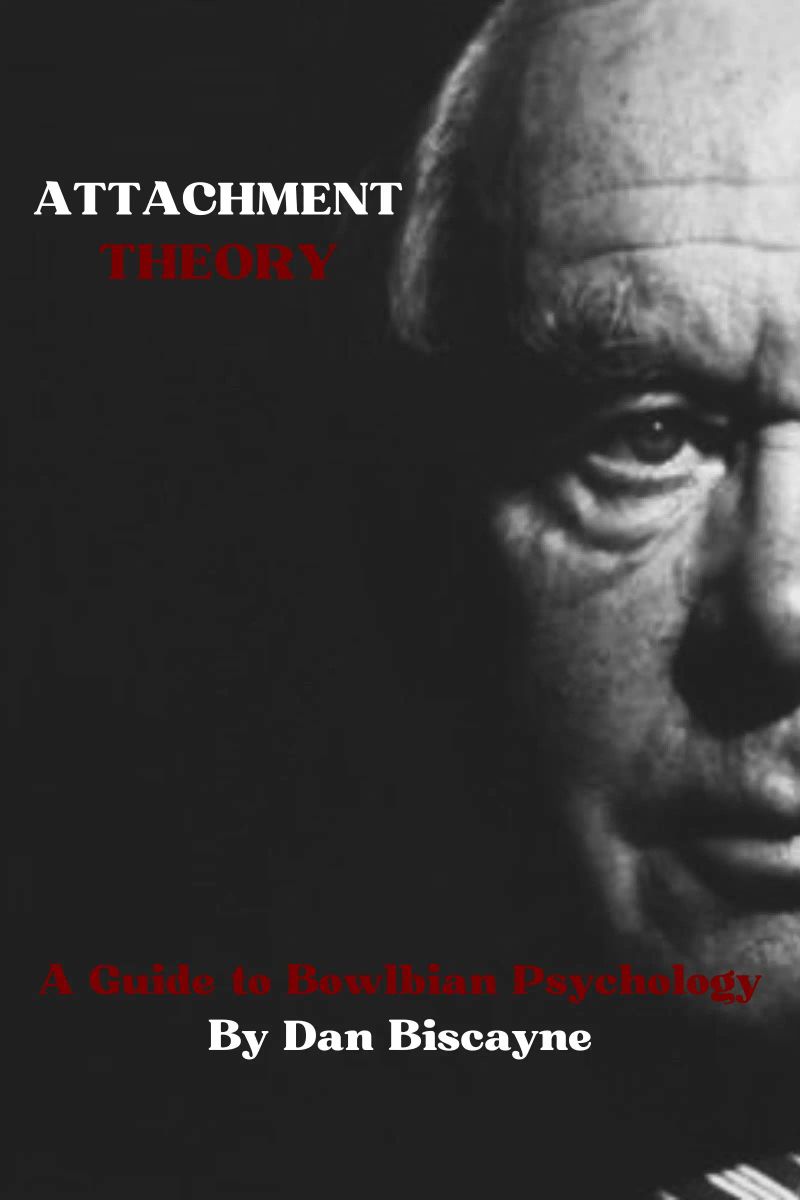
Attachment Theory
A Guide to Bowlbian PsychologyBy Dan Biscayne


Length7h 10m
About this audiobook
Emerging in the mid–twentieth century at the intersection of psychoanalytic thought, ethology, and systems theory, John Bowlby’s work represented a decisive shift in the understanding of early relational life. Rejecting drive-reductionist explanations of infant–caregiver bonds, Bowlby advanced the radical proposition that attachment is an evolutionarily grounded behavioral system, organized around the infant’s need for proximity to a protective figure and calibrated by environmental contingencies.
Attachment theory introduced a biologically informed account of emotional development, positing that early interactions with caregivers generate internal working models—cognitive-affective schemas that guide expectations about the self, others, and relationships across the lifespan. These models, formed within concrete relational contexts, become foundational for affect regulation, exploration, resilience, and vulnerability to psychopathology. In articulating these claims, Bowlby not only reframed debates within psychoanalysis but also catalyzed decades of empirical research, much of it further elaborated through Mary Ainsworth’s observational studies and the development of attachment classifications.
This book situates Bowlby’s theory within its historical and intellectual contexts while critically engaging its conceptual architecture and empirical legacy. It explores the theory’s central constructs—secure base behavior, separation and loss, internal working models, and the attachment system—alongside contemporary refinements emerging from neuroscience, developmental psychopathology, and cross-cultural research. At the same time, it addresses enduring controversies concerning measurement, universality, and the interplay between biology and culture.
More than a retrospective account, this work approaches attachment theory as a living framework: one that continues to inform clinical practice, social policy, and interdisciplinary inquiry. By revisiting Bowlby’s foundational insights and tracing their evolution, the book aims to illuminate both the strengths and the necessary revisions of attachment theory, underscoring its ongoing relevance for understanding human development in relational context.
Audiobook details
GenrePsychology, Health and Wellness
Length7 hrs 10 mins
Narrated byListen with 1,000+ voices
FormateBook with Audio
Publish dateFeb 11, 2026
LanguageEnglish
Table of contents
1ATTACHMENT THEORY
2Introduction to Attachment Theory
3Historical Context and Development
4John Bowlby and the Genesis of Attachment Studies
5Key Concepts and Postulates of Attachment Theory (pt. 1)
Show all chaptersShow less
6Key Concepts and Postulates of Attachment Theory (pt. 2)
7Key Concepts and Postulates of Attachment Theory (pt. 3)
8The Dynamics of Attachment (pt. 1)
9The Dynamics of Attachment (pt. 2)
10The Dynamics of Attachment (pt. 3)
11Applications of the Theory in Clinical Psychology
12Critiques and Counterarguments
13Future Directions & Research in Attachment Theory
14Bowlby’s 50 Quotes on Attachment Theory
Series

Teoría de la Identidad SocialDan Biscayne7h 50m$9
Social Identity TheoryDan Biscayne7h 2m$8
Theory of Planned BehaviorDan Biscayne6h 15m$8

Teoría del Comportamiento PlanificadoDan Biscayne7h$8

Teoría del ApegoDan Biscayne7h 46m$9

Teoría Cognitiva de la DepresiónDan Biscayne9h$9
Cognitive Theory of DepressionDan Biscayne8h 7m$9

Gramática UniversalDan Biscayne7h 15m$8

Universal GrammarDan Biscayne6h 34m$8
Teoría del YoDan Biscayne9h 43m$10

Los Tres ÓrdenesDan Biscayne11h 21m$10

Teoría SocioculturalDan Biscayne9h 26m$10

Teoría VoluntaristaDan Biscayne8h 58m$9

Condicionamiento EmocionalDan Biscayne8h 44m$9

Teoría de la Disonancia CognitivaDan Biscayne8h 51m$9
Desarrollo PsicosocialDan Biscayne7h 20m$9
Teoría del Aprendizaje SocialDan Biscayne7h 24m$9

Teoría de la AutorrealizaciónDan Biscayne7h 40m$9

Teoría Centrada en la PersonaDan Biscayne7h 28m$9
What to Make of a LifeJim Collins13h 31m4.4 (793)$33 · $0.00

Invisible StormJason Kander6h 48m4.7 (3.2K)$24 · $0.00

I Am The StormJanice Dean9h4.6 (1.5K)$8 · $0.00

On Democracies and Death CultsDouglas Murray10h 38m4.6 (6.5K)$29 · $0.00

TerraformPropaganda5h 39m4.7 (594)$24 · $0.00

Southern Horrors: Lynch Law in All Its Phases (Annotated)Ida B. Wells-Barnett2h 44m4.6 (1.3K)$2 · $0.00

Hour of the HeartIrvin D. Yalom, Benjamin Yalom8h 19m4.6 (2.3K)$26 · $0.00

Braving the TruthRachel Held Evans11h 31m4.7 (359)$29 · $0.00
Level UpRob Dial7h 42m4.6 (3.3K)$26 · $0.00

As a JewSarah Hurwitz8h 36m4.6 (1.2K)$26 · $0.00

Saint Joan (Annotated)George Bernard Shaw6h 20m4.6 (1.2K)$1.20 · $0.00

Burn the HaystackJennie Young, PhD9h 30m4.6 (543)$29 · $0.00

Woman and the New Race (Annotated)Margaret Sanger6h 30m4.6 (1K)$1.99 · $0.00

Good InsideBecky Kennedy9h 55m4.5 (59.3K)$29 · $0.00

Du Bois: EssaysW.E.B. Du Bois6h 22m4.6 (1.5K)$1 · $0.00

The North American Indian (Illustrated Edition)Edward S. Curtis, Frederick Webb Hodge5h 59m4.6 (1.4K)$2 · $0.00

Valley of the BirdtailAndrew Stobo Sniderman, Douglas Sanderson10h 1m4.6 (2.4K)$29 · $0.00

Lies My Therapist Told MeGreg E. Gifford9h 3m4.6 (503)$29 · $0.00
Disturbed in Their NestsAlephonsion Deng, Judy A. Bernstein11h 22m4.6 (595)$23 · $0.00

No Name in the StreetJames Baldwin5h4.5 (8.5K)$20 · $0.00

The Yoga Sutras of PatanjaliPatanjali4h 8m4.5 (18.5K)$6 · $0.00

The Lost VoiceGreta Morgan8h 30m4.7 (285)$26 · $0.00

Healthy Kids, Happy KidsElisa Song14h 18m4.6 (760)$33 · $0.00

Eat It!Jordan Syatt, Michael Vacanti4h 40m4.6 (1.5K)$20 · $0.00

Consent Laid BareChanel Contos7h 11m4.5 (1.7K)$24 · $0.00

How to Make Disease DisappearRangan Chatterjee5h 26m4.5 (3.5K)$24 · $0.00

The Complete Herbal (Annotated)Nicholas Culpeper29h 8m4.5 (1.4K)$2 · $0.00

A Plague Upon Our HouseScott W. Atlas MD10h 37m4.5 (3.4K)$20 · $0.00

The Cancer CodeDr. Jason Fung10h 48m4.5 (5.3K)$29 · $0.00

The Gift of TherapyIrvin Yalom7h 39m4.5 (38.8K)$26 · $0.00

EarlySarah DiGregorio9h 47m4.5 (1.3K)$29 · $0.00

Bottle of LiesKatherine Eban14h 25m4.4 (12K)$33 · $0.00

The 36-Hour DayNancy L. Mace, Peter V. Rabins17h 13m4.4 (9.2K)$28 · $0.00

FlooredSara Reardon10h 36m4.5 (1K)$29 · $0.00

Radical RemissionKelly A. Turner9h 26m4.4 (8.1K)$29 · $0.00

The Sinatra SolutionStephen T. Sinatra MD9h4.5 (899)$20 · $0.00

The Songaminute ManSimon McDermott6h 12m4.5 (280)$24 · $0.00
Sometimes BrilliantLarry Brilliant12h 27m4.5 (954)$29 · $0.00

Live Your LifeAmanda Kloots, Anna Kloots10h 54m4.4 (13.7K)$29 · $0.00

All in Her HeadElizabeth Comen13h 25m4.4 (18.2K)$33 · $0.00