


Length1h 54m
About this audiobook
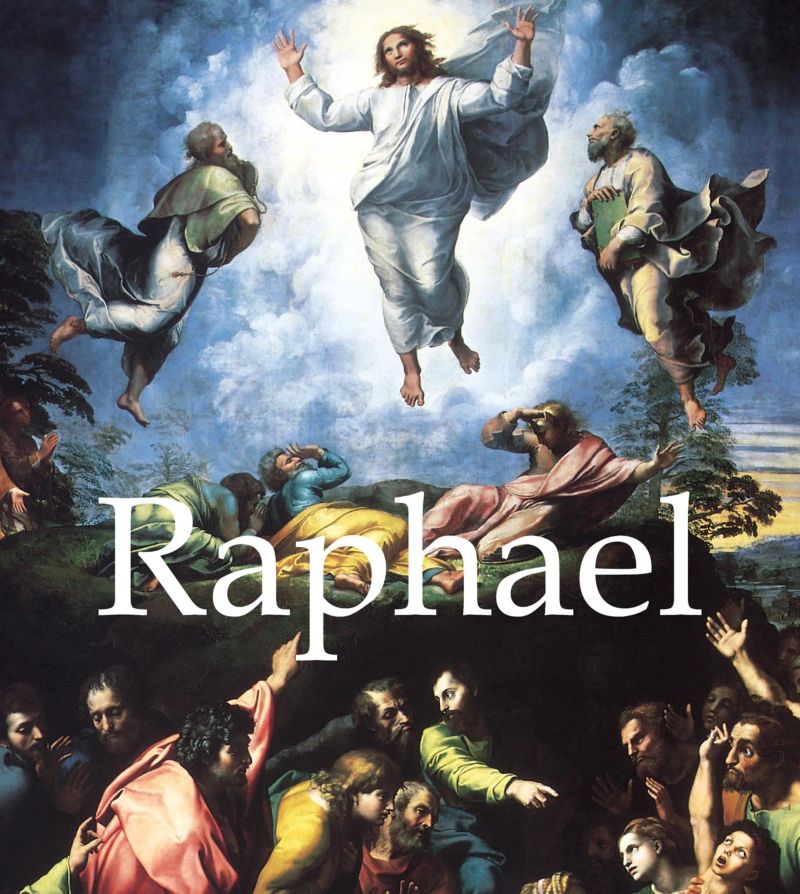
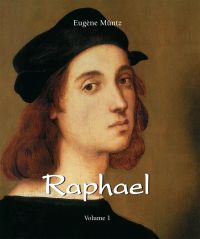
Raphael was the artist who most closely resembled Pheidias. The Greeks said that the latter invented nothing; rather, he carried every kind of art invented by his forerunners to such a pitch of perfection that he achieved pure and perfect harmony. Those words, "pure and perfect harmony," express, in fact, better than any others what Raphael brought to Italian art. From Perugino, he gathered all the weak grace and gentility of the Umbrian School, he acquired strength and certainty in Florence, and he created a style based on the fusion of Leonardo's and Michelangelo's lessons under the light of his own noble spirit. His compositions on the traditional theme of the Virgin and Child seemed intensely novel to his contemporaries, and only their time-honoured glory prevents us now from perceiving their originality. He has an even more magnificent claim in the composition and realisation of those frescos with which, from 1509, he adorned the Stanze and the Loggia at the Vatican. The sublime, which Michelangelo attained by his ardour and passion, Raphael attained by the sovereign balance of intelligence and sensibility. One of his masterpieces, The School of Athens, was created by genius: the multiple detail, the portrait heads, the suppleness of gesture, the ease of composition, the life circulating everywhere within the light are his most admirable and identifiable traits.
Audiobook details
Rating★★★★ 4.0 (45)
Includes Amazon, Goodreads, LibraryThing
GenreOther
Length1 hr 54 mins
Narrated byListen with 1,000+ voices
FormateBook with Audio
Publish dateJul 1, 2011
LanguageEnglish
Table of contents
1Raphael
2© Sirrocco, London, UK © Confidential Concepts, worldwide, USA
3Biography
4patron of the arts Federico da Montefeltro.
5Birth of Raphael and his First Works
Show all chaptersShow less
61500-1501 Oil on wood, 58 x 36 cm Musée du Louvre, Paris
7his activities. But this worker, so humble in
8The Madonna and Child with a Book
9and the Prophets in the church of the Pace.
10His Departure for Perugia and his Collaboration
11The Crowning of the Virgin (Oddi Altarpiece)
12once in painting, goldsmith work, architecture or
131504 Oil on wood, 52.9 x 37.4 cm Galleria degli Uffizi, Florence
14themselves into the deepest secrets of colour. They
151504 Oil on wood, 170 x 118 cm Pinacoteca di Brera, Milan
16The biographer of Italian artists, Giorgio
171504 Oil on wood, 47 x 35 cm Galleria degli Uffizi, Florence
18Raphael.
19paintings on a small scale and with subjects not
20The Madonna and Child Enthroned with Saints (Colonna Altarpiece)
21a lady from one of the most powerful families of
221504-1505 Oil on wood, 17 x 17 cm Musée Condé, Chantilly
23Portrait of the Doge Leonardo Loredan
24the astonished and delighted masses who
25Raphael Travels to Siena – The Vision of a Knight
261505 Oil on wood, 31 x 27 cm Musée du Louvre, Paris
27Leonardo da Vinci, Frà Bartolommeo, and Masaccio
281505 Pen and ink, 25.7 x 21 cm Galleria dell’Accademia, Venice
29Raphael Returns to Urbino
30place in 1504, perhaps on his return from Siena.
31hardships such as the invasion of the duchy by the
32of Cesare Borgia and the triumph of the
33Madonna and Child, known as Little Cowper Madonna
34Portrait of Agnolo Doni
35Raphael in Florence
36the patience worthy of Job, microscopic wood
37company, in winter especially, in Baccio’s studio.
38Unfortunately, throughout the four years of his
39In this respect, Raphael’s time in Florence could
40The Crowning of the Virgin, known as The Monteluce Madonna
411506 Oil on wood, 107 x 77 cm Galleria degli Uffizi, Florence
42government and those wealthy art lovers who
43their role as patrons of the arts, families such as
441506 Oil on wood, 65 x 51 cm Galleria Borghese, Rome
45Return to Perugia in 1505
46Saint George and the Dragon
471506 Oil on wood, 45 x 33 cm Galleria degli Uffizi, Florence
48Francesco Francia. The renown of this eminent
49Around 1506 the elderly goldsmith-painter
50In addition to the Madonnas, around this time
Leonardo Da Vinci - Thinker and Man of ScienceEugène Müntz8h 43m3.9 (59)$18 · $0.00
Das ultimative Buch über RaphaelEugène Müntz8h 42m4.6 (13)$19 · $0.00
Leonardo Da VinciEugène Müntz5h 41m4.2 (244)$13 · $0.00
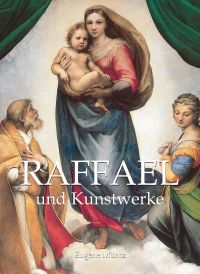
Raphael und KunstwerkeEugène Müntz2h$15 · $0.00
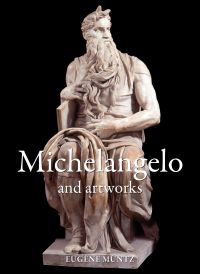
Michelangelo and artworksEugène Müntz57m4.0 (79)$15 · $0.00
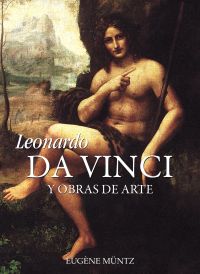
Leonardo da Vinci y obras de arteEugène Müntz1h 41m4.2 (145)$15 · $0.00
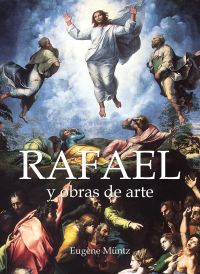
Rafael y obras de arteEugène Müntz1h 59m4.0 (34)$15 · $0.00
Miguel Ángel y obras de arteEugène Müntz1h 27m$15 · $0.00
MichelangeloEugène Müntz5h 42m$16 · $0.00
Michel-Ange et œuvres d'artEugène Müntz1h 35m4.1 (54)$15 · $0.00
Raphaël et œuvres d'artEugène Müntz1h 43m$15 · $0.00
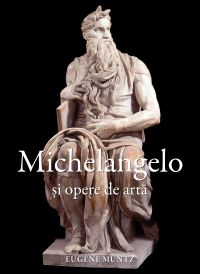
Michelangelo și opere de artăEugène Müntz1h 27m$15 · $0.00
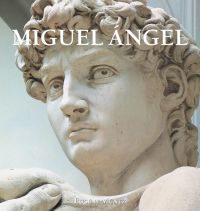
Miguel ÁngelEugène Müntz1h 13m3.8 (42)$8 · $0.00
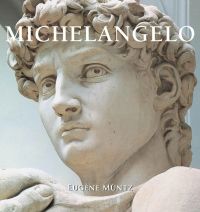
MichelangeloEugène Müntz1h 3m4.1 (75)$8 · $0.00
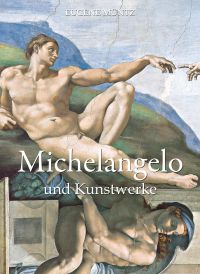
Michelangelo und KunstwerkeEugène Müntz1h 38m4.1 (59)$15 · $0.00
Leonardo Da Vinci - El genio divinoEugène Müntz6h 11m4.3 (143)$16 · $0.00
MichelangeloEugène Müntz1h 21m4.0 (78)$8 · $0.00
Leonardo da VinciEugène Müntz5h 40m4.0 (163)$10 · $0.00
Miguel ÁngelEugène Müntz4h 17m4.1 (65)$13 · $0.00
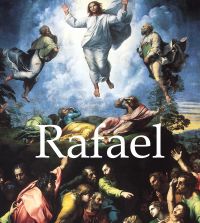
RafaelEugène Müntz2h 5m4.1 (32)$13.50 · $0.00
Mere ChristianityC. S. Lewis7h 7m4.4 (519.7K)$24 · $0.00

Her Daily BreadKate Wood12h 57m4.6 (153)$33 · $0.00
The Holy Bible - 1 SamuelKing James2h 13m4.8 (1.6K)$3 · $0.00
The American Standard Bible — The Gospel of MatthewMatthew3h 56m4.7 (3K)$2 · $0.00

Bad Fat Black GirlSesali Bowen6h 32m4.7 (2.8K)$24 · $0.00
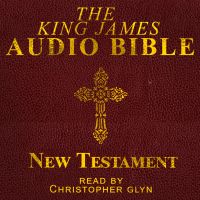
The King James Audio Bible New Testament CompleteChristopher Glyn20h 2m4.7 (2.6K)$12 · $0.00
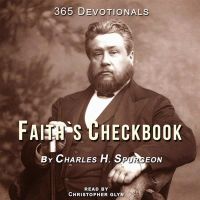
Faiths CheckbookCharles Spurgeon12h 44m4.7 (3.2K)$11 · $0.00

Ten Things I Wish You Knew About Your Child's Mental HealthDr. Billy Garvey4h 53m4.7 (2.4K)$20 · $0.00

Designing Terry Pratchett’s DiscworldPaul Kidby3h 52m4.7 (343)$20 · $0.00
The Chosen Book OneAmanda Jenkins, Kristen Hendricks, Dallas Jenkins3h 8m4.6 (4.9K)$10 · $0.00
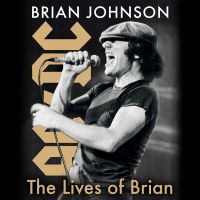
The Lives of BrianBrian Johnson9h 45m4.6 (3.5K)$29 · $0.00
Expository Thoughts on the Gospel of LukeJ.C. Ryle27h 13m4.7 (536)$18 · $0.00

CrossroadsKaleb Dahlgren7h 56m4.6 (4.9K)$26 · $0.00

Across the RiverKent Babb11h 40m4.6 (927)$29 · $0.00

Brain Training for RidersAndrea Monsarrat Waldo5h 56m4.7 (550)$19 · $0.00
My Effin' LifeGeddy Lee17h 11m4.6 (13.1K)$40 · $0.00

Kings and PawnsHoward Bryant10h 9m4.6 (678)$29 · $0.00

The Elementia Chronicles #2: The New OrderSean Fay Wolfe11h 17m4.6 (841)$29 · $0.00
The ActsLuke2h 55m4.6 (19.7K)$12 · $0.00
New Testament - Easy NavigationWorld English Bible19h 35m4.6 (1.3K)$1.30 · $0.00
You may also like
Letters to His Son, 1748Philip Dormer Stanhope Earl of Chesterfield4h 37m4.1 (1.7K)$2 · $0.00
The Ten Books on ArchitectureVitruvius Pollio9h 49m4.2 (3.8K)Free
Letters to His Son, 1749Philip Dormer Stanhope Earl of Chesterfield5h 3m4.0 (1.4K)$2 · $0.00
Letters to His Son, 1750Philip Dormer Stanhope Earl of Chesterfield3h 34m4.0 (2.1K)$1 · $0.00

VictoriaA. N. Wilson21h 7m4.0 (3.6K)$30

The EuropeansHenry James6h 9m3.7 (7.7K)$20
Letters to His Son, 1750Philip Dormer Stanhope Earl of Chesterfield3h 34m4.1 (752)$2 · $0.00
The ultimate book on RaphaelEugène Müntz7h 47m3.7 (15)$19 · $0.00
Raphael - Volume 1Eugène Müntz4h 34m4.6 (12)$18 · $0.00
RubensS. L. Bensusan54m$1 · $0.00
Louis Spohr's AutobiographyLouis Spohr27h 4m$2 · $0.00

Two Years in the Forbidden CityThe Princess Der Ling9h 5m3.8 (552)Free

Sir Robert Hart. The Romance of a Great CareerJuliet Bredon4h 14m$1 · $0.00
Peter VischerCecil Headlam3h 4m$2 · $0.00
Letters to His Son, 1751Philip Dormer Stanhope Earl of Chesterfield3h 52m3.8 (13)$2 · $0.00

Elisabeth Louise Vigée-LebrunW. H. Helm4h 9m4.1 (11)$16 · $0.00
Anecdotes of Painters, Engravers, Sculptors and Architects, and Curiosities of Art (Vol. 2 of 3)Shearjashub Spooner8h 44m$2 · $0.00

HandelThomas Tapper14m4.1 (23)$1 · $0.00
The King's MirrorAnthony Hope11h 9m3.6 (33)$2.30

Letters to His Son, 1752Philip Dormer Stanhope Earl of Chesterfield4h 40m3.8 (11)$2 · $0.00