


Length3h
About this audiobook
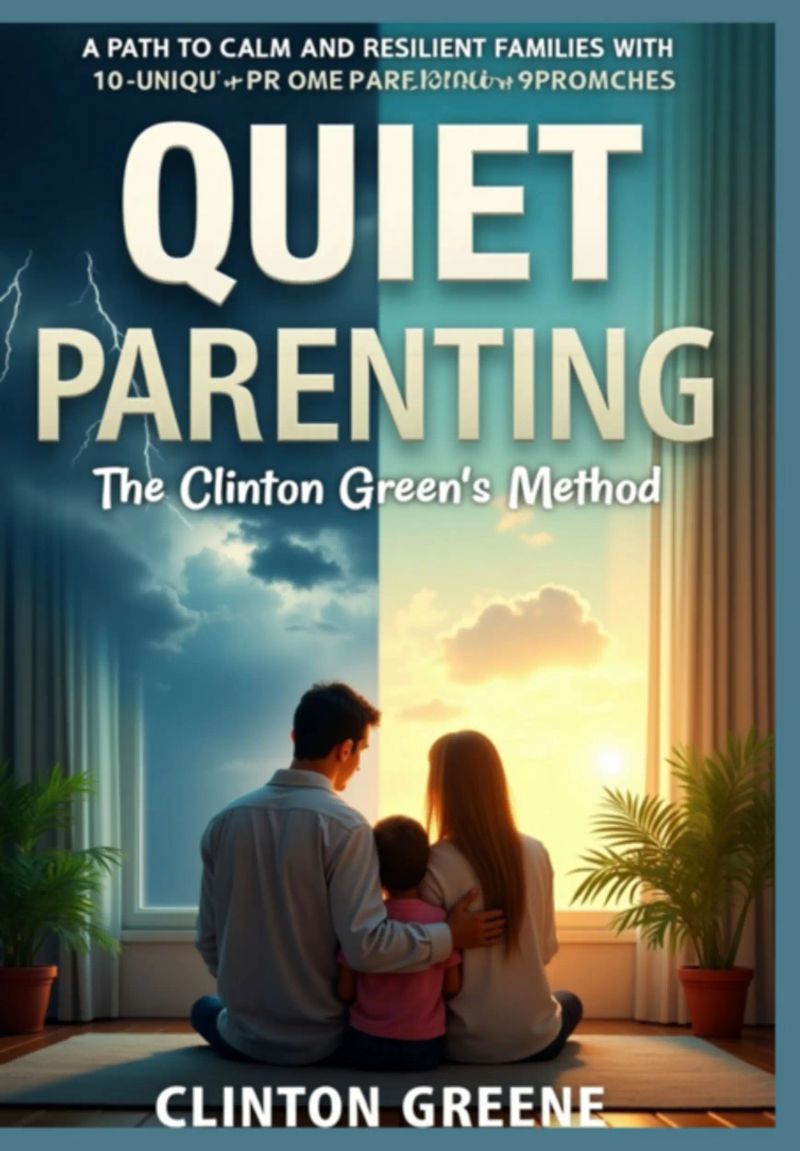
Quiet Parenting is a philosophy that prioritizes calmness and emotional regulation in the family dynamic. It's about creating an environment where children feel safe to express themselves, learn from their mistakes, and develop into resilient, emotionally intelligent individuals. It's not about eliminating chaos completely but learning to navigate it with grace and calm. The vision behind Quiet Parenting is simple: to build families where every member feels heard and valued, and where emotional resilience becomes the cornerstone of growth. A calm family doesn't mean a perfect one; it means a family that can face challenges together with strength and understanding.
Audiobook details
GenreSelf-Help, Humor
Length3 hrs
Narrated byListen with 1,000+ voices
FormateBook with Audio
Publish dateSep 1, 2025
LanguageEnglish
Table of contents
1Introduction
2Foreword
3Preface
4Acknowledgments
5Introduction
Show all chaptersShow less
6What is Quiet Parenting?
7The Vision of a Calm and Resilient Family
8Who Was Clinton Greene? The Origins of the Method
9How This Book Can Transform Your Parenting
10I. PART ONE
11Chapter 1: The Noise Around Us: Why Parenting Feels Chaotic
12Chapter 2: The Power of Quiet Leadership
13II. PART TWO
14Chapter 3: Approach 1: The Art of Listening Deeply
15Chapter 4: Approach 2: Emotional First Aid
16Chapter 5
17Approach 3: Setting Clear and Consistent Boundaries
181. Define Your Core Values
192. Communicate Boundaries Clearly
203. Be Consistent
214. Anticipate Pushback
225. Use Logical Consequences
236. Model the Behavior You Expect
247. Balance Boundaries with Empathy
258. Adapt Boundaries as Your Child Grows
26Chapter 6: Approach 4: Creating Rhythms and Rituals
27Chapter 7: Approach 5: The Pause-and-Reflect Technique
28Chapter 8
29Approach 6: Strengthening Emotional Intelligence
30Teaching Children to Name and Navigate Emotions
31Empathy as a Cornerstone of Resilience
32Practical Tips for Strengthening Emotional Intelligence
33The Quiet Parenting Perspective on Emotional Intelligence
34Chapter
35Chapter 9
36Moving Away from Authoritarian Control and Teaching Responsibility Through Dialogue
37The Principles of Collaborative Problem Solving
38Steps to Collaborative Problem Solving
39The Benefits of Collaborative Problem Solving
40Overcoming Challenges
41Quiet Parenting Perspective on Collaborative Problem Solving
42Chapter 10
43Building Connection, Relieving Stress, and Nurturing Emotional Well-Being
44The Role of Play in Childhood Development
45The Role of Laughter in Parenting and Child Development
46Incorporating Play into Parenting
47Harnessing the Power of Laughter
48Scientific Insights: Why Play and Laughter Matter
49Overcoming Barriers to Play and Laughter
50The Long-Term Benefits of Play and Laughter
More from Clinton Greene


Learning to PrayJames Martin13h 24m4.5 (3.4K)$33 · $0.00

Swayam Ki AwaazPrem Rawat8h 34m4.7 (1.1K)$26 · $0.00
Forever BoyKate Swenson9h 27m4.7 (5K)$29 · $0.00

You Are Worth ItKyle Carpenter, Don Yaeger8h 53m4.7 (4.8K)$29 · $0.00

The Happiest Man on EarthEddie Jaku3h 48m4.6 (178K)$7 · $0.00

Finding MeViola Davis9h 15m4.6 (256.4K)$29 · $0.00

Spiritual AnatomyDaaji Kamlesh D. Patel9h 47m4.7 (319)$29 · $0.00

The Dangerous Truth about Today’s MarijuanaLaura Stack CSP, MBA9h 57m4.7 (385)$20 · $0.00

The Gospel according to Spiritualism (Translated)Allan Kardec14h 39m4.6 (3.9K)$5.70 · $0.00

Birdie & HarlowTaylor Wolfe7h 50m4.6 (6.5K)$26 · $0.00

CrossroadsKaleb Dahlgren7h 56m4.6 (4.9K)$26 · $0.00

Life on the BridgeKaelynn Partlow5h 40m4.6 (1.1K)$24 · $0.00

Keep Your Love OnDanny Silk9h 4m4.6 (8.1K)$10 · $0.00
The Tao of Joy Every DayDerek Lin10h 24m4.6 (762)$20 · $0.00
UndividedVicky Beeching9h 2m4.6 (1.3K)$29 · $0.00

HE CAN WHO THINKS HE CAN & OTHER BOOKS ON SUCCESSOrison Swett Marden5h 54m4.6 (1.2K)$1.99 · $0.00
Level UpRob Dial7h 42m4.6 (3.3K)$26 · $0.00

Burn the HaystackJennie Young, PhD9h 30m4.6 (543)$29 · $0.00

ACRES OF DIAMONDS: Our Every-day Opportunities (Wisdom & Empowerment Series) (Annotated)Russell Conwell2h 26m4.6 (1K)$2 · $0.00

Good InsideBecky Kennedy9h 55m4.5 (59.3K)$29 · $0.00

Lost In TranslationAudrey Davis9h 15m4.4 (235)Free
The Life of DaiDai Henwood, Jaquie Brown8h 2m4.6 (790)$26 · $0.00

Welcome to PawneeJim O'Heir6h 24m4.5 (5.3K)$24 · $0.00

Going PostalTerry Pratchett13h 36m4.5 (163.8K)$33 · $0.00

Woman UninterruptedBrodie Kane7h 1m4.6 (562)$24 · $0.00

1984 & Animal Farm (Annotated)George Orwell15h 54m4.5 (220.8K)$1.99 · $0.00

Kingsblood Royal (Annotated)Sinclair Lewis14h 42m4.6 (264)$2 · $0.00

This Is Going to HurtAdam Kay5h 47m4.4 (444.7K)$24 · $0.00

You Will Get Through This NightDaniel Howell6h 56m4.4 (11.8K)$24 · $0.00

Northanger Abbey (Annotated)Jane Austen10h 7m4.5 (1.6K)$2 · $0.00

My Dear HamiltonStephanie Dray, Laura Kamoie23h 7m4.4 (63.6K)$46 · $0.00

THE SCREWTAPE LETTERS & SCREWTAPE PROPOSES A TOAST (Annotated)C. S. Lewis5h 6m4.4 (471K)$2 · $0.00
BufferingHannah Hart5h 55m4.4 (12.4K)$24 · $0.00

The Office BFFsJenna Fischer, Angela Kinsey8h 26m4.3 (45.4K)$26 · $0.00

The Collected Stories of Dorothy ParkerDorothy Parker8h 36m4.3 (13.6K)$1 · $0.00

LambChristopher Moore15h 22m4.3 (211.3K)$33 · $0.00

The Importance of Being Earnest (World's Classics Series)Oscar Wilde4h 10m4.3 (467.3K)$1.99 · $0.00

#IMomSoHardKristin Hensley, Jen Smedley7h 19m4.3 (7.3K)$24 · $0.00

Mixed PlateJo Koy8h 18m4.3 (7.1K)$26 · $0.00

Over the TopJonathan Van Ness5h 50m4.3 (87.3K)$24 · $0.00
You may also like
Raising Your Spirited ChildMary Sheedy Kurcinka14h 8m4.3 (12.5K)$33 · $0.00

How To Make Friends And Influence People & How To Stop Worrying And Start LivingDale Carnegie22h 56m4.4 (13.4K)$1 · $0.00
Wait, What?James E. Ryan2h 49m4.1 (6.5K)$18 · $0.00

Making SpaceThich Nhat Hanh53m4.2 (3.2K)$5

All You Need is LoveShelja Sen5h 17m4.3 (303)$18 · $0.00

Autism And AdhdAntonio Carlos Barreto Dos Santos4h 18m$5 · $0.00

The Fourth Trimester MarriageNora T. Calder1h 48m$2.30 · $0.00

Parenting Without ComparisonElise J. Hale1h 48m$2.30 · $0.00
Why You Shouldn't Stress About Baby Feeding MilestonesAurora Brooks52m$3.50 · $0.00

Love in the Time of ColicIan Kerner, Heidi Raykeil6h 17m3.7 (85)$24 · $0.00

The New Parent’s Mental Health HandbookSimone K. Rivers1h 53m$2.30 · $0.00

The Ultimate Guide for Working Dads: Achieving Work-Life BalanceAurora Brooks1h 7m$3.50 · $0.00

Be Good To Yourself (Unabridged) (Annotated)Orison Swett Marden6h 34m4.6 (12)$0.99 · $0.00

Marriage Enrichment RetreatsVera Mace, D. R. Mace1h 1m$2 · $0.00

How to Manage Mom Guilt: Finding BalanceAurora Brooks1h 6m$3.50 · $0.00

Understanding Postpartum AdjustmentKaida Mabry3h 58m$3.50 · $0.00

The Surprising Benefits of Being a Working MomAurora Brooks1h 11m$3.50 · $0.00

The Sleep Training Method That's Gentle on Both Baby and ParentAurora Brooks1h$3.50 · $0.00

Why Comparing Baby Milestones Can Be HarmfulAurora Brooks1h 2m$3.50 · $0.00

Why It's Okay to Be a "Good Enough" ParentAurora Brooks1h 13m$3.50 · $0.00