
Audio only
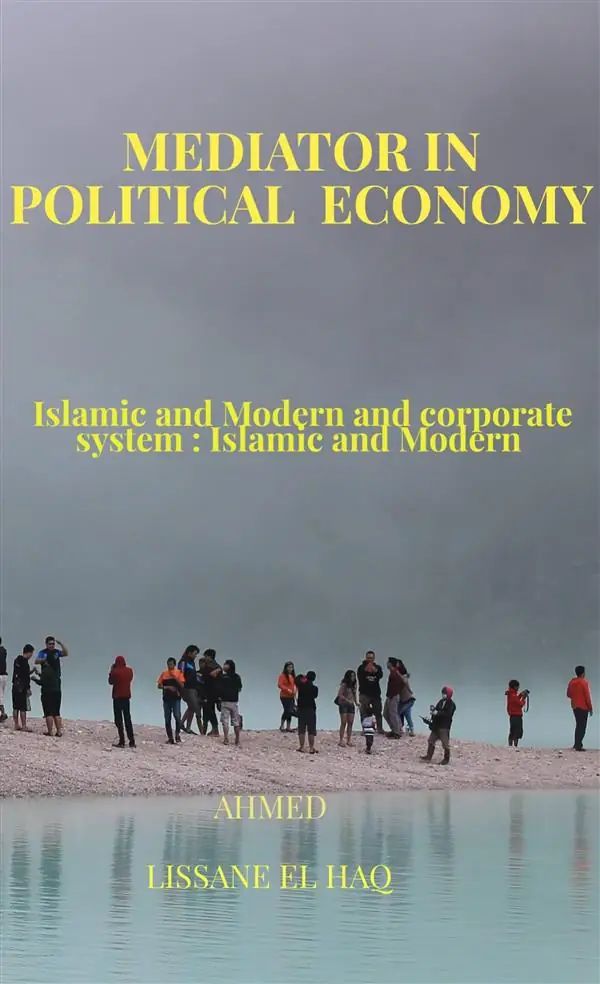
Mediator in Political Economy
Islamic and modern and Corporate system Islamic and modernBy Ahmed Lissane el haq


Length16h 23m
About this audiobook
Mediator book on Islamic and modern political economy and the system of Islamic and modern companies deals with the subject of political economy from an Islamic and modern perspective. The book also deals with the system of Islamic and modern companies. The book contains a careful research on these topics of interest to readers interested in this field. The study aims to put the Islamic and modern economy on two parallel sides within the framework of the interview between two systems that agree on principles and differ in regulatory laws between legitimacy and status. It aims to put in front of businessmen and trade the five Islamic companies with their systems and laws and the five modern companies with their laws and regulations in an interview between two systems that meet at the table of production and investment despite their differences in source.
Audiobook details
GenreBusiness and Economics
Length16 hrs 23 mins
Narrated byListen with 1,000+ voices
FormateBook with Audio
Publish dateOct 5, 2024
LanguageEnglish
Table of contents
1The introduction
2Chapter One
3The first topic
4The concept of the word economy and the nature of the main trends under which the word economy is included: The communist system
5The second topic
Show all chaptersShow less
6The original, linguistic and terminological concept of the word economy and the changes that occurred to it between capital and capitalist. ...and the commons, and communism, and socialism, and socialism....
7The word economics is linked to politics and what politics?
8The fourth topic
9Economics and its branches: Definition of economics
10Branches of economics
11The science of economics is divided into several branches, the most important of which are:
12Firstly - theoretical economics
13Secondly: Applied economics
14Thirdly: Social economy
15Fourthly - The national economy
16Fifthly: International economy
17The relationship of economics to other sciences
18Firstly - social sciences
19Secondly - Legal sciences
20Thirdly: Natural sciences
21The economic problem and ways to solve it
22The first topic
23Economic activity and human needs
24The second topic
25Production and permanent and circulating capital
26The first - work
27Second - Topics
28Third - means
29The third section
30Conventional exchange and free markets
31The fourth topic
32Swap and financial markets or “stock exchanges”
33The arrow
34Buying and selling stocks with options and pledges
35Participation document, transferable and recallable.
36Selling currencies, bills of exchange, and dealing by check
37Final, intermediate, immediate and life time consumption
38Chapter Two
39.
40The first topic
41The emergence of economic thought and the emergence of human life
42The beginning of ownership between individual and collective ownership
43Aristote and his views on economics
44Among the Romans and in the Middle Ages
45The Muhammadan mission and Islamic economic thought
46Islam and the beginning of economic thought among the Arabs
47Abolishing the usurious system and establishing Islamic commerce in its place
48Reform in the agricultural economy
49Call for economic development and work
50Chapter Three

Never Split the DifferenceChris Voss, Tahl Raz8h 7m4.4 (277.7K)$26 · $0.00
The Intelligent Investor Rev Ed.Benjamin Graham17h 48m4.3 (191.5K)$40 · $0.00
The Hard Thing About Hard ThingsBen Horowitz7h 57m4.2 (134.3K)$26 · $0.00
Boundaries for LeadersHenry Cloud7h 36m4.3 (3.6K)$26 · $0.00
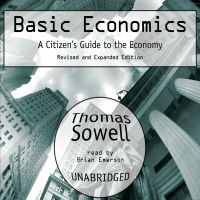
Basic EconomicsThomas Sowell18h 32m4.5 (29.3K)$28 · $0.00

Poor Charlie’s AlmanackGrover Gardener, Charles T. Munger13h 9m4.5 (24.7K)$18 · $0.00

The Ambuja StoryNarotam Sekhsaria13h 59m4.5 (830)$33 · $0.00

The Secret Door to SuccessFlorence Scovel Shinn2h 25m4.5 (2.1K)$1.20 · $0.00

This Is Going to HurtAdam Kay5h 47m4.4 (444.7K)$24 · $0.00

Big TrustShadé Zahrai, Fayçal Sekkouah8h 36m4.6 (406)$26 · $0.00
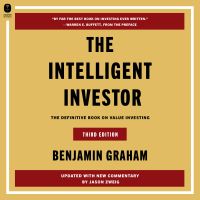
The Intelligent Investor Third EditionBenjamin Graham, Jason Zweig20h4.4 (156.6K)$46 · $0.00

Bottle of LiesKatherine Eban14h 25m4.4 (12K)$33 · $0.00

The Antiracist Business BookTrudi Lebrón6h 10m4.6 (275)$17 · $0.00
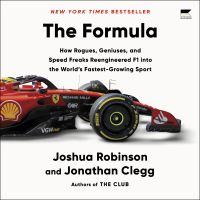
The FormulaJoshua Robinson, Jonathan Clegg10h 41m4.4 (6.9K)$29 · $0.00

Let Them LeadJohn U. Bacon7h 10m4.5 (1.4K)$24 · $0.00

Secrets of the Millionaire MindT. Harv Eker5h 11m4.4 (301.4K)$24 · $0.00

The Person You Mean to BeDolly Chugh9h 6m4.4 (7.2K)$29 · $0.00
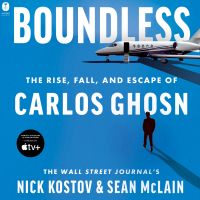
BoundlessNick Kostov, Sean McLain9h 17m4.5 (1.1K)$29 · $0.00

Everyday DharmaSuneel Gupta5h 2m4.5 (761)$20 · $0.00
Let's Talk Mutual FundsMonika Halan7h 5m4.4 (2.4K)$16 · $0.00
You may also like
Basic EconomicsThomas Sowell18h 32m4.5 (29.3K)$28 · $0.00
Intellectuals and SocietyThomas Sowell11h 23m4.4 (5.7K)$21 · $0.00
The FormulaJoshua Robinson, Jonathan Clegg10h 41m4.4 (6.9K)$29 · $0.00
The PrinceNicolo Machiavelli5h 12m4.0 (440.3K)$6 · $0.00

The PrinceNiccolò Machiavelli4h 56m4.0 (412.9K)$4 · $0.00

PropagandaEdward Bernays3h 20m3.9 (12.1K)Free
Imperialism, the Highest Stage of CapitalismVladimir Lenin4h 31m4.3 (14.3K)$4 · $0.00

PropagandaEdward Bernays4h 42m3.9 (11.2K)$17
The Theory of Business EnterpriseThorstein Veblen11h 28m4.1 (276)$1.99 · $0.00

The QuranAllah23h 7m4.7 (136.1K)$1 · $0.00
Crystallizing Public OpinionEdward Bernays5h 17m3.9 (1.6K)$8 · $0.00
The Social ContractJean-Jacques Rousseau10h 49m3.9 (68.7K)$9 · $0.00
The Great DestroyerLimbaugh, David18h 6m4.0 (1.5K)Free

The PrinceNiccolo Machiavelli3h 27m4.0 (475.6K)$16 · $0.00

The Art of WarSun Tzu1h 10m4.0 (623.2K) · 2602Free
THE THEORY OF THE LEISURE CLASS: An Economic Study of American Institutions and a Social Critique of Conspicuous Consumption (Annotated)Thorstein Veblen12h 58m4.4 (1K)$0.99 · $0.00
The Invasion of Europe by the Barbarians (Annotated)J. B. Bury8h 41m4.0 (697)$2 · $0.00

The Age of ReasonThomas Paine6h 53m4.1 (38.4K)$1.20 · $0.00
THE FINANCIERTheodore Dreiser22h 50m4.1 (9.1K)$1.99 · $0.00

Deliver Us From EvilSean Hannity4h 40m3.7 (1.7K)$20 · $0.00