
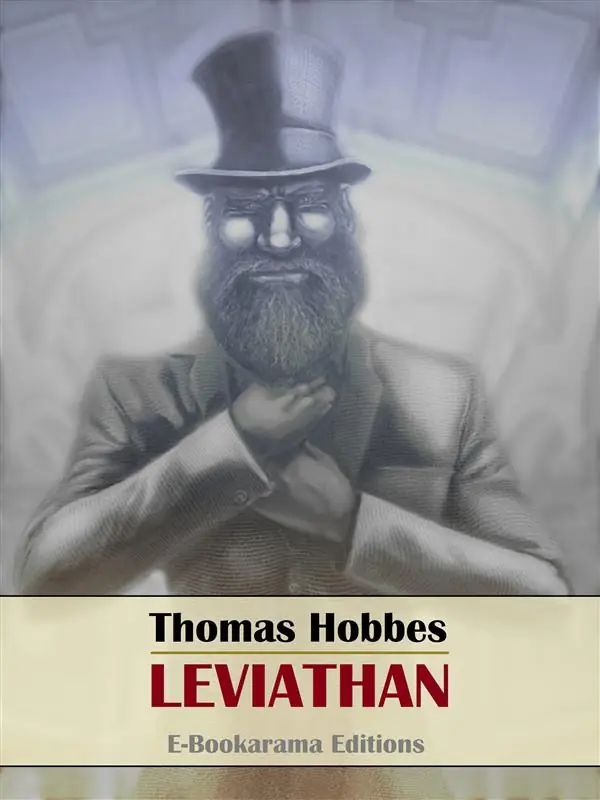
Audio only


Length22h 59m
About this audiobook
Thomas Hobbes’s political manifesto "Leviathan" (or, as it was originally titled: “Leviathan or The Matter, Forme and Power of a Common-Wealth Ecclesiastical and Civil", 1651) holds that a commonwealth with a social contract is the ideal way to govern a body of people.
Hobbes argues that a sovereign power is best equipped to maintain peace and civic unity and that each of the nation’s citizens buys into a social contract that allows the sovereign power to act on behalf of safety and public defence. The central image of the philosophy is a leviathan or sea monster, with a body made of human constituents and a head representing the sovereign leader. According to Hobbes, this philosophy is the best in order to avoid civil war and maintain a unified nation. The manifesto is broken up into four sections, which build on this central idea.
Audiobook details
Rating★★★★ 4.0 (72.2K)
Includes Goodreads, Amazon, LibraryThing, StoryGraph
GenrePhilosophy, History, Children's Literature
Length22 hrs 59 mins
Narrated byListen with 1,000+ voices
FormateBook with Audio
Publish dateJun 3, 2019
LanguageEnglish
Table of contents
1Introduction
2PART 1. OF MAN
3Chapter 1. Of Sense
4Chapter 2. Of Imagination
5Chapter 3. Of The Consequence Or Trayne Of Imaginations
Show all chaptersShow less
6Chapter 4. Of Speech
7Chapter 5. Of Reason, And Science.
8Chapter 6. Of The Interiour Beginnings Of Voluntary Motions
9Chapter 7. Of The Ends Or Resolutions Of Discourse
10Chapter 8. Of The Vertues Commonly Called Intellectual; And Their Contrary Defects
11Chapter 9. Of The Severall Subjects Of Knowledge
12Chapter 10. Of Power, Worth, Dignity, Honour And Worthiness
13Chapter 11. Of The Difference Of Manners
14Chapter 12. Of Religion
15Chapter 13. Of The Naturall Condition Of Mankind, As Concerning Their Felicity, And Misery
16Chapter 14. Of The First And Second Naturall Lawes, And Of Contracts
17Chapter 15. Of Other Lawes Of Nature
18Chapter 16. Of Persons, Authors, And Things Personated
19PART 2. OF COMMON-WEALTH
20Chapter 17. Of The Causes, Generation, And Definition Of A Common-Wealth
21Chapter 18. Of The Rights Of Soveraignes By Institution
22Chapter 19. Of The Severall Kinds Of Common-Wealth By Institution, And Of Succession To The Soveraigne Power
23Chapter 20. Of Dominion Paternall And Despoticall
24Chapter 21. Of The Liberty Of Subjects
25Chapter 22. Of Systemes Subject, Politicall, And Private
26Chapter 23. Of The Publique Ministers Of Soveraign Power
27Chapter 24. Of The Nutrition, And Procreation Of A Common-Wealth
28Chapter 25. Of Counsell
29Chapter 26. Of Civill Lawes
30Chapter 27. Of Crimes, Excuses, And Extenuations
31Chapter 28. Of Punishments, And Rewards
32Chapter 29. Of Those Things That Weaken, Or Tend To The Dissolution Of A Common-Wealth
33Chapter 30. Of The Office Of The Soveraign Representative
34Chapter 31. Of The Kingdome Of God By Nature
35PART 3. OF A CHRISTIAN COMMON-WEALTH
36Chapter 32. Of The Principles Of Christian Politiques
37Chapter 33. Of The Number, Antiquity, Scope, Authority, And Interpreters Of The Books Of Holy Scriptures
38Chapter 34. Of The Signification Of Spirit, Angel, And Inspiration In The Books Of Holy Scripture
39Chapter 35. Of The Signification In Scripture Of Kingdome Of God, Of Holy, Sacred, And Sacrament
40Chapter 36. Of The Word Of God, And Of Prophets
41Chapter 37. Of Miracles, And Their Use
42Chapter 38. Of The Signification In Scripture Of Eternall Life, Hell, Salvation, The World To Come, And Redemption
43Chapter 39. Of The Signification In Scripture Of The Word Church
44Chapter 40. Of The Rights Of The Kingdome Of God, In Abraham, Moses, High Priests, And The Kings Of Judah
45Chapter 41. Of The Office Of Our Blessed Saviour
46Chapter 42. Of Power Ecclesiasticall (pt. 1)
47Chapter 42. Of Power Ecclesiasticall (pt. 2)
48Chapter 43. Of What Is Necessary For A Mans Reception Into The Kingdome Of Heaven
49Chapter 44. Of Spirituall Darknesse From Misinterpretation Of Scripture
50Chapter 45. Of Daemonology, And Other Reliques Of The Religion Of The Gentiles
More from Thomas Hobbes

That Bird Has My WingsJarvis Jay Masters9h 49m4.4 (13.7K)$29 · $0.00

Tâo Teh KingLaozi2h 34m4.4 (230.9K)$2 · $0.00

SymposiumPlato3h 26m4.4 (97.9K)$1.20 · $0.00

Buddhist Boot CampTimber Hawkeye2h 39m4.4 (8.4K)$18 · $0.00
Enchiridion & The Discourses of Epictetus (Annotated)Arrian Epictetus18h 9m4.4 (3.5K)$2 · $0.00

The Meditations of the Emperor Marcus Aurelius AntoninusEmperor of Rome Marcus Aurelius5h 41m4.4 (1.8M)$1 · $0.00
Crime and PunishmentFyodor Dostoevsky23h 11m4.4 (1.3M)$12 · $0.00

MeditationsMarcus Aurelius5h 52m4.4 (433.7K)$1 · $0.00

Everyday DharmaSuneel Gupta5h 2m4.5 (761)$20 · $0.00

The Joyful Wisdom ("La Gaya Scienza")Friedrich Wilhelm Nietzsche11h 37m4.4 (26.6K)$1 · $0.00
The Art of LivingEpictetus, Sharon Lebell3h 16m4.4 (50.1K)$18 · $0.00
MeditationsEmperor Of Rome Marcus Aurelius7h 23m4.3 (477.5K)$1.20 · $0.00

The Imitation of ChristThomas à Kempis6h 27m4.3 (84.6K)$21 · $0.00

Sadhana: the realisation of lifeRabindranath Tagore3h 49m4.4 (8.6K)$6 · $0.00
SapiensYuval Noah Harari15h 18m4.3 (1.4M) · 1215$33 · $0.00

You BelongSebene Selassie8h 35m4.4 (2.7K)$26 · $0.00

The Song Celestial; Or, Bhagavad-Gîtâ (from the Mahâbhârata)Anonymous2h 18m4.4 (3.2K)$2 · $0.00

The KybalionThe Three Initiates3h 47m4.3 (58.7K)$20 · $0.00

Chuang Tzu: Mystic, Moralist, and Social ReformerZhuangzi14h 42m4.4 (1.2K)$1 · $0.00

High-RisersBen Austen13h 33m4.4 (2.8K)$33 · $0.00

A Brief History of IntelligenceMax S. Bennett12h 18m4.6 (6.6K)$29 · $0.00

The Happiest Man on EarthEddie Jaku3h 48m4.6 (178K)$7 · $0.00

MotherlandJulia Ioffe17h 52m4.7 (2.5K)$40 · $0.00

Where Cowards Go to DieBenjamin Sledge8h 42m4.7 (351)$20 · $0.00

RevolutionariesSanjeev Sanyal11h 23m4.6 (2.6K)$29 · $0.00

We Crossed a Bridge and It TrembledWendy Pearlman6h4.6 (5.2K)$24 · $0.00

Unbroken Bonds of BattleJohnny Joey Jones8h 31m4.6 (2.6K)$8 · $0.00

The Daughter of AuschwitzTova Friedman, Malcolm Brabant7h 54m4.6 (16.7K)$26 · $0.00

Lily's PromiseLily Ebert, Dov Forman8h 54m4.6 (16.1K)$29 · $0.00

On Democracies and Death CultsDouglas Murray10h 38m4.6 (6.5K)$29 · $0.00

Across the RiverKent Babb11h 40m4.6 (927)$29 · $0.00

Balcony Over Jerusalem: A Middle East Memoir - Israel, Palestine and BeyondJohn Lyons12h 37m4.6 (1.4K)$33 · $0.00

BeyondStephen Walker15h 39m4.6 (3.2K)$33 · $0.00

Kings and PawnsHoward Bryant10h 9m4.6 (678)$29 · $0.00

No EscapeNury Turkel9h 30m4.6 (809)$28 · $0.00

Jubal Stone: U.S. Marshal: Blood Trail To Hell: A Western Adventure NovelCasey Nash3h 42m4.6 (3.2K)$18 · $0.00

Fall and RiseMitchell Zuckoff17h 23m4.6 (9.8K)$40 · $0.00

The SurvivorJosef Lewkowicz, Michael Calvin9h 22m4.6 (2.5K)$29 · $0.00

Always FaithfulThomas Schueman, Zainullah Zaki12h 12m4.6 (977)$29 · $0.00

The State of Society in France Before the Revolution of 1789 (Annotated)Alexis de Tocqueville17h 25m4.6 (1.2K)$2 · $0.00

The Nutcracker and The Mouse King (Annotated)E.T.A. Hoffmann4h 4m4.6 (1.5K)$2 · $0.00

REBECCA OF SUNNYBROOK FARM & NEW CHRONICLES OF REBECCA (Children's Book Classics) (Annotated)Kate Douglas Wiggin15h 32m4.6 (1.4K)$1.99 · $0.00

Just William (Illustrated) (Annotated)Richmal Crompton6h 30m4.6 (1.2K)$2 · $0.00

The Labors of Hercules BealGary D. Schmidt8h 17m4.6 (10.4K)$8 · $0.00

Clancy of the Overflow (The Matilda Saga, #9)Jackie French14h 24m4.6 (471)$33 · $0.00

The Great Fairy Tales - Oscar Wilde Edition (Illustrated) (Annotated)Oscar Wilde6h 31m4.6 (1.1K)$2 · $0.00

Alice's Adventures in WonderlandLewis Carroll3h4.5 (5.9K)$7.99 · $0.00

The Boy Who Followed His Father into AuschwitzJeremy Dronfield6h 54m4.5 (28.5K)$24 · $0.00

Bat and the End of EverythingElana K. Arnold2h 40m4.6 (2.3K)$18 · $0.00

Chronicles of Ancient Darkness #6: Ghost HunterMichelle Paver6h 20m4.5 (11.7K)$24 · $0.00

Masterminds: PaybackGordon Korman6h 51m4.5 (5.8K)$24 · $0.00

The House at Pooh CornerA. A. Milne, E. H. Shepard3h 6m4.5 (107.8K)$2 · $0.00

Anne of Green Gables (Annotated)Lucy Maud Montgomery13h 1m4.5 (2.8K)$2 · $0.00

The Guardian Herd: StormboundJennifer Lynn Alvarez6h 19m4.5 (2.3K)$24 · $0.00

The One and Only FamilyKatherine Applegate3h 14m4.5 (7.5K)$18 · $0.00

Other Words for HomeJasmine Warga3h 50m4.5 (42.8K)$20 · $0.00

Amari and the Night BrothersB. B. Alston11h 11m4.5 (42.2K)$29 · $0.00

The Keepers #4: The Starlit LoomTed Sanders10h 56m4.6 (361)$29 · $0.00

Winnie-the-PoohAlan Alexander Milne2h 52m4.5 (401.1K)$3 · $0.00

Anne of Green GablesL. M. Montgomery10h 42m4.5 (1.2M)$2 · $0.00
You may also like

The 22 Immutable Laws of MarketingAl Ries, Jack Trout1h 26m4.1 (27.5K)$16 · $0.00

The Holy WarJohn Bunyan10h 17m4.4 (2.9K)$2.30

The Kingdom of God is Within YouLeo Tolstoy13h 27m4.3 (8.1K)$2.30 · $0.00
The 22 Immutable Laws of MarketingAl Ries, Jack Trout3h 7m4.1 (27.7K)$5 · $0.00

Dialogues Concerning Natural ReligionDavid Hume5h 4m4.1 (9.9K)$1 · $0.00

The Screwtape LettersC. S. Lewis3h 53m4.4 (603.3K)$2 · $0.00

The AntichristFriedrich Nietzsche3h 55m4.1 (40.8K)$12 · $0.00

Saint Thomas Aquinas (Annotated)G. K. Chesterton6h 59m4.2 (14.6K)$1.99 · $0.00

History of The Decline and Fall of The Roman Empire Vol IIEdward Gibbon31h 14m4.2 (1.4K)$2.30

Reclaiming Israel’s HistoryDavid Brog9h 28m4.5 (595)$20

The AntichristFriedrich Nietzsche3h 2m4.1 (39.8K)$16 · $0.00
Mind is a MythU. G. Krishnamurti5h 53m4.4 (422)$2 · $0.00

The Kingdom of God is Within YouLeo Tolstoy13h 32m4.3 (8.2K)$16 · $0.00

From Manassas to Appomattox: Memoirs of the Civil War in America (Illustrated Edition)James Longstreet24h 49m4.2 (1.3K)$2 · $0.00

On the Genealogy of MoralsFriedrich Nietzsche6h 11m4.3 (76.5K)$1.20 · $0.00

Meditations on the Actual State of Christianity, and on the Attacks Which Are Now Being Made Upon ItFrançois Guizot4h 37m$2 · $0.00

John Knox and the ReformationAndrew Lang8h 49m3.1 (28)$1 · $0.00
The Essence of Christianity (Summarized Edition)Ludwig Feuerbach3h 58m$2

Meditations on the Actual State of Christianity, and on the Attacks Which Are Now Being Made Upon ItFrançois Guizot4h 37m$2 · $0.00
Christian LifeSteven A. Hein7h 7m4.4 (96)$20 · $0.00