
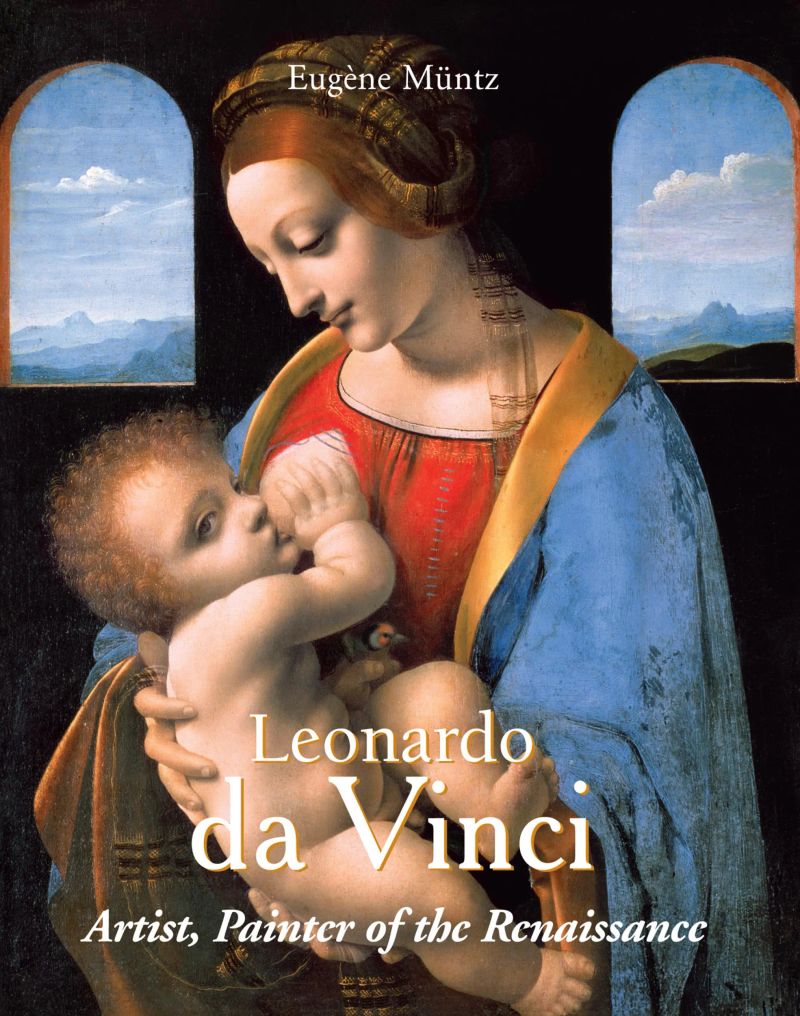


Length9h 1m
About this audiobook
Leonardo's early life was spent in Florence, his maturity in Milan, and the last three years of his life in France. Leonardo's teacher was Verrocchio. First he was a goldsmith, then a painter and sculptor: as a painter, representative of the very scientific school of draughtsmanship; more famous as a sculptor, being the creator of the Colleoni statue at Venice, Leonardo was a man of striking physical attractiveness, great charm of manner and conversation, and mental accomplishment. He was well grounded in the sciences and mathematics of the day, as well as a gifted musician. His skill in draughtsmanship was extraordinary; shown by his numerous drawings as well as by his comparatively few paintings. His skill of hand is at the service of most minute observation and analytical research into the character and structure of form. Leonardo is the first in date of the great men who had the desire to create in a picture a kind of mystic unity brought about by the fusion of matter and spirit. Now that the Primitives had concluded their experiments, ceaselessly pursued during two centuries, by the conquest of the methods of painting, he was able to pronounce the words which served as a password to all later artists worthy of the name: painting is a spiritual thing, cosa mentale. He completed Florentine draughtsmanship in applying to modelling by light and shade, a sharp subtlety which his predecessors had used only to give greater precision to their contours. This marvellous draughtsmanship, this modelling and chiaroscuro he used not solely to paint the exterior appearance of the body but, as no one before him had done, to cast over it a reflection of the mystery of the inner life. In the Mona Lisa and his other masterpieces he even used landscape not merely as a more or less picturesque decoration, but as a sort of echo of that interior life and an element of a perfect harmony. Relying on the still quite novel laws of perspective this doctor of scholastic wisdom, who was at the same time an initiator of modern thought, substituted for the discursive manner of the Primitives the principle of concentration which is the basis of classical art. The picture is no longer presented to us as an almost fortuitous aggregate of details and episodes. It is an organism in which all the elements, lines and colours, shadows and lights, compose a subtle tracery converging on a spiritual, a sensuous centre. It was not with the external significance of objects, but with their inward and spiritual significance, that Leonardo was occupied.
Audiobook details
GenreOther
Length9 hrs 1 min
Narrated byListen with 1,000+ voices
FormateBook with Audio
Publish dateDec 28, 2023
LanguageEnglish
Table of contents
1Leonardo Leonardo da Vinci da Vinci
2permission of the copyright holder, throughout the world. Unless
3PREFACE
4LEONARDO’S CHILDHOOD AND HIS FIRST WORKS
5and after Donatello – of the monumental treatment of the horse.
Show all chaptersShow less
6outburst of genius.
7Alte Pinakothek, Munich.
8The names of certain men of genius, Archimedes, Christopher
9LEONARDO’S CHILDHOOD AND HIS FIRST WORKS
10Galleria degli Uffizi, Florence.
11Leonardo.
12LEONARDO’S CHILDHOOD AND HIS FIRST WORKS
13Ottavio de’ Medici.
14Galleria degli Uffizi, Florence.
15Leonardo.
16Todi.
17exigencies of science.
18their initiator.
19LEONARDO’S CHILDHOOD AND HIS FIRST WORKS
20accept the youth as his pupil.
21Casa Buonarroti, Florence.
22Colleone, his unfinished masterpiece.
23though Verrocchio perhaps rather overshot the mark.
24LEONARDO’S CHILDHOOD AND HIS FIRST WORKS
251496; then, after 1500, once more in Florence, where
26A tender friendship united Lorenzo and his master, whom he
27Pen and ink. Bibliothèque de
28LEONARDO’S CHILDHOOD AND HIS FIRST WORKS
29As to Zoroastro di Peretola, the pupil, and not the fellow-
30and honour thereby.”
31Musée du Louvre, Paris.
32LEONARDO’S CHILDHOOD AND HIS FIRST WORKS
33David (1476), but less harsh, more rounded, the mouth less
34Biblioteca Reale, Turin.
35LEONARDO’S CHILDHOOD AND HIS FIRST WORKS
36Duke of Milan.”
37LEONARDO’S CHILDHOOD AND HIS FIRST WORKS
38Oil on wood panel, 98 x 217 cm.
39Palermo.
40ideal beauty.
41Pen and ink, 7.8 x 9.2 cm.
42for various reasons.
43LEONARDO’S CHILDHOOD AND HIS FIRST WORKS
44fifteenth century.
45Royal Library, Windsor Castle.
46the hand of the master – “quod est demonstrandum.”
47stiffness in their clumsy necks.
48dates from a much later period in the artist’s life.
49In his first efforts as a sculptor, the biographer tells
50An admirable terracotta in South Kensington
Leonardo Da Vinci - Thinker and Man of ScienceEugène Müntz8h 43m3.9 (59)$18 · $0.00
Das ultimative Buch über RaphaelEugène Müntz8h 42m4.6 (13)$19 · $0.00
Leonardo Da VinciEugène Müntz5h 41m4.2 (244)$13 · $0.00

Raphael und KunstwerkeEugène Müntz2h$15 · $0.00
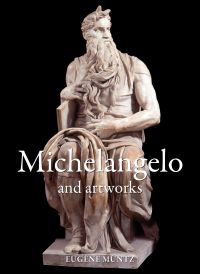
Michelangelo and artworksEugène Müntz57m4.0 (79)$15 · $0.00
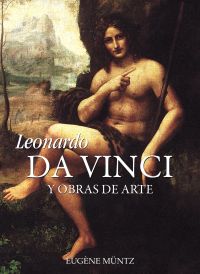
Leonardo da Vinci y obras de arteEugène Müntz1h 41m4.2 (145)$15 · $0.00
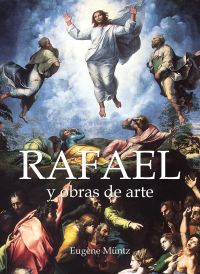
Rafael y obras de arteEugène Müntz1h 59m4.0 (34)$15 · $0.00
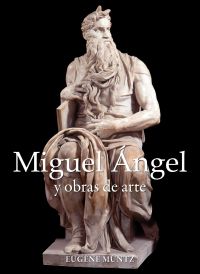
Miguel Ángel y obras de arteEugène Müntz1h 27m$15 · $0.00
MichelangeloEugène Müntz5h 42m$16 · $0.00
Michel-Ange et œuvres d'artEugène Müntz1h 35m4.1 (54)$15 · $0.00
Raphaël et œuvres d'artEugène Müntz1h 43m$15 · $0.00
Michelangelo și opere de artăEugène Müntz1h 27m$15 · $0.00
Miguel ÁngelEugène Müntz1h 13m3.8 (42)$8 · $0.00
MichelangeloEugène Müntz1h 3m4.1 (75)$8 · $0.00
Michelangelo und KunstwerkeEugène Müntz1h 38m4.1 (59)$15 · $0.00
Leonardo Da Vinci - El genio divinoEugène Müntz6h 11m4.3 (143)$16 · $0.00
MichelangeloEugène Müntz1h 21m4.0 (78)$8 · $0.00
Leonardo da VinciEugène Müntz5h 40m4.0 (163)$10 · $0.00
Miguel ÁngelEugène Müntz4h 17m4.1 (65)$13 · $0.00
RafaelEugène Müntz2h 5m4.1 (32)$13.50 · $0.00
Mere ChristianityC. S. Lewis7h 7m4.4 (519.7K)$24 · $0.00

Her Daily BreadKate Wood12h 57m4.6 (153)$33 · $0.00
The Holy Bible - 1 SamuelKing James2h 13m4.8 (1.6K)$3 · $0.00
The American Standard Bible — The Gospel of MatthewMatthew3h 56m4.7 (3K)$2 · $0.00

Bad Fat Black GirlSesali Bowen6h 32m4.7 (2.8K)$24 · $0.00
The King James Audio Bible New Testament CompleteChristopher Glyn20h 2m4.7 (2.6K)$12 · $0.00
Faiths CheckbookCharles Spurgeon12h 44m4.7 (3.2K)$11 · $0.00
Ten Things I Wish You Knew About Your Child's Mental HealthDr. Billy Garvey4h 53m4.7 (2.4K)$20 · $0.00
Designing Terry Pratchett’s DiscworldPaul Kidby3h 52m4.7 (343)$20 · $0.00
The Chosen Book OneAmanda Jenkins, Kristen Hendricks, Dallas Jenkins3h 8m4.6 (4.9K)$10 · $0.00
The Lives of BrianBrian Johnson9h 45m4.6 (3.5K)$29 · $0.00
Expository Thoughts on the Gospel of LukeJ.C. Ryle27h 13m4.7 (536)$18 · $0.00

CrossroadsKaleb Dahlgren7h 56m4.6 (4.9K)$26 · $0.00

Across the RiverKent Babb11h 40m4.6 (927)$29 · $0.00
Brain Training for RidersAndrea Monsarrat Waldo5h 56m4.7 (550)$19 · $0.00
My Effin' LifeGeddy Lee17h 11m4.6 (13.1K)$40 · $0.00
Kings and PawnsHoward Bryant10h 9m4.6 (678)$29 · $0.00

The Elementia Chronicles #2: The New OrderSean Fay Wolfe11h 17m4.6 (841)$29 · $0.00
The ActsLuke2h 55m4.6 (19.7K)$12 · $0.00
New Testament - Easy NavigationWorld English Bible19h 35m4.6 (1.3K)$1.30 · $0.00
You may also like
Fairy Tales & Fantasy: The Hans Christian Andersen's Edition (All 127 Stories in one volume)Hans Christian Andersen40h 4m4.3 (15.2K)$1.99 · $0.00
Leonardo da Vinci: Thoughts on Art & LifeLeonardo da Vinci5h 10m4.1 (1.1K)$1 · $0.00

OrlandoVirginia Woolf8h 18m4.1 (555.1K)$2.30
The Essential Works of TagoreRabindranath Tagore64h 57m4.6 (304)$0.99 · $0.00
The Analects of Confucius (Bilingual Edition: English/Chinese)Anonymous4h 7m4.4 (1.3K)$1.99 · $0.00
Orlando: A BiographyVirginia Woolf8h 42m4.0 (147.3K)$1 · $0.00
Thoughts on Art and Life by Leonardo da VinciLeonardo da Vinci5h 24m4.1 (1.5K)$0.99 · $0.00

Poems by Walt WhitmanWalt Whitman5h 45m4.1 (2.2K)$2.30 · $0.00
Orlando: A Biography (Annotated)Virginia Woolf10h 9m4.1 (141.2K)$1.49 · $0.00
The Sayings of Lao TzÅLao Tzu2h 7m4.1 (364)$1 · $0.00
Orlando, A BiographyVirginia Woolf8h 27m4.0 (143.7K)$3.50 · $0.00
PreludesAlice Christiana Gertrude Thompson Meynell1h 57m$2 · $0.00
Ethics Explored: 52 Influential BooksBooker T. Washington, Richard Baxter, James Harold Romain, Cora May Williams, John Hamilton Moore, Aristotle, John H. Stapleton, Franz Brentano, Margaret Slattery, G. E. Moore, T. De Witt Talmage, Bernard Mandeville, William De Witt Hyde, Lucy Helen Muriel Soulsby, J. M. Judy, Thomas Fowler, M. Valentine, John Dewey, W. R. Sorley, Kenneth Ingram, S. A. D. Tissot, Robert Chenault Givler, James Hayden Tufts, Goldwin Smith, Mabel Anne McKee, Malcolm Guthrie, Maurice Francis Egan, Alfred Russel Wallace, S. M. I. Henry, Rudolf Eucken, Horatio Robinson Storer, Edward Abbott Sir Parry, Epictetus, Emil Edward Kusel, Stephen S. Wise, H. G. Wells, John Bunyan, George Horace Lorimer, Oliver Optic, Horatio Jr. Alger, Mohandas K. Gandhi, Plutarch, Arthur Christopher Benson, Benedictus de Spinoza, Felix Adler, Iamblichus, W. R. Washington Sullivan, Laurence Housman, Upton Sinclair382h 23m$0.99 · $0.00

The Poet Li PoArthur David Waley1h 40m3.9 (30)$1 · $0.00
The Magical Ritual of the Sanctum RegnumÉliphas Lévi2h 58m4.2 (55)$2 · $0.00
The Drawings of Leonardo da VinciC. Lewis Hind, Leonardo da Vinci42m4.2 (14)$1 · $0.00

Poems of Emile VerhaerenEmile Verhaeren1h 29m3.6 (32)$1 · $0.00
Aristoteles: Metaphysik, Nikomachische Ethik, Das Organon, Die Physik & Die DichtkunstAristoteles63h 19m4.4 (106)$1 · $0.00
Leonardo Da VinciGabriel Séailles1h 23m3.9 (26)$8 · $0.00
Jean-Antoine WatteauYouri Zolotov3h 10m$16 · $0.00