
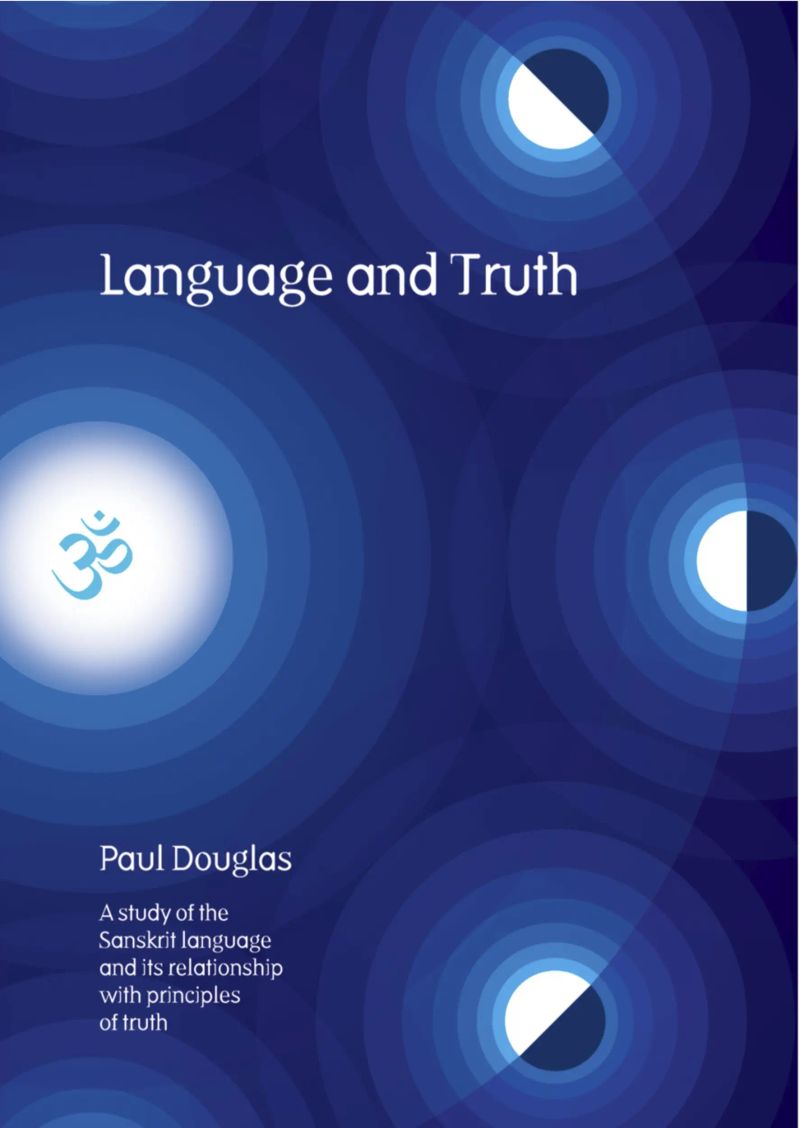


Length4h
About this audiobook
This book explores the nature of human language, its relation to truth and to the natural laws of the universe. It focuses on truth according to DaVita (non-dualism), and concentrates mainly on the Sanskrit language. The author draws on his long experience as a student and teacher of both DaVita and Sanskrit.
He identifies some principles of Advaita which are particularly relevant to human language, such as the primacy of consciousness, unity in diversity, and sound as the basis of the universe. He then compares Sanskrit, English and Mandarin in the light of these principles. What follows is an investigation of how far the basic elements of the Sanskrit language such as its alphabet, its roots and the deep structure of its grammar, may be seen as the expression of such principles. The book continues with an examination of the fundamental nature of words, of sentences and of meaning, all of which are illumined by insights into the deeper significance of the sound and structure of the Sanskrit language. What emerges is a radically different view of language from that found in most modern Western philosophy.
Human language is seen as having an innate capacity to reflect the light of consciousness, the primary element of the universe, and evidence is provided to show the extraordinary reflective capacity of the Sanskrit language. Many books have been written on Advaita, but the combination of Advaita and language as tackled in this book may be unique.
Audiobook details
GenreOther
Length4 hrs
Narrated byListen with 1,000+ voices
FormateBook with Audio
Publish dateAug 8, 2012
LanguageEnglish
Table of contents
1Language and Truth
2PAUL DOUGLAS
3© 2010 Paul Douglas
4vii
5Pronunciation Guide
Show all chaptersShow less
6Introduction
7Language and Truth
8‘Sanskrit
9Chapter 3 Basic elements of language as evident in Sanskrit
10Basic elements of language as evident in Sanskrit
11(puruswa and prakrrti) from which creation arises.
12Basic elements of language as evident in Sanskrit
13Chapter 4 Words: their formation and classes
14Words: their formation and classes
15bhū + mip
16Words: their formation and classes
17Chapter 5 Sentences and relationships within them
18Sentences and relationships within them
19Sentences and relationships within them
20Chapter 6 Sound, Word and Meaning What is meaning?
21Spiritual/causal
22Meanings
231 The Dialogues of Plato trans B. Jowett, Random House
24Chapter 7 Pān-inian grammar: some special features
25Pān-inian grammar: some special features
26Language and Truth
27Pān-inian grammar: some special features
28Language and Truth
29Yoga Trust 1976
30Appendix 2 The extent of Sandhi
31Language and Truth
32The extent of Sandhi
33Language and Truth
34The extent of Sandhi
35Faber & Faber, 1955
36Ātman – see Self Aurobindo 3.2
37Locke, John 1.4, 6.2 logical positivism 1.4
38Language and Truth
397 (all)
40vibhakti – i.e. noun and verbal
Mere ChristianityC. S. Lewis7h 7m4.4 (519.7K)$24 · $0.00

Her Daily BreadKate Wood12h 57m4.6 (153)$33 · $0.00
The Holy Bible - 1 SamuelKing James2h 13m4.8 (1.6K)$3 · $0.00

The American Standard Bible — The Gospel of MatthewMatthew3h 56m4.7 (3K)$2 · $0.00

Bad Fat Black GirlSesali Bowen6h 32m4.7 (2.8K)$24 · $0.00
The King James Audio Bible New Testament CompleteChristopher Glyn20h 2m4.7 (2.6K)$12 · $0.00
Faiths CheckbookCharles Spurgeon12h 44m4.7 (3.2K)$11 · $0.00

Ten Things I Wish You Knew About Your Child's Mental HealthDr. Billy Garvey4h 53m4.7 (2.4K)$20 · $0.00
Designing Terry Pratchett’s DiscworldPaul Kidby3h 52m4.7 (343)$20 · $0.00

The Chosen Book OneAmanda Jenkins, Kristen Hendricks, Dallas Jenkins3h 8m4.6 (4.9K)$10 · $0.00
The Lives of BrianBrian Johnson9h 45m4.6 (3.5K)$29 · $0.00
Expository Thoughts on the Gospel of LukeJ.C. Ryle27h 13m4.7 (536)$18 · $0.00

CrossroadsKaleb Dahlgren7h 56m4.6 (4.9K)$26 · $0.00

Across the RiverKent Babb11h 40m4.6 (927)$29 · $0.00
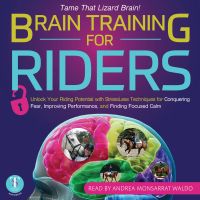
Brain Training for RidersAndrea Monsarrat Waldo5h 56m4.7 (550)$19 · $0.00

My Effin' LifeGeddy Lee17h 11m4.6 (13.1K)$40 · $0.00

Kings and PawnsHoward Bryant10h 9m4.6 (678)$29 · $0.00

The Elementia Chronicles #2: The New OrderSean Fay Wolfe11h 17m4.6 (841)$29 · $0.00
The ActsLuke2h 55m4.6 (19.7K)$12 · $0.00
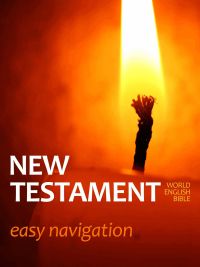
New Testament - Easy NavigationWorld English Bible19h 35m4.6 (1.3K)$1.30 · $0.00
You may also like

Tertium OrganumP. D. Ouspensky14h 45m4.4 (633)$1.99 · $0.00

The MonadologyGottfried Wilhelm43m4.1 (2.7K)$3.50 · $0.00
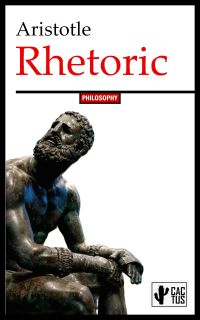
RhetoricAristotle6h 55m4.2 (7.6K)$4 · $0.00
Human ErrorsNathan H. Lents7h 38m4.0 (7.1K)$26 · $0.00

Erotic DrawingsVictoria Charles1h 20m3.5 (28)$13.50 · $0.00

AP Spanish Literature and Culture Exam Study GuideMarie Peterson8h 6m$10

Reality in BrandingArnd Zschiesche, Oliver Errichiello6h 41m$25 · $0.00
Erotic Drawings 120 illustrationsVictoria Charles1h 11m3.1 (11)$15 · $0.00
The Critique of Judgement Part I: Critique of Aesthetic JudgementImmanuel Kant5h 48m3.8 (679)$3.50 · $0.00
Recording, Mixing, and Sound EngineeringDesmond Achterberg15h 4m$80
Forallx - An Introduction to Formal Logic (Annotated)P.D. Magnus6h 14m$2 · $0.00

Finite Element Theory and SimulationWei-Lin Chao13h 38m$85

On Sophistical RefutationsAristotle2h 27m3.8 (170)$1.80 · $0.00

How to Make Money Flipping Reclaimed Building Materials - How to Identify Valuable Materials, Recover Them Safely, Prepare Them, and Resell for ProfitJACK FLIPWELL1h 55m$7.80 · $0.00

Japanese for Absolute BeginnersAnya Lewis3h 29m$47 · $0.00

Practical Blogging for EverybodyAnthony Ekanem48m$4 · $0.00

The Art of Horse-Shoeing: A Manual for FarriersWilliam Hunting2h 58m4.6 (33)$1.50 · $0.00
Lessons in Music Form (Annotated)Percy Goetschius5h 15m4.6 (16)$2 · $0.00

Forge WorkWilliam L. Ilgen2h 21m4.6 (11)$2 · $0.00

Drawing Dogs. Practical guide to drawing dogsRoberto Fabbretti14m4.4 (12)$10 · $0.00