


Length1h 22m
About this audiobook
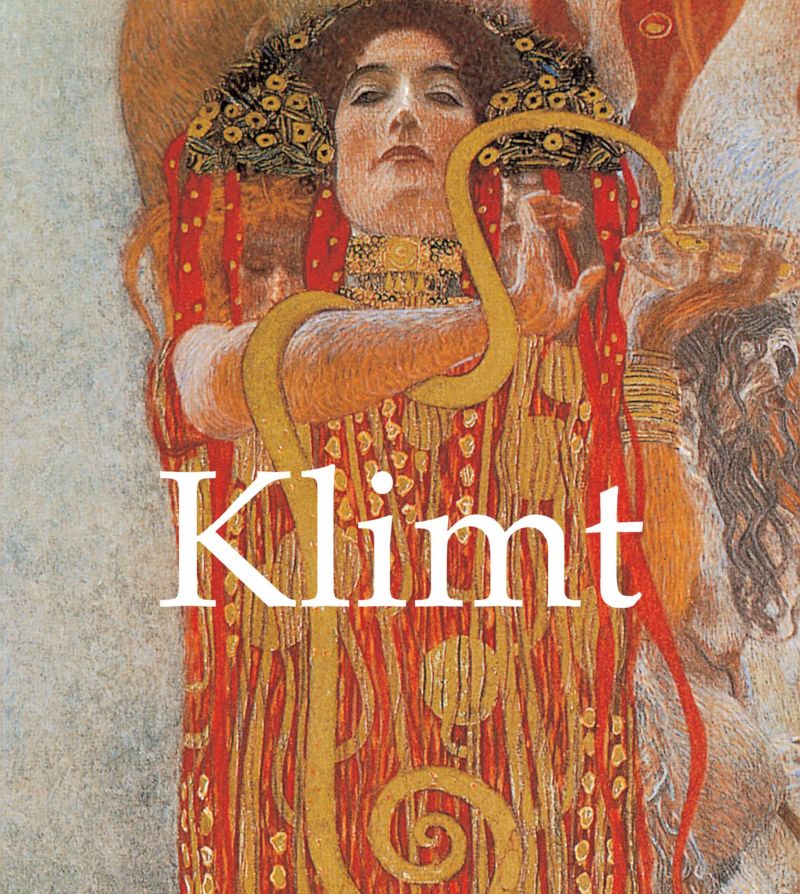
"I am not interested in myself as a subject for painting, but in others, particularly women…"Beautiful, sensuous and above all erotic, Gustav Klimt's paintings speak of a world of opulence and leisure, which seems aeons away from the harsh, post-modern environment we live in now. The subjects he treats – allegories, portraits, landscapes and erotic figures – contain virtually no reference to external events, but strive rather to create a world where beauty, above everything else, is dominant. His use of colour and pattern was profoundly influenced by the art of Japan, ancient Egypt, and Byzantium. Ravenne, the flat, two-dimensional perspective of his paintings, and the frequently stylised quality of his images form an oeuvre imbued with a profound sensuality and one where the figure of woman, above all, reigns supreme. Klimt's very first works brought him success at an unusually young age. Gustav, born in 1862, obtained a state grant to study at Kunstgewerbeschule (the Vienna School of Arts and Crafts) at the age of fourteen. His talents as a draughtsman and painter were quickly noticed, and in 1879 he formed the Künstlercompagnie (Artists' Company) with his brother Ernst and another student, Franz Matsch. The latter part of the nineteenth century was a period of great architectural activity in Vienna. In 1857, the Emperor Franz Joseph had ordered the destruction of the fortifications that had surrounded the medieval city centre. The Ringstrasse was the result, a budding new district with magnificent buildings and beautiful parks, all paid for by public expenses. Therefore the young Klimt and his partners had ample opportunities to show off their talents, and they received early commissions to contribute to the decorations for the pageant organised to celebrate the silver wedding anniversary of the Emperor Franz Joseph and the Empress Elisabeth. In 1894, Matsch moved out of their communal studio, and in 1897 Klimt, together with his closest friends, resigned from the Künstlerhausgenossenschaft (the Cooperative Society of Austrian Artists) to form a new movement known as the Secession, of which he was immediately elected president. The Secession was a great success, holding both a first and second exhibition in 1898. The movement made enough money to commission its very own building, designed for it by the architect Joseph Maria Olbrich. Above the entrance was its motto: "To each age its art, to art its freedom." From around 1897 onward, Klimt spent almost every summer on the Attersee with the Flöge family. These were periods of peace and tranquillity in which he produced the landscape paintings constituting almost a quarter of his entire oeuvre. Klimt made sketches for virtually everything he did. Sometimes there were over a hundred drawings for one painting, each showing a different detail – a piece of clothing or jewellery, or a simple gesture. Just how exceptional Gustav Klimt was is perhaps reflected in the fact that he had no predecessors and no real followers. He admired Rodin and Whistler without slavishly copying them, and was admired in turn by the younger Viennese painters Egon Schiele and Oskar Kokoschka, both of whom were greatly influenced by Klimt.
Audiobook details
Rating★★★★ 4.1 (67)
Includes Goodreads
GenreOther
Length1 hr 22 mins
Narrated byListen with 1,000+ voices
FormateBook with Audio
Publish dateJul 1, 2011
LanguageEnglish
Table of contents
1Klimt
2© Confidential Concepts, worldwide, USA © Parkstone Press International, New York, USA
3Biography
4Munich Succession.
5Ravenne and Florence.
Show all chaptersShow less
6Decorative Arts in Munich.
7virtually no reference to external events, but
8Ravenna, the flat, two-dimensional perspective
91883 oil on canvas, 85 x 117 cm Historisches Museum, Vienna
101884 oil on canvas, 50 x 74 cm Historisches Museum Vienna
11His talents as a draughtsman and painter
12In 1857, the Emperor Franz Joseph had
13Therefore, the young Klimt and his partners
14Elisabeth.
15works, such as Fable, The Idyll, or indeed one
161886-1888 750 x 400 cm Burgtheater, Vienna
17unsuggestive ‘v’ reminiscent of modern-day
181888 Vienna
19Allegory of “Sculpture”
20Portrait of Joseph Pembaur
211890 oil on canvas, 69 x 55 cm Innsbruck, Austria
22the death of his father and brother Ernst in
231890 oil on canvas, 55 x 128.5 cm Wadsworth Atheneum, Hartford (Connecticut)
24communal studio, and in 1897 Klimt, together
25both a first and a second exhibition in 1898.
26of paintings for the University of Vienna. The
27series of dignified, formal paintings in classical
28c.1894 oil on wood, 39 x 23 cm Kunsthistorisches Museum, Vienna
29the fact that on its first showing in Paris at the
30The first appearance of the unfinished
311895 Bayerische Staatsgemäldesammlungen, Munich
32the two striking female figures at the bottom
331895 oil on canvas, 60 x 44 cm Österreichische Galerie, Vienna
34The naked woman at the top of the picture
35Interestingly though, in the sketch the
36Final drawing for the allegory of “Tragedy”
37women an ideal female type: modern, with a
38Portrait of a Woman
39dark-haired version of Marilyn Monroe.
401897-1898 oil on canvas, 41 x 66 cm Österreichische Galerie, Vienna
41Pallas Athena
421898 Oil on canvas, 75 x 75 cm Historisches Museum, Vienna
431898 oil on canvas, 52 x 65 cm Private collection
44Excess resembles not so much a woman as an
451898 black chalk, pencil, Indian ink, 41 x 10 cm
46much in the same way that modern-day
471898 oil on canvas, 145 x 145 cm Österreichische Galerie, Vienna
48Exhibition wallpaper for “Secession I”
491898 lithograph, 62 x 43 cm Private collection, New York
50This calm response perhaps best typifies
More from Jane Rogoyska, Patrick Bade
Gustav KlimtJane Rogoyska, Patrick Bade3h 4m$16 · $0.00
Gustav KlimtJane Rogoyska, Patrick Bade3h 3m4.3 (189)$16 · $0.00
Gustav KlimtJane Rogoyska, Patrick Bade2h 53m4.3 (196)$16 · $0.00
Gustav KlimtJane Rogoyska, Patrick Bade2h 14m4.1 (67)$13 · $0.00
Gustav KlimtJane Rogoyska, Patrick Bade2h 17m4.1 (67)$13 · $0.00
Amedeo ModiglianiJane Rogoyska, Frances Alexander2h 28m4.2 (23)$13 · $0.00
Gustav KlimtJane Rogoyska, Patrick Bade3h 6m4.1 (67)$15 · $0.00
Gustav KlimtJane Rogoyska, Patrick Bade2h 24m4.3 (174)$13 · $0.00
Gustav KlimtJane Rogoyska, Patrick Bade3h4.1 (67)$15 · $0.00
Amedeo ModiglianiJane Rogoyska, Frances Alexander2h 13m4.1 (19)$13 · $0.00
Amedeo ModiglianiJane Rogoyska, Frances Alexander2h 24m4.6 (17)$13 · $0.00
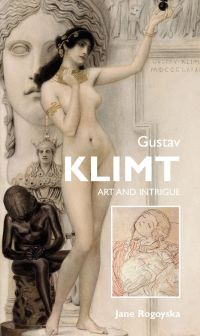
Gustav Klimt: Art and intrigueJane Rogoyska47m4.3 (89)$13 · $0.00
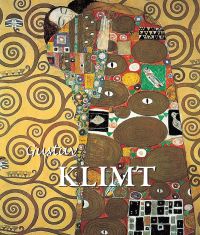
Gustav KlimtJane Rogoyska, Patrick Bade3h 2m4.3 (200)$16 · $0.00
Amedeo ModiglianiJane Rogoyska, Frances Alexander2h 16m4.6 (28)$13 · $0.00
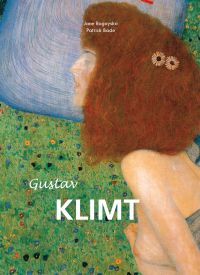
Gustav KlimtJane Rogoyska, Patrick Bade2h 23m4.3 (88)$13 · $0.00
Mere ChristianityC. S. Lewis7h 7m4.4 (519.7K)$24 · $0.00

Her Daily BreadKate Wood12h 57m4.6 (153)$33 · $0.00
The Holy Bible - 1 SamuelKing James2h 13m4.8 (1.6K)$3 · $0.00
The American Standard Bible — The Gospel of MatthewMatthew3h 56m4.7 (3K)$2 · $0.00

Bad Fat Black GirlSesali Bowen6h 32m4.7 (2.8K)$24 · $0.00
The King James Audio Bible New Testament CompleteChristopher Glyn20h 2m4.7 (2.6K)$12 · $0.00
Faiths CheckbookCharles Spurgeon12h 44m4.7 (3.2K)$11 · $0.00

Ten Things I Wish You Knew About Your Child's Mental HealthDr. Billy Garvey4h 53m4.7 (2.4K)$20 · $0.00

Designing Terry Pratchett’s DiscworldPaul Kidby3h 52m4.7 (343)$20 · $0.00
The Chosen Book OneAmanda Jenkins, Kristen Hendricks, Dallas Jenkins3h 8m4.6 (4.9K)$10 · $0.00

The Lives of BrianBrian Johnson9h 45m4.6 (3.5K)$29 · $0.00
Expository Thoughts on the Gospel of LukeJ.C. Ryle27h 13m4.7 (536)$18 · $0.00

CrossroadsKaleb Dahlgren7h 56m4.6 (4.9K)$26 · $0.00

Across the RiverKent Babb11h 40m4.6 (927)$29 · $0.00

Brain Training for RidersAndrea Monsarrat Waldo5h 56m4.7 (550)$19 · $0.00
My Effin' LifeGeddy Lee17h 11m4.6 (13.1K)$40 · $0.00

Kings and PawnsHoward Bryant10h 9m4.6 (678)$29 · $0.00

The Elementia Chronicles #2: The New OrderSean Fay Wolfe11h 17m4.6 (841)$29 · $0.00
The ActsLuke2h 55m4.6 (19.7K)$12 · $0.00

New Testament - Easy NavigationWorld English Bible19h 35m4.6 (1.3K)$1.30 · $0.00
You may also like
India: A Million Mutinies NowV. S. Naipaul24h 46m4.0 (2.6K)$30
The Education of Henry AdamsHenry Adams19h 28m4.0 (16.9K)$30

A Room of One's OwnVirginia Woolf5h 5m4.3 (326.8K)$20
If the Oceans Were InkCarla Power12h 35m4.2 (2.9K)$20 · $0.00

RevolutionariesJack N. Rakove19h 28m4.0 (1.9K)$32

Letters Written During a Short Residence in Sweden, Norway, and Denmark (Annotated)Mary Wollstonecraft7h 7m3.8 (1.5K)$0.99 · $0.00

Little SoldiersLenora Chu11h 30m4.3 (3.1K)$29 · $0.00

Terrible VirtueEllen Feldman7h 43m3.6 (1.5K)$26 · $0.00

Human, All Too Human: A Book For Free Spirits, Part IFriedrich Nietzsche10h4.3 (11.2K)$12

Hegel's Phenomenology of MindGeorg Wilhelm Friedrich Hegel27h 45m4.1 (29.6K)$1.99 · $0.00
Desperately Seeking Shah RukhShrayana Bhattacharya19h 14m4.3 (3.6K)$18 · $0.00
LutherHartmann Grisar124h 10m4.3 (50)$1.99 · $0.00

Women as World Builders: Studies in Modern FeminismFloyd Dell29m$2 · $0.00

Madame de Staël (Annotated)Bella Duffy7h 38m$1.99 · $0.00

Memoirs of Dr. Joseph PriestleyJoseph Priestley7h 54m$1 · $0.00
Dream Life and Real LifeOlive Schreiner0m3.5 (40)$2 · $0.00

The Grandes DamesStephen Birmingham11h 32m4.2 (236)$27 · $0.00

The Collected Works of John Stuart Mill (Annotated)John Stuart Mill139h 17m4.4 (12)$2 · $0.00

The Essence of Hegel's Philosophy (Annotated)Georg Wilhelm Friedrich Hegel243h 2m$2 · $0.00

The Soul of a BishopH. G. Wells8h 55m3.6 (59)$2.30