
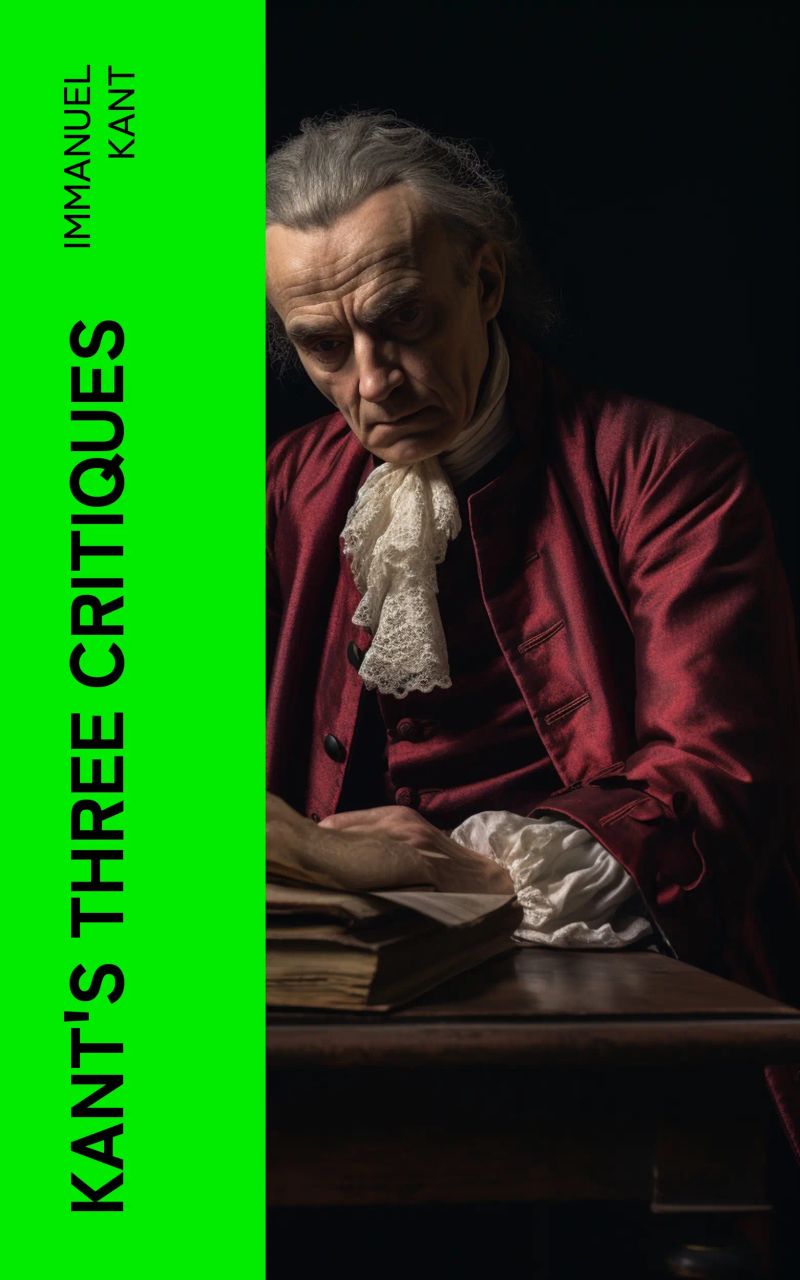
Kant's Three Critiques
The Critique of Pure Reason, The Critique of Practical Reason & The Critique of JudgmentBy Immanuel Kant


Length46h 9m
About this audiobook
The Critique of Pure Reason is one of the most influential works in the history of philosophy. Kant here explains what he means by a critique of pure reason: "I do not mean by this a critique of books and systems, but of the faculty of reason in general, in respect of all knowledge after which it may strive independently of all experience." The Critique of Practical Reason is the second of Immanuel Kant's three critiques and it deals with his moral philosophy. The second Critique exercised a decisive influence over the subsequent development of the field of ethics and moral philosophy, beginning with Johann Gottlieb Fichte's Doctrine of Science. The Critique of Judgment, also translated as the Critique of the Power of Judgment completes the Critical project begun in the Critique of Pure Reason. The book is divided into two main sections: the Critique of Aesthetic Judgment and the Critique of Teleological Judgment, and also includes a large overview of the entirety of Kant's Critical system, arranged in its final form. Immanuel Kant (1724-1804) was a German philosopher, who, according to the Stanford Encyclopedia of Philosophy is "the central figure of modern philosophy." Kant argued that fundamental concepts of the human mind structure human experience, that reason is the source of morality, that aesthetics arises from a faculty of disinterested judgment, that space and time are forms of our understanding, and that the world as it is "in-itself" is unknowable. Kant took himself to have effected a Copernican revolution in philosophy, akin to Copernicus' reversal of the age-old belief that the sun revolved around the earth. Table of Contents: THE CRITIQUE OF PURE REASON THE CRITIQUE OF PRACTICAL REASON THE CRITIQUE OF JUDGMENT
Audiobook details
GenrePhilosophy
Length46 hrs 9 mins
Narrated byListen with 1,000+ voices
FormateBook with Audio
Publish dateDec 22, 2023
LanguageEnglish
Table of contents
1Preface to the First Edition, 1781
51Section VII. Critical Solution of the Cosmological Problem
2Preface to the Second Edition, 1787
52Section VIII. Regulative Principle of Pure Reason in relation to the Cosmological Ideas
3I. Of the difference between Pure and Empirical Knowledge
53Section IX. Of the Empirical Use of the Regulative Principle of Reason with regard to the Cosmological Ideas
4II. The Human Intellect, even in an Unphilosophical State, is in Possession of Certain Cognitions “a priori”
54Chapter III. The Ideal of Pure Reason
5III. Philosophy stands in need of a Science which shall Determine the Possibility, Principles, and Extent of Human Knowledge “a priori”
55Section I. Of the Ideal in General
Show all chaptersShow less
6IV. Of the Difference Between Analytical and Synthetical Judgements
56Section II. Of the Transcendental Ideal (Prototypon Trancendentale)
7V. In all Theoretical Sciences of Reason, Synthetical Judgements “a priori” are contained as Principles
57Section III. Of the Arguments employed by Speculative Reason in Proof of the Existence of a Supreme Being
8VI. The Universal Problem of Pure Reason
58Section IV. Of the Impossibility of an Ontological Proof of the Existence of God
9VII. Idea and Division of a Particular Science, under the Name of a Critique of Pure Reason
59Section V. Of the Impossibility of a Cosmological Proof of the Existence of God
10Section I. Of Space
60Section VI. Of the Impossibility of a Physico-Theological Proof
11Section II. Of Time
61Section VII. Critique of all Theology based upon Speculative Principles of Reason
12I. Of Logic in General
62Appendix. Of the Regulative Employment of the Ideas of Pure Reason
13II. Of Transcendental Logic
63Section I. The Discipline of Pure Reason in the Sphere of Dogmatism
14III. Of the Division of General Logic into Analytic and Dialectic
64Section II. The Discipline of Pure Reason in Polemics
15IV. Of the Division of Transcendental Logic into Transcendental Analytic and Dialectic
65Section III. The Discipline of Pure Reason in Hypothesis
16Book I. Analytic of Conceptions
66Section IV. The Discipline of Pure Reason in Relation to Proofs
17Chapter I. Of the Transcendental Clue to the Discovery of all Pure Conceptions of the Understanding
67Section I. Of the Ultimate End of the Pure Use of Reason
18Introductory
68Section II. Of the Ideal of the Summum Bonum as a Determining Ground of the Ultimate End of Pure Reason
19Section I. Of defined above Use of understanding in General
69Section III. Of Opinion, Knowledge, and Belief
20Section II. Of the Logical Function of the Understanding in Judgements
70Chapter III. The Architectonic of Pure Reason
21Section III. Of the Pure Conceptions of the Understanding, or Categories
71Chapter IV. The History of Pure Reason
22Chapter II. Of the Deduction of the Pure Conceptions of the Understanding
72Preface
23Section I. Of the Principles of a Transcendental Deduction in general
73Introduction. Of the Idea of a Critique of Practical Reason
24Section II. Transcendental Deduction of the pure Conceptions of the Understanding
74Chapter I. Of the Principles of Pure Practical Reason
25Book II. Analytic of Principles
75Chapter II. Of the Concept of an Object of Pure Practical Reason
26Introduction. Of the Transcendental Faculty of judgement in General
76Chapter III. Of the Motives of Pure Practical Reason
27Chapter I. Of the Schematism of the Pure Conceptions of the Understanding
77Chapter I. Of a Dialectic of Pure Practical Reason Generally
28Chapter II. System of all Principles of the Pure Understanding
78Chapter II. Of the Dialectic of Pure Reason in defining the Conception of the “Summum Bonum”
29Section I. Of the Supreme Principle of all Analytical Judgements
79Second Part. Methodology of Pure Practical Reason
30Section II. Of the Supreme Principle of all Synthetical Judgements
80Conclusion
31Section III. Systematic Representation of all Synthetical Principles of the Pure Understanding (pt. 1)
81Editor’s Introduction
32Section III. Systematic Representation of all Synthetical Principles of the Pure Understanding (pt. 2)
82Preface
33Chapter III. Of the Ground of the Division of all Objects into Phenomena and Noumena
83I. Of the Division of Philosophy
34Appendix
84II. Of the Realm of Philosophy in General
35Introduction
85III. Of the Critique of Judgement as a Means of Combining the Two Parts of Philosophy into a Whole
36I. Of Transcendental Illusory Appearance
86IV. Of Judgement as a Faculty Legislating a Priori
37II. Of Pure Reason as the Seat of Transcendental Illusory Appearance
87V. The Principle of the Formal Purposiveness of Nature is a Transcendental Principle of Judgement
38Book I. Of the Conceptions of Pure Reason
88VI. Of the Combination of the Feeling of Pleasure with the Concept of the Purposiveness of Nature
39Section I. Of Ideas in General
89VII. Of the Aesthetical Representation of the Purposiveness of Nature
40Section II. Of Transcendental Ideas
90VIII. Of the Logical Representation of the Purposiveness of Nature
41Section III. System of Transcendental Ideas
91IX. Of the Connexion of the Legislation of Understanding with that of Reason by Means of the Judgement
42Book II. Of the Dialectical Procedure of Pure Reason
92First Book: Analytic of the Beautiful
43Chapter I. Of the Paralogisms of Pure Reason
93Second Book: Analytic of the Sublime (pt. 1)
44Chapter II. The Antinomy of Pure Reason
94Second Book: Analytic of the Sublime (pt. 2)
45Section I. System of Cosmological Ideas
95Second Division: Dialectic of the Aesthetical Judgement
46Section II. Antithetic of Pure Reason
96First Division: Analytic of the Teleological Judgement
47Section III. Of the Interest of Reason in these Self-contradictions
97Second Division: Dialectic of the Teleological Judgement
48Section IV. Of the necessity imposed upon Pure Reason of presenting a Solution of its Transcendental Problems
98Methodology of the Teleological Judgement
49Section V. Sceptical Exposition of the Cosmological Problems presented in the four Transcendental Ideas
99General remark on Teleology
50Section VI. Transcendental Idealism as the Key to the Solution of Pure Cosmological Dialectic

Ausgewählte Schriften zur Geschichtsphilosophie, Ethik und PolitikImmanuel Kant7h 23m$2 · $0.00
THE THREE CRITIQUES: The Critique of Pure Reason, The Critique of Practical Reason & The Critique of JudgmentImmanuel Kant46h 10m$1 · $0.00

Anthropologie in pragmatischer HinsichtImmanuel Kant9h 19m$1 · $0.00
Critique of Practical Reason (Kritik der praktischen Vernunft)Immanuel Kant6h 50m$2 · $0.00
Kant's Prolegomena to Any Future MetaphysicsImmanuel Kant4h 21m$1 · $0.00

Groundwork of the Metaphysics of MoralsImmanuel Kant4h 28m$1 · $0.00
The Metaphysical Elements of EthicsImmanuel Kant2h 50m$2 · $0.00

Über die Vulkane im MondeImmanuel Kant22m$2 · $0.00

Über PädagogikImmanuel Kant2h 45m$2 · $0.00

Allgemeine Naturgeschichte und Theorie des HimmelsImmanuel Kant6h 10m$1 · $0.00
Die Metaphysik der SittenImmanuel Kant12h 16m$2 · $0.00
The Kantian Ethics: Metaphysics of Morals, The Critique of Practical Reason & Perpetual PeaceImmanuel Kant23h 26m$1 · $0.00

The Greatest Works of Immanuel KantImmanuel Kant84h 30m$1 · $0.00

Ikuiseen rauhaan: Valtio-oikeudellinen tutkielmaImmanuel Kant3h 1m$2 · $0.00

Kritik der praktischen VernunftImmanuel Kant7h 34m$2 · $0.00

Immanuel Kant: Beobachtungen über das Gefühl des Schönen und ErhabenenImmanuel Kant3h 49m$2 · $0.00

Die Metaphysik der SittenImmanuel Kant13h 47m$2 · $0.00

Groundwork of the Metaphysics of MoralsImmanuel Kant4h 47m$2 · $0.00
Metaphysische Anfangsgründe der NaturwissenschaftImmanuel Kant6h 14m$2 · $0.00
The Ethics of Immanuel KantImmanuel Kant22h 5m$2 · $0.00
The Collected Works of Friedrich NietzscheFriedrich Nietzsche92h$2 · $0.00
The Practicing StoicWard Farnsworth9h 56m$20

Moral Letters to LuciliusLucius Annaeus Seneca25h 38m$2 · $0.00
THE THREE CRITIQUES: The Critique of Pure Reason, The Critique of Practical Reason & The Critique of JudgmentImmanuel Kant46h 10m$1 · $0.00

The Complete Essays of MontaigneMichel de Montaigne45h 30m$2 · $0.00

The Origin of OthersToni Morrison2h 25m$20
The LawFrédéric Bastiat2h 7m$10
IlluminationsWalter Benjamin10h 12m$20 · $0.00

Tâo Teh KingLaozi2h 38m$2 · $0.00

Buddhist Boot CampTimber Hawkeye2h 39m$18 · $0.00
The DhammapadaFriedrich Max Müller1h 30m$15
Change Your MindRJ Spina7h 5m$17

SUMMA THEOLOGICAThomas Aquinas282h 57m$1 · $0.00

The Meditations of the Emperor Marcus Aurelius AntoninusEmperor of Rome Marcus Aurelius6h 24m$1 · $0.00
Crime and PunishmentFyodor Dostoevsky23h 11m$12 · $0.00

MeditationsMarcus Aurelius5h 54m$1 · $0.00

Tao Te ChingLao Tzu1h 25m$2 · $0.00

Tao Te ChingStephen Mitchell, Lao Tzu1h 42m$16 · $0.00

Everyday DharmaSuneel Gupta5h 2m$20 · $0.00

Dr. Martin Luther King Jr. on LoveMartin Luther King10h 2m$29 · $0.00
You may also like

OrthodoxyG. K. Chesterton6h 37m$2.30
The Journey of Not KnowingJulie Benezet7h 36m$20
Question Meditation—LIFEMichael Draksal28m$11 · $0.00
THE SUBCONSCIOUS & THE SUPERCONSCIOUS PLANES OF MINDWilliam Walker Atkinson4h 33m$2 · $0.00
On QualityRobert M. Pirsig, Wendy K. Pirsig2h 58m$18 · $0.00
The ground of being, and the mind of manJiddu Krishnamurti1h 12m$4 · $0.00
The Myth of EnlightenmentOM C. Parkin50m$8 · $0.00
How to Read People like a BookVincent McDaniel2h 4m$2.99 · $0.00

Essays in Zen BuddhismDaisetz Teitaro13h 48m$2.40
The Ending Of TimeJiddu Krishnamurti19h 4m$24 · $0.00

The Greatest SecretRhonda Byrne6h 20m5 (1)$24 · $0.00
Unraveling HabitsUnknown Author59m$17 · $0.00

Big TrustShadé Zahrai, Fayçal Sekkouah8h 36m$26 · $0.00
The Spiritual Exercises of St. Ignatius of LoyolaIgnatius of Loyola4h 38m$1 · $0.00

OrthodoxyG. K. Chesterton6h 36m$2 · $0.00

You TurnAshley Stahl9h 22m$20
Step I TemperanceFalco Wisskirchen30m$18 · $0.00

Step I Soul Mirror WorkFalco Wisskirchen30m$18 · $0.00
Nicomachean EthicsAristotle11h 4m$1 · $0.00
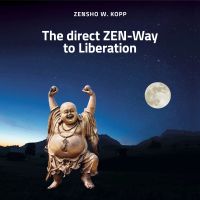
The direct ZEN-Way to LiberationZensho W. Kopp2h 6m$13 · $0.00