
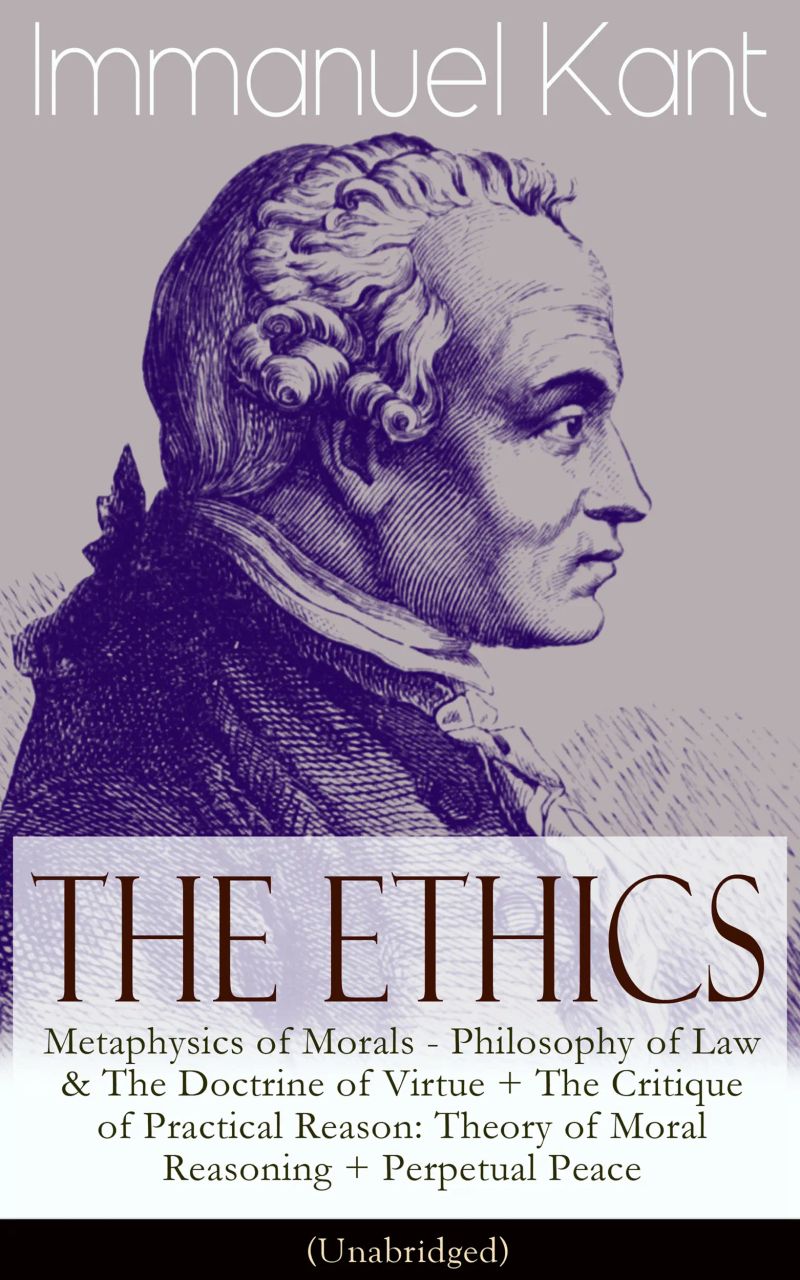
The Ethics of Immanuel Kant
Metaphysics of Morals - Philosophy of Law & The Doctrine of Virtue + The Critique of Practical Reason: Theory of Moral Reasoning + Perpetual Peace (Unabridged)By Immanuel Kant


Length22h 5m
About this audiobook
This carefully crafted ebook: "The Ethics of Immanuel Kant" is formatted for your eReader with a functional and detailed table of contents. Fundamental Principles of the Metaphysics of Morals, also known as the Groundwork of the Metaphysic of Morals, is the first of Immanuel Kant's mature works on moral philosophy and remains one of the most influential in the field. Kant conceives his investigation as a work of foundational ethics—one that clears the ground for future research by explaining the core concepts and principles of moral theory and showing that they are normative for rational agents. Kant aspires to nothing less than this: to lay bare the fundamental principle of morality and show that it applies to us. The Metaphysics of Morals is a work of political and moral philosophy by Immanuel Kant. The work is divided into two main parts, "The Science of Right, which deals with the rights that people have or can acquire, and the Doctrine of Virtue, which deals with the virtues they ought to acquire." The Critique of Practical Reason is the second of Immanuel Kant's three critiques and deals with his moral philosophy. Immanuel Kant (1724-1804) was a German philosopher, who, according to the Stanford Encyclopedia of Philosophy is "the central figure of modern philosophy." Kant argued that fundamental concepts of the human mind structure human experience, that reason is the source of morality, that aesthetics arises from a faculty of disinterested judgment, that space and time are forms of our understanding, and that the world as it is "in-itself" is unknowable. Contents: Fundamental Principles of the Metaphysic of Morals The Metaphysics of Morals Philosophy of Law (The Science of Right) The Metaphysical Elements of Ethics The Critique of Practical Reason: Theory of Moral Reasoning Perpetual Peace
Audiobook details
Rating★★★★ 4.2 (23)
Includes Goodreads, Amazon
GenrePhilosophy
Length22 hrs 5 mins
Narrated byListen with 1,000+ voices
FormateBook with Audio
Publish dateOct 1, 2015
LanguageEnglish
Table of contents
1The Ethics of Immanuel Kant
2Fundamental Principles of the Metaphysic of Morals
3Preface
4First Section: Transition from the Common Rational Knowledge of Morality to the Philosophical
5Second Section: Transition from Popular Moral Philosophy to the Metaphysic of Morals
Show all chaptersShow less
6Third Section: Transition from the Metaphysic of Morals to the Critique of Pure Practical Reason
7Translator's preface
8Bibliographical note
9General Introduction to the Metaphysics of Morals
10I. The Relation of the Faculties of the Human Mind to the Moral Laws
11II. The Idea and Necessity of a Metaphysic of Morals
12III. The Division of a Metaphysic of Morals
13General Divisions of the Metaphysics of Morals
14I. Division of the Metaphysic of Morals as a System of Duties generally
15II. Division of the Metaphysic of Morals according to Relations of Obligation
16III. Division of the Metaphysic of Morals
17IV. General preliminary Conceptions defined and explained
18Introduction to the Science of Right
19General Definitions and Divisions
20A. What the Science of Right is
21B. What is Right?
22C. Universal Principle of Right
23D. Right is conjoined with the Title or Authority to compel
24E. Strict Right may be also represented as the possibility of a universal reciprocal Compulsion in harmony with the Freedom of all according to universal Laws
25F. Supplementary Remarks on Equivocal Right
26Division of the Science of Right
27A. General Division of the Duties of Right
28B. Universal Division of Rights
29C. Methodical Division of the Science of Right
30Part First: Private Right
31Chapter First. Of the Mode of Having Anything External as One’s Own
32Chapter Second. The Mode of acquiring anything External
33First Section. Principles of Real Right
34Second Section. Principles of Personal Right
35Third Section. Principles of Personal Right that is Real in Kind
36The Rights of the Family as a Domestic Society
37TITLE FIRST. Conjugal Right. (Husband and Wife.)
38TITLE SECOND. Parental Right. (Parent and Child.)
39TITLE THIRD. Household Right. (Master and Servant.)
40SYSTEMATIC DIVISION Of all the Rights capable of being acquired by Contract
41EPISODICAL SECTION. The Ideal Acquisition of external Objects of the Will
42Chapter Third. Acquisition conditioned by the Sentence of a Public Judicatory
43Part Second: Public Right
44I. Right of the State and Constitutional Law
45II. The Right of Nations and International Law
46III. The Universal Right of Mankind
47Conclusion
48Supplementary Explanations of the Principles of Right
49I. Logical Preparation for the Preceding Conception of Right
50II. Justification of the Conception of a Personal Right of a Real Kind

Zum ewigen FriedenImmanuel Kant, Sam Rokbuhm1h 18m$12 · $0.00

The Greatest Works of Immanuel KantImmanuel Kant83h 28m4.4 (142)$1.99 · $0.00

Untersuchung über die Deutlichkeit der Grundsätze der natürlichen Theologie und der MoralImmanuel Kant2h 49m4.0 (41)$1 · $0.00

Kant: Kritik der praktischen Vernunft, Kritik der reinen Vernunft & Kritik der UrteilskraftImmanuel Kant46h 31m4.5 (1.4K)$1 · $0.00
The Critique of Pure ReasonImmanuel Kant25h 41m4.1 (49.5K)$1.99 · $0.00

The Three Critiques: The Critique of Pure Reason, Practical Reason and JudgmentImmanuel Kant46h 6m4.3 (15.5K)$1.99 · $0.00

Physische GeographieImmanuel Kant13h 54m3.9 (47)$1 · $0.00

THE CRITIQUE OF JUDGMENTImmanuel Kant15h 35m4.1 (11.8K)$1.99 · $0.00
THE CRITIQUE OF PRACTICAL REASONImmanuel Kant8h 29m4.1 (14.1K)$1.99 · $0.00

Die Metaphysik der SittenImmanuel Kant14h 4m4.1 (4.2K)$1 · $0.00

Schriften zur physischen GeographieImmanuel Kant26h 23m4.4 (11)$1 · $0.00

Kritik der Urteilskraft: Die dritte KritikImmanuel Kant16h 25m4.1 (16.7K)$1 · $0.00

The Kantian Ethics: Metaphysics of Morals, The Critique of Practical Reason & Perpetual PeaceImmanuel Kant23h 29m$1.99 · $0.00
THE CRITIQUE OF PURE REASONImmanuel Kant25h 39m4.1 (51.3K)$1.99 · $0.00

IMMANUEL KANT: Philosophical Books, Critiques & EssaysImmanuel Kant83h 15m4.4 (143)$1.99 · $0.00
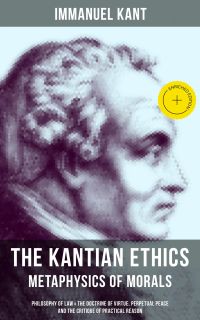
The Kantian Ethics: Metaphysics of MoralsImmanuel Kant23h 30m4.1 (5.1K)$1.99 · $0.00

Crítica de la Razón PuraImmanuel Kant26h 12m4.1 (51.4K)$11 · $0.00

Träume eines Geistersehers, erläutert durch Träume der Metaphysik (Kommentiert)Immanuel Kant4h 2m3.8 (189)$1 · $0.00
Metaphysische Anfangsgründe der Naturwissenschaft (Kommentiert)Immanuel Kant6h 33m4.1 (145)$1 · $0.00

Teoría y praxisImmanuel Kant4h 2m3.9 (243)$11 · $0.00

The Art of LivingThich Nhat Hanh5h 1m4.5 (14.2K)$24 · $0.00

Moral Letters to LuciliusLucius Annaeus Seneca24h 26m4.5 (71.7K)$0.99 · $0.00

Lessons in TruthH. Emilie Cady3h 50m4.5 (2.4K)$20 · $0.00
Letters from a StoicSeneca6h 5m4.4 (80.4K)$6 · $0.00
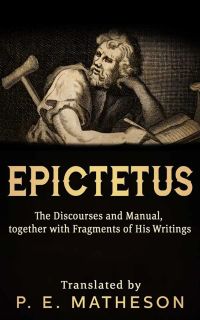
The Discourses of EpictetusP. E. MATHESOM12h 47m4.4 (17.7K)$1.20 · $0.00

IlluminationsWalter Benjamin10h 12m4.4 (16.2K)$20 · $0.00

That Bird Has My WingsJarvis Jay Masters9h 49m4.4 (13.7K)$29 · $0.00

Tâo Teh KingLaozi2h 34m4.4 (230.9K)$2 · $0.00

SymposiumPlato3h 26m4.4 (97.9K)$1.20 · $0.00

Buddhist Boot CampTimber Hawkeye2h 39m4.4 (8.4K)$18 · $0.00
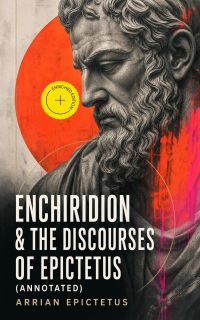
Enchiridion & The Discourses of Epictetus (Annotated)Arrian Epictetus18h 9m4.4 (3.5K)$2 · $0.00

The Meditations of the Emperor Marcus Aurelius AntoninusEmperor of Rome Marcus Aurelius5h 41m4.4 (1.8M)$1 · $0.00

Crime and PunishmentFyodor Dostoevsky23h 11m4.4 (1.3M)$12 · $0.00

MeditationsMarcus Aurelius5h 52m4.4 (433.7K)$1 · $0.00

Everyday DharmaSuneel Gupta5h 2m4.5 (761)$20 · $0.00

The Joyful Wisdom ("La Gaya Scienza")Friedrich Wilhelm Nietzsche11h 37m4.4 (26.6K)$1 · $0.00
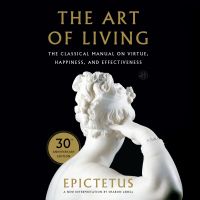
The Art of LivingEpictetus, Sharon Lebell3h 16m4.4 (50.1K)$18 · $0.00
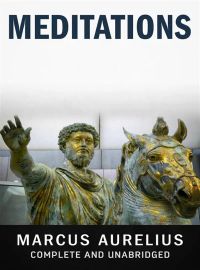
MeditationsEmperor Of Rome Marcus Aurelius7h 23m4.3 (477.5K)$1.20 · $0.00

The Imitation of ChristThomas à Kempis6h 27m4.3 (84.6K)$21 · $0.00

Sadhana: the realisation of lifeRabindranath Tagore3h 49m4.4 (8.6K)$6 · $0.00
You may also like

How to Be EverythingEmilie Wapnick5h4.0 (6.2K)$20 · $0.00

Nuggets of the New ThoughtWilliam Walker4h 16m4.2 (252)$3.50 · $0.00

The Science of Wallace D. Wattles: Complete TrilogyWallace D. Wattles8h 3m4.5 (2.6K)$2 · $0.00

Think and Grow Rich! The classic personal development and self-help book by Napoleon Hill (Annotated)Napoleon Hill12h 2m4.3 (99.2K)$0.99 · $0.00

Refuse to Choose!Barbara Sher11h 25m4.1 (6.6K)$20

Your Invisible PowerGeneviève Behrend4h 58m4.2 (5.5K)$1.99 · $0.00

Swayam Ki AwaazPrem Rawat8h 34m4.7 (1.1K)$26 · $0.00
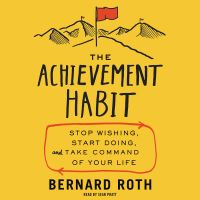
The Achievement HabitBernard Roth7h 23m3.9 (5.7K)$24 · $0.00
The Art of ImpossibleSteven Kotler9h 17m4.2 (10K)$29 · $0.00

HOW TO STOP WORRYING & START LIVINGDale Carnegie13h 6m4.2 (146.5K)$1 · $0.00

Hot and UnbotheredYana Tallon-Hicks10h 44m4.5 (600)$29 · $0.00

Once Upon a StrangerDr. Gillian Sandstrom8h 31m4.3 (467)$26 · $0.00

The Subtle Art of Not Giving a F*ck JournalMark Manson1h 21m4.2 (1.6K)$16 · $0.00

How to Get What You Want (Annotated)Wallace D. Wattles1h 24m4.3 (266)$0.99 · $0.00

The Courage to Teach, Tenth Anniversary EditionParker J. Palmer8h 34m4.3 (5.7K)$20
The Art of Problem SolvingAnthony Ekanem28m$5 · $0.00

All Women WantAlyx Gorman11h4.1 (63)$29 · $0.00

Pennsylvania Community Health Worker Certification Study Guide 2026/2027Imara Kestwick13h 11m$25

E - Ludic AdministrationRobson Paniago / Marília Bestani4h 20m$10 · $0.00

The First Love of Your Life Is YourselfDanniel Silva3h 19m$1.80 · $0.00