
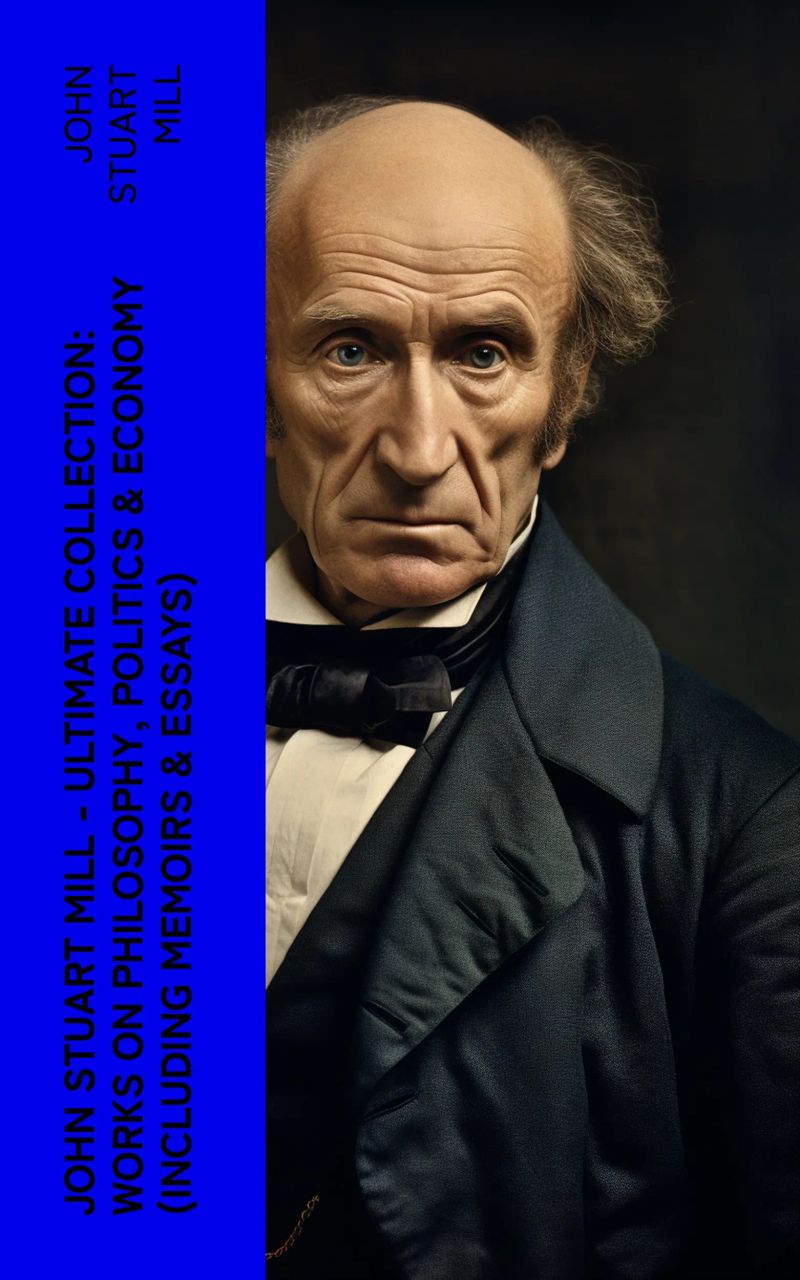
JOHN STUART MILL - Ultimate Collection: Works on Philosophy, Politics & Economy (Including Memoirs & Essays)
By John Stuart Mill


Length136h 48m
About this audiobook
John Stuart Mill is considered to be one of the most influential thinkers in the history of liberalism, who contributed greatly to social theory, political theory and political economy. This meticulously edited collection covers all areas of the author's interests and clearly represents his work and principal ideals: hierarchy of pleasures in Utilitarianism, liberalism and early liberal feminism. Contents: The Autobiography Utilitarianism The Subjection of Women On Liberty Principles of Political Economy A System Of Logic, Ratiocinative And Inductive Auguste Comte and Positivism Three Essays on Religion Considerations on Representative Government England and Ireland Essays on Some Unsettled Questions of Political Economy Inaugural Address Delivered to the University of St. Andrews Memorandum of the Improvements in the Administration of India During the Last Thirty Years Remarks on Bentham's Philosophy Socialism Speech In Favor of Capital Punishment The Contest in America The Slave Power Thoughts on Parliamentary Reform A Few Words on Non-Intervention
Audiobook details
GenrePhilosophy
Length136 hrs 48 mins
Narrated byListen with 1,000+ voices
FormateBook with Audio
Publish dateDec 14, 2023
LanguageEnglish
Table of contents
1Introduction
2274. Taxation systems of the United States and other Countries
2CHAPTER I GENERAL REMARKS
2285. A Résumé of the general principles of taxation
3CHAPTER II WHAT UTILITARIANISM IS
2291. Is it desirable to defray extraordinary public expenses by loans?
4CHAPTER III OF THE ULTIMATE SANCTION OF THE PRINCIPLE OF UTILITY
2302. Not desirable to redeem a national Debt by a general Contribution
5CHAPTER IV OF WHAT SORT OF PROOF THE PRINCIPLE OF UTILITY IS SUSCEPTIBLE
2313. In what cases desirable to maintain a surplus revenue for the redemption of Debt
Show all chaptersShow less
6CHAPTER V ON THE CONNEXION BETWEEN JUSTICE AND UTILITY
2321. The doctrine of Protection to Native Industry
7Chapter I
2332. — had its origin in the Mercantile System
8Chapter II
2343. — supported by pleas of national subsistence and national defense
9Chapter III
2354. — on the ground of encouraging young industries; colonial policy
10Chapter IV
2365. — on the ground of high wages
11I
2376. — on the ground of creating a diversity of industries
12II
2387. — on the ground that it lowers prices
13III
239A Brief Bibliography Of The Tariffs Of The United States
14Chapter I Introductory
240A Brief Bibliography Of Bimetallism
15Chapter II of the Liberty of Thought and Discussion
241A Brief Bibliography Of American Shipping
16Chapter III of Individuality, as One of the Elements of Well-being
242Appendix II Examination Questions
17Chapter IV of the Limits to the Authority of Society Over the Individual
243Preface To The First Edition
18Preface
244Preface To The Third And Fourth Editions
19A Sketch Of The History Of Political Economy
245Preface To The Eight Edition
20Books For Consultation
246Introduction
21Preliminary Riarks
247Chapter I Of The Necessity Of Commencing With An Analysis Of Language
221. The Requisites of Production are Two: Labor, and Appropriate Natural Objects
248Chapter II Of Names
232. The Second Requisite of Production, Labor
249Introduction
243. Of Capital as a Requisite of Production
250Feelings, Or States of Consciousness
251. Definition of Productive and Unproductive Labor
251Substances
262. Productive and Unproductive Consumption
252Attributes: and, first, Qualities
273. Distinction Between Labor for the Supply of Productive Consumption and Labor for the Supply of Unproductive Consumption
253Relations
281. Capital is Wealth Appropriated to Reproductive Employment
254Quantity
292. More Capital Devoted to Production than Actually Employed in it
255Attributes Concluded
303. Examination of Cases Illustrative of the Idea of Capital
256General Results
311. Industry is Limited by Capital
257Chapter IV Of Propositions
322. Increase of Capital gives Increased Employment to Labor, Without Assignable Bounds
258Chapter V Of The Import Of Propositions
333. Capital is the result of Saving, and all Capital is Consumed
259Chapter VI Of Propositions Merely Verbal
344. Capital is kept up by Perpetual Reproduction, as shown by the Recovery of Countries from Devastation
260Chapter VII Of The Nature Of Classification, And The Five Predicables
355. Effects of Defraying Government Expenditure by Loans
261Chapter VIII Of Definition
366. Demand for Commodities is not Demand for Labor
262Chapter I Of Inference, Or Reasoning, In General
371. Fixed and Circulating Capital
263Chapter II Of Ratiocination, Or Syllogism
382. Increase of Fixed Capital, when, at the Expense of Circulating, might be Detrimental to the Laborers
264Chapter III Of The Functions And Logical Value Of The Syllogism
393. — This seldom, if ever, occurs
265Chapter IV Of Trains Of Reasoning, And Deductive Sciences
401. General Causes of Superior Productiveness
266Chapter V Of Demonstration, And Necessary Truths
412. Combination and Division of Labor Increase Productiveness
267Chapter VI The Same Subject Continued
423. Advantages of Division of Labor
268Chapter VII Examination Of Some Opinions Opposed To The Preceding Doctrines
434. Production on a Large and Production on a Small Scale
269Chapter I Preliminary Observations On Induction In General
441. The Law of the Increase of Production Depends on those of Three Elements — Labor. Capital, and Land
270Chapter II Of Inductions Improperly So Called
452. The Law of Population
271Chapter III Of The Ground Of Induction
463. By what Checks the Increase of Population is Practically Limited
272Chapter IV Of Laws Of Nature
471. Means for Saving in the Surplus above Necessaries
273Chapter V Of The Law Of Universal Causation
482. Motive for Saving in the Surplus above Necessaries
274Chapter VI On The Composition Of Causes
493. Examples of Deficiency in the Strength of this Desire
275Chapter VII On Observation And Experiment
504. Examples of Excess of this Desire
276Chapter VIII Of The Four Methods Of Experimental Inquiry
511. The Law of Production from the Soil, a Law of Diminishing Return in Proportion to the Increased Application of Labor and Capital
277Chapter IX Miscellaneous Examples Of The Four Methods
522. Antagonist Principle to the Law of Diminishing Return; the Progress of Improvements in Production
278Chapter X Of Plurality Of Causes, And Of The Intermixture Of Effects
533. — In Railways
279Chapter XI Of The Deductive Method
544. — In Manufactures
280Chapter XII Of The Explanation Of Laws Of Nature
555. Law Holds True of Mining
281Chapter XIII Miscellaneous Examples Of The Explanation Of Laws Of Nature
561. Remedies for Weakness of the Principle of Accumulation
282Chapter XIV Of The Limits To The Explanation Of Laws Of Nature; And Of Hypotheses
572. Even where the Desire to Accumulate is Strong, Population must be Kept within the Limits of Population from Land
283Chapter XV Of Progressive Effects; And Of The Continued Action Of Causes
583. Necessity of Restraining Population not superseded by Free Trade in Food
284Chapter XVI Of Empirical Laws
594. — Nor by Emigration
285Chapter XVII Of Chance And Its Elimination
601. Individual Property and its opponents
286Chapter XVIII Of The Calculation Of Chances
612. The case for Communism against private property presented
287Chapter XIX Of The Extension Of Derivative Laws To Adjacent Cases
623. The Socialists who appeal to state-help
288Chapter XX Of Analogy
634. Of various minor schemes, Communistic and Socialistic
289Chapter XXI Of The Evidence Of The Law Of Universal Causation
645. The Socialist objections to the present order of Society examined
290Chapter XXII Of Uniformities Of Co-Existence Not Dependent On Causation
656. Property in land different from property in Movables
291Chapter XXIII Of Approximate Generalizations, And Probable Evidence
661. Of Competition and Custom
292Chapter XXIV Of The Remaining Laws Of Nature
672. The Wages-fund, and the Objections to it Considered
293Chapter XXV Of The Grounds Of Disbelief
683. Examination of some popular Opinions respecting Wages
294Chapter I Of Observation And Description
694. Certain rare Circumstances excepted, High Wages imply Restraints on Population
295Chapter II Of Abstraction, Or The Formation Of Conceptions
705. Due Restriction of Population the only Safeguard of a Laboring-Class
296Chapter III Of Naming, As Subsidiary To Induction
711. A Legal or Customary Minimum of Wages, with a Guarantee of Employment
297Chapter IV Of The Requisites Of A Philosophical Language, And The Principles Of Definition
722. — Would Require as a Condition Legal Measures for Repression of Population
298Chapter V On The Natural History Of The Variations In The Meaning Of Terms
733. Allowances in Aid of Wages and the Standard of Living
299Chapter VI The Principles Of A Philosophical Language Further Considered
744. Grounds for Expecting Improvement in Public Opinion on the Subject of Population
300Chapter VII Of Classification, As Subsidiary To Induction
755. Twofold means of Elevating the Habits of the Laboring-People; by Education, and by Foreign and Home Colonization
301Chapter VIII Of Classification By Series
761. Differences of Wages Arising from Different Degrees of Attractiveness in Different Employments
302Chapter I Of Fallacies In General
772. Differences arising from Natural Monopolies
303Chapter II Classification Of Fallacies
783. Effect on Wages of the Competition of Persons having other Means of Support
304Chapter III Fallacies Of Simple Inspection; Or A Priori Fallacies
794. Wages of Women, why Lower than those of Men
305Chapter IV Fallacies Of Observation
805. Differences of Wages Arising from Laws, Combinations, or Customs
306Chapter V Fallacies Of Generalization
811. Profits include Interest and Risk; but, correctly speaking, do not include Wages of Superintendence
307Chapter VI Fallacies Of Ratiocination
822. The Minimum of Profits; what produces Variations in the Amount of Profits
308Chapter VII Fallacies Of Confusion
833. General Tendency of Profits to an Equality
309Chapter I Introductory Remarks
844. The Cause of the Existence of any Profit; the Advances of Capitalists consist of Wages of Labor
310Chapter II Of Liberty And Necessity
855. The Rate of Profit depends on the Cost of Labor
311Chapter III That There Is, Or May Be, A Science Of Human Nature
861. Rent the Effect of a Natural Monopoly
312Chapter IV Of The Laws Of Mind
872. No Land can pay Rent except Land of such Quality or Situation as exists in less Quantity than the Demand
313Chapter V Of Ethology, Or The Science Of The Formation Of Character
883. The Rent of Land is the Excess of its Return above the Return to the worst Land in Cultivation
314Chapter VI General Considerations On The Social Science
894. — Or to the Capital employed in the least advantageous Circumstances
315Chapter VII Of The Chemical, Or Experimental, Method In The Social Science
905. Opposing Views of the Law of Rent
316Chapter VIII Of The Geometrical, Or Abstract, Method
916. Rent does not enter into the Cost of Production of Agricultural Produce
317Chapter IX Of The Physical, Or Concrete Deductive, Method
921. Definitions of Value in Use, Exchange Value, and Price
318Chapter X Of The Inverse Deductive, Or Historical, Method
932. Conditions of Value: Utility, Difficulty of Attainment, and Transferableness
319Chapter XI Additional Elucidations Of The Science Of History
943. Commodities limited in Quantity by the law of Demand and Supply: General working of this Law
320Chapter XII Of The Logic Of Practice, Or Art; Including Morality And Policy
954. Miscellaneous Cases falling under this Law
321Part I The Cours De Philosophie Positive (pt. 1)
965. Commodities which are Susceptible of Indefinite Multiplication without Increase of Cost. Law of their Value Cost of Production
322Part I The Cours De Philosophie Positive (pt. 2)
976. The Value of these Commodities confirm, in the long run, to their Cost of Production through the operation of Demand and Supply
323Part II The Later Speculations of M. Comte
981. Of Labor, the principal Element in Cost of Production
324Introductory Notice
992. Wages affect Values, only if different in different employments; “non-competing groups.”
325Nature
1003. Profits an element in Cost of Production
326Utility of Religion
1014. Cost of Production properly represented by sacrifice, or cost, to the Laborer as well as to the Capitalist; the relation of this conception to the Cost of Labor
327Part I Introduction
1025. When profits vary from Employment to Employment, or are spread over unequal lengths of Time, they affect Values accordingly
328Part II Attributes
1036. Occasional Elements in Cost of Production; taxes and ground-rent
329Part III Immortality
1041. Commodities which are susceptible of indefinite Multiplication, but not without increase of Cost. Law of their Value, Cost of Production in the most unfavorable existing circumstances
330Part IV Revelation
1052. Such commodities, when Produced in circumstances more favorable, yield a Rent equal to the difference of Cost
331Preface
1063. Rent of Mines and Fisheries and ground-rent of Buildings, and cases of gain analogous to Rent
332Chapter I — To What Extent Forms of Government are a Matter of Choice
1074. Résumé of the laws of value of each of the three classes of commodities
333Chapter II — The Criterion of a Good Form of Government
1081. The three functions of Money — a Common Denominator of Value, a Medium of Exchange, a “Standard of Value”
334Chapter III — That the ideally best Form of Government is Representative Government
1092. Gold and Silver, why fitted for those purposes
335Chapter IV — Under what Social Conditions Representative Government is Inapplicable
1103. Money a mere contrivance for facilitating exchanges, which does not affect the laws of value
336Chapter V — Of the Proper Functions of Representative Bodies
1111. Value of Money, an ambiguous expression
337Chapter VI — Of the Infirmities and Dangers to which Representative Government is Liable
1122. The Value of Money depends on its quantity
338Chapter VII — Of True and False Democracy; Representation of All, and Representation of the Majority Only
1133. — Together with the Rapidity of Circulation
339Chapter VIII — Of the Extension of the Suffrage
1144. Explanations and Limitations of this Principle
340Chapter IX — Should there be Two Stages of Election?
1151. The value of Money, in a state of Freedom, conforms to the value of the Bullion contained in it
341Chapter X — Of the Mode of Voting
1162. — Which is determined by the cost of production
342Chapter XI — Of the Duration of Parliaments
1173. This law, how related to the principle laid down in the preceding chapter
343Chapter XII — Ought Pledges to be Required from Members of Parliament?
1181. Objections to a Double Standard
344Chapter XIII — Of a Second Chamber
1192. The use of the two metals as money, and the management of Subsidiary Coins
345Chapter XIV — Of the Executive in a Representative Government
1203. The experience of the United States with a double standard from 1792 to 1883
346Chapter XV — Of Local Representative Bodies
1211. Credit not a creation but a Transfer of the means of Production
347Chapter XVI — Of Nationality, as Connected With Representative Government
1222. In what manner it assists Production
348Chapter XVII — Of Federal Representative Governments
1233. Function of Credit in economizing the use of Money
349Chapter XVIII — Of the Government of Dependencies by a Free State
1244. Bills of Exchange
350England and Ireland
1255. Promissory Notes
351Preface
1266. Deposits and Checks
352ESSAY I OF THE LAWS OF INTERCHANGE BETWEEN NATIONS; AND THE DISTRIBUTION OF THE GAINS OF COMMERCE AMONG THE COUNTRIES OF THE COMMERCIAL WORLD
1271. What acts on prices is Credit, in whatever shape given
353ESSAY II OF THE INFLUENCE OF CONSUMPTION ON PRODUCTION
1282. Credit a purchasing Power, similar to Money
354ESSAY III ON THE WORDS PRODUCTIVE AND UNPRODUCTIVE
1293. Great extensions and contractions of Credit. Phenomena of a commercial crisis analyzed
355ESSAY IV ON PROFITS, AND INTEREST
1304. Influence of the different forms of Credit on Prices
356ESSAY V ON THE DEFINITION OF POLITICAL ECONOMY; AND ON THE METHOD OF INVESTIGATION PROPER TO IT
1315. On what the use of Credit depends
357Inaugural Address Delivered to the University of St. Andrews
1326. What is essential to the idea of Money?
358Connection of the Revenue System with the Rights and Condition of the People
1331. What determines the value of an inconvertible paper money?
359Bombay Ryotwar Reform
1342. If regulated by the price of Bullion, as inconvertible Currency might be safe, but not Expedient
360Madras Improvements
1353. Examination of the doctrine that an inconvertible Current is safe, if representing actual Property
361Ryotwar Reform in Progress at Madras
1364. Experiments with paper Money in the United States
362Fiscal System of India
1375. Examination of the gain arising from the increase and issue of paper Currency
363Land Revenue
1386. Résumé of the subject of money
364Opium
1391. The theory of a general Over-Supply of Commodities stated
365Salt
1402. The supply of commodities in general can not exceed the power of Purchase
366Tobacco Monopoly Abolished
1413. There can never be a lack of Demand arising from lack of Desire to Consume
367Customs
1424. Origin and Explanation of the notion of general Over-Supply
368Post-office
1431. Values of commodities which have a joint cost of production
369Judicial Arrangements of Lord Cornwallis
1442. Values of the different kinds of agricultural produce
370Subsequent Improvements
1451. Cost of Production not a regulator of international values. Extension of the word “international”
371The New Codes
1462. Interchange of commodities between distance places determined by differences not in their absolute, but in the comparative, costs of production
372Judicial System of the Non-Regulation Provinces
1473. The direct benefits of commerce consist in increased Efficiency of the productive powers of the World
373Prison Discipline
1484. — Not in a Vent for exports, nor in the gains of Merchants
374Police
1495. Indirect benefits of Commerce, Economical and Moral; still greater than the Direct
375Suppression of Piracy
1501. The values of imported commodities depend on the Terms of international interchange
376Infanticide
1512. The values of foreign commodities depend, not upon Cost of Production, but upon Reciprocal Demand and Supply
377Suttee
1523. — As illustrated by trade in cloth and linen between England and Germany
378Witchcraft
1534. The conclusion states in the Equation of International Demand
379Tragga
1545. The cost to a country of its imports depends not only on the ratio of exchange, but on the efficiency of its labor
380Meriah Sacrifices
1551. Money imported on two modes; as a Commodity, and as a medium of Exchange
381Abolition of Slavery
1562. As a commodity, it obeys the same laws of Value as other imported Commodities
382Wet Begaree, or Forced Labour
1571. Money passes from country to country as a Medium of Exchange, through the Exchanges
383Civil Rights of Religious Converts
1582. Distinction between Variations in the Exchanges which are self-adjusting and those which can only be rectified through Prices
384Re-marriage of Widows
1591. The substitution of money for barter makes no difference in exports and imports, nor in the Law of international Values
385Irrigation Works
1602. The preceding Theorem further illustrated
386Jumna Canals
1613. The precious metals, as money, are of the same Value, and distribute themselves according to the same Law, with the precious metals as a Commodity
387Ganges Canal
1624. International payments entering into the “financial account.”
388Punjab Canals
1631. Variations in the exchange, which originate in the Currency
389Sind Canals
1642. Effect of a sudden increase of a metallic Currency, or of the sudden creation of Bank-Notes or other substitutes for Money
390Coleroon Works
1653. Effect of the increase of an inconvertible paper Currency. Real and nominal exchange
391Godavery Anicut
1661. The Rate of Interest depends on the Demand and Supply of Loans
392Kistna Anicut
1672. Circumstances which Determine the Permanent Demand and Supply of Loans
393Palar Anicut
1683. Circumstances which Determine the Fluctuations
394Roads and Navigable Canals
1694. The Rate of Interest not really Connected with the value of Money, but often confounded with it
395Grand Trunk Road
1705. The Rate of Interest determines the price of land and of Securities
396Great Deccan Road
1711. Causes which enable one Country to undersell another
397Agra and Bombay Road
1722. High wages do not prevent one Country from underselling another
398Dacca and Chittagong Road
1733. Low wages enable a Country to undersell another, when Peculiar to certain branches of Industry
399Pegu Roads
1744. — But not when common to All
400Miscellaneous Roads
1755. Low profits as affecting the carrying Trade
401Madras Roads
1761. Exchange and money make no Difference in the law of Wages
402Bombay Roads
1772. In the law of Rent
403Sind Roads
1783. — Nor in the law of Profits
404New Organization of Public Works
1791. Tendency of the progress of society toward increased Command over the powers of Nature; increased Security, and increased Capacity of Co-Operation
405Colleges of Civil Engineering
1802. Tendency to a Decline of the Value and Cost of Production of all Commodities
406Railways
1813. — except the products of Agriculture and Mining, which have a tendency to Rise
407Electric Telegraph
1824. — that tendency from time to time Counteracted by Improvements in Production
408Early Educational Proceedings
1835. Effect of the Progress of Society in moderating fluctuations of Value
409Government Colleges
1841. Characteristic features of industrial Progress
410Village Schools
1852. First two cases, Population and Capital increasing, the arts of production stationary
411Schools for Teachers
1863. The arts of production advancing, capital and population stationary
412Colleges and Schools in Western India
1874. Theoretical results, if all three Elements progressive
413Education Despatch of 1854
1885. Practical Results
414Directors of Public Instruction
1891. Different Theories as to the fall of Profits
415Grants in Aid
1902. What determines the minimum rate of Profit?
416Universities
1913. In old and opulent countries, profits habitually near to the minimum
417Medical Schools and Colleges
1924. — prevented from reaching it by commercial revulsions
418Native Medical Service
1935. — by improvements in Production
419School Books
1946. — by the importation of cheap Necessaries and Implements
420Educational Test for Public Employment
1957. — by the emigration of Capital
421Cotton Experiments
1961. Abstraction of Capital not necessarily a national loss
422Indian Fibrous Productions
1972. In opulent countries, the extension of machinery not detrimental but beneficial to Laborers
423Tea Cultivation
1983. Stationary state of wealth and population dreaded by some writers, but not in itself undesirable
424Hospitals and Dispensaries
1991. The possibility of improvement while Laborers remain merely receivers of Wages
425Vaccination
2002. — through small holdings, by which the landlord's gain is shared
426Libraries
2013. — through co-operation, by which the manager's wages are shared
427Improvement of Native States
2024. Distributive Co-operation
428Protection and Improvement of the Oppressed Races
2035. Productive Co-Operation
429Appendix (A) Bengal Survey
2046. Industrial Partnership
430Appendix (B) Survey and Assessment of the North-western provinces
2057. People's Banks
431Appendix (C) Survey and Assessment of the Bombay Territory
2061. Four fundamental rules of Taxation
432Appendix (D) Exemption of Lands Improved by the Ryots From Extra Assessment
2072. Grounds of the principle of Equality of Taxation
433Appendix (E) Salt Revenue
2083. Should the same percentage be levied on all amounts of Income?
434Remarks on Bentham's Philosophy
2094. Should the same percentage be levied on Perpetual and on Terminable Incomes?
435Preliminary Notice
2105. The increase of the rent of land from natural causes a fit subject of peculiar Taxation
436Introductory
2116. Taxes falling on Capital not necessarily objectionable
437Socialist Objections to the Present Order of Society
2121. Direct taxes either on income or expenditure
438The Socialist Objections to the Present Order of Society Examined
2132. Taxes on rent
439The Difficulties of Socialism
2143. — on profits
440The Idea of Private Property not Fixed but Variable
2154. — on Wages
441Speech In Favor of Capital Punishment
2165. — on Income
442The Contest in America
2176. A House-Tax
443The Slave Power
2181. A Tax on all commodities would fall on Profits
444Thoughts on Parliamentary Reform
2192. Taxes on particular commodities fall on the consumer
445A Few Words on Non-Intervention
2203. Peculiar effects of taxes on Necessaries
446CHAPTER I CHILDHOOD AND EARLY EDUCATION
2214. — how modified by the tendency of profits to a minimum
447CHAPTER II MORAL INFLUENCES IN EARLY YOUTH. MY FATHER'S CHARACTER AND OPINIONS
2225. Effects of discriminating Duties
448CHAPTER III LAST STAGE OF EDUCATION, AND FIRST OF SELF-EDUCATION
2236. Effects produced on international Exchange by Duties on Exports and on Imports.
449CHAPTER IV YOUTHFUL PROPAGANDISM. THE "WESTMINSTER REVIEW"
2241. Arguments for and against direct Taxation
450CHAPTER V CRISIS IN MY MENTAL HISTORY. ONE STAGE ONWARD
2252. What forms of indirect taxation are most eligible?
451CHAPTER VI COMMENCEMENT OF THE MOST VALUABLE FRIENDSHIP OF MY LIFE. MY FATHER'S DEATH. WRITINGS AND OTHER PROCEEDINGS UP TO 1840
2263. Practical rules for indirect taxation
452CHAPTER VII GENERAL VIEW OF THE REMAINDER OF MY LIFE
More from John Stuart Mill
A System of Logic, Ratiocinative and InductiveJohn Stuart Mill43h 17m$1 · $0.00

La libertàJohn Stuart Mill5h 28m$2 · $0.00

JOHN STUART MILL - Ultimate Collection: Works on Philosophy, Politics & Economy (Including Memoirs & Essays)John Stuart Mill139h 21m$1 · $0.00
Inaugural address delivered to the University of St. Andrews, Feb. 1st 1867John Stuart Mill2h 25m$1 · $0.00

John Stuart Mill: System der deduktiven und induktiven LogikJohn Stuart Mill51h 54m$1 · $0.00

Auguste Comte and PositivismJohn Stuart Mill5h 18m$2 · $0.00

Gesammelte philosophische WerkeJohn Stuart Mill55h 49m$1 · $0.00

Considerations on Representative GovernmentJohn Stuart Mill10h 14m$2 · $0.00

The Collected Works of John Stuart MillJohn Stuart Mill140h 11m$2 · $0.00

Die Hörigkeit der FrauJohn Stuart Mill5h 50m$1 · $0.00

Über die FreiheitJohn Stuart Mill5h 52m$2 · $0.00

The Essence of Mill's Economics: Principles of Political Economy, Essays on Some Unsettled Questions of Political Economy, Socialism & The Slave PowerJohn Stuart Mill36h 52m$2 · $0.00
System der deduktiven und induktiven LogikJohn Stuart Mill48h 50m$2 · $0.00

The Greatest Happiness Principle - Utilitarianism, On Liberty & The Subjection of WomenJohn Stuart Mill13h 32m$2 · $0.00

Gesammelte philosophische WerkeJohn Stuart Mill54h 41m$2 · $0.00

The Way to a Beautiful WorldJames Norbury44m$9 · $0.00

The Collected Works of Friedrich NietzscheFriedrich Nietzsche92h$2 · $0.00
The Practicing StoicWard Farnsworth9h 56m$20

Moral Letters to LuciliusLucius Annaeus Seneca25h 38m$2 · $0.00

THE THREE CRITIQUES: The Critique of Pure Reason, The Critique of Practical Reason & The Critique of JudgmentImmanuel Kant46h 10m$1 · $0.00

The Complete Essays of MontaigneMichel de Montaigne45h 30m$2 · $0.00

The Origin of OthersToni Morrison2h 25m$20

The LawFrédéric Bastiat2h 7m$10

IlluminationsWalter Benjamin10h 12m$20 · $0.00

Tâo Teh KingLaozi2h 38m$2 · $0.00

Buddhist Boot CampTimber Hawkeye2h 39m$18 · $0.00

The DhammapadaFriedrich Max Müller1h 30m$15

Change Your MindRJ Spina7h 5m$17

SUMMA THEOLOGICAThomas Aquinas282h 57m$1 · $0.00

The Meditations of the Emperor Marcus Aurelius AntoninusEmperor of Rome Marcus Aurelius6h 24m$1 · $0.00

Crime and PunishmentFyodor Dostoevsky23h 11m$12 · $0.00

MeditationsMarcus Aurelius5h 54m$1 · $0.00

Tao Te ChingLao Tzu1h 25m$2 · $0.00

Tao Te ChingStephen Mitchell, Lao Tzu1h 42m$16 · $0.00

Everyday DharmaSuneel Gupta5h 2m$20 · $0.00
You may also like

The Trump Survival GuideGene Stone4h 31m$20 · $0.00

The Ethics of Urban LeaseholdsJohn Thomas Emmett1h 45m$1 · $0.00

Men, Women, and Gods; and Other LecturesHelen H. Gardener5h 58m$2 · $0.00

A Woman's Philosophy of Woman; or, Woman affranchisedMadame d' Héricourt10h 24m$1 · $0.00
The Greatest Happiness Principle - Utilitarianism, On Liberty & The Subjection of WomenJohn Stuart Mill13h 32m$2 · $0.00

The Intelligent Woman's Guide To Socialism And CapitalismBernard Shaw25h 8m$2.40

The Constitution of the United StatesJames M. Beck4h 21m$2 · $0.00

Woman in the Nineteenth CenturySarah Margaret Fuller Ossoli11h 56m$1 · $0.00

AbolitionAngela Y. Davis12h 15m$25

A Woman's Philosophy of Woman; or, Woman affranchisedMadame d' Héricourt9h 39m$2 · $0.00

Elevating Equity and JusticeRobert Kim4h 57m$20

The Candidatesthe Speech Resource Company8h 40m$20

The Declaration of IndependenceFounding Fathers, Thomas Jefferson9m$1 · $0.00

The Unfinished Programme of DemocracyRichard Roberts8h 39m$2 · $0.00

Christians in a Cancel CultureJoe Dallas6h 54m$17 · $0.00

The Great Presidential DebatesSpeechWorks7h 55m$20
Political IdealsBertrand Arthur William Russell2h 29m$2 · $0.00

Your vote and how to use itGertrude Foster Brown3h 33m$1 · $0.00

A Room of One's OwnVirginia Woolf5h 16m$2 · $0.00

Collection Of Scientific Papers On Brazilian Law Volume 2Paulo Byron Oliveira Soares Neto3h$5 · $0.00