
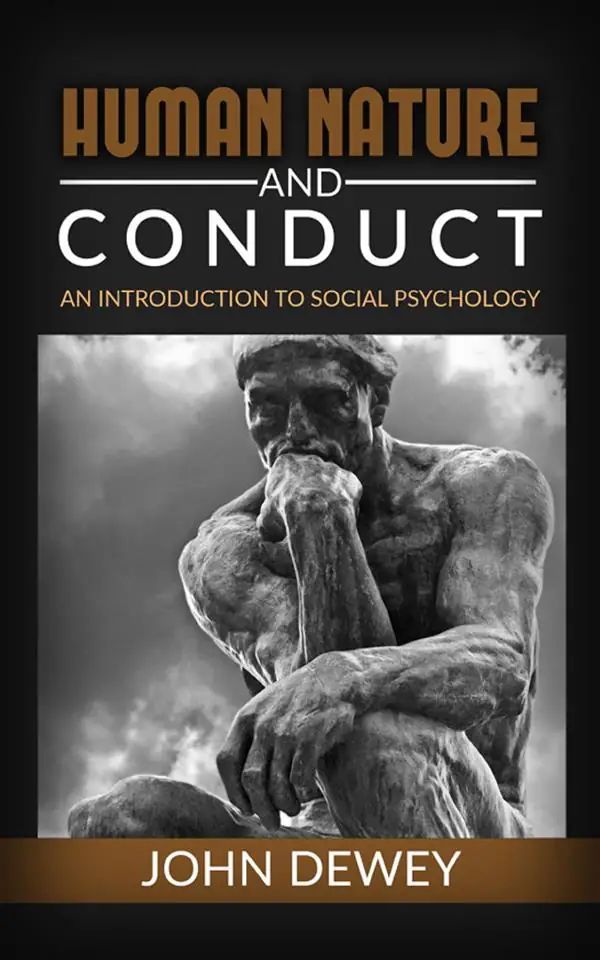
Audio only


Length9h 21m
About this audiobook
John Dewey(1859 1952) was anAmerican philosopher, psychologistandeducational reformerwhose ideas have been influential in education and social reform. Dewey was an important early developer of the philosophy ofpragmatismand one of the founders offunctional psychology. He was a major representative ofprogressive educationandliberalism.In 1894 Dewey joined the newly foundedUniversity of Chicago(1894 1904) where he developed his belief in an empirically based theory of knowledge, becoming associated with the newly emerging Pragmatic philosophy. His time at the University of Chicago resulted in four essays collectively entitledThought and its Subject-Matter, which was published with collected works from his colleagues at Chicago under the collective titleStudies in Logical Theory(1903). During that time Dewey also initiated theUniversity of Chicago Laboratory Schools, where he was able to actualize the pedagogical beliefs that provided material for his first major work on education, The School and Social Progress(1899).In 1899, Dewey was elected president of theAmerican Psychological Association. From 1904 until his retirement in 1930 he was professor of philosophy at both Columbia Universityand Columbia University'sTeachers College.In 1905 he became president of theAmerican Philosophical Association. He was a longtime member of theAmerican Federation of Teachers.
Audiobook details
Rating★★★★ 4.1 (1.8K)
Includes Goodreads, Amazon, LibraryThing, StoryGraph
GenrePsychology
Length9 hrs 21 mins
Narrated byListen with 1,000+ voices
FormateBook with Audio
Publish dateAug 23, 2017
LanguageEnglish
Table of contents
1PREFACE
2INTRODUCTION
3PART ONE. THE PLACE OF HABIT IN CONDUCT
4SECTION I: HABITS AS SOCIAL FUNCTIONS
5SECTION II: HABITS AND WILL
Show all chaptersShow less
6SECTION III: CHARACTER AND CONDUCT
7SECTION IV: CUSTOM AND HABIT
8SECTION V: CUSTOM AND MORALITY
9SECTION VI: HABIT AND SOCIAL PSYCHOLOGY
10PART TWO. THE PLACE OF IMPULSE IN CONDUCT
11SECTION I: IMPULSES AND CHANGE OF HABITS
12SECTION II: PLASTICITY OF IMPULSE
13SECTION III: CHANGING HUMAN NATURE
14SECTION IV: IMPULSE AND CONFLICT OF HABITS
15SECTION V: CLASSIFICATION OF INSTINCTS
16SECTION VI: NO SEPARATE INSTINCTS
17SECTION VII: IMPULSE AND THOUGHT
18PART THREE. THE PLACE OF INTELLIGENCE IN CONDUCT
19SECTION I: HABIT AND INTELLIGENCE
20SECTION II: THE PSYCHOLOGY OF THINKING
21SECTION III: THE NATURE OF DELIBERATION
22SECTION IV: DELIBERATION AND CALCULATION
23SECTION V: THE UNIQUENESS OF GOOD
24SECTION VI: THE NATURE OF AIMS
25SECTION VII: THE NATURE OF PRINCIPLES
26SECTION VIII: DESIRE AND INTELLIGENCE
27SECTION IX: THE PRESENT AND FUTURE
28PART FOUR. CONCLUSION
29SECTION I: THE GOOD OF ACTIVITY
30SECTION II: MORALS ARE HUMAN
31SECTION III: WHAT IS FREEDOM?
32SECTION IV: MORALITY IS SOCIAL
More from John Dewey

What to Make of a LifeJim Collins13h 31m4.4 (794)$33 · $0.00

TerraformPropaganda5h 39m4.7 (594)$24 · $0.00

Southern Horrors: Lynch Law in All Its Phases (Annotated)Ida B. Wells-Barnett2h 44m4.6 (1.3K)$2 · $0.00

Hour of the HeartIrvin D. Yalom, Benjamin Yalom8h 19m4.6 (2.3K)$26 · $0.00

Braving the TruthRachel Held Evans11h 31m4.7 (359)$29 · $0.00
Level UpRob Dial7h 42m4.6 (3.3K)$26 · $0.00

As a JewSarah Hurwitz8h 36m4.6 (1.2K)$26 · $0.00

Saint Joan (Annotated)George Bernard Shaw6h 20m4.6 (1.2K)$1.20 · $0.00

Burn the HaystackJennie Young, PhD9h 30m4.6 (543)$29 · $0.00

Woman and the New Race (Annotated)Margaret Sanger6h 30m4.6 (1K)$0.99 · $0.00

Good InsideBecky Kennedy9h 55m4.5 (59.3K)$29 · $0.00
The Mis-Education of the NegroCarter Godwin Woodson5h 4m4.5 (29.4K)$1.20 · $0.00

Du Bois: EssaysW.E.B. Du Bois6h 22m4.6 (1.5K)$1 · $0.00

The North American Indian (Illustrated Edition)Edward S. Curtis, Frederick Webb Hodge5h 59m4.6 (1.4K)$2 · $0.00

Valley of the BirdtailAndrew Stobo Sniderman, Douglas Sanderson10h 1m4.6 (2.4K)$29 · $0.00

Lies My Therapist Told MeGreg E. Gifford9h 3m4.6 (503)$29 · $0.00

Disturbed in Their NestsAlephonsion Deng, Judy A. Bernstein11h 22m4.6 (595)$23 · $0.00

No Name in the StreetJames Baldwin5h4.5 (8.5K)$20 · $0.00
Narrative of the Life of Frederick DouglassFrederick Douglass4h 13m4.5 (309.9K)$1.20 · $0.00

Magic SeasonWade Rouse6h 41m4.6 (855)$24 · $0.00
You may also like

Hegel's Philosophy of MindGeorg Wilhelm Friedrich Hegel14h 28m4.0 (717)$1 · $0.00

Great Pianists on Piano Playing (Annotated)James Francis Cooke8h 13m4.2 (264)$2 · $0.00

On ColorDavid Scott Kastan5h 54m3.9 (1.1K)$20

An Essay Concerning Human UnderstandingJohn Locke30h 12m4.0 (18K)$1.20 · $0.00

The CurtainMilan Kundera4h 40m4.0 (3.8K)$20 · $0.00

The Six EnneadsPlotinus34h 13m4.3 (4.3K)$21 · $0.00

Acquired TastesPeter Mayle4h 55m3.8 (2.5K)$20
The Critique of Practical ReasonImmanuel Kant6h 52m4.2 (14.9K)$3.50 · $0.00

The Hidden Habits of GeniusCraig Wright10h 7m4.0 (2.3K)$29 · $0.00

The Moon and SixpenceSomerset Maugham8h 8m4.1 (35.8K)$2.30
The Honest Truth About DishonestyDan Ariely8h 36m4.0 (20.9K)$26 · $0.00

MozartJan Swafford30h 23m4.4 (1.6K)$53 · $0.00

Business BrandingAnthony Ekanem59m5.0 (1)$4 · $0.00

Essay On Mind And Spirit And EpistemologyAlder D'pass6h 1m$7 · $0.00

I Feel Too Old for the Job Market and Too Young for Retirement - How to Plan Your Next Career Chapter, Update Your Skills, and Find Work in Your Forties or Fifties Without Pretending to Be TwentyMax Paradox6h 36m$7.70 · $0.00

30 Millennia of Erotic ArtHans-Jürgen Döpp, Joe Thomas A., Victoria Charles, Klaus Carl H.10h 2m4.5 (14)$18 · $0.00

The New Science of Sex and GenderScientific American5h 55m3.7 (96)$17 · $0.00

CharacterMarjorie Garber16h 27m3.6 (53)$25

The Story of LingerieMuriel Barbier, Shazia Boucher5h 59m3.9 (16)$15.50 · $0.00
An A. B. C. of every-day people : Good, bad & indifferentG. E. Farrow11m$2 · $0.00