
Audio only


Length9h 21m
About this audiobook
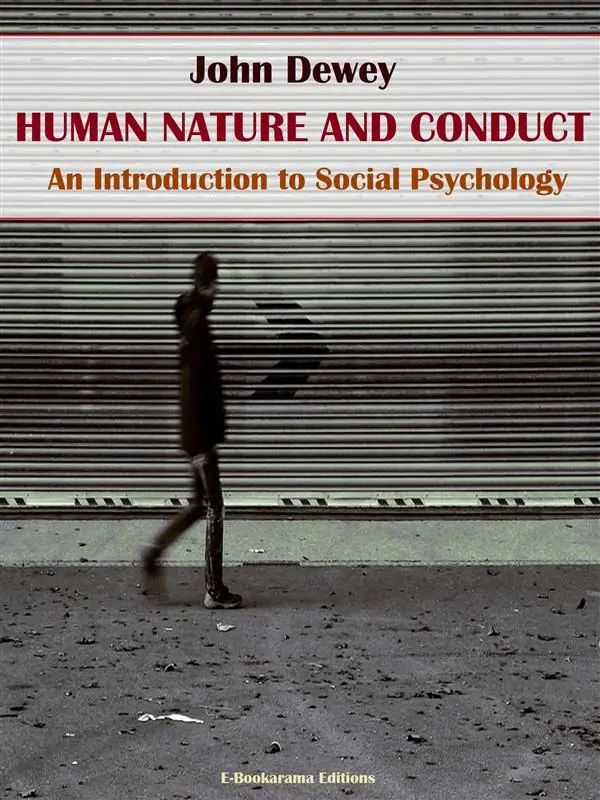
In "Human Nature and Conduct", John Dewey extends the principles of the his pragmatic philosophy into the realm of developmental and social psychology.
First published in 1922, the work was a notable departure from the deterministic theories of contemporaries, such as the physiological psychology of Wilhelm Wundt, the behaviourism of Ivan Pavlov, and Freud's emphasis on the unconscious. Refuting in particular the dualistic implications of the Pavlovian stimulus-response model of human behaviour and the arbitrariness by which those terms are assigned, he posits instead a holistic and humanistic paradigm in which a creative response to one's environment becomes the mark of a healthy individual.
Dewey brings the rigour of natural sciences to the quest for a better moral system. By studying habit, impulse, and intelligence, he arrives at a morality that is firmly rooted the context of the world, accounting for thinking humans with individual circumstances that do, indeed, make a difference when determining right and wrong.
Students of sociology, philosophy, and psychology will be interested to see moral judgement investigated as a scientific question by one of America's most influential philosophers.
Audiobook details
Rating★★★★ 4.2 (1.5K)
Includes Goodreads, LibraryThing, Amazon, StoryGraph
GenrePsychology, Philosophy, Science and Nature
Length9 hrs 21 mins
Narrated byListen with 1,000+ voices
FormateBook with Audio
Publish dateJun 3, 2020
LanguageEnglish
Table of contents
1Preface
2Introduction
3PART ONE. THE PLACE OF HABIT IN CONDUCT
4Section 1. Habits As Social Functions
5Section 2. Habits And Will
Show all chaptersShow less
6Section 3. Character And Conduct
7Section 4. Custom And Habit
8Section 5. Custom And Morality
9Section 6. Habit And Social Psychology
10PART TWO. THE PLACE OF IMPULSE IN CONDUCT
11Section 1. Impulses And Change Of Habits
12Section 2. Plasticity Of Impulse
13Section 3. Changing Human Nature
14Section 4. Impulse And Conflict Of Habits
15Section 5. Classification Of Instincts
16Section 6. No Separate Instincts
17Section 7. Impulse And Thought
18PART THREE. THE PLACE OF INTELLIGENCE IN CONDUCT
19Section 1. Habit And Intelligence
20Section 2. The Psychology Of Thinking
21Section 3. The Nature Of Deliberation
22Section 4. Deliberation And Calculation
23Section 5. The Uniqueness Of Good
24Section 6. The Nature Of Aims
25Section 7. The Nature Of Principles
26Section 8. Desire And Intelligence
27Section 9. The Present And Future
28PART FOUR. CONCLUSION
29Section 1. The Good Of Activity
30Section 2. Morals Are Human
31Section 3. What Is Freedom?
32Section 4. Morality Is Social
More from John Dewey
What to Make of a LifeJim Collins13h 31m4.4 (794)$33 · $0.00

Braving the TruthRachel Held Evans11h 31m4.7 (359)$29 · $0.00
Level UpRob Dial7h 42m4.6 (3.3K)$26 · $0.00

As a JewSarah Hurwitz8h 36m4.6 (1.2K)$26 · $0.00

Saint Joan (Annotated)George Bernard Shaw6h 20m4.6 (1.2K)$1.20 · $0.00

Burn the HaystackJennie Young, PhD9h 30m4.6 (543)$29 · $0.00

Woman and the New Race (Annotated)Margaret Sanger6h 30m4.6 (1K)$1.99 · $0.00

Good InsideBecky Kennedy9h 55m4.5 (59.3K)$29 · $0.00
The Mis-Education of the NegroCarter Godwin Woodson5h 4m4.5 (29.4K)$1.20 · $0.00

Du Bois: EssaysW.E.B. Du Bois6h 22m4.6 (1.5K)$1 · $0.00

The North American Indian (Illustrated Edition)Edward S. Curtis, Frederick Webb Hodge5h 59m4.6 (1.4K)$2 · $0.00

Valley of the BirdtailAndrew Stobo Sniderman, Douglas Sanderson10h 1m4.6 (2.4K)$29 · $0.00

Lies My Therapist Told MeGreg E. Gifford9h 3m4.6 (503)$29 · $0.00

Disturbed in Their NestsAlephonsion Deng, Judy A. Bernstein11h 22m4.6 (595)$23 · $0.00
No Name in the StreetJames Baldwin5h4.5 (8.5K)$20 · $0.00
Narrative of the Life of Frederick DouglassFrederick Douglass4h 13m4.5 (309.9K)$1.20 · $0.00

Magic SeasonWade Rouse6h 41m4.6 (855)$24 · $0.00

Consent Laid BareChanel Contos7h 11m4.5 (1.7K)$24 · $0.00

The Big RevealSasha Velour6h 15m4.5 (2.1K)$24 · $0.00

EssaysGeorge Orwell26h 38m4.5 (8.4K)$4 · $0.00
IlluminationsWalter Benjamin10h 12m4.4 (16.2K)$20 · $0.00

That Bird Has My WingsJarvis Jay Masters9h 49m4.4 (13.7K)$29 · $0.00

Tâo Teh KingLaozi2h 34m4.4 (230.9K)$2 · $0.00

SymposiumPlato3h 26m4.4 (97.9K)$1.20 · $0.00

Buddhist Boot CampTimber Hawkeye2h 39m4.4 (8.4K)$18 · $0.00
Enchiridion & The Discourses of Epictetus (Annotated)Arrian Epictetus18h 9m4.4 (3.5K)$2 · $0.00

The Meditations of the Emperor Marcus Aurelius AntoninusEmperor of Rome Marcus Aurelius5h 41m4.4 (1.8M)$1 · $0.00
Crime and PunishmentFyodor Dostoevsky23h 11m4.4 (1.3M)$12 · $0.00

MeditationsMarcus Aurelius5h 52m4.4 (433.7K)$1 · $0.00

Everyday DharmaSuneel Gupta5h 2m4.5 (761)$20 · $0.00

The Joyful Wisdom ("La Gaya Scienza")Friedrich Wilhelm Nietzsche11h 37m4.4 (26.6K)$1 · $0.00
The Art of LivingEpictetus, Sharon Lebell3h 16m4.4 (50.1K)$18 · $0.00
MeditationsEmperor Of Rome Marcus Aurelius7h 23m4.3 (477.5K)$1.20 · $0.00

The Imitation of ChristThomas à Kempis6h 27m4.3 (84.6K)$21 · $0.00

Sadhana: the realisation of lifeRabindranath Tagore3h 49m4.4 (8.6K)$6 · $0.00
SapiensYuval Noah Harari15h 18m4.3 (1.4M) · 1193$33 · $0.00
You BelongSebene Selassie8h 35m4.4 (2.7K)$26 · $0.00

The Song Celestial; Or, Bhagavad-Gîtâ (from the Mahâbhârata)Anonymous2h 18m4.4 (3.2K)$2 · $0.00

The KybalionThe Three Initiates3h 47m4.3 (58.7K)$20 · $0.00

Chuang Tzu: Mystic, Moralist, and Social ReformerZhuangzi14h 42m4.4 (1.2K)$1 · $0.00

A Brief History of IntelligenceMax S. Bennett12h 18m4.6 (6.6K)$29 · $0.00
The Story of BirdsSteve Brusatte11h 49m4.6 (401)$29 · $0.00

Craig & FredCraig Grossi8h 6m4.5 (9.6K)$26 · $0.00

Celebrating BirdsNatalia Rojas, Ana Maria Martinez6h 47m4.6 (330)$24 · $0.00

Saving JemimaJulie Zickefoose4h 59m4.5 (749)$20 · $0.00

Will's Red CoatTom Ryan8h 23m4.5 (2.3K)$26 · $0.00

Of Time and TurtlesSy Montgomery10h 34m4.5 (5K)$29 · $0.00

Zen and the Art of Saving the PlanetThich Nhat Hanh9h 20m4.5 (3.9K)$29 · $0.00

BLACK BEAUTY (With Original Illustrations)Anna Sewell7h 31m4.5 (1.3K)$1.99 · $0.00

Bottle of LiesKatherine Eban14h 25m4.4 (12K)$33 · $0.00
IngrainedCallum Robinson8h 10m4.5 (1.1K)$26 · $0.00

The Lion Tracker's Guide To LifeBoyd Varty3h 1m4.4 (4.8K)$18 · $0.00

Born for LoveBruce D. Perry, Maia Szalavitz11h 42m4.4 (4K)$29 · $0.00

The Mountains of California (With Original Drawings & Photographs) (Annotated)John Muir11h 35m4.5 (1.1K)$2 · $0.00

The New GuysMeredith Bagby16h 50m4.4 (1.2K)$40 · $0.00

Blue PasturesMary Oliver3h 23m4.4 (3.8K)$18 · $0.00
The Rise and Reign of the MammalsSteve Brusatte13h 26m4.4 (11.1K)$33 · $0.00

VaccinatedPaul A. Offit8h 30m4.4 (3.7K)$26 · $0.00

The Light EatersZoë Schlanger10h 57m4.4 (22.8K)$29 · $0.00

Where the Lost Dogs GoSusannah Charleson11h 7m4.5 (699)$23 · $0.00
You may also like

Warrior MindsetMichael J. Asken1h 16m4.4 (1K)$6 · $0.00

The Science of Getting RichWallace D. Wattles2h 4m4.2 (64.7K)$1 · $0.00
Executive Presence 2.0Sylvia Ann Hewlett9h 10m3.5 (2.6K)$29 · $0.00

Magic WordsJonah Berger6h 54m3.9 (2.6K)$24 · $0.00
Men and WomenRobert Browning3h 44m4.2 (1.8K)$2.30

The Invisible Hand of the Market: The Theory of Moral Sentiments + The Wealth of NationsAdam Smith59h 8m4.2 (1.6K)$2 · $0.00

The Greatest Works of Immanuel Kant (Annotated)Immanuel Kant83h 52m$2 · $0.00

Masterworks on the Foundations of Moral Obligation – 5 Classic Ethical TreatisesBenedictus de Spinoza, David Hume, Adam Smith, Immanuel Kant, Arthur Schopenhauer59h 46m$1

Lectures on the English Poets; Delivered at the Surrey InstitutionWilliam Hazlitt4h 38m3.9 (36)$2 · $0.00
Coaching and Mentoring Resource ManualJimmy Petruzzi3h 47m$8 · $0.00
The Simple Path to More Profit: The 3P SystemPhilip Semmelroth59m4.8 (20)$0.00 · $0.00

VIRGINIA DMV Permit Study GuideLUCAS CRANE9h 13m$11.50 · $0.00

Should I Take the Buyout?Imad Muratspahic3h 56m$13 · $0.00

One Hundred Best Books (Annotated)John Cowper Powys3h 16m3.7 (136)$2 · $0.00

Organizational BehaviorKnowledge Flow2h 3m$4.10 · $0.00

The Nonverbal CommunicatorMade for Success6h 27m$20
Thinking SmartNirmalya Kumar7h 22m4.0 (31)$24 · $0.00
Innovation CultureChristian Buchholz, Rainer Krumm1h 56m$10 · $0.00
The Story Theater MethodDoug Stevenson1h 57m4.3 (170)$10

The TeacherJacob Abbott10h 7m2.6 (15)$2 · $0.00