
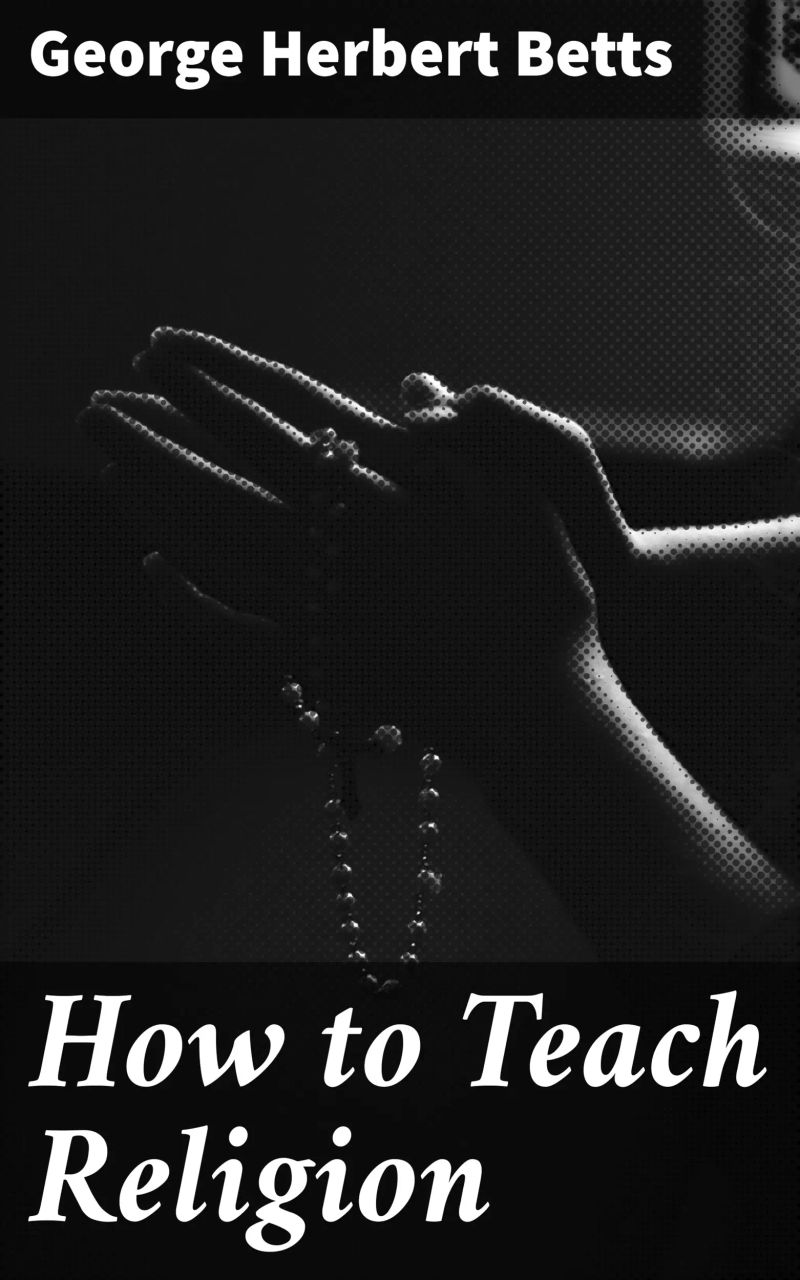
How to Teach Religion
Principles and MethodsBy George Herbert Betts

Length5h 5m
About this audiobook
In "How to Teach Religion," George Herbert Betts offers a comprehensive exploration of pedagogical principles tailored specifically for religious education. Betts employs a pragmatic literary style, blending theoretical insights with practical examples, making the work accessible for both educators and theologians. The text is grounded in the early 20th-century context of progressive education, reflecting the era's emphasis on experiential learning and moral development, while also critiquing traditional dogmatic approaches that may hinder spiritual growth. George Herbert Betts was an influential figure in the field of educational psychology and moral education, which undoubtedly shaped his approach to teaching religion. His background as a scholar and educator equipped him with unique insights into the psychological dimensions of learning, enabling him to advocate for a holistic approach to religious instruction. Betts's commitment to fostering critical thinking and personal reflection in students reflects broader shifts in the educational landscape during his time, affirming the importance of adapting teaching methods to meet the needs of diverse learners. This book is highly recommended for educators, religious leaders, and anyone interested in the intersection of education and spirituality. Betts'Äôs thoughtful framework not only equips readers with effective teaching strategies but also encourages them to reflect on their own beliefs and practices, fostering a deeper understanding of the transformative potential of religious education.
Audiobook details
GenreSpirituality and Religion
Length5 hrs 5 mins
Narrated byListen with 1,000+ voices
FormateBook with Audio
Publish dateDec 4, 2019
LanguageEnglish
Table of contents
1CHAPTER III
2THE FOURFOLD FOUNDATION[1]
3THE AIM IN TEACHING RELIGION
4SELECTING THE SUBJECT MATTER
5HOW SHALL WE ORGANIZE AND PLAN THE LESSONS?
Show all chaptersShow less
6PRESENTING THE LESSON—INSTRUCTION
7FOR FURTHER READING
8CHAPTER IV
9RELIGIOUS KNOWLEDGE OF MOST WORTH
10THE CHILD'S CONCEPT OF GOD
11THE CHILD'S CONCEPT OF RELIGION
12KNOWLEDGE OF THE BIBLE
13KNOWLEDGE ABOUT THE CHURCH
14KNOWLEDGE OF RELIGIOUS MUSIC AND ART
15FOR FURTHER READING
16CHAPTER V
17RELIGIOUS ATTITUDES TO BE CULTIVATED
18ATTITUDES TOWARD THE SCHOOL AND ITS WORK
19ATTITUDES THAT CARRY INTO LIFE BEYOND THE SCHOOL
20FOR FURTHER READING
21CHAPTER VI
22CONNECTING RELIGIOUS INSTRUCTION WITH LIFE AND CONDUCT
23RELIGIOUS HABITS AS AN AIM
24APPLICATION OF RELIGIOUS INSTRUCTION TO THE DAILY LIFE
25PARTICIPATION IN THE WORK OF THE CHURCH AND SOCIAL SERVICE
26FOR FURTHER READING
27CHAPTER VII
28THE SUBJECT MATTER OF RELIGIOUS EDUCATION
29SOURCES OF MATERIAL
30MATERIAL FROM THE BIBLE
31STORY MATERIAL
32MATERIAL FROM NATURE
33MATERIAL FROM HISTORY AND BIOGRAPHY
34PICTURE MATERIAL
35MUSIC IN THE CURRICULUM
36FOR FURTHER READING
37CHAPTER VIII
38THE ORGANIZATION OF MATERIAL
39TYPES OF ORGANIZATION
40ORGANIZATION OF THE CURRICULUM AS A WHOLE
41ORGANIZING THE DAILY LESSON MATERIAL
42FOR FURTHER READING
43CHAPTER IX
44THE TECHNIQUE OF TEACHING
45ATTENTION TO KEY
46THE APPEAL TO INTEREST
47FREEDOM FROM DISTRACTIONS
48DANGER POINTS IN INSTRUCTION
49FOR FURTHER READING
50CHAPTER X
More from George Herbert Betts

Proud Police WifeRebecca Lynn4h 52m4.8 (14K)$10 · $0.00

I Hear His Whisper 365 Daily Devotions (Gift Edition)Brian Simmons, Gretchen Rodriguez9h 23m4.8 (2K)$10 · $0.00

A Little God Time for Women Morning & Evening DevotionalBroadStreet Publishing Group LLC15h 15m4.9 (1.2K)$10 · $0.00
The Chosen Presents: A Blended Harmony of the GospelsSteve Laube, Amanda Jenkins, Dallas Jenkins7h 8m4.9 (823)$10 · $0.00
Prayers from the Throne RoomBrian Simmons8h 55m4.9 (256)$10 · $0.00
31 Decrees of Blessing for Your LifePatricia King2h 38m4.8 (1.4K)$10 · $0.00
Loved BabySarah Philpott4h 51m4.8 (1.4K)$10 · $0.00

The QuranAllah23h 7m4.7 (136.1K)$1 · $0.00

The Secret of the RosaryLouis de Montfort6h 1m4.7 (16K)$2 · $0.00
The Holy Qur-an: Text, Translation and CommentaryAbdullah Yusuf Ali22h 16m4.7 (133K)$1 · $0.00
All of Grace (Annotated)Charles Spurgeon5h 1m4.7 (1.3K)$1.99 · $0.00

Steps to ChristEllen G. White3h 12m4.7 (13.8K)$2 · $0.00
The Doctrine and Selected CovenantsJoseph Smith13h 53m4.7 (10.4K)$1.99 · $0.00
Sinners in the Hands of an Angry God & Other Sermons (Annotated)Jonathan Edwards7h 51m4.7 (1.5K)$2 · $0.00
Swayam Ki AwaazPrem Rawat8h 34m4.7 (1.1K)$26 · $0.00
Behind the BadgeAdam Davis10h 18m4.7 (2.7K)$10 · $0.00
The New Human Revolution, vol. 1Daisaku Ikeda7h 46m4.7 (669)$12 · $0.00

You Are Worth ItKyle Carpenter, Don Yaeger8h 53m4.7 (4.8K)$29 · $0.00
Praying GraceDavid A. Holland3h 2m4.7 (658)$10 · $0.00
Evidence Not SeenDarlene Deibler Rose11h 11m4.6 (11.9K)$29 · $0.00
You may also like

The Invisible Hand of the Market: The Theory of Moral Sentiments + The Wealth of NationsAdam Smith59h 8m4.2 (1.6K)$2 · $0.00
Choose PossibilitySukhinder Singh Cassidy7h 33m4.0 (774)$26 · $0.00
Warrior MindsetMichael J. Asken1h 16m4.4 (1K)$6 · $0.00

The Science of Getting RichWallace D. Wattles2h 4m4.2 (64.7K)$1 · $0.00
Executive Presence 2.0Sylvia Ann Hewlett9h 10m3.5 (2.6K)$29 · $0.00

Report of the Committee of FifteenWilliam Torrey Harris, H. S. Tarbell, A. S. Draper5h 15m$2 · $0.00

No Cloak, No DaggerAurora X. Carmichael7h 30m$4.10 · $0.00
Laws of ProspectingMade for Success25m$5

English for job interviews!José Roberto A. Igreja49m4.4 (116)$1 · $0.00

NMLS STUDY GUIDE 2026/2027Adrian Hartwell11h 41m$10
A Neglected Argument for the Reality of God (Annotated)Charles Sanders Peirce2h 29m$2 · $0.00
The Story Theater MethodDoug Stevenson1h 57m4.3 (170)$10

The TeacherJacob Abbott10h 7m2.6 (15)$2 · $0.00

I Only Learned Today That Filters Need Cleaning Too - How to Handle Basic Home and Appliance Maintenance Before a Small Neglect Turns Into a Bill with an Extra ZeroMax Paradox6h 20m$7.70 · $0.00

Kansas RBT Certification Exam Prep 2026/2027Mireille Oyelaran16h 26m$22
Thinking SmartNirmalya Kumar7h 22m4.0 (31)$24 · $0.00
The No-Fail MeetingOmar Periu3h 47m$25

One Hundred Best Books (Annotated)John Cowper Powys3h 16m3.7 (136)$2 · $0.00

Should I Take the Buyout?Imad Muratspahic3h 56m$13 · $0.00

Always in ChargeNoah W. Harrington29h 51m$4.10 · $0.00