

The Mind and Its Education
Unlocking the Potential of the Mind: A Comprehensive Guide to Educational PsychologyBy George Herbert Betts


Length8h 3m
About this audiobook
In "The Mind and Its Education," George Herbert Betts embarks on a profound exploration of the cognitive processes that underpin effective learning. Integrating contemporary psychological theories with pragmatic educational practices, Betts delves into the intricate relationship between thought and instruction. His literary style is characterized by clarity and rigor, making complex ideas accessible to educators and scholars alike. Set against the backdrop of early 20th-century educational reform, the book serves as a critical commentary on how psychological insights can transform pedagogical approaches, advocating for a more holistic understanding of the learner's mind. George Herbert Betts was an influential educator and psychologist, whose experiences in progressive education shaped his perspective on teaching and learning. Having witnessed the limitations of conventional methods, he sought to bridge the gap between psychological theory and classroom practice. Betts'Äô work is marked by a commitment to fostering intellectual inquiry and emotional engagement in the learning process, making his insights imperative for the evolving field of education during his time. This book is essential reading for educators, psychologists, and anyone invested in the principles of effective teaching. Betts'Äô rigorous analysis and innovative ideas provide a robust framework for understanding the cognitive dimensions of education, offering valuable strategies for creating an engaging and empowering learning environment.
Audiobook details
Rating★★★★ 3.6 (26)
Includes Goodreads
GenreEducation and Learning
Length8 hrs 3 mins
Narrated byListen with 1,000+ voices
FormateBook with Audio
Publish dateNov 19, 2019
LanguageEnglish
Table of contents
14. POINTS OF FAILURE IN ATTENTION
25. TYPES OF ATTENTION
36. IMPROVING THE POWER OF ATTENTION
47. PROBLEMS IN OBSERVATION AND INTROSPECTION
5CHAPTER III
Show all chaptersShow less
6THE BRAIN AND NERVOUS SYSTEM
71. THE RELATIONS OF MIND AND BRAIN
82. THE MIND'S DEPENDENCE ON THE EXTERNAL WORLD
93. STRUCTURAL ELEMENTS OF THE NERVOUS SYSTEM
104. GROSS STRUCTURE OF THE NERVOUS SYSTEM
115. LOCALIZATION OF FUNCTION IN THE NERVOUS SYSTEM
126. FORMS OF SENSORY STIMULI
13CHAPTER IV
14MENTAL DEVELOPMENT AND MOTOR TRAINING
151. FACTORS DETERMINING THE EFFICIENCY OF THE NERVOUS SYSTEM
162. DEVELOPMENT OF NERVOUS SYSTEM THROUGH USE
173. EDUCATION AND THE TRAINING OF THE NERVOUS SYSTEM
184. IMPORTANCE OF HEALTH AND VIGOR OF THE NERVOUS SYSTEM
195. PROBLEMS FOR INTROSPECTION AND OBSERVATION
20CHAPTER V
21HABIT
221. THE NATURE OF HABIT
232. THE PLACE OF HABIT IN THE ECONOMY OF OUR LIVES
243. THE TYRANNY OF HABIT
254. HABIT-FORMING A PART OF EDUCATION
265. RULES FOR HABIT-FORMING
276. PROBLEMS IN OBSERVATION AND INTROSPECTION
28CHAPTER VI
29SENSATION
301. HOW WE COME TO KNOW THE EXTERNAL WORLD
312. THE NATURE OF SENSATION
323. SENSORY QUALITIES AND THEIR END-ORGANS
334. PROBLEMS IN OBSERVATION AND INTROSPECTION
34CHAPTER VII
35PERCEPTION
361. THE FUNCTION OF PERCEPTION
372. THE NATURE OF PERCEPTION
383. THE PERCEPTION OF SPACE
394. THE PERCEPTION OF TIME
405. THE TRAINING OF PERCEPTION
416. PROBLEMS IN OBSERVATION AND INTROSPECTION
42CHAPTER VIII
43MENTAL IMAGES AND IDEAS
441. THE PART PLAYED BY PAST EXPERIENCE
452. HOW PAST EXPERIENCE IS CONSERVED
463. INDIVIDUAL DIFFERENCES IN IMAGERY
474. THE FUNCTION OF IMAGES
485. THE CULTIVATION OF IMAGERY
496. PROBLEMS IN INTROSPECTION AND OBSERVATION
50CHAPTER IX
More from George Herbert Betts


A Brief History of IntelligenceMax S. Bennett12h 18m4.6 (6.6K)$29 · $0.00

HomeschooledStefan Merrill Block7h 10m3.6 (18.5K)$28 · $0.00

The Call of the Wild and FreeAinsley Arment9h 7m4.4 (21.2K)$29 · $0.00
The Freelance WayRobert Vlach19h 48m4.5 (528)$40 · $0.00

Race to the BottomLuke Rosiak9h 20m4.5 (600)$29 · $0.00

They Came for the SchoolsMike Hixenbaugh9h 5m4.5 (2.6K)$8 · $0.00

Find Me UnafraidKennedy Odede, Jessica Posner11h 11m4.5 (2.7K)$29 · $0.00

Asking for ItKate Harding8h 55m4.4 (5.3K)$20 · $0.00
Defining Moments in Black HistoryDick Gregory7h 37m4.4 (6K)$26 · $0.00

The Emerald Tablets of Thoth the AtlanteanMaurice Doreal3h 4m4.4 (8.8K)$6 · $0.00

Learning AmericaLuma Mufleh6h 37m4.4 (564)$24 · $0.00
Math-ishJo Boaler7h 21m4.4 (588)$24 · $0.00

Daddy-Long-LegsJean Webster12h 18m4.2 (91K)$1.99 · $0.00
It Worked For MeColin Powell7h 42m4.3 (9.8K)$26 · $0.00

Little SoldiersLenora Chu11h 30m4.3 (3.1K)$29 · $0.00

Grammar-land; Or, Grammar in Fun for the Children of Schoolroom-shireM. L. Nesbitt2h 36m4.4 (488)$1 · $0.00

Financial FeministTori Dunlap8h 3m4.2 (22.2K)$8 · $0.00

DarkwaterWilliam Edward Burghardt Du Bois6h 40m4.3 (1.4K)$11 · $0.00

The Highway Code UKDepartment for Transport3h 33m4.2 (36.6K)$11 · $0.00

He'll Be OKCelia Lashlie6h 32m4.3 (1.1K)$24 · $0.00
You may also like

Incidental InventionsElena Ferrante3h 6m3.9 (5.7K)$15 · $0.00

Long Story ShortMargot Leitman4h 53m3.9 (2.8K)$14 · $0.00
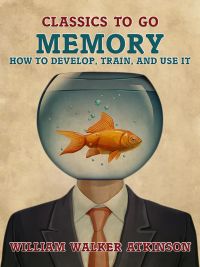
Memory How to Develop, Train, and Use ItWilliam Walker Atkinson3h 56m4.0 (2.7K)$2.30

Talks To Teachers On PsychologyWilliam James7h 58m4.1 (650)$1.99 · $0.00
The Book of Knowing and The Book of OverthinkingGwendoline Smith4h 13m4.1 (3.2K)$15

The Essays of Arthur Schopenhauer; Counsels and MaximsArthur Schopenhauer4h 53m4.2 (962)$2.30
Head StrongDave Asprey10h 41m3.9 (4.7K)$29 · $0.00
Creative QuestQuestlove8h 44m4.2 (14.3K)$26 · $0.00

On the Improvement of the UnderstandingBenedictus de Spinoza1m4.0 (1.1K)$2.30
ConvictionsMarcus J. Borg6h 11m4.3 (1.9K)$24 · $0.00

I Live a Life Like YoursJan Grue5h 7m4.1 (1.9K)$20

How We ThinkJohn Dewey7h 6m4.0 (1.1K)Free
Scientific Strategies To Maximize Memory, Focus, And CognitionEdivaldo Ascaneo46m$6 · $0.00

TEXES Core Subjects EC–6 (391) Exam Prep 2026/2027Adrian Hartwell10h 35m$10

My Life in MiddlemarchRebecca Mead9h 38m$20
Pieces of LightCharles Fernyhough10h 4m3.7 (686)$29 · $0.00
The Intelligent Brain CodeDanniel Silva3h 57m$1.80 · $0.00
Talks To Teachers On Psychology (Annotated)William James7h 39m4.6 (17)$2 · $0.00

The TracesMairead Small Staid7h 25m4.0 (48)$17
Clarity Through ActionSteve Pavlina17m4.1 (21)$4 · $0.00