



Length2h 4m
About this audiobook
In a world increasingly driven by intelligent technologies, the ability to interact effectively with artificial intelligence has become an essential skill. " Master AI: How to Ask the Right Questions and Get Transformative Answers" reveals the techniques and strategies needed to obtain clear, useful and transformative responses from the AIs that are part of our daily lives. With a practical and straightforward approach, this guide explores everything from the fundamentals of AI to the nuances of asking the right questions, maximizing the potential of this technology to learn, solve problems, and make work easier. Topics covered include how to break down complex questions, ask for specific details, and work around AI limitations to avoid vague and inaccurate answers. Designed for anyone looking to use artificial intelligence more effectively—whether professionals, students, or technology enthusiasts—this book offers a fresh perspective on how to turn a simple query into a powerful analytical tool.
Audiobook details
GenreChildren's Literature, Technology
Length2 hrs 4 mins
Narrated byListen with 1,000+ voices
FormateBook with Audio
Publish dateNov 3, 2024
LanguageEnglish
Table of contents
11.1 Types of Artificial Intelligence and Their Functionalities
21.2 How AIs Work and Learn
31.3 Key Differences Between Human and AI Interaction
41.4 Preparing to Interrogate the AI
51.5 Final Considerations: Knowledge is Power
Show all chaptersShow less
62.1 Clear and Direct Questions
72.2 Contextualization: The More Information, the Better
82.3 The Role of Keywords
92.4 Practical Examples of Effective Questions
102.5 Reformulation and Requests for Details
112.6 Proven Practices for Different Types of Questions
122.7 Chapter Conclusion
133.1 Serial Questions: The Divide and Conquer Technique
143.2 Reformulation and Deepening
153.3 Using Examples to Improve Response Quality
163.4 Question Structures for Different Types of Information
173.5 Dealing with Incomplete or Ambiguous Responses
183.6 The Art of Skeptical Questioning
194.1 Limitations of AIs : What to Realistically Expect
204.2 Recognizing Ambiguous or Incomplete Responses
214.3 Questioning with Skepticism: Not Every Answer is Correct
224.4 Strategies to Maximize Response Accuracy
234.5 Practices to Avoid Frustration When Interacting with AIs
245.1 Educational Uses: Asking Questions to Learn and Teach
255.2 Customer Service and Technical Support
265.3 Research and Development
275.4 Personal Uses: Personal Planning and Organization
285.5 Tools and Resources for Professionals in Various Areas
296.1 Useful Commands and Phrases for Refining Questions
306.2 Platforms that Optimize Interaction with AIs
316.3 Personalizing Interactions with AI
326.4 Learning Resources to Enhance the Use of AI
336.5 Practical Examples of Interaction with AI for Different Purposes
346.6 Security and Privacy Practices When Using AIs
35Review of Fundamental Concepts
36The Future of Artificial Intelligence in Everyday Life
37How to Harness the Future of AI
38Final Reflection
391. Glossary of Technical Terms
402. Examples of Questions and Answers in Different Scenarios
More from Henrique Xavier Oliveira


Warriors #6: The Darkest HourErin Hunter8h 8m4.6 (70.2K)$26 · $0.00

Bible 09: 1 SamuelKing James2h 28m4.6 (1.6K)$12 · $0.00

The Complete Works of Beatrix Potter: 22 Children's Books with Original IllustrationsBeatrix Potter5h 3m4.6 (3.9K)$1.99 · $0.00

The Violet Fairy Book (Annotated)Andrew Lang11h 39m4.7 (304)$2 · $0.00

Little Lord Fauntleroy (Annotated)Frances Hodgson Burnett7h 56m4.6 (1.5K)$0.99 · $0.00
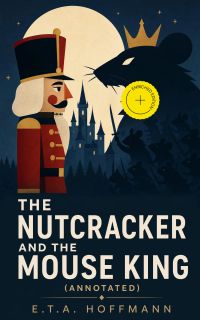
The Nutcracker and The Mouse King (Annotated)E.T.A. Hoffmann4h 4m4.6 (1.5K)$2 · $0.00

REBECCA OF SUNNYBROOK FARM & NEW CHRONICLES OF REBECCA (Children's Book Classics) (Annotated)Kate Douglas Wiggin15h 32m4.6 (1.4K)$0.99 · $0.00

Just William (Illustrated) (Annotated)Richmal Crompton6h 30m4.6 (1.2K)$2 · $0.00
The Labors of Hercules BealGary D. Schmidt8h 17m4.6 (10.4K)$8 · $0.00

Clancy of the Overflow (The Matilda Saga, #9)Jackie French14h 24m4.6 (471)$33 · $0.00
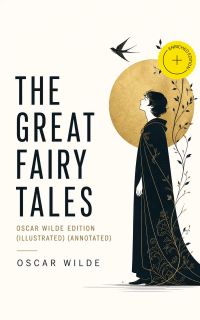
The Great Fairy Tales - Oscar Wilde Edition (Illustrated) (Annotated)Oscar Wilde6h 31m4.6 (1.1K)$2 · $0.00

Alice's Adventures in WonderlandLewis Carroll3h4.5 (5.9K)$7.99 · $0.00

The Boy Who Followed His Father into AuschwitzJeremy Dronfield6h 54m4.5 (28.5K)$24 · $0.00
Bat and the End of EverythingElana K. Arnold2h 40m4.6 (2.3K)$18 · $0.00
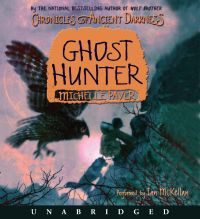
Chronicles of Ancient Darkness #6: Ghost HunterMichelle Paver6h 20m4.5 (11.7K)$24 · $0.00
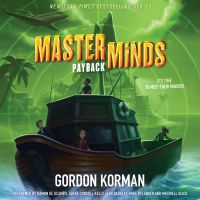
Masterminds: PaybackGordon Korman6h 51m4.5 (5.8K)$24 · $0.00

The House at Pooh CornerA. A. Milne, E. H. Shepard3h 6m4.5 (107.8K)$2 · $0.00

Anne of Green Gables (Annotated)Lucy Maud Montgomery13h 1m4.5 (2.8K)$2 · $0.00
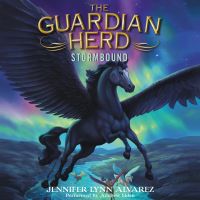
The Guardian Herd: StormboundJennifer Lynn Alvarez6h 19m4.5 (2.3K)$24 · $0.00
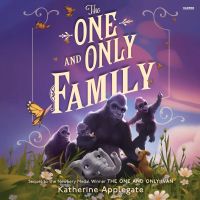
The One and Only FamilyKatherine Applegate3h 14m4.5 (7.5K)$18 · $0.00
Everybody Has a Podcast (Except You)Justin McElroy, Travis McElroy, Griffin McElroy5h 9m4.3 (2.3K)$24 · $0.00

Hands of TimeRebecca Struthers8h 8m4.4 (1.3K)$26 · $0.00
Never Lost AgainBill Kilday10h 1m4.4 (805)$29 · $0.00
How the Internet HappenedBrian McCullough13h 28m4.3 (2.7K)$23 · $0.00
Collected Writings of Nikola TeslaNikola Tesla, Thomas Commerford Martin21h 50m4.3 (1.7K)$1 · $0.00
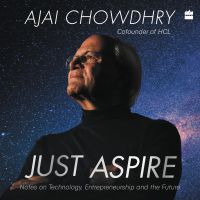
Just AspireAjai Chowdhry9h 13m4.4 (260)$29 · $0.00
The Little Book of AliensAdam Frank8h 20m4.3 (1.3K)$26 · $0.00
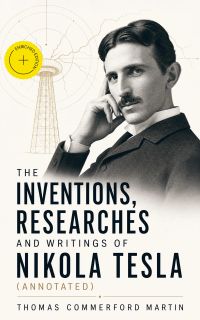
The inventions, researches and writings of Nikola Tesla (Annotated)Thomas Commerford Martin16h 59m4.3 (1.3K)$2 · $0.00

KargilV.P. Malik15h 18m4.3 (2K)$24 · $0.00
Experiments with Alternating CurrentsNikola Tesla9h 16m4.3 (874)$1.99 · $0.00

Fire on the HorizonTom Shroder, John Konrad8h 23m4.3 (858)$26 · $0.00

The Smell of Kerosene (Annotated)National Aeronautics and Space Administration, Donald L. Mallick, Peter W. Merlin11h 32m4.3 (523)$2 · $0.00

The Boy Who Harnessed the WindWilliam Kamkwamba, Bryan Mealer10h 5m4.2 (78.9K)$29 · $0.00

Across the Airless WildsEarl Swift10h 8m4.3 (1.3K)$29 · $0.00

Console WarsBlake J. Harris20h 41m4.2 (13.7K)$46 · $0.00

Improvised Munitions HandbookU.S. Department of Defense4h 49m4.3 (1.6K)$0.99 · $0.00
Escaping GravityLori Garver10h 54m4.2 (2.2K)$20 · $0.00

Wireless WarsJonathan Pelson8h 2m4.3 (418)$20 · $0.00

Let There Be WaterSeth M. Siegel8h 36m4.2 (2.3K)$20 · $0.00
The PerfectionistsSimon Winchester11h 46m4.2 (9.9K)$29 · $0.00
You may also like

12 BytesJeanette Winterson9h4.0 (2.5K)$20
Collected Writings of Nikola TeslaThomas Commerford Martin, Nikola Tesla19h 42m4.4 (2.8K)$1.99 · $0.00
AutonomyLawrence D. Burns, Christopher Shulgan11h 21m4.1 (1.1K)$29 · $0.00
The Problem of Increasing Human Energy (Annotated)Nikola Tesla6h 44m4.2 (3.2K)$2 · $0.00

Automate Real Work with AILena Devlin7h 30m$5 · $0.00
Giant Brains, or, Machines That ThinkEdmund Callis Berkeley9h 21m$2.30
Signal Processing for Electrical EngineersHelen Marchetti12h 6m$80

Build with Agentic AIDaria Quill7h 21m$5
Eft Investing: A Comprehensive Guide to Researching and Investing (The Intelligent Investor's Guide to Using Free Online Stock Screeners to Find Winning Stocks)Matthew Nagel2h 7m$3.50 · $0.00

Artificial IntelligenceJ.C.Lesko2h 43m$15 · $0.00
The Future Ready OrganizationGyan Nagpal7h 44m4.3 (35)$26 · $0.00
Build Intelligent SystemsNathan Underwood7h 15m$5 · $0.00
Neural Networks Without PythonPaloma Iqbal7h 29m$5 · $0.00
Fair GameRob Collie9h 39m3.9 (32)$20 · $0.00
Build AI Agents with FlowiseCyrus Fontaine8h 1m$5
The Evolution Of AIJasper Livingstone10h 56m$9
The Electric SlidePacky McCormick4h 31m5.0 (12)Free

The Evolution of Technologythe Speech Resource Company9h 30m$20

Code to ScreenTheo Vantage3h 49m$9

On-Device AI: The Complete TinyML Guide for DevelopersCaroline Lennox3h 22m$4 · $0.00