
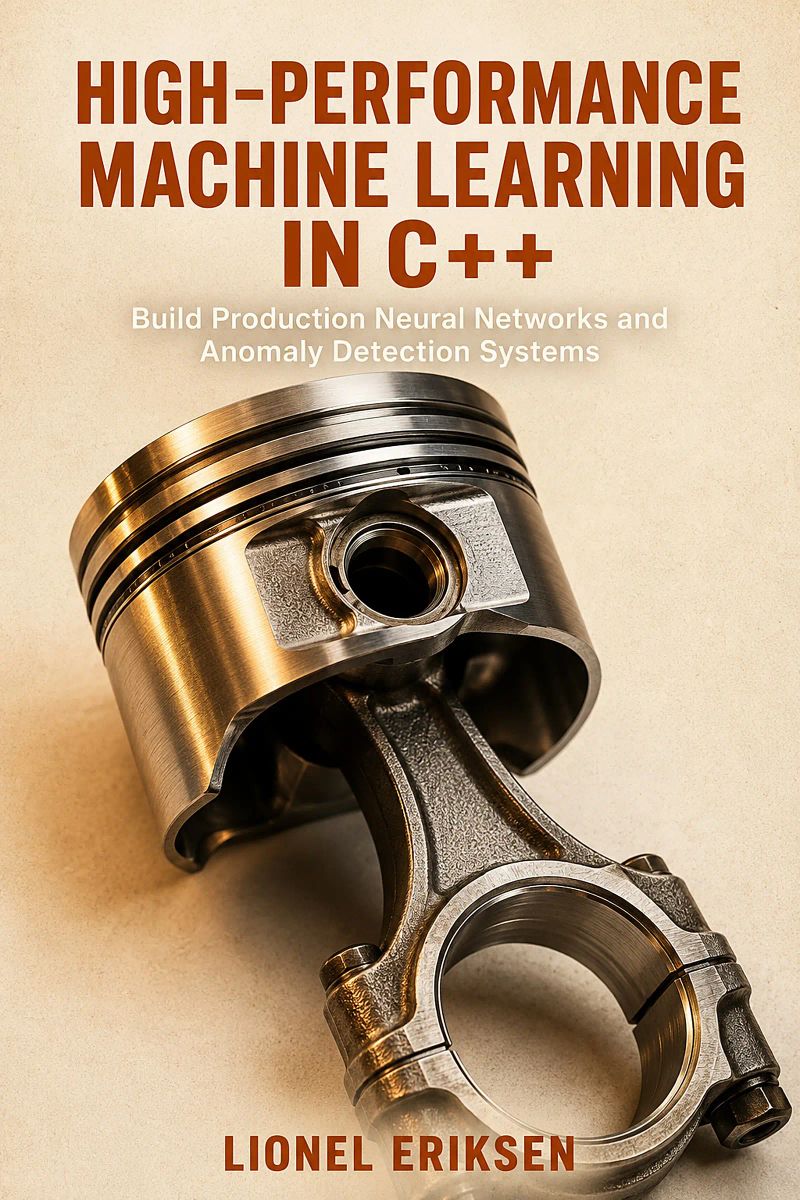
High-Performance Machine Learning in C++
Build Production Neural Networks and Anomaly Detection SystemsBy Lionel Eriksen

Length7h 37m
About this audiobook
Machine learning C++ and high-performance computing converge in this hands-on guide for building fast AI models from the ground up. Lionel Eriksen teaches you to implement training, inference, and numerical routines where speed truly matters—close to the metal. From optimizing memory access to parallelizing algorithms with OpenMP and SIMD, you'll master techniques that make your models run faster than Python-based alternatives. Practical exercises cover gradient descent, backpropagation, and custom kernels for CPUs. No fluff—just C++ code that delivers real-world performance gains. Whether you're a beginner or seasoned developer, this book bridges theory and practice. Competitor authors: [placeholder] and [placeholder] offer similar topics, but Ibarra's focus on low-level optimization and practical implementation sets this apart.
What You'll Learn
Build neural networks from scratch using raw C++ and Eigen
Implement gradient descent, backpropagation, and loss functions
Optimize memory layout and cache usage for faster training
Parallelize loops with OpenMP and vectorize with SIMD intrinsics
Write custom numerical routines for matrix operations
Profile and debug performance bottlenecks with tools like perf and Valgrind
Deploy models in embedded systems and low-latency applications
Who This Book Is For
Software engineers, data scientists, and C++ developers who want to push AI performance beyond scripting languages. Ideal for those building real-time systems, game AI, or high-frequency trading models.
Table of Contents
Why C++ for Machine Learning?
Setting Up Your Development Environment
Data Structures for High Performance
Linear Algebra Routines from Scratch
Implementing Gradient Descent
Building a Neural Network Layer
Training with Backpropagation
Parallelization with OpenMP
Vectorization with SIMD
Memory Optimization Techniques
Profiling and Benchmarking
Inference Optimization
Deploying to Embedded Systems
Case Study: Real-Time Object Detection
Get ready to write C++ that makes AI fly. No Python wrappers—just raw speed and full control.
Audiobook details
GenreTechnology
Length7 hrs 37 mins
Narrated byListen with 1,000+ voices
FormateBook with Audio
LanguageEnglish
Table of contents
1Preface
2Chapter 1 — Setting Up Your C++ Machine Learning Workbench
3Chapter 2 — Building a Blazing-Fast Math Library from Scratch
4Chapter 3 — Data Loading and Preprocessing for Time-Series Sensor Data
5Chapter 4 — Linear Regression for Baseline Anomaly Detection
Show all chaptersShow less
6Chapter 5 — Logistic Regression for Binary Fault Classification
7Chapter 6 — Foundations of a Custom Neural Network Framework
8Chapter 7 — Training Deep Networks with Optimizers and Regularization
9Chapter 8 — Convolutional Neural Networks for Spectrogram Analysis
10Chapter 9 — Performance Optimization: Cache-Friendly Layouts and SIMD
11Chapter 10 — Recurrent Networks for Sequential Anomaly Prediction
12Chapter 11 — Transformers for Long-Range Sensor Dependencies
13Chapter 12 — Decision Trees for Interpretable Rules
14Chapter 13 — Ensemble Methods: Random Forests and Gradient Boosting
15Chapter 14 — Unsupervised Learning: Autoencoders and K-Means Clustering
16Chapter 15 — Dimensionality Reduction with PCA and SVD
17Chapter 16 — Model Compression and Edge Deployment
18Chapter 17 — Real-Time Inference Server with Zero-Copy Batching
19Chapter 18 — Performance Showdown: C++ vs Python Frameworks
20About the Author

When the Heavens Went on SaleAshlee Vance18h 20m4.4 (3K)$40 · $0.00

Everybody Has a Podcast (Except You)Justin McElroy, Travis McElroy, Griffin McElroy5h 9m4.3 (2.3K)$24 · $0.00

Hands of TimeRebecca Struthers8h 8m4.4 (1.3K)$26 · $0.00
Never Lost AgainBill Kilday10h 1m4.4 (805)$29 · $0.00
How the Internet HappenedBrian McCullough13h 28m4.3 (2.7K)$23 · $0.00
Collected Writings of Nikola TeslaNikola Tesla, Thomas Commerford Martin21h 50m4.3 (1.7K)$1 · $0.00
Just AspireAjai Chowdhry9h 13m4.4 (260)$29 · $0.00

The Little Book of AliensAdam Frank8h 20m4.3 (1.3K)$26 · $0.00
The inventions, researches and writings of Nikola Tesla (Annotated)Thomas Commerford Martin16h 59m4.3 (1.3K)$2 · $0.00

KargilV.P. Malik15h 18m4.3 (2K)$24 · $0.00
Experiments with Alternating CurrentsNikola Tesla9h 6m4.3 (874)$1 · $0.00

Fire on the HorizonTom Shroder, John Konrad8h 23m4.3 (858)$26 · $0.00

The Smell of Kerosene (Annotated)National Aeronautics and Space Administration, Donald L. Mallick, Peter W. Merlin11h 32m4.3 (523)$2 · $0.00
The Boy Who Harnessed the WindWilliam Kamkwamba, Bryan Mealer10h 5m4.2 (78.9K)$29 · $0.00
Across the Airless WildsEarl Swift10h 8m4.3 (1.3K)$29 · $0.00

Console WarsBlake J. Harris20h 41m4.2 (13.7K)$46 · $0.00

Improvised Munitions HandbookU.S. Department of Defense4h 49m4.3 (1.6K)$1.99 · $0.00
Escaping GravityLori Garver10h 54m4.2 (2.2K)$20 · $0.00

Wireless WarsJonathan Pelson8h 2m4.3 (418)$20 · $0.00

Let There Be WaterSeth M. Siegel8h 36m4.2 (2.3K)$20 · $0.00
You may also like

ITIL® 4 Create, Deliver and Support (CDS)Claire Agutter3h 36m4.6 (23)$40 · $0.00
Software Structure by DesignRohan Dasgupta14h 44m4.8 (10)$75

ITIL® 4 Essentials: Your essential guide for the ITIL 4 Foundation exam and beyond, second editionClaire Agutter4h4.2 (50)$40 · $0.00

HorizonsJames Poskett15h 18m3.7 (472)$33 · $0.00
A Color Notation: How to Numerically Describe ColorsA. H. Munsell3h 52m3.8 (159)$2 · $0.00
Numerical Analysis Using MATLAB, Excel and VBAOmar Halabi12h 9m$75
Airfoils, Lift and Drag IllustratedPatrick Zwolinska11h 22m$50
Statistical Methods for Engineers and ScientistsPriya Ramanathan15h 5m$95
Blender for BeginnersImad Muratspahic1h 18m$5.20 · $0.00
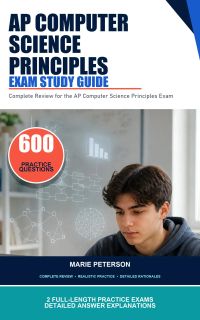
AP Computer Science Principles Exam Study GuideMarie Peterson8h 32m$10
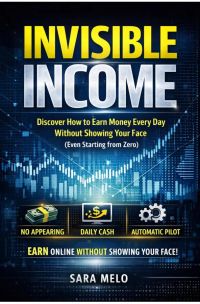
Invisible IncomeSara Melo1h 34m$1.80 · $0.00

From Zero To AutomaticSara Melo1h 25m$1.80 · $0.00
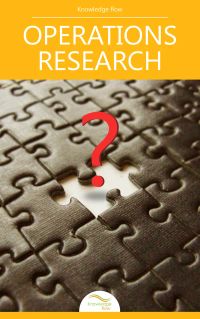
Operation ResearchKnowledge Flow1h 15m$4.10 · $0.00
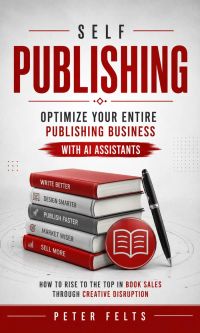
Self Publishing: Optimize Your Entire Publishing Business With AI Assistants (How to Rise to the Top in Book Sales Through Creative Disruption)Peter Felts1h 8m$3.50 · $0.00
Algorithms in Java, Coded and TestedBianca Zielinski7h 25m$5 · $0.00
Machine Learning in the CloudLionel Jansen8h 21m$5 · $0.00
Build a 2.5D RPG with Godot 4 and C#Gregory Whitlock7h 8m$5 · $0.00
Bio-Inspired AI in C++Zoe Becker7h 10m$5 · $0.00
Python Programming Made PracticalAustin Gray7h 21m5.0 (1)$6.50 · $0.00
Ethical Hacking Practice LabAaron Blake7h 51m$6.50 · $0.00