
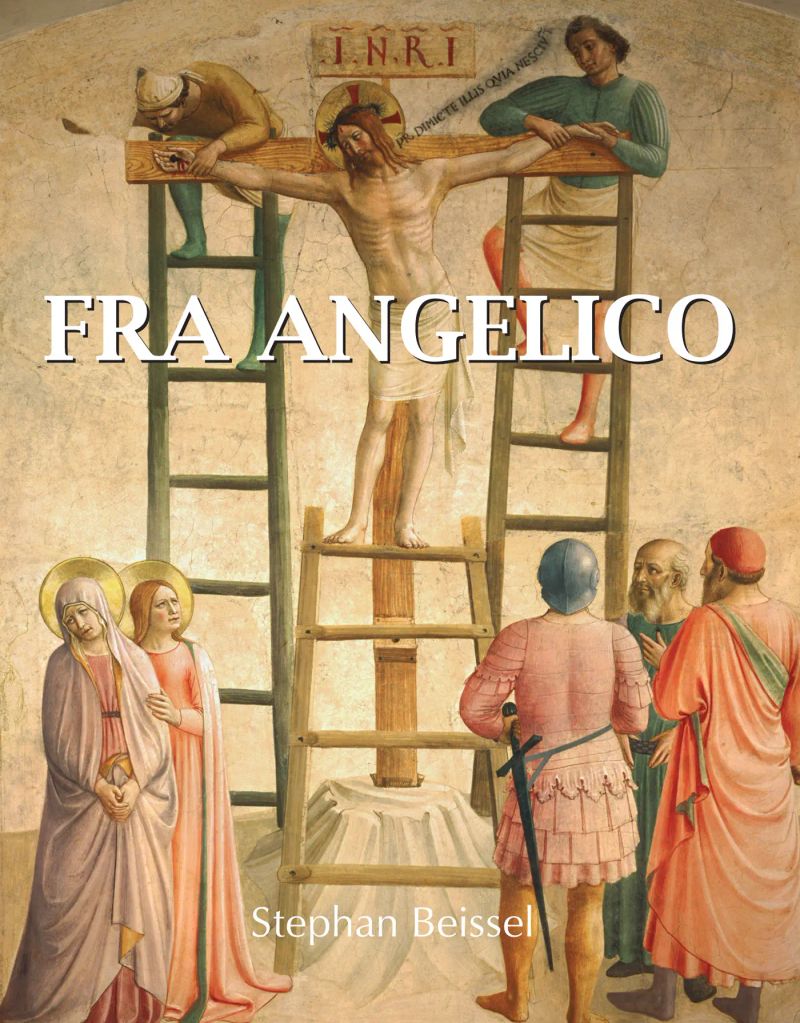
Fra Angelico
Painter of Heavenly GraceBy Stephan Beissel


Length5h 41m
About this audiobook
Secluded within cloister walls, a painter and a monk, and brother of the order of the Dominicans, Angelico devoted his life to religious paintings. Little is known of his early life except that he was born at Vicchio, in the broad fertile valley of the Mugello, not far from Florence, that his name was Guido de Pietro, and that he passed his youth in Florence, probably in some bottegha, for at twenty he was recognised as a painter. In 1418 he entered in a Dominican convent in Fiesole with his brother. They were welcomed by the monks and, after a year’s novitiate, admitted to the brotherhood, Guido taking the name by which he was known for the rest of his life, Fra Giovanni da Fiesole; for the title of Angelico, the “Angel,” or Il Beato, “The Blessed,” was conferred on him after his death. Henceforth he became an example of two personalities in one man: he was all in all a painter, but also a devout monk; his subjects were always religious ones and represented in a deeply religious spirit, yet his devotion as a monk was no greater than his absorption as an artist. Consequently, though his life was secluded within the walls of the monastery, he kept in touch with the art movements of his time and continually developed as a painter. His early work shows that he had learned of the illuminators who inherited the Byzantine traditions, and had been affected by the simple religious feeling of Giotto’s work. Also influenced by Lorenzo Monaco and the Sienese School, he painted under the patronage of Cosimo de Medici. Then he began to learn of that brilliant band of sculptors and architects who were enriching Florence by their genius. Ghiberti was executing his pictures in bronze upon the doors of the Baptistery; Donatello, his famous statue of St. George and the dancing children around the organ-gallery in the Cathedral; and Luca della Robbia was at work upon his frieze of children, singing, dancing and playing upon instruments. Moreover, Masaccio had revealed the dignity of form in painting. Through these artists the beauty of the human form and of its life and movement was being manifested to the Florentines and to the other cities. Angelico caught the enthusiasm and gave increasing reality of life and movement to his figures.
Audiobook details
GenreOther
Length5 hrs 41 mins
Narrated byListen with 1,000+ voices
FormateBook with Audio
LanguageEnglish
Table of contents
1Introduction
2Fra Angelico’s Early Training and his Work in Cortona and Perugia
3Stay and Work in Fiesole
4Fra Angelico’s Stay in Florence, and his Murals at the Convento di San Marco
5Outside Influences
Show all chaptersShow less
6The Paintings of the Last Judgment and their Relationship with Dante’s Poetry
7The Virgin Mary in the Paintings of Fra Angelico
8Works in Rome and Orvieto
9The Final Years and Death of Fra Angelico
10List of Artists
Series
More from Stephan Beissel
Mere ChristianityC. S. Lewis7h 7m4.4 (519.7K)$24 · $0.00

Her Daily BreadKate Wood12h 57m4.6 (153)$33 · $0.00
The Holy Bible - 1 SamuelKing James2h 13m4.8 (1.6K)$3 · $0.00
The American Standard Bible — The Gospel of MatthewMatthew3h 56m4.7 (3K)$2 · $0.00

Bad Fat Black GirlSesali Bowen6h 32m4.7 (2.8K)$24 · $0.00
The King James Audio Bible New Testament CompleteChristopher Glyn20h 2m4.7 (2.6K)$12 · $0.00
Faiths CheckbookCharles Spurgeon12h 44m4.7 (3.2K)$11 · $0.00

Ten Things I Wish You Knew About Your Child's Mental HealthDr. Billy Garvey4h 53m4.7 (2.4K)$20 · $0.00

Designing Terry Pratchett’s DiscworldPaul Kidby3h 52m4.7 (343)$20 · $0.00
The Chosen Book OneAmanda Jenkins, Kristen Hendricks, Dallas Jenkins3h 8m4.6 (4.9K)$10 · $0.00
The Lives of BrianBrian Johnson9h 45m4.6 (3.5K)$29 · $0.00
Expository Thoughts on the Gospel of LukeJ.C. Ryle27h 13m4.7 (536)$18 · $0.00

CrossroadsKaleb Dahlgren7h 56m4.6 (4.9K)$26 · $0.00

Across the RiverKent Babb11h 40m4.6 (927)$29 · $0.00

Brain Training for RidersAndrea Monsarrat Waldo5h 56m4.7 (550)$19 · $0.00
My Effin' LifeGeddy Lee17h 11m4.6 (13.1K)$40 · $0.00

Kings and PawnsHoward Bryant10h 9m4.6 (678)$29 · $0.00

The Elementia Chronicles #2: The New OrderSean Fay Wolfe11h 17m4.6 (841)$29 · $0.00
The ActsLuke2h 55m4.6 (19.7K)$12 · $0.00
New Testament - Easy NavigationWorld English Bible19h 35m4.6 (1.3K)$1.30 · $0.00
You may also like

The Kingdom, the Power, and the GloryTim Alberta18h 16m4.4 (18.1K)$8 · $0.00
Short and Easy Method of Prayer (Annotated)Madame Guyon12h 20m4.5 (360)$2 · $0.00
Filling Up the Afflictions of ChristJohn Piper2h 52m4.5 (1.2K)$15
Cicero's Tusculan DisputationsMarcus Tullius Cicero13h 15m4.1 (586)$1 · $0.00
Restoring Faithvarious authors2h 16m4.6 (323)$15 · $0.00
THE CONSOLATION OF PHILOSOPHY (Collector's Edition)Anicius Manlius Severinus Boethius15h 20m4.2 (51.6K)$1.99 · $0.00

Loved BabySarah Philpott4h 51m4.8 (1.4K)$10 · $0.00
Devotions Upon Emergent OccasionsJohn Donne7h 6m4.2 (1.5K)Free
The Consolation of Philosophy (translated by W. V. Cooper) (Annotated)Anicius Manlius Severinus Boethius6h 8m4.2 (32.4K)$0.99 · $0.00
The Consolation of PhilosophyBoethius4h 7m4.2 (20.1K)Free

Jonathan EdwardsGeorge M. Marsden24h 29m4.4 (3.5K)$25
MichelangeloEugène Müntz4h 37m3.8 (42)$16 · $0.00
MichelangeloEugène Müntz4h 57m4.1 (63)$18 · $0.00

De Amicitia, Scipio's DreamMarcus Tullius Cicero1h 49m4.2 (18)$2 · $0.00
The Consolation of Philosophy (translated by Walter John Sedgefield) (Annotated)Anicius Manlius Severinus Boethius6h 25m4.2 (33)$0.99 · $0.00
Journal of a Residence at BagdadAnthony Norris Groves8h 39m$1 · $0.00
Paul Gerhardt's Spiritual SongsPaul Gerhardt7h 42m$1 · $0.00
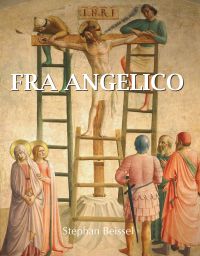
Fra AngelicoStephan Beissel6h 29m$18 · $0.00
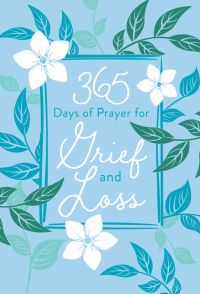
365 Days of Prayer for Grief and LossBroadStreet Publishing Group LLC7h 57m4.5 (189)$10 · $0.00

God Is in ControlBroadStreet Publishing Group LLC1h 55m$10 · $0.00