
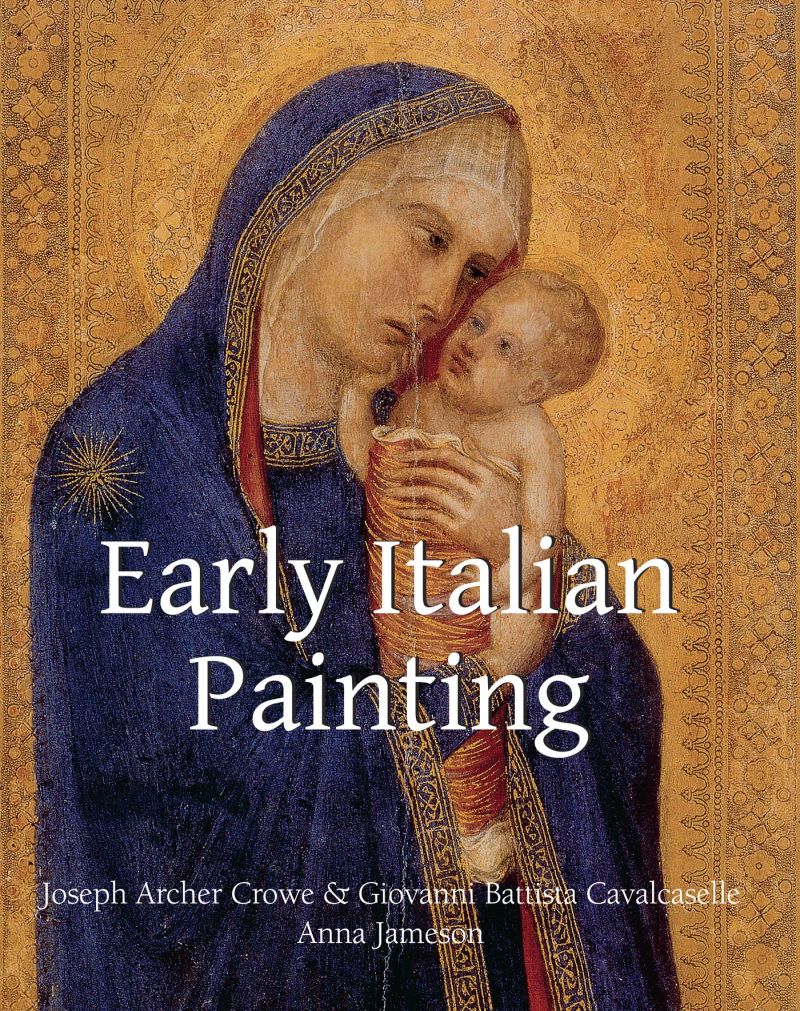
Early Italian Painting
From Giotto to Fra Angelico: the birth of perspectiveBy Joseph Archer Crowe, Giovanni Battista Cavalcaselle, Anna Jameson


Length5h
About this audiobook
Oscillating between the majesty of the Greco-Byzantine tradition and the modernity predicted by Giotto, Early Italian Painting addresses the first important aesthetic movement that would lead to the Renaissance, the Italian Primitives. Trying new mediums and techniques, these revolutionary artists no longer painted frescos on walls, but created the first mobile paintings on wooden panels. The faces of the figures were painted to shock the spectator in order to emphasise the divinity of the character being represented. The bright gold leafed backgrounds were used to highlight the godliness of the subject. The elegance of both line and colour were combined to reinforce specific symbolic choices. Ultimately the Early Italian artists wished to make the invisible visible. In this magnificent book, the authors emphasise the importance that the rivalry between the Sienese and Florentine schools played in the evolution of art history. The reader will discover how the sacred began to take a more human form through these forgotten masterworks, opening a discrete but definitive door through the use of anthropomorphism, a technique that would be cherished by the Renaissance.
Audiobook details
GenreOther
Length5 hrs
Narrated byListen with 1,000+ voices
FormateBook with Audio
LanguageEnglish
Table of contents
1Introduction
2Introduction: Something about Pictures and Painters
3Revival of Art in Siena – Fundamental Difference between Sienese and Florentine Art
4Early Christianity and Art
5Memoirs of the Early Italian Painters
Show all chaptersShow less
6Guido da Siena 13th Century
7Giovanni Cimabue 1240-1302
8Cimabue and the Rucellai Madonna: Contemporaries of Cimabue – Gradual Rise of the Art of Florence
9Duccio di Buoninsegna c. 1255-c. 1318
10Ugolino di Nerio 1280(?)-1349
11Segna di Bonaventura Active c. 1298-1331
12Giotto di Bondone 1267-1337
13Pietro Cavallini 1259-c. 1330
14The Campo Santo
15Andrea Orcagna c. 1308-1368
16Taddeo Gaddi c. 1300-1366
17Simone Martini, also called Simone Memmi c. 1284-1344
18Conclusion
Series
More from Joseph Archer Crowe, Giovanni Battista Cavalcaselle, Anna Jameson

Mere ChristianityC. S. Lewis7h 7m4.4 (519.7K)$24 · $0.00

Her Daily BreadKate Wood12h 57m4.6 (153)$33 · $0.00
The Holy Bible - 1 SamuelKing James2h 13m4.8 (1.6K)$3 · $0.00
The American Standard Bible — The Gospel of MatthewMatthew3h 56m4.7 (3K)$2 · $0.00

Bad Fat Black GirlSesali Bowen6h 32m4.7 (2.8K)$24 · $0.00
The King James Audio Bible New Testament CompleteChristopher Glyn20h 2m4.7 (2.6K)$12 · $0.00
Faiths CheckbookCharles Spurgeon12h 44m4.7 (3.2K)$11 · $0.00

Ten Things I Wish You Knew About Your Child's Mental HealthDr. Billy Garvey4h 53m4.7 (2.4K)$20 · $0.00
Designing Terry Pratchett’s DiscworldPaul Kidby3h 52m4.7 (343)$20 · $0.00
The Chosen Book OneAmanda Jenkins, Kristen Hendricks, Dallas Jenkins3h 8m4.6 (4.9K)$10 · $0.00
The Lives of BrianBrian Johnson9h 45m4.6 (3.5K)$29 · $0.00
Expository Thoughts on the Gospel of LukeJ.C. Ryle27h 13m4.7 (536)$18 · $0.00

CrossroadsKaleb Dahlgren7h 56m4.6 (4.9K)$26 · $0.00

Across the RiverKent Babb11h 40m4.6 (927)$29 · $0.00

Brain Training for RidersAndrea Monsarrat Waldo5h 56m4.7 (550)$19 · $0.00
My Effin' LifeGeddy Lee17h 11m4.6 (13.1K)$40 · $0.00
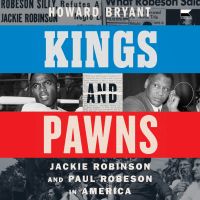
Kings and PawnsHoward Bryant10h 9m4.6 (678)$29 · $0.00

The Elementia Chronicles #2: The New OrderSean Fay Wolfe11h 17m4.6 (841)$29 · $0.00
The ActsLuke2h 55m4.6 (19.7K)$12 · $0.00
New Testament - Easy NavigationWorld English Bible19h 35m4.6 (1.3K)$1.30 · $0.00
You may also like
Scientific CreationismHenry M. Morris11h 4m3.8 (1.1K)$23 · $0.00

The Great ApostasyJames E. Talmage6h 45m4.3 (3.3K)$1.99 · $0.00
The Holy Bible - PsalmsKing James4h 2m4.7 (21.9K)$3 · $0.00
The City of God - Volume 1Bishop of Hippo Saint Augustine24h 26m4.4 (3.1K)$2.30
Book of ColossiansUnknown Author16m4.7 (1.2K)$8
Treatise On the Holy SpiritBasil the Great7h 5m4.5 (1.7K)$2 · $0.00
Dialogues Concerning Natural ReligionDavid Hume3h 58m4.1 (8.9K)Free

Vatican WaltzRoland Merullo8h 36m3.8 (1.6K)$20 · $0.00
THE PROBLEM OF PAIN (Unabridged)C. S. Lewis5h 36m4.3 (94.3K)$2 · $0.00
A Treatise on Good WorksMartin Luther2h 42m4.3 (407)$1 · $0.00

Theodicy (Annotated)Gottfried Wilhelm Leibniz19h 29m4.2 (1.9K)$0.99 · $0.00
Holy Spirit And Defense Of The FaithJohn Warwick Montgomery34m$3 · $0.00
A journey through Romanesque artVictoria Charles, Klaus H. Carl1h 29m$13 · $0.00

God Hates a False BalancePastor Philip13m$13 · $0.00
Meet Your Guardian AngelJacky Newcomb31m$10
An Apology for AtheismCharles Southwell4h 19m$2 · $0.00
Is the Devil a Myth?Charles Franklin Wimberly4h 13m4.4 (16)$21 · $0.00
On the apostolical successionWilliam J. Irons3h 33m$2 · $0.00
Primitive Christian Worship. Or, The Evidence of Holy Scripture and the ChurchJames Endell Tyler11h 38m$2 · $0.00
The Great Doctrines of the Bible (Annotated)William Evans8h 45m4.5 (177)$2 · $0.00