
Audio only


Length5h 38m
About this audiobook
Francis Bacon had many accomplishments. He was a scientist, a philosopher, and a politician, and he was adept, too, at taking bribes; for this he had been imprisoned. It is, however, as a literary man that he is perhaps best remembered, a writer so competent with the pen that for decades there have been some persons willing to argue that Bacon wrote the plays attributed to William Shakespeare.
The essay form is rare in the modern age, although there are some faint signs of its revival. As Bacon used it, the essay is a carefully fashioned statement, both informative and expressive, by which a person comments on life and manners, on nature and its puzzles.
"The Essays" first appeared, ten in number, in 1597 (by 1612, the number of essays had been increased to thirty-eight). They were immediately popular because they were brief, lively, humane, and well-written. Perhaps they were effective in contrast to the rambling, florid prose written by most writers of the time. A considerable part of their charm lay in their civilised tone. In these essays, Bacon reveals himself as an inquisitive but also an appreciative man with wit enough to interest others.
The essays concern themselves with such universal concepts as truth, death, love, goodness, friendship, fortune, and praise. They cover such controversial matters as religion, atheism, custom and education, and usury, and they consider such intriguing matters as envy, cunning, innovations, suspicion, ambition, praise, vainglory, and the vicissitudes of things.
Audiobook details
Rating★★★★ 4.0 (6.1K)
Includes Goodreads, Amazon, LibraryThing, StoryGraph
GenrePsychology, Biography and Memoir, Education and Learning
Length5 hrs 38 mins
Narrated byListen with 1,000+ voices
FormateBook with Audio
Publish dateJun 7, 2019
LanguageEnglish
Table of contents
1Of Truth
26Of Seeming Wise
2Of Death
27Of Friendship
3Of Unity in Religion
28Of Expense
4Of Revenge
29Of the True Greatness of Kingdoms and Estates
5Of Adversity
30Of Regiment of Health
Show all chaptersShow less
6Of Simulation and Dissimulation
31Of Suspicion
7Of Parents and Children
32Of Discourse
8Of Marriage and Single Life
33Of Plantations
9Of Envy
34Of Riches
10Of Love
35Of Prophecies
11Of Great Place
36Of Ambition
12Of Boldness
37Of Masques and Triumphs
13Of Goodness and Goodness of Nature
38Of Nature in Men
14Of Nobility
39Of Custom and Education
15Of Seditions and Troubles
40Of Fortune
16Of Atheism
41Of Usury
17Of Superstition
42Of Youth and Age
18Of Travel
43Of Beauty
19Of Empire
44Of Deformity
20Of Counsel
45Of Building
21Of Delays
46Of Gardens
22Of Cunning
47Of Negotiating
23Of Wisdom for a Man’s Self
48Of Followers and Friends
24Of Innovations
49Of Suitors
25Of Dispatch
50Of Studies
More from Francis Bacon
The New OrganonFrancis Bacon9h 3m3.9 (2.3K)$0.60 · $0.00
The Advancement of Learning (Annotated)Francis Bacon9h 8m4.2 (100)$1.20 · $0.00
The EssaysFrancis Bacon5h 39m$4.70 · $0.00
The New OrganonFrancis Bacon9h 3m3.9 (2.3K)$3.50 · $0.00
The EssaysFrancis Bacon5h 39m4.1 (22K)$3.50 · $0.00
The Advancement of LearningFrancis Bacon9h 9m4.0 (3.3K)$3.50 · $0.00
What to Make of a LifeJim Collins13h 31m4.4 (794)$33 · $0.00
Braving the TruthRachel Held Evans11h 31m4.7 (359)$29 · $0.00
Level UpRob Dial7h 42m4.6 (3.3K)$26 · $0.00

As a JewSarah Hurwitz8h 36m4.6 (1.2K)$26 · $0.00
Saint Joan (Annotated)George Bernard Shaw6h 20m4.6 (1.2K)$1.20 · $0.00
Burn the HaystackJennie Young, PhD9h 30m4.6 (543)$29 · $0.00

Woman and the New Race (Annotated)Margaret Sanger6h 30m4.6 (1K)$1.99 · $0.00
Good InsideBecky Kennedy9h 55m4.5 (59.3K)$29 · $0.00
The Mis-Education of the NegroCarter Godwin Woodson5h 4m4.5 (29.4K)$1.20 · $0.00
Du Bois: EssaysW.E.B. Du Bois6h 22m4.6 (1.5K)$1 · $0.00

The North American Indian (Illustrated Edition)Edward S. Curtis, Frederick Webb Hodge5h 59m4.6 (1.4K)$2 · $0.00

Valley of the BirdtailAndrew Stobo Sniderman, Douglas Sanderson10h 1m4.6 (2.4K)$29 · $0.00
Lies My Therapist Told MeGreg E. Gifford9h 3m4.6 (503)$29 · $0.00
Disturbed in Their NestsAlephonsion Deng, Judy A. Bernstein11h 22m4.6 (595)$23 · $0.00
No Name in the StreetJames Baldwin5h4.5 (8.5K)$20 · $0.00
Narrative of the Life of Frederick DouglassFrederick Douglass4h 13m4.5 (309.9K)$1.20 · $0.00
Magic SeasonWade Rouse6h 41m4.6 (855)$24 · $0.00
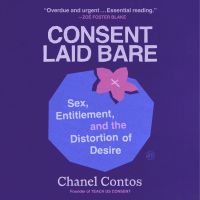
Consent Laid BareChanel Contos7h 11m4.5 (1.7K)$24 · $0.00

The Big RevealSasha Velour6h 15m4.5 (2.1K)$24 · $0.00
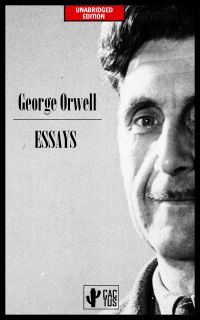
EssaysGeorge Orwell26h 38m4.5 (8.4K)$4 · $0.00
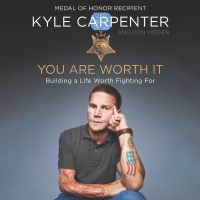
You Are Worth ItKyle Carpenter, Don Yaeger8h 53m4.7 (4.8K)$29 · $0.00

The Happiest Man on EarthEddie Jaku3h 48m4.6 (178K)$7 · $0.00
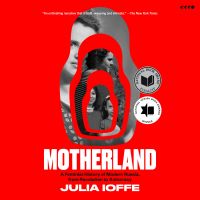
MotherlandJulia Ioffe17h 52m4.7 (2.5K)$40 · $0.00
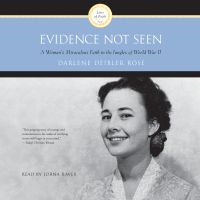
Evidence Not SeenDarlene Deibler Rose11h 11m4.6 (11.9K)$29 · $0.00

Where Cowards Go to DieBenjamin Sledge8h 42m4.7 (351)$20 · $0.00

Will You Love Me?Cathy Glass9h 5m4.6 (9.3K)$29 · $0.00
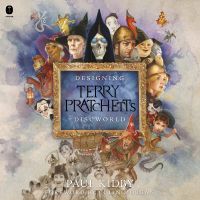
Designing Terry Pratchett’s DiscworldPaul Kidby3h 52m4.7 (343)$20 · $0.00

HostageEli Sharabi5h 25m4.6 (10.8K)$24 · $0.00

Finding MeViola Davis9h 15m4.6 (256.4K)$29 · $0.00

The Dangerous Truth about Today’s MarijuanaLaura Stack CSP, MBA9h 57m4.7 (385)$20 · $0.00

Birdie & HarlowTaylor Wolfe7h 50m4.6 (6.5K)$26 · $0.00
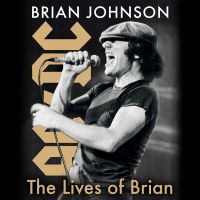
The Lives of BrianBrian Johnson9h 45m4.6 (3.5K)$29 · $0.00

I Am The StormJanice Dean9h4.6 (1.5K)$8 · $0.00
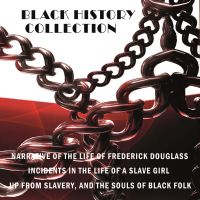
Black History CollectionFrederick Douglass, Harriet Ann Jacobs, Booker T. Washington, W.E.B. Du Bois27h 9m4.6 (2.6K)$18 · $0.00
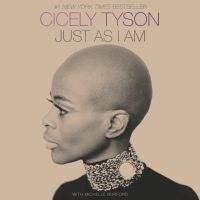
Just as I AmCicely Tyson16h 8m4.6 (99K)$33 · $0.00

Unbroken Bonds of BattleJohnny Joey Jones8h 31m4.6 (2.6K)$8 · $0.00

The Daughter of AuschwitzTova Friedman, Malcolm Brabant7h 54m4.6 (16.7K)$26 · $0.00
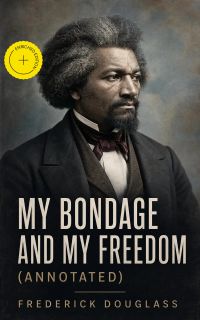
My Bondage and My Freedom (Annotated)Frederick Douglass15h 30m4.6 (2.4K)$2 · $0.00
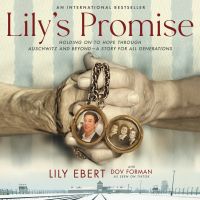
Lily's PromiseLily Ebert, Dov Forman8h 54m4.6 (16.1K)$29 · $0.00
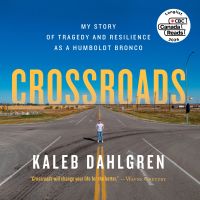
CrossroadsKaleb Dahlgren7h 56m4.6 (4.9K)$26 · $0.00
A Brief History of IntelligenceMax S. Bennett12h 18m4.6 (6.6K)$29 · $0.00

HomeschooledStefan Merrill Block7h 10m3.6 (18.5K)$28 · $0.00

Parents and Children (Annotated)Charlotte Mason9h 23m4.6 (988)$2 · $0.00
Children Under FireJohn Woodrow Cox10h 17m4.5 (1.6K)$29 · $0.00

The State Must ProvideAdam Harris7h 15m4.5 (775)$24 · $0.00
The Call of the Wild and FreeAinsley Arment9h 7m4.4 (21.2K)$29 · $0.00
The Freelance WayRobert Vlach19h 48m4.5 (528)$40 · $0.00
Race to the BottomLuke Rosiak9h 20m4.5 (600)$29 · $0.00

They Came for the SchoolsMike Hixenbaugh9h 5m4.5 (2.6K)$8 · $0.00
Find Me UnafraidKennedy Odede, Jessica Posner11h 11m4.5 (2.7K)$29 · $0.00
Asking for ItKate Harding8h 55m4.4 (5.3K)$20 · $0.00
Defining Moments in Black HistoryDick Gregory7h 37m4.4 (6K)$26 · $0.00

The Emerald Tablets of Thoth the AtlanteanMaurice Doreal3h 4m4.4 (8.8K)$6 · $0.00

Learning AmericaLuma Mufleh6h 37m4.4 (564)$24 · $0.00
Math-ishJo Boaler7h 21m4.4 (588)$24 · $0.00
It Worked For MeColin Powell7h 42m4.3 (9.8K)$26 · $0.00

Little SoldiersLenora Chu11h 30m4.3 (3.1K)$29 · $0.00

Financial FeministTori Dunlap8h 3m4.2 (22.2K)$8 · $0.00
Grammar-land; Or, Grammar in Fun for the Children of Schoolroom-shireM. L. Nesbitt2h 36m4.4 (487)$1 · $0.00

DarkwaterWilliam Edward Burghardt Du Bois6h 40m4.3 (1.4K)$11 · $0.00
You may also like

PenseesBlaise Pascal8h 40m4.2 (21.2K)$3.50 · $0.00
Plato: Complete WorksPlato141h 38m4.5 (16.1K)$2 · $0.00
Fallen LeavesWill Durant5h 18m4.2 (2K)$17
PhilebusPlato5h 19m4.1 (1.4K)$1 · $0.00
Kant's Critique of JudgementImmanuel Kant12h 49m4.2 (12.5K)$1.80 · $0.00
Discourse on the MethodRené Descartes2h 24m4.0 (37.8K)$1.20 · $0.00

On the Genealogy of MoralsFriedrich Nietzsche6h 11m4.3 (76.5K)$1.20 · $0.00
The World's Last Night and Other EssaysC. S. Lewis3h 3m4.3 (3.5K)$1 · $0.00
On Sense and ReferenceGottlob Frege2h 14m4.1 (484)$1 · $0.00
The Meaning of TruthWilliam James6h 24m4.1 (442)$2 · $0.00
The Problems of PhilosophyBertrand Russell4h 32m4.0 (25.8K)Free
Against EmpathyPaul Bloom7h 30m3.8 (9K)$26 · $0.00
The Six EnneadsPlotinus34h 13m4.3 (4.3K)$21 · $0.00
Tertium OrganumP. D. Ouspensky14h 45m4.4 (633)$1.99 · $0.00
Socrates in the CityEric Metaxas14h 54m4.3 (697)$25 · $0.00
Dialogues Concerning Natural ReligionDavid Hume3h 58m4.1 (8.9K)Free
Elements of MoralsPaul Janet8h 25m$2 · $0.00
An Examination of President Edwards' Inquiry into the Freedom of the WillAlbert Taylor Bledsoe7h 5m$2 · $0.00
M. Cousin's Course of PhilosophyWilliam Hamilton2h 7m$2 · $0.00
An Enquiry Concerning the Principles of Taste, and of the Origin of our Ideas of Beauty, etcFrances Reynolds1h 18m$1 · $0.00