
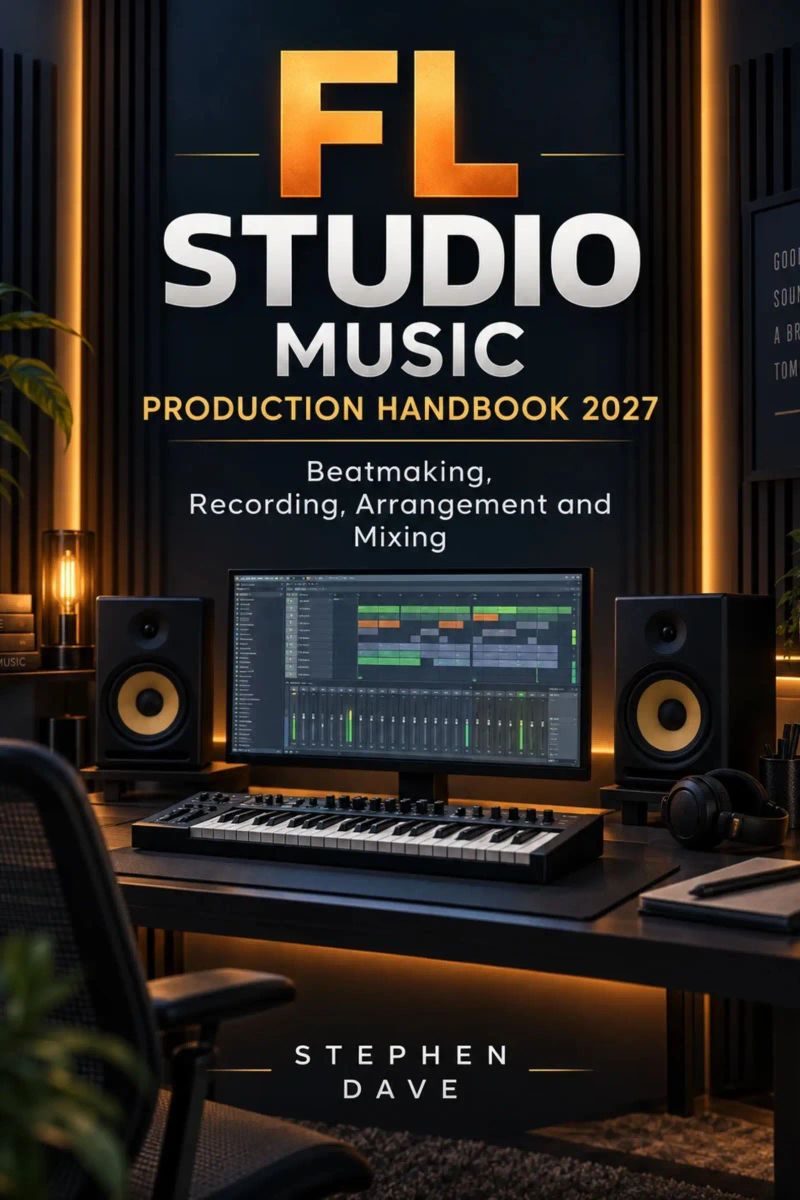
FL STUDIO MUSIC PRODUCTION HANDBOOK 2027
Beatmaking, Recording, Arrangement and MixingBy Stephen Dave


Length21h 10m
About this audiobook
A digital audio workstation becomes confusing when channels, patterns, clips, tracks, instruments, audio files, routing, automation, plugins, project assets, and deliverables are treated as interchangeable objects.
This handbook replaces feature-by-feature guessing with a connected workflow. A complete music-production handbook that follows a project from installation and first sound through beatmaking, MIDI, audio recording, arrangement, synthesis, sampling, mixing, mastering, collaboration, troubleshooting, archiving, and final delivery. It begins with the operating foundation, then shows how each decision affects the next stage of the project. The result is a guide that can be read in sequence by a newcomer or opened by task when a real session stops behaving as expected.
Coverage includes editions, installation, audio devices, latency, project organization, studio connections, drum programming, piano-roll sequencing, melody and harmony, arranging, audio recording and comping, sampling, synthesis and sound design, automation, mixer routing, equalization, dynamics, spatial effects, vocals, creative processing, mixing, mastering, collaboration, performance, plugin management, troubleshooting, export, archives, and version-change verification. The emphasis stays on cause and effect: what the operator is trying to accomplish, which layer controls the result, what evidence confirms success, and what should remain unchanged while a fault is isolated.
Readers learn to follow one sound from source to arrangement and mixer, preserve project dependencies, distinguish composition problems from routing or processing problems, and finish files that can be reopened, shared, and delivered. That approach is especially useful when a session must be reopened later, transferred to another workstation, explained to a collaborator, recovered after an update, or operated under time pressure.
The intended audience includes beginning and intermediate producers, beatmakers, songwriters, recording artists, home-studio musicians, and experienced users who want a more disciplined production workflow. The progression gives newer readers a route from fundamentals to complete work while allowing experienced users to move directly to advanced integration, diagnostics, preservation, and delivery.
Readers learn to follow one sound from source to arrangement and mixer, preserve project dependencies, distinguish composition problems from routing or processing problems, and finish files that can be reopened, shared, and delivered. The goal is not memorizing every option. It is gaining a durable mental model, a reliable sequence of checks, and the confidence to make deliberate choices without sacrificing earlier work.
Editions, bundled tools, licensing, online services, plugin formats, menus, and operating-system behavior change. Readers should verify their installed version, edition, rights, and third-party compatibility. No workflow can replace current documentation, competent safety practice, or verification on the reader's own system. This handbook is designed to make that verification clearer, faster, and easier to preserve.
Understand how patterns, channels, clips, tracks, the arrangement, and the mixer interact
Create drums, MIDI parts, melodies, samples, recordings, automation, and complete arrangements
Route, edit, process, mix, master, export, and quality-check finished music
Organize projects, plugins, recordings, backups, collaborations, and archives safely
Troubleshoot latency, missing files, silent signal paths, plugin issues, and failed exports
Audiobook details
GenreOther, Technology
Length21 hrs 10 mins
Narrated byListen with 1,000+ voices
FormateBook with Audio
Publish dateOct 2, 2026
LanguageEnglish
Table of contents
11.1 What FL Studio actually does
21.2 The five working areas and the transport
31.3 Patterns, channels, tracks and clips are not synonyms
41.4 Choosing an edition for the work you intend to do
51.5 Ownership, updates, trials and project portability
Show all chaptersShow less
61.6 From first idea to a deliverable: the complete project map
71.7 Guided orientation exercise: follow one sound
81.8 Common early misconceptions
91.9 Chapter review and next decisions
102.1 Establish the computer and account baseline
112.2 Install or update without disturbing existing work
122.3 Authorize the correct edition
132.4 Identify the complete playback path
142.5 Choose a sample rate that suits the work
152.6 Buffer size, perceived delay and audio stability
162.7 Run a controlled first-sound test
172.8 Permission and installation problems
182.9 Choose the right device for a specific task
192.10 Interpret a latency problem before changing settings
202.11 Validate the installation with a second project and a fresh launch
212.12 Chapter completion checks
223.1 Read the interface by responsibility, not by appearance
233.2 Understand patterns, channels and Playlist tracks
243.3 Navigate the Browser and establish search locations
253.4 Build a predictable project-folder system
263.5 Choose the correct project format
273.6 Transport, modes and arrangement checkpoints
283.7 Design a template that helps rather than dictates
293.8 Recover orientation in an unfamiliar project
303.9 Develop a usable naming and color language
313.10 Design checkpoints that survive creative changes
323.11 Apply a project-organization audit to a real song
333.12 Completion criteria and handoff to studio equipment
344.1 Plan the studio around actual signal paths
354.2 Connect an audio interface deliberately
364.3 Select microphone and instrument inputs correctly
374.4 Map the physical input to FL Studio
384.5 Configure monitoring without echo or feedback
394.6 Install and enable a MIDI keyboard or controller
404.7 Separate controller mapping from note recording
414.8 Configure external sound modules and complex devices conservatively
424.9 Diagnose the connection layer before the application layer
434.10 Improve a single-room recording setup without excess equipment
444.11 Test the studio as a complete production instrument
454.12 Build and verify the practical studio configuration
465.1 Define the pulse before selecting samples
475.2 Select one-shots for distinct jobs
485.3 Program a readable first bar
495.4 Understand note events, sample playback and retriggering
505.5 Introduce accents with velocity rather than level chasing
More from Stephen Dave
FL STUDIO MANUEL DE PRODUCTION MUSICALE 2027Stephen Dave25h 23m$9
CHAMSYS MAGICQ LIGHTING CONTROL HANDBOOKStephen Dave18h 18m$9
Akai MPC One G2 & One+ Music Production HandbookStephen Dave15h 52m4.4 (16)$10

Akai MPC One G2 & One+ MusikproduktionshandbuchStephen Dave18h 58m$9
Akai MPC One G2 & One+ Manuel de la production musicaleStephen Dave18h 52m$9
DEEPSKYSTACKER 6 Astrophotography HandbookStephen Dave7h 57m$9

FL Studio HANDBUCH FÜR MUSIKPRODUKTION 2027Stephen Dave25h 48m$9
CHAMSYS MAGICQ LICHTSTEUERUNGSHANDBUCHStephen Dave21h 29m$9
DEEPSKYSTACKER 6 Manuel d'astrophotographieStephen Dave10h 7m$9

DEEPSKYSTACKER 6 Handbuch der AstrofotografieStephen Dave9h 52m$9
CHAMSYS MAGICQ MANUEL DE CONTRÔLE DE L'ÉCLAIRAGEStephen Dave21h 30m$9
Bluebeam revu 21 Baustart & SchätzungshandbuchStephen Dave21h 40m$10
Bluebeam Revu 21 Décollage en construction & Manuel d'estimationStephen Dave21h 56m$10
Bluebeam revu 21 Construction Takeoff & Estimating HandbookStephen Dave18h 31m$10

ABLETON LIVE 12 HANDBUCH DER MUSIKPRODUKTIONStephen Dave26h 42m$10
ABLETON LIVE 12 MUSIC PRODUCTION HANDBOOKStephen Dave21h 55m$10
ABLETON LIVE 12 MANUEL DE PRODUCTION MUSICALEStephen Dave26h 22m4.8 (12)$10
Mere ChristianityC. S. Lewis7h 7m4.4 (519.7K)$24 · $0.00

Her Daily BreadKate Wood12h 57m4.6 (153)$33 · $0.00
The Holy Bible - 1 SamuelKing James2h 13m4.8 (1.6K)$3 · $0.00

The American Standard Bible — The Gospel of MatthewMatthew3h 56m4.7 (3K)$2 · $0.00

Bad Fat Black GirlSesali Bowen6h 32m4.7 (2.8K)$24 · $0.00
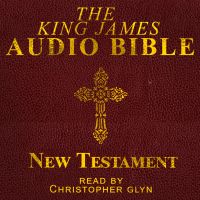
The King James Audio Bible New Testament CompleteChristopher Glyn20h 2m4.7 (2.6K)$12 · $0.00
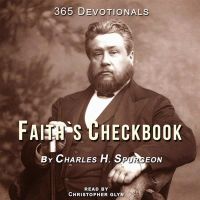
Faiths CheckbookCharles Spurgeon12h 44m4.7 (3.2K)$11 · $0.00

Ten Things I Wish You Knew About Your Child's Mental HealthDr. Billy Garvey4h 53m4.7 (2.4K)$20 · $0.00
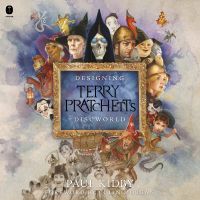
Designing Terry Pratchett’s DiscworldPaul Kidby3h 52m4.7 (343)$20 · $0.00
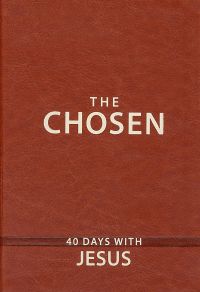
The Chosen Book OneAmanda Jenkins, Kristen Hendricks, Dallas Jenkins3h 8m4.6 (4.9K)$10 · $0.00
The Lives of BrianBrian Johnson9h 45m4.6 (3.5K)$29 · $0.00
Expository Thoughts on the Gospel of LukeJ.C. Ryle27h 13m4.7 (536)$18 · $0.00

CrossroadsKaleb Dahlgren7h 56m4.6 (4.9K)$26 · $0.00

Across the RiverKent Babb11h 40m4.6 (927)$29 · $0.00

Brain Training for RidersAndrea Monsarrat Waldo5h 56m4.7 (550)$19 · $0.00

My Effin' LifeGeddy Lee17h 11m4.6 (13.1K)$40 · $0.00

Kings and PawnsHoward Bryant10h 9m4.6 (678)$29 · $0.00

The Elementia Chronicles #2: The New OrderSean Fay Wolfe11h 17m4.6 (841)$29 · $0.00

The ActsLuke2h 55m4.6 (19.7K)$12 · $0.00

New Testament - Easy NavigationWorld English Bible19h 35m4.6 (1.3K)$1.30 · $0.00
Never Lost AgainBill Kilday10h 1m4.4 (805)$29 · $0.00
How the Internet HappenedBrian McCullough13h 28m4.3 (2.7K)$23 · $0.00

Collected Writings of Nikola TeslaNikola Tesla, Thomas Commerford Martin21h 50m4.3 (1.7K)$1 · $0.00
Just AspireAjai Chowdhry9h 13m4.4 (260)$29 · $0.00

The Little Book of AliensAdam Frank8h 20m4.3 (1.3K)$26 · $0.00
The inventions, researches and writings of Nikola Tesla (Annotated)Thomas Commerford Martin16h 59m4.3 (1.3K)$2 · $0.00

KargilV.P. Malik15h 18m4.3 (2K)$24 · $0.00

Experiments with Alternating CurrentsNikola Tesla9h 16m4.3 (874)$1.99 · $0.00

Fire on the HorizonTom Shroder, John Konrad8h 23m4.3 (858)$26 · $0.00

The Smell of Kerosene (Annotated)National Aeronautics and Space Administration, Donald L. Mallick, Peter W. Merlin11h 32m4.3 (523)$2 · $0.00

The Boy Who Harnessed the WindWilliam Kamkwamba, Bryan Mealer10h 5m4.2 (78.9K)$29 · $0.00

Across the Airless WildsEarl Swift10h 8m4.3 (1.3K)$29 · $0.00

Console WarsBlake J. Harris20h 41m4.2 (13.7K)$46 · $0.00

Improvised Munitions HandbookU.S. Department of Defense4h 49m4.3 (1.6K)$0.99 · $0.00
Escaping GravityLori Garver10h 54m4.2 (2.2K)$20 · $0.00

Wireless WarsJonathan Pelson8h 2m4.3 (419)$20 · $0.00

Let There Be WaterSeth M. Siegel8h 36m4.2 (2.3K)$20 · $0.00
The PerfectionistsSimon Winchester11h 46m4.2 (9.9K)$29 · $0.00
Rethinking NarcissismDr. Craig Malkin6h 7m4.2 (3.4K)$24 · $0.00

Project Animal FarmSonia Faruqi11h 23m4.3 (563)$20 · $0.00
You may also like

Elements of ChemistryAntoine Lavoisier12h 24m4.1 (685)$9.10 · $0.00

Rapid Russian, Vols. 1 & 2Earworms Learning2h 15m4.6 (88)$20
Up Around the BendBill Brown Jr.29m$2

Dear Hearts and Gentle PeopleBill Brown Jr.37m$4
Iron ManBill Brown Jr.46m$5

AP World History Exam Study GuideMarie Peterson8h 47m$10

LauraBill Brown Jr.26m$2

The HomecomingBill Brown Jr.52m$5

I'll Never Fall in Love AgainBill Brown Jr.30m$2

Mrs. Robinson AccompanimentBill Brown Jr.22m$2

March in GBill Brown Jr.28m$2

Beyond The SunsetBill Brown Jr.19m$2

Grace Greater Than Our SinBill Brown Jr.1h 38m$10

Somewhere My LoveBill Brown Jr.1h 1m$10
The Big Sewing BookEva-Maria Heller2h 17m$5 · $0.00
The Plain-English Guide to CanvaMiles Draper4h 17m$8

Learn Spanish for Beginners - Lesson 1Jasmin Voges44m$12 · $0.00

The Senior-Friendly Guide to Streaming TVWalter Hemsley3h 47m$5

Drone for Beginners Made SimpleWalter Hemsley4h 35m$8

Pennsylvania Journeyman & Master Plumber Exam Workbook 2026/2027Garrick Pellowe14h 5m$30