

FEEDING THE WOLF
How to Recognize and Stop the Beneficiary Who Could Become Your Worst EnemyBy Frank Ikechukwu IgwealorRecorded TrackLength19h 28m
About this audiobook
Both come to the door hungry. Only time reveals whether you are feeding a dog or a wolf.
The people best placed to harm a benefactor are the people he has helped. He has given them access, knowledge, resources, and trust, and he is almost always the last to see the danger coming. The danger rarely lies in the first act of kindness; it lies in what follows, when relief becomes establishment and establishment becomes power.
The book traces the seven stages by which a dependent beneficiary can become a rival, an accuser, or a replacement. He also shows the three decision points where a benefactor can still change the outcome: before establishment, before empowerment, and at the first credible sign of hostile conduct.
Drawing on Caesar and Brutus, Lenin and Stalin, Washington and Benedict Arnold, David and Absalom, King Lear, and modern business and family cases, this book offers a clear method in place of hindsight, so that you can act while you still have meaningful choices. Help wisely.
Audiobook details
GenreSelf-Help, Philosophy
Length19 hrs 28 mins
Narrated byRecorded Track
FormatAudiobook
Publish dateOct 19, 2026
LanguageEnglish
Table of contents
1FEEDING THE WOLF
2Preface
3Introduction: The Benefactor's Paradox
4How to Read This Book
5PART I — FOUNDATIONS
Show all chaptersShow less
6Chapter 1: The Enemy You Helped Create: The Benefactor's Paradox
7PART II — STAGE ONE: THE APPEAL
82. Prior conduct
94. Responses to reasonable limits
106. What can the benefactor afford to risk?
11PART III — STAGE TWO: ESTABLISHMENT
12PART IV — STAGE THREE: EMPOWERMENT AND LEVERAGE
13PART V — STAGE FOUR: STABILIZATION AND ENTITLEMENT
14PART VI — STAGE FIVE: BREAKAWAY
15Chapter 20: The Inverted Narrative: Rewriting the Origin Story
16Chapter 21: The Psychology of Moral Justification
17PART VII — STAGE SIX: RIVALRY AND BETRAYAL
18Chapter 25: The Weaponization of Proximity and Trust
19PART VIII — STAGE SEVEN: SUPPLANTING
20PART IX — DETOURS AND MISREADINGS
21PART X — THE SAME ARC IN EVERY ARENA
22PART XI — BREAKING THE CYCLE Part 1
23PART XI — BREAKING THE CYCLE Part 2
24PART XII — THE BENEFACTOR'S DOCTRINE
25Conclusion: Generosity Without Naivety: The Enemy You Empowered Must Not Become the Reason You Stop Doing Good
26APPENDICES
276. Adversarial conduct
More from Frank Ikechukwu Igwealor

CASHING OUT WITHOUT SELLING OUTFrank Ikechukwu Igwealor13h 39m$9.99
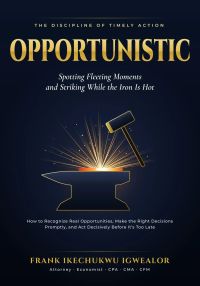
OPPORTUNISTIC - Spotting Fleeting Moments and Striking While the Iron Is HotFrank Ikechukwu Igwealor26h 46m$9.99
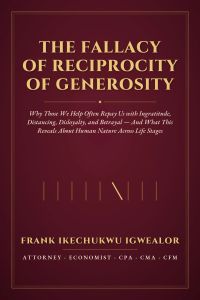
The Fallacy of Reciprocity of GenerosityFrank Ikechukwu Igwealor13h 1m$9.99

WHY CHRISTIANS CANNOT IN GOOD CONSCIENCE SUPPORT OR VOTE FOR THE DEMOCRATIC PARTYFrank Ikechukwu Igwealor8h 17m5.0 (1)$9.99

THE BEAUTIFUL LIEFrank Ikechukwu Igwealor16h 11m$9.99

The 10X Stock FinderFrank Ikechukwu Igwealor29h 2m$9.99

Learning to PrayJames Martin13h 24m4.5 (3.4K)$33 · $0.00

Swayam Ki AwaazPrem Rawat8h 34m4.7 (1.1K)$26 · $0.00

Forever BoyKate Swenson9h 27m4.7 (5K)$29 · $0.00

You Are Worth ItKyle Carpenter, Don Yaeger8h 53m4.7 (4.8K)$29 · $0.00

The Happiest Man on EarthEddie Jaku3h 48m4.6 (178K)$7 · $0.00

Finding MeViola Davis9h 15m4.6 (256.4K)$29 · $0.00

Spiritual AnatomyDaaji Kamlesh D. Patel9h 47m4.7 (319)$29 · $0.00

The Dangerous Truth about Today’s MarijuanaLaura Stack CSP, MBA9h 57m4.7 (385)$20 · $0.00
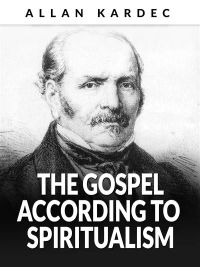
The Gospel according to Spiritualism (Translated)Allan Kardec14h 39m4.6 (3.9K)$5.70 · $0.00

Birdie & HarlowTaylor Wolfe7h 50m4.6 (6.5K)$26 · $0.00

CrossroadsKaleb Dahlgren7h 56m4.6 (4.9K)$26 · $0.00

Life on the BridgeKaelynn Partlow5h 40m4.6 (1.1K)$24 · $0.00

Keep Your Love OnDanny Silk9h 4m4.6 (8.1K)$10 · $0.00

The Tao of Joy Every DayDerek Lin10h 24m4.6 (762)$20 · $0.00

UndividedVicky Beeching9h 2m4.6 (1.3K)$29 · $0.00

HE CAN WHO THINKS HE CAN & OTHER BOOKS ON SUCCESSOrison Swett Marden5h 54m4.6 (1.2K)$1.99 · $0.00
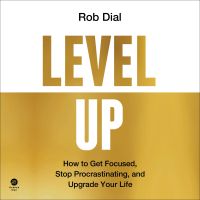
Level UpRob Dial7h 42m4.6 (3.3K)$26 · $0.00

Burn the HaystackJennie Young, PhD9h 30m4.6 (543)$29 · $0.00

ACRES OF DIAMONDS: Our Every-day Opportunities (Wisdom & Empowerment Series) (Annotated)Russell Conwell2h 26m4.6 (1K)$2 · $0.00

Good InsideBecky Kennedy9h 55m4.5 (59.3K)$29 · $0.00

WitnessAriel Burger8h 1m4.6 (1.3K)$20 · $0.00

The Magic PresenceGodfré Ray King10h 21m4.6 (307)$1.20 · $0.00

The Art of LivingThich Nhat Hanh5h 1m4.5 (14.2K)$24 · $0.00

Moral Letters to LuciliusLucius Annaeus Seneca24h 26m4.5 (71.7K)$0.99 · $0.00

Lessons in TruthH. Emilie Cady3h 50m4.5 (2.4K)$20 · $0.00

Letters from a StoicSeneca6h 5m4.4 (80.4K)$6 · $0.00

The Discourses of EpictetusP. E. MATHESOM12h 47m4.4 (17.7K)$1.20 · $0.00

IlluminationsWalter Benjamin10h 12m4.4 (16.2K)$20 · $0.00

That Bird Has My WingsJarvis Jay Masters9h 49m4.4 (13.7K)$29 · $0.00

Tâo Teh KingLaozi2h 34m4.4 (230.9K)$2 · $0.00

SymposiumPlato3h 26m4.4 (97.9K)$1.20 · $0.00

Buddhist Boot CampTimber Hawkeye2h 39m4.4 (8.4K)$18 · $0.00

Enchiridion & The Discourses of Epictetus (Annotated)Arrian Epictetus18h 9m4.4 (3.5K)$2 · $0.00

The Meditations of the Emperor Marcus Aurelius AntoninusEmperor of Rome Marcus Aurelius5h 41m4.4 (1.8M)$1 · $0.00

Crime and PunishmentFyodor Dostoevsky23h 11m4.4 (1.3M)$12 · $0.00

MeditationsMarcus Aurelius5h 52m4.4 (433.7K)$1 · $0.00

Everyday DharmaSuneel Gupta5h 2m4.5 (761)$20 · $0.00

The Joyful Wisdom ("La Gaya Scienza")Friedrich Wilhelm Nietzsche11h 37m4.4 (26.6K)$1 · $0.00
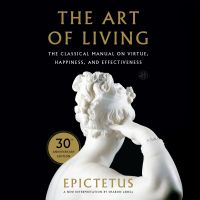
The Art of LivingEpictetus, Sharon Lebell3h 16m4.4 (50.1K)$18 · $0.00

MeditationsEmperor Of Rome Marcus Aurelius7h 23m4.3 (477.5K)$1.20 · $0.00
You may also like

The Tragedy of King LearWilliam Shakespeare3h 20m4.2 (273.6K)$2.30

King LearWilliam Shakespeare3h 45m4.2 (276.3K)$1.80 · $0.00

King LearWilliam Shakespeare3h 8m4.3 (276.2K)$15

Tearing Us ApartRyan T. Anderson, Alexandra DeSanctis8h 16m4.6 (723)$20

Discourses on the First Decade of Titus LiviusNiccolò Machiavelli15h 3m4.2 (11.3K)$2 · $0.00

The Tragedy of King LearWilliam Shakespeare2h 25m4.2 (272.2K)$2 · $0.00

The History of the Peloponnesian WarThucydides21h 50m4.2 (52.7K)Free

I'll Take Your Questions NowStephanie Grisham9h 59m3.6 (6.6K)$29 · $0.00

THE BELLY OF PARISÉmile Zola15h 6m4.0 (9.1K)$1.99 · $0.00
Measure for MeasureWilliam Shakespeare2h 29m3.9 (46K)$16 · $0.00

King JohnWilliam Shakespeare2h 44m3.7 (10.5K)$1.20 · $0.00

The Tragedy of King LearWilliam Shakespeare2h 50m4.2 (279.2K)$1.20 · $0.00

Gutenberg's ApprenticeAlix Christie14h 10m3.7 (4.5K)$33 · $0.00

King LearWilliam Shakespeare3h 6m4.2 (263.5K)$18 · $0.00

Game ChangeJohn Heilemann, Mark Halperin14h 44m4.2 (25K)$33 · $0.00

Felix Holt, the RadicalGeorge Eliot19h 48m3.8 (5.2K)$2.30 · $0.00

Memoirs of the Empress Catherine IIEmpress of Russia Catherine Ii8h 52m4.0 (2.8K)$2 · $0.00

The Annals (Annotated)Tacitus19h 5m4.0 (25.1K)$0.99 · $0.00

Measure for MeasureWilliam Shakespeare3h 9m3.9 (74.3K)$1.20 · $0.00

King JohnWilliam Shakespeare2h 28m3.7 (11K)$15