
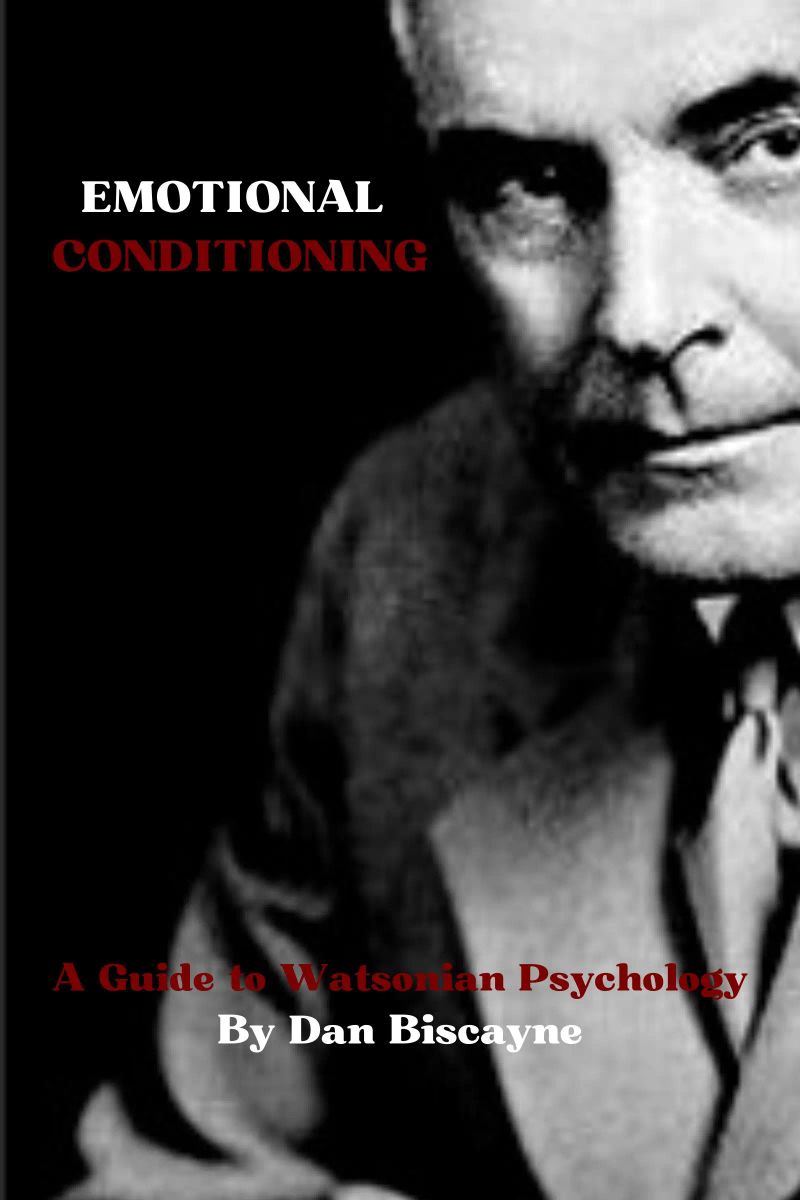
Emotional Conditioning
A Guide to Watsonian PsychologyBy Dan Biscayne


Length7h 55m
About this audiobook
At the dawn of the twentieth century, psychology stood at a crossroads between introspective philosophy and emerging experimental science. Into this landscape stepped John B. Watson, a bold thinker who challenged the notion that the mind could only be studied through subjective reflection. He proposed instead that behavior—and the emotions that underlie it—could be observed, measured, and shaped through the principles of learning. From this conviction arose the theory of Emotional Conditioning, a framework that would redefine how psychologists understood emotion, personality, and the formation of human experience.
Watson’s idea was deceptively simple yet revolutionary: emotions are not innate mysteries beyond comprehension, but conditioned responses—learned through association and experience. Just as Pavlov’s dogs learned to salivate at the sound of a bell, humans could learn to fear, love, or feel joy in response to once-neutral stimuli. His now-famous “Little Albert” experiment illustrated this principle vividly, showing how a previously indifferent object could come to elicit fear through pairing with an aversive event. Though ethically troubling by modern standards, this study marked a turning point in psychology, shifting the focus from inner speculation to observable emotional behavior.
This book revisits Watson’s theory in its historical, scientific, and philosophical context. It traces how his ideas challenged the dominance of introspection, inspired generations of behaviorists, and laid the groundwork for later fields such as cognitive-behavioral therapy, exposure treatment, and affective neuroscience. More than a relic of early psychology, emotional conditioning remains a living concept—one that continues to shape how we understand emotional development, trauma, attachment, and change.
By exploring Watson’s legacy, this work seeks not only to honor his contribution but also to examine its enduring relevance and limitations. To understand emotional conditioning is to glimpse the powerful processes through which human feeling is learned, shaped, and, ultimately, transformed.
Audiobook details
GenrePsychology, Self-Help
Length7 hrs 55 mins
Narrated byListen with 1,000+ voices
FormateBook with Audio
Publish dateOct 26, 2025
LanguageEnglish
Table of contents
1EMOTIONAL CONDITIONING
2Introduction to Emotional Conditioning
3Historical Context and Development
4John B. Watson’s Life and Career
5Core Principles of Watsonian Psychology
Show all chaptersShow less
6Mechanisms of Emotional Conditioning
7Advanced Concepts - Differentiation & Generalization
8Controversies and Counterarguments
9Future Directions in Emotional Conditioning
10Watson’s 20 Quotes on Emotional Conditioning
Series


Teoría de la Identidad SocialDan Biscayne7h 50m$9
Social Identity TheoryDan Biscayne7h 2m$8
Theory of Planned BehaviorDan Biscayne6h 15m$8

Teoría del Comportamiento PlanificadoDan Biscayne7h$8

Attachment TheoryDan Biscayne7h 11m$8

Teoría del ApegoDan Biscayne7h 46m$9

Teoría Cognitiva de la DepresiónDan Biscayne9h$9
Cognitive Theory of DepressionDan Biscayne8h 7m$9

Gramática UniversalDan Biscayne7h 15m$8

Universal GrammarDan Biscayne6h 34m$8

Teoría del YoDan Biscayne9h 43m$10

Los Tres ÓrdenesDan Biscayne11h 21m$10

Teoría SocioculturalDan Biscayne9h 26m$10

Teoría VoluntaristaDan Biscayne8h 58m$9

Condicionamiento EmocionalDan Biscayne8h 44m$9

Teoría de la Disonancia CognitivaDan Biscayne8h 51m$9
Desarrollo PsicosocialDan Biscayne7h 20m$9

Teoría del Aprendizaje SocialDan Biscayne7h 24m$9

Teoría de la AutorrealizaciónDan Biscayne7h 40m$9

Teoría Centrada en la PersonaDan Biscayne7h 28m$9
What to Make of a LifeJim Collins13h 31m4.4 (793)$33 · $0.00

TerraformPropaganda5h 39m4.7 (594)$24 · $0.00

Southern Horrors: Lynch Law in All Its Phases (Annotated)Ida B. Wells-Barnett2h 44m4.6 (1.3K)$2 · $0.00
Hour of the HeartIrvin D. Yalom, Benjamin Yalom8h 19m4.6 (2.3K)$26 · $0.00

Braving the TruthRachel Held Evans11h 31m4.7 (359)$29 · $0.00
Level UpRob Dial7h 42m4.6 (3.3K)$26 · $0.00

As a JewSarah Hurwitz8h 36m4.6 (1.2K)$26 · $0.00

Burn the HaystackJennie Young, PhD9h 30m4.6 (543)$29 · $0.00

Woman and the New Race (Annotated)Margaret Sanger6h 30m4.6 (1K)$1.99 · $0.00

Good InsideBecky Kennedy9h 55m4.5 (59.3K)$29 · $0.00

Du Bois: EssaysW.E.B. Du Bois6h 22m4.6 (1.5K)$1 · $0.00

The North American Indian (Illustrated Edition)Edward S. Curtis, Frederick Webb Hodge5h 59m4.6 (1.4K)$2 · $0.00

Valley of the BirdtailAndrew Stobo Sniderman, Douglas Sanderson10h 1m4.6 (2.4K)$29 · $0.00

Lies My Therapist Told MeGreg E. Gifford9h 3m4.6 (503)$29 · $0.00

Disturbed in Their NestsAlephonsion Deng, Judy A. Bernstein11h 22m4.6 (595)$23 · $0.00

No Name in the StreetJames Baldwin5h4.5 (8.5K)$20 · $0.00

Magic SeasonWade Rouse6h 41m4.6 (855)$24 · $0.00

Consent Laid BareChanel Contos7h 11m4.5 (1.7K)$24 · $0.00

The Big RevealSasha Velour6h 15m4.5 (2.1K)$24 · $0.00

Pastoral SongJames Rebanks8h 35m4.5 (12K)$26 · $0.00
Learning to PrayJames Martin13h 24m4.5 (3.4K)$33 · $0.00

Finding MeViola Davis9h 15m4.6 (256.4K)$29 · $0.00

Spiritual AnatomyDaaji Kamlesh D. Patel9h 47m4.7 (319)$29 · $0.00

The Dangerous Truth about Today’s MarijuanaLaura Stack CSP, MBA9h 57m4.7 (384)$20 · $0.00

Birdie & HarlowTaylor Wolfe7h 50m4.6 (6.5K)$26 · $0.00

CrossroadsKaleb Dahlgren7h 56m4.6 (4.9K)$26 · $0.00

Life on the BridgeKaelynn Partlow5h 40m4.6 (1.1K)$24 · $0.00

Keep Your Love OnDanny Silk9h 4m4.6 (8.1K)$10 · $0.00
The Tao of Joy Every DayDerek Lin10h 24m4.6 (762)$20 · $0.00
UndividedVicky Beeching9h 2m4.6 (1.3K)$29 · $0.00
Level UpRob Dial7h 42m4.6 (3.3K)$26 · $0.00
Burn the HaystackJennie Young, PhD9h 30m4.6 (543)$29 · $0.00

ACRES OF DIAMONDS: Our Every-day Opportunities (Wisdom & Empowerment Series) (Annotated)Russell Conwell2h 26m4.6 (1K)$2 · $0.00
Good InsideBecky Kennedy9h 55m4.5 (59.3K)$29 · $0.00

The Lost VoiceGreta Morgan8h 30m4.7 (285)$26 · $0.00

Stripped DownBunnie Xo8h 25m4.5 (32.9K)$26 · $0.00

UnthinkableJamie Raskin15h 8m4.5 (9.3K)$8 · $0.00

Wallace D. Wattles Ultimate Collection Wallace D. Wattles16h 53m4.6 (1.3K)$1 · $0.00
Inquire WithinIn-Q2h 18m4.6 (993)$16 · $0.00

Under His WingsEmily Compagno7h 16m4.6 (848)$22 · $0.00
You may also like
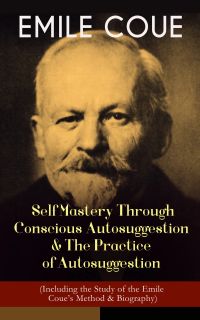
EMILE COUE: Self Mastery Through Conscious Autosuggestion & The Practice of Autosuggestion (Including the Study of the Emile Coue's Method & Biography)Emile Coue6h 9m4.2 (2.7K)$2 · $0.00
The Extended MindAnnie Murphy Paul11h 26m4.2 (4.5K)$29 · $0.00
Your Brain at WorkDavid Rock9h 42m4.2 (15.2K)$29 · $0.00

My Magic BreathNick Ortner, Alison Taylor4m4.3 (1.7K)$4 · $0.00

GutGiulia Enders8h 48m4.2 (70.9K)$29 · $0.00

Sexual IntelligenceMarty Klein7h 36m3.9 (2.2K)$26 · $0.00

Your Mind and How to Use It: A Manual of Practical Psychology (Unabridged) (Annotated)William Walker Atkinson6h 3m4.1 (2.2K)$2 · $0.00

Keep HappyEustace Milles56m$2.30

Subliminal to Clear BrainfogMiss Smilla59m$2 · $0.00

Put Anxiety to RestDr. Larry Iverson, Dr. Mort Ormon5h 17m$23

Applied Psychology for NursesMary F. Porter2h 30m3.7 (49)$1 · $0.00

Super MemoryMade for Success12h 13m3.6 (25)$20
How To Solve Overthinking and Anxiety In RelationshipsAlec Moody1h 54m5.0 (8) Only with Ultra
Power Speed-Reading Performance SystemLiv Montgomery2h 9m2.2 (16)$15

InsomniaHerika Negri Brito de Vasconcelos3h 6m$12 · $0.00

Fragile BrainScientific American7h 53m4.3 (34)$20
Recovering misplaced things - through hypnosisMichael Bauer40m$35 · $0.00

Intermittent FastingEthan D. Anderson12h 22m3.9 (23)$6.30 · $0.00

The Machinery of the Mind (translated)Violet M. Firth (Dion Fortune)1h 56m4.0 (86)$4.60 · $0.00

Sound Waves For HypnosisHypnotic Sound Waves, Laura Bloom11h 53m$21 · $0.00