
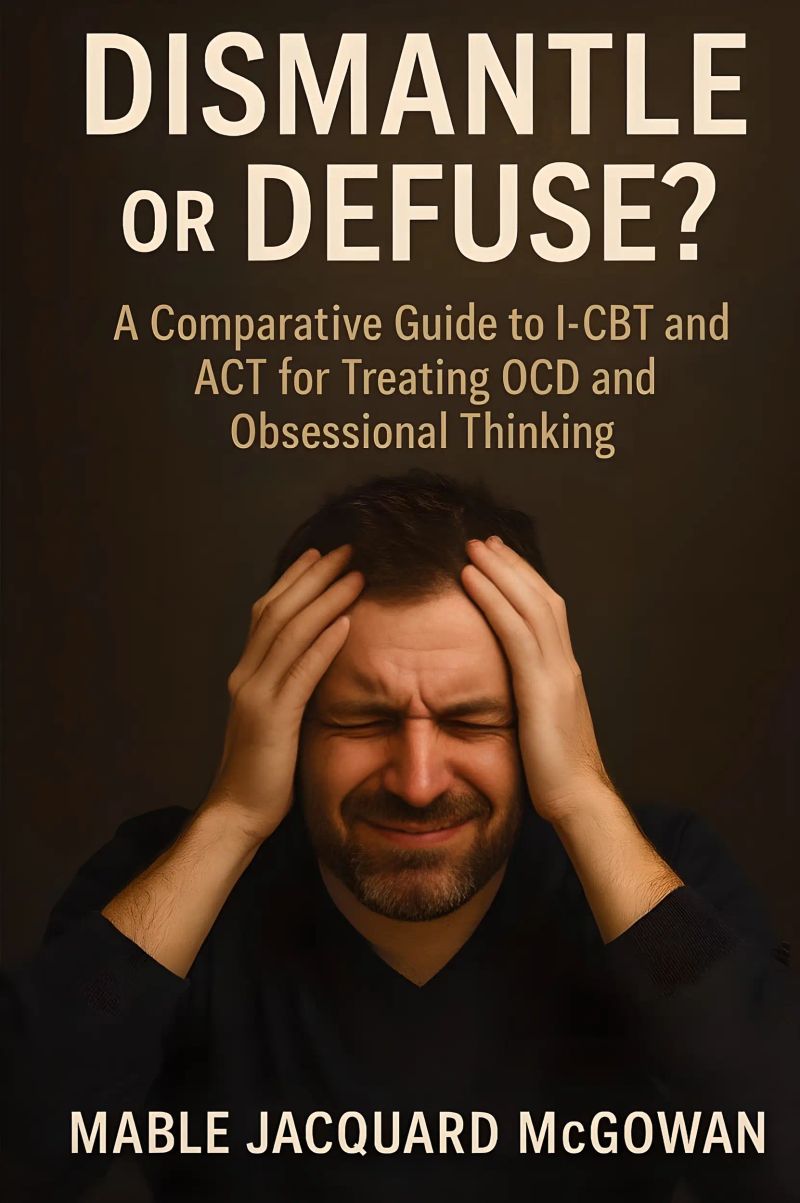
Dismantle or Defuse?
A Comparative Guide to I-CBT and ACT for Treating OCD and Obsessional ThinkingBy Mable Jacquard McGowan


Length2h 36m
About this audiobook
Dismantle or Defuse? shows how two evidence-based approaches— Inference-based Cognitive Behavioral Therapy (I-CBT) and Acceptance and Commitment Therapy (ACT)—tackle obsessive doubt, mental rituals, and the “what-if” loop in OCD and obsessional thinking.
Part One: I-CBT explains inferential confusion, the feared-self theme, and reality-sensing steps that help you spot when imagination is posing as fact.
Part Two: ACT teaches defusion, values, and committed action so you can change how you relate to sticky thoughts without arguing with them.
Side-by-Side Tools: clear checklists to decide when to use I-CBT dismantling and when to use ACT defusion, plus sample scripts, tracking sheets, and relapse-prevention plans.
Everyday Examples: contamination, checking, harm doubts, relationship doubts, and “not-just-right” sensations, with practical exercises you can try at your own pace.
By the end, you’ll have a simple method to choose the right tool for the moment: dismantle doubtful stories with I-CBT or defuse sticky thoughts with ACT—then return to meaningful action.
Who it’s for: adults, students, and clinicians seeking a plain-English, step-by-step guide that respects science and focuses on usable skills.
Key topics: I-CBT, ACT, inferential confusion, cognitive fusion, mental rituals, reassurance seeking, values-based action, reality-sensing, obsessional doubt, self-help for OCD.
Audiobook details
GenreOther
Length2 hrs 36 mins
Narrated byListen with 1,000+ voices
FormateBook with Audio
Publish dateFeb 2, 2026
LanguageEnglish
Table of contents
1Dismantle or Defuse?
2Preface
3The Evolving Landscape of Cognitive Therapy
4The Post-CBT World
5Moving Beyond ERP
Show all chaptersShow less
6Dismantle or Defuse?
7The I-CBT Approach
8The ACT Approach
9Chapter 1: Foundational Principles of I-CBT
10A Paradigm Shift
11Core Concept — Inferential Confusion
12Why Exposure is Logically Unnecessary
13Chapter 2: The I-CBT Formulation in Practice
14Deconstructing the Obsessional Narrative
15Case Study: Sarah's Story of Contamination
16Your Personal Blueprint
17Chapter 3: The I-CBT Toolkit
18Reality-Sensing Exercises
19Clinical Pitfalls
20Differentiating Doubts
21Using the I-CBT Modules
22Chapter 4: Foundational Principles of ACT
23The Goal of Psychological Flexibility
24The Role of Values
25Acceptance, Not Resignation
26Chapter 5: The ACT Formulation in Practice
27Creative Hopelessness
28Introducing the Hexaflex
29Case Study: Sarah's Story Through an ACT Lens
30The ACT Path for Sarah:
31Chapter 6: The ACT Toolkit
32Mindfulness and Present-Moment Awareness
33Cognitive Defusion Techniques
34Values Clarification Exercises
35Committed Action
36Chapter 7: Philosophical Underpinnings — Truth vs. Workability
37The Stance on Thoughts
38The Approach to Reality
39The Role of Anxiety
40Chapter 8: Mechanisms of Change and The Clinician's Stance
41How They Work
42The Therapist's Role
43I-CBT Homework
44Different Ways of Working
45Chapter 9: A Clinician's Decision Guide: When to Dismantle, When to Defuse
46Indications for I-CBT
47Indications for ACT
48A Decision-Making Tree
49Choosing Your Path
50Chapter 10: An Integrative Approach
More from Mable Jacquard McGowan


Mere ChristianityC. S. Lewis7h 7m4.4 (519.7K)$24 · $0.00

Her Daily BreadKate Wood12h 57m4.6 (153)$33 · $0.00
The Holy Bible - 1 SamuelKing James2h 13m4.8 (1.6K)$3 · $0.00

The American Standard Bible — The Gospel of MatthewMatthew3h 56m4.7 (3K)$2 · $0.00

Bad Fat Black GirlSesali Bowen6h 32m4.7 (2.8K)$24 · $0.00
The King James Audio Bible New Testament CompleteChristopher Glyn20h 2m4.7 (2.6K)$12 · $0.00
Faiths CheckbookCharles Spurgeon12h 44m4.7 (3.2K)$11 · $0.00
Ten Things I Wish You Knew About Your Child's Mental HealthDr. Billy Garvey4h 53m4.7 (2.4K)$20 · $0.00
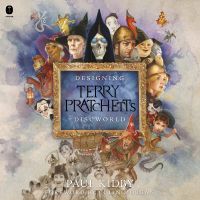
Designing Terry Pratchett’s DiscworldPaul Kidby3h 52m4.7 (343)$20 · $0.00
The Chosen Book OneAmanda Jenkins, Kristen Hendricks, Dallas Jenkins3h 8m4.6 (4.9K)$10 · $0.00
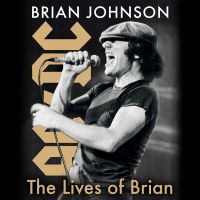
The Lives of BrianBrian Johnson9h 45m4.6 (3.5K)$29 · $0.00
Expository Thoughts on the Gospel of LukeJ.C. Ryle27h 13m4.7 (536)$18 · $0.00

CrossroadsKaleb Dahlgren7h 56m4.6 (4.9K)$26 · $0.00

Across the RiverKent Babb11h 40m4.6 (927)$29 · $0.00
Brain Training for RidersAndrea Monsarrat Waldo5h 56m4.7 (550)$19 · $0.00
My Effin' LifeGeddy Lee17h 11m4.6 (13.1K)$40 · $0.00
Kings and PawnsHoward Bryant10h 9m4.6 (678)$29 · $0.00
The Elementia Chronicles #2: The New OrderSean Fay Wolfe11h 17m4.6 (841)$29 · $0.00

The ActsLuke2h 55m4.6 (19.7K)$12 · $0.00
New Testament - Easy NavigationWorld English Bible19h 35m4.6 (1.3K)$1.30 · $0.00
You may also like

The Science of Breath (translated)William Walker Atkinson2h 37m4.1 (3K)$4.60 · $0.00

Above Lifes TurmoilJames Allen2h 12m4.1 (1.3K)$2.30 · $0.00

The Solar PlexusWilliam Walker Atkinson2h4.2 (1.2K)$2 · $0.00

The Essays of Arthur Schopenhauer (translated)Arthur Schopenhauer4h 55m4.3 (3.2K)$4.70 · $0.00

That's What She SaidJoanne Lipman8h 29m4.1 (1.8K)$26 · $0.00
The Hormone Balance BibleShawn Tassone15h 38m4.0 (646)$33 · $0.00
The Edinburgh Lectures on Mental ScienceT. Troward4h 1m4.4 (1.6K)$2 · $0.00

Let's Talk Mutual FundsMonika Halan7h 5m4.4 (2.4K)$16 · $0.00
How to Live on 24 Hours a DayArnold Bennett2h 4m3.6 (10.2K)$2 · $0.00
Meditation Made EasyLorin Roche1h 35m4.2 (409)$16 · $0.00
The Essential EnneagramDavid Daniels, Virginia Price4h 30m4.0 (4.4K)$20 · $0.00

The Wisdom of LifeArthur Shopenhauer3h 20m4.2 (18.7K)$4.70 · $0.00
How We BreakVincent Deary11h 9m4.2 (257)$25

A Buddhist BibleDwight Goddard7h 53m4.2 (1.3K)$1.20 · $0.00
Personal GrowthSteve Pavlina1h 30m4.1 (5.1K)$12 · $0.00

Fiction Focus for WritersJackie Weger44m$4

Easy Everyday Meditations, Mindfulness, and PranayamasSue Fuller3h 46m$15

Unlocking HappinessScientific American10h 33m3.9 (53)$20 · $0.00

Daily MotivationRicardo Amorim10m$7 · $0.00
Spiritual Sound Bath: Transform Your World Through ListeningAbhamani Ajash, Lhamo Sarepa12h 14m4.7 (67)$23 · $0.00