


Length3h 49m
About this audiobook
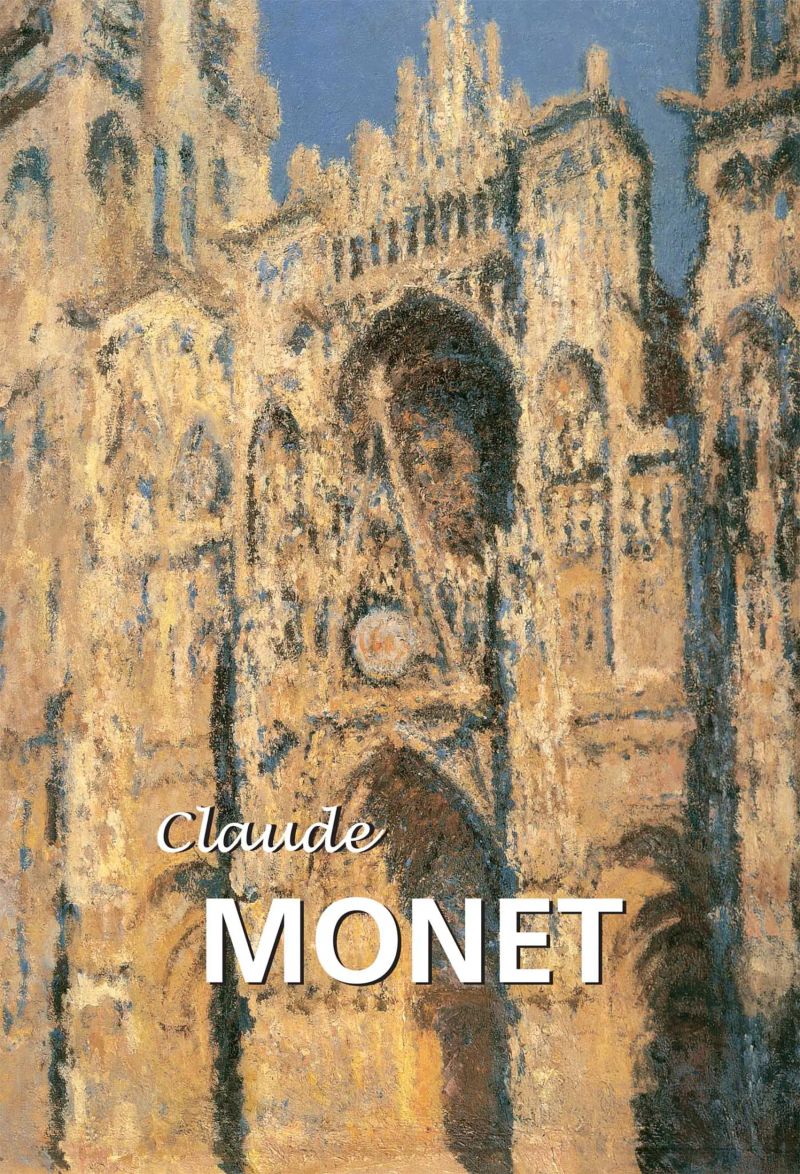
For Claude Monet the designation 'impressionist' always remained a source of pride. In spite of all the things critics have written about his work, Monet continued to be a true impressionist to the end of his very long life. He was so by deep conviction, and for his Impressionism he may have sacrificed many other opportunities that his enormous talent held out to him. Monet did not paint classical compositions with figures, and he did not become a portraitist, although his professional training included those skills. He chose a single genre for himself, landscape painting, and in that he achieved a degree of perfection none of his contemporaries managed to attain. Yet the little boy began by drawing caricatures. Boudin advised Monet to stop doing caricatures and to take up landscapes instead. The sea, the sky, animals, people, and trees are beautiful in the exact state in which nature created them – surrounded by air and light. Indeed, it was Boudin who passed on to Monet his conviction of the importance of working in the open air, which Monet would in turn transmit to his impressionist friends. Monet did not want to enrol at the Ecole des Beaux-Arts. He chose to attend a private school, L'Académie Suisse, established by an ex-model on the Quai d'Orfèvres near the Pont Saint-Michel. One could draw and paint from a live model there for a modest fee. This was where Monet met the future impressionist Camille Pissarro. Later in Gleyre's studio, Monet met Auguste Renoir Alfred Sisley, and Frédéric Bazille. Monet considered it very important that Boudin be introduced to his new friends. He also told his friends of another painter he had found in Normandy. This was the remarkable Dutchman Jongkind. His landscapes were saturated with colour, and their sincerity, at times even their naïveté, was combined with subtle observation of the Normandy shore's variable nature. At this time Monet's landscapes were not yet characterized by great richness of colour. Rather, they recalled the tonalities of paintings by the Barbizon artists, and Boudin's seascapes. He composed a range of colour based on yellow-brown or blue-grey. At the Third Impressionist Exhibition in 1877 Monet presented a series of paintings for the first time: seven views of the Saint-Lazare train station. He selected them from among twelve he had painted at the station. This motif in Monet's work is in line not only with Manet's Chemin de fer (The Railway) and with his own landscapes featuring trains and stations at Argenteuil, but also with a trend that surfaced after the railways first began to appear. In 1883, Monet had bought a house in the village of Giverny, near the little town of Vernon. At Giverny, series painting became one of his chief working procedures. Meadows became his permanent workplace. When a journalist, who had come from Vétheuil to interview Monet, asked him where his studio was, the painter answered, "My studio! I've never had a studio, and I can't see why one would lock oneself up in a room. To draw, yes – to paint, no". Then, broadly gesturing towards the Seine, the hills, and the silhouette of the little town, he declared, "There's my real studio."Monet began to go to London in the last decade of the nineteenth century. He began all his London paintings working directly from nature, but completed many of them afterwards, at Giverny. The series formed an indivisible whole, and the painter had to work on all his canvases at one time. A friend of Monet's, the writer Octave Mirbeau, wrote that he had accomplished a miracle. With the help of colours he had succeeded in recreating on the canvas something almost impossible to capture: he was reproducing sunlight, enriching it with an infinite number of reflections. Alone among the impressionists, Claude Monet took an almost scientific study of the possibilities of colour to its limits; it is unlikely that one could have gone any further in that direction.
Audiobook details
Rating★★★★ 4.2 (270)
Includes Amazon, Goodreads, LibraryThing
GenreOther
Length3 hrs 49 mins
Narrated byListen with 1,000+ voices
FormateBook with Audio
Publish dateJul 1, 2011
LanguageEnglish
Table of contents
1Claude Claude
2His life
3Both the visual and the literary portraits of Monet depict him
4Boulanger, Gérôme, Baudry and Gigoux; the battle-scenes
5Sebastian, Ovid, The Abduction of Rebecca and other similar subject
Show all chaptersShow less
61865 Salon, and his one-man show at the time of the World
7Guillaumin, Duranty, Zola and Pissarro, as well as the friends
8Bazille, Renoir, Sisley and Pissarro. Discussions, arguments
9certain general principles.
10Monet’s cousin, Jeanne-Marguerite Lecadre, in the garden at
11the solidity of natural forms, present in his early landscapes and
12The Mouth of
13Barbizon school painters, although so close to one another both
14(Impression, soleil levant, Musée Marmottan, Paris; W., I, 263). It was
15(A Promenade) (1873, Musée d’Orsay, Paris; W., I, 274). Across a
16with sunlight, the trees of the boulevard, the carriages and
17This optimistic view of
18Île-de-France so dear to his heart.
19In The Poppies (A Promenade) (1873), for instance, the line of
20the Renaissance masters.
21personal contacts with the friends of his youth, creative contact
22From here a considerable portion of Saint-Romain’s tower
23Seagulls (1904, Pushkin Museum of Fine Arts, Moscow).
24Nocturnes, The Sea and Moonlight by Debussy, then musical
25The leaning towards decorativeness characteristic of him in
26Cathedral, and the first Giverny water-lilies — how many and
27The question of the interpretation of Claude Monet’s work
28On the following page:
29Notes
30Critics, Stockholm, 1952, p. 100.
31Petersburg, 1911, p. 42.
32Waterloo Bridge
33Musée d’Orsay, Paris.
34Michel Monet to the Musée Marmotton in Paris. Dating from
35Claude Monet.”
36Lecadre, an eminent physician from Le Havre.
37Above: detail from p. 55.
38At the Fourth Impressionist Exhibition in 1879, where a
39LILACS IN THE SUN
40thin paint, with almost no
41Impressionists no other picture rivals Monet’s
42Rouen Cathedral series).
43Musée d'Orsay, Paris.
44Dahlias, which George Rivière described in L’Impressionniste
45Drouot. The Corner of
46Third Impressionist Exhibition among the eleven Monets from
47L ike many artists of his day and earlier times, Monet
48Marmottan (No. 5131, f° 26 verso).
49Quite in tune with this unhurried rhythm of horizontal lines
50Page 85 :

Paul CézanneNathalia Brodskaya57m4.2 (48)$8 · $0.00
Paul Cézanne și opere de artăNathalia Brodskaya1h 16m$15 · $0.00
DegasNathalia Brodskaya1h 2m4.3 (32)$8 · $0.00
PissarroNathalia Brodskaya1h 23m$8 · $0.00
Édouard Manet et œuvres d'artNathalia Brodskaya1h 32m$15 · $0.00

PissarroNathalia Brodskaya1h 26m4.4 (17)$8 · $0.00

SisleyNathalia Brodskaya1h 17m4.6 (11)$8 · $0.00

Paul Cézanne et œuvres d'artNathalia Brodskaya1h 37m4.3 (34)$15 · $0.00

ImpresionismoNathalia Brodskaya9h 43m4.1 (240)$18 · $0.00
Claude Monet et œuvres d'artNathalia Brodskaya1h 17m4.3 (36)$15 · $0.00
Claude MonetNathalia Brodskaya58m4.2 (250)$8 · $0.00

CézanneNathalia Brodskaya1h4.3 (25)$8 · $0.00
RenoirNathalia Brodskaya1h 3m4.3 (22)$8 · $0.00
Pierre-Auguste Renoir et œuvres d'artNathalia Brodskaya1h 24m4.2 (45)$15 · $0.00

GauguinNathalia Brodskaya1h 12m4.3 (31)$8 · $0.00
Impressionism 120 illustrationsNathalia Brodskaya1h 20m3.9 (82)$15 · $0.00
Monet 1840-1926Nathalia Brodskaya41m4.3 (228)$15 · $0.00
ManetNathalia Brodskaya2h 26m$13.50 · $0.00
CézanneNathalia Brodskaya1h 29m4.3 (34)$13.50 · $0.00
Claude MonetNathalia Brodskaya3h 39m4.3 (25)$10 · $0.00

Mere ChristianityC. S. Lewis7h 7m4.4 (519.7K)$24 · $0.00

Her Daily BreadKate Wood12h 57m4.6 (153)$33 · $0.00

The Holy Bible - 1 SamuelKing James2h 13m4.8 (1.6K)$3 · $0.00

The American Standard Bible — The Gospel of MatthewMatthew3h 56m4.7 (3K)$2 · $0.00

Bad Fat Black GirlSesali Bowen6h 32m4.7 (2.8K)$24 · $0.00

The King James Audio Bible New Testament CompleteChristopher Glyn20h 2m4.7 (2.6K)$12 · $0.00

Faiths CheckbookCharles Spurgeon12h 44m4.7 (3.2K)$11 · $0.00

Ten Things I Wish You Knew About Your Child's Mental HealthDr. Billy Garvey4h 53m4.7 (2.4K)$20 · $0.00

Designing Terry Pratchett’s DiscworldPaul Kidby3h 52m4.7 (343)$20 · $0.00
The Chosen Book OneAmanda Jenkins, Kristen Hendricks, Dallas Jenkins3h 8m4.6 (4.9K)$10 · $0.00

The Lives of BrianBrian Johnson9h 45m4.6 (3.5K)$29 · $0.00
Expository Thoughts on the Gospel of LukeJ.C. Ryle27h 13m4.7 (536)$18 · $0.00

CrossroadsKaleb Dahlgren7h 56m4.6 (4.9K)$26 · $0.00

Across the RiverKent Babb11h 40m4.6 (927)$29 · $0.00

Brain Training for RidersAndrea Monsarrat Waldo5h 56m4.7 (550)$19 · $0.00

My Effin' LifeGeddy Lee17h 11m4.6 (13.1K)$40 · $0.00

Kings and PawnsHoward Bryant10h 9m4.6 (678)$29 · $0.00

The Elementia Chronicles #2: The New OrderSean Fay Wolfe11h 17m4.6 (841)$29 · $0.00

The ActsLuke2h 55m4.6 (19.7K)$12 · $0.00

New Testament - Easy NavigationWorld English Bible19h 35m4.6 (1.3K)$1.30 · $0.00
You may also like
Walden, Walking & Civil DisobedienceHenry David Thoreau14h 9m4.3 (4.5K)$2 · $0.00

Meander, Spiral, ExplodeJane Alison5h 50m4.2 (3.2K)$20 · $0.00

Walden, and On The Duty Of Civil DisobedienceHenry David Thoreau11h 54m3.9 (39.6K)$1.20 · $0.00

Georgia O'Keeffe and artworksJanet Souter1h 27m4.2 (1.4K)$15 · $0.00
Art NouveauJean Lahor1h 35m4.1 (261)$15 · $0.00

WaldenHenry David Thoreau10h 26m3.9 (241.4K)$17 · $0.00

O'KeeffeJanet Souter4h 6m4.2 (1.5K)$15.50 · $0.00
Walden, Walking & Civil Disobedience (Including The Life of Henry David Thoreau)Henry David Thoreau15h 8m4.2 (2.9K)$1.99 · $0.00
ImpressionismNathalia Brodskaïa8h 44m4.1 (253)$18 · $0.00

O'KeeffeJanet Souter1h 33m4.3 (1.4K)$13.50 · $0.00

Leaves of Grass (Complete Edition)Walt Whitman19h 40m4.3 (143.7K)$1.99 · $0.00

MY FIRST SUMMER IN THE SIERRA (Illustrated Edition)John Muir7h 44m4.2 (21.5K)$1.99 · $0.00

Views of Nature – Contemplations on the Sublime Phenomena of Creation with Scientific IllustrationsAlexander von Humboldt21h 49m4.1 (658.5K)$1 · $0.00
Essays by Ralph Waldo EmersonRalph Waldo Emerson7h 37m4.3 (6.3K)$2.30

WaldenHenry David Thoreau13h 32m3.9 (237.8K)$5 · $0.00

Collected Works of Henry David Thoreau (Illustrated) (Annotated)Henry David Thoreau89h 28m$2 · $0.00
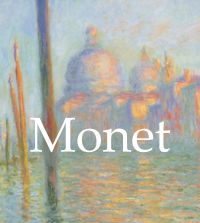
MonetNathalia Brodskaya1h 23m4.2 (79)$13.50 · $0.00

TiffanyCharles de Kay1h 26m$13.50 · $0.00
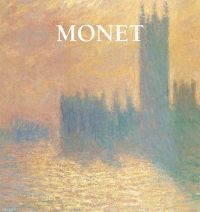
MonetNathalia Brodskaya1h 3m4.0 (69)$8 · $0.00

SisleyNathalia Brodskaya59m4.5 (14)$8 · $0.00