
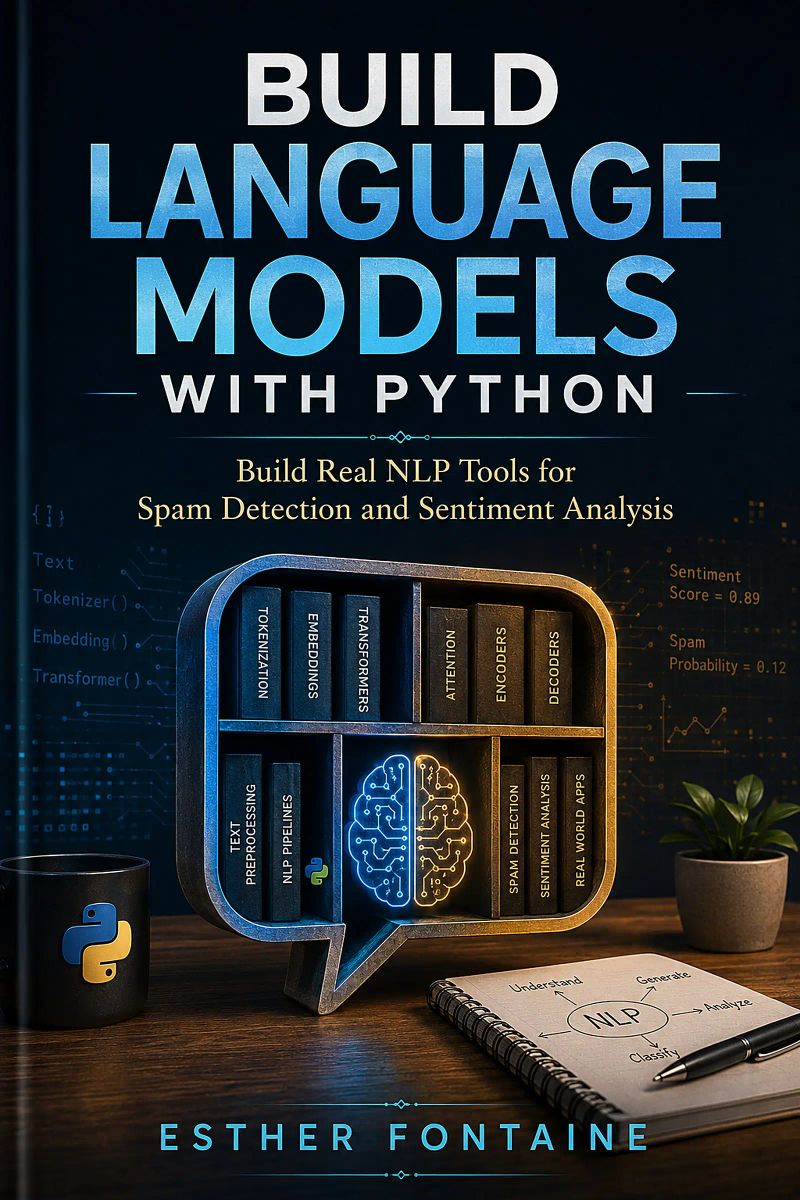
Build Language Models with Python
Build Real NLP Tools for Spam Detection and Sentiment AnalysisBy Esther Fontaine


Length7h 30m
About this audiobook
natural language processing with Python and transformers for beginners. Master natural language processing and transformer models with this hands-on guide. From tokenization and embeddings to fine-tuning for classification, search, and chat, Esther Fontaine delivers a practical, code-first approach using Python. Whether you're a beginner or a pro, you'll build real-world language models step by step. This book stands out from Wallace and Ali by focusing on applied Python and transformers, not theory or investing. Learn to preprocess text, train BERT, deploy chatbots, and optimize performance—all with clear examples and ready-to-run code. Ideal for data scientists, ML engineers, and anyone eager to create AI that understands language.
Discover how to: tokenize and embed text with Hugging Face, fine-tune pre-trained models for sentiment analysis and search, build a custom chat system with GPT-like architectures, and scale your models for production. Each chapter includes exercises and real datasets to cement your skills. With Esther Fontaine's guidance, you'll go from zero to building production-ready NLP systems. Unlike abstract discussions in other books, this is a straight-to-code manual that gets results. Compare with Louis and Huyen—this is the practical Python path to NLP mastery.
This hands-on AI/ML/Data guide is written to be used at the keyboard: every concept is paired with something you can run, adapt, and keep. You move from first principles to real, working results, with the common errors and fixes called out along the way so you are never stuck for long.
Audiobook details
GenreTechnology
Length7 hrs 30 mins
Narrated byListen with 1,000+ voices
FormateBook with Audio
LanguageEnglish
Table of contents
1Introduction
2Preface
3Chapter 1 — What NLP Can Do for You
4Chapter 2 — Cleaning Real-World Text (pt. 1)
5Chapter 2 — Cleaning Real-World Text (pt. 2)
Show all chaptersShow less
6Chapter 2 — Cleaning Real-World Text (pt. 3)

Hands of TimeRebecca Struthers8h 8m4.4 (1.3K)$26 · $0.00
Never Lost AgainBill Kilday10h 1m4.4 (805)$29 · $0.00

How the Internet HappenedBrian McCullough13h 28m4.3 (2.7K)$23 · $0.00

Collected Writings of Nikola TeslaNikola Tesla, Thomas Commerford Martin21h 50m4.3 (1.7K)$1 · $0.00

Just AspireAjai Chowdhry9h 13m4.4 (260)$29 · $0.00

The Little Book of AliensAdam Frank8h 20m4.3 (1.3K)$26 · $0.00
The inventions, researches and writings of Nikola Tesla (Annotated)Thomas Commerford Martin16h 59m4.3 (1.3K)$2 · $0.00

KargilV.P. Malik15h 18m4.3 (2K)$24 · $0.00
Experiments with Alternating CurrentsNikola Tesla9h 6m4.3 (874)$1 · $0.00

Fire on the HorizonTom Shroder, John Konrad8h 23m4.3 (858)$26 · $0.00

The Smell of Kerosene (Annotated)National Aeronautics and Space Administration, Donald L. Mallick, Peter W. Merlin11h 32m4.3 (523)$2 · $0.00

The Boy Who Harnessed the WindWilliam Kamkwamba, Bryan Mealer10h 5m4.2 (78.9K)$29 · $0.00

Across the Airless WildsEarl Swift10h 8m4.3 (1.3K)$29 · $0.00

Console WarsBlake J. Harris20h 41m4.2 (13.7K)$46 · $0.00

Improvised Munitions HandbookU.S. Department of Defense4h 49m4.3 (1.6K)$1.99 · $0.00
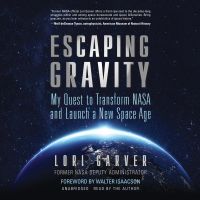
Escaping GravityLori Garver10h 54m4.2 (2.2K)$20 · $0.00

Wireless WarsJonathan Pelson8h 2m4.3 (418)$20 · $0.00

Let There Be WaterSeth M. Siegel8h 36m4.2 (2.3K)$20 · $0.00
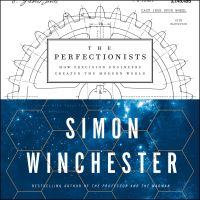
The PerfectionistsSimon Winchester11h 46m4.2 (9.9K)$29 · $0.00
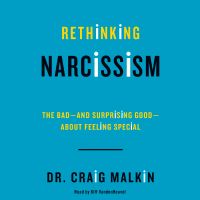
Rethinking NarcissismDr. Craig Malkin6h 7m4.2 (3.4K)$24 · $0.00
You may also like

ITIL Foundation Essentials ITIL 4 Edition - The ultimate revision guide, second editionClaire Agutter1h 12m4.2 (462)$27 · $0.00
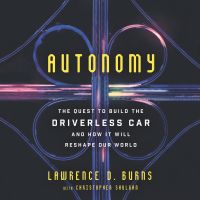
AutonomyLawrence D. Burns, Christopher Shulgan11h 21m4.1 (1.1K)$29 · $0.00

The Highway Code UKDepartment for Transport3h 33m4.2 (36.6K)$11 · $0.00

Pete the Cat: Robo-PeteJames Dean5m4.0 (2.3K)$4 · $0.00

12 BytesJeanette Winterson9h4.0 (2.5K)$20

Machines of Loving GraceJohn Markoff11h 53m3.8 (1.4K)$29 · $0.00

Build AI Voice AssistantsVera Grimaldi7h 55m$5 · $0.00

Automate Real Work with AILena Devlin7h 30m$5 · $0.00

Build with Agentic AIDaria Quill7h 22m$5 · $0.00

Machines at WorkMary Elting37m3.9 (18)$2 · $0.00
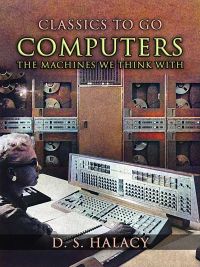
Computers The Machines We Think WithD. S. Halacy8h 40m3.5 (10)$2.30
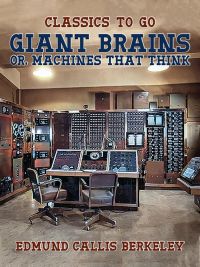
Giant Brains, or, Machines That ThinkEdmund Callis Berkeley9h 21m$2.30

Edge-AI-Engineering Wie man Künstliche Intelligenz am Netzwerkrand Aufbaut, Bereitstellt und OptimiertSloane Garrett6h 33m$13 · $0.00

DriverlessHod Lipson, Melba Kurman9h 57m3.9 (552)$20
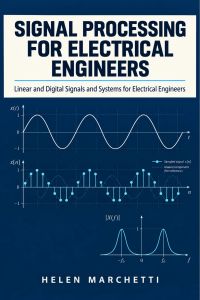
Signal Processing for Electrical EngineersHelen Marchetti12h 6m$80
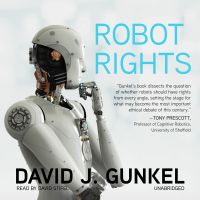
Robot RightsDavid J. Gunkel10h 58m4.1 (122)$23 · $0.00

Chatgpt Complete GuideJoaquin Gener1h 23m$6 · $0.00
Artificial IntelligenceAxel Mammitzsch53m$10 · $0.00

Master AiHenrique Xavier Oliveira2h 5m$6 · $0.00

Introduction to AI and Machine LearningDisrupt.co.nz1h 23m$1.20 · $0.00