

BENDING THE RULES
The Moral Tightrope Between Integrity and Getting AheadBy Cedrick Carter


Length1h 26m
About this audiobook
What if playing by the rules has been holding you back?
Bending the Rules is the book nobody writes because it tells the truth nobody wants to say out loud: strict moral behavior doesn't always lead to success — and the people getting ahead often know something you don't.
This isn't a manual for manipulation. It's a sharp, honest examination of how the real world actually works — from the psychology of why good people justify bad decisions, to why systems reward visibility over virtue, to the hidden cost of being too principled to advocate for yourself.
Through real-world case studies, behavioral research, and hard-won insight, this book shows you how to navigate the gray area between integrity and advantage without losing yourself in the process.
By the end, you won't just see the game differently. You'll know how to play it on your terms.
Audiobook details
GenreBusiness and Economics, Philosophy
Length1 hr 26 mins
Narrated byListen with 1,000+ voices
FormateBook with Audio
Publish dateApr 7, 2026
LanguageEnglish
Table of contents
1BENDING THE RULES
2Introduction: The Game Nobody Told You About
3opportunist.
4Chapter One: The Lie We Were Sold About Success
5ambitious, strategic, or self-interested.
Show all chaptersShow less
6Chapter Two: No Good Deed Goes Unpunished
7acknowledgment or compensation.
8wrong people, at the wrong cost.
9Chapter Three: The Rule-Benders — What They Actually Did
10outcomes.
11Chapter Four: The Psychology of the Gray Area
12— Albert Bandura, Moral Disengagement
13moral disengagement. Tenbrunsel and Messick's research on ethical fading. Ariely's
14any internal override.
15them in a losing position permanently.
16Chapter Five: Systems Don't Care About Your Intentions
17to your outcomes.
18Chapter Six: The Cost of Being Too Moral
19but a schedule.
20that conversation.
21than wisdom.
22Chapter Seven: The Cost of Going Too Far
23industry and era.
24Chapter Eight: The Strategic Middle Ground
25it publicly without shame.
26rather than as constraints on your competitive behavior.
27becomes genuinely useful rather than merely survivable.
28gain for long-term positioning.
29Chapter Ten: Turning Awareness Into Income
30well-intentioned but under-informed competitors.
31Conclusion: The Mirror Test
32between those two versions.
33decisions.
34failure.
35operating on inherited assumptions.
More from Cedrick Carter

THE ENGINEERED COLLAPSE OF THE BLACK FAMILYCedrick Carter1h 13m$4.99

The Chess CorrelationCedrick Carter 1h 28m$4.99

The War You're Already InCedrick Carter1h 24m$2.99

THE FATAL FLAWCedrick Carter 1h 27m Only with Ultra

The Fibonacci EffectCedrick Carter1h 24m Only with Ultra

The Truth She Tells vs The Truth That HappenedCedrick Carter1h 26m Only with Ultra

The Truth Lost in 3 Million PagesCedrick Carter1h 28m Only with Ultra

Escape Isn't an Exit -- It's a BuildCedrick Carter1h 17m Only with Ultra

Never Split the DifferenceChris Voss, Tahl Raz8h 7m4.4 (277.7K)$26 · $0.00
The Intelligent Investor Rev Ed.Benjamin Graham17h 48m4.3 (191.5K)$40 · $0.00
The Hard Thing About Hard ThingsBen Horowitz7h 57m4.2 (134.3K)$26 · $0.00
Boundaries for LeadersHenry Cloud7h 36m4.3 (3.6K)$26 · $0.00

The Secret Door to SuccessFlorence Scovel Shinn2h 25m4.5 (2.1K)$1.20 · $0.00

This Is Going to HurtAdam Kay5h 47m4.4 (444.7K)$24 · $0.00

Big TrustShadé Zahrai, Fayçal Sekkouah8h 36m4.6 (406)$26 · $0.00
The Intelligent Investor Third EditionBenjamin Graham, Jason Zweig20h4.4 (156.6K)$46 · $0.00

Bottle of LiesKatherine Eban14h 25m4.4 (12K)$33 · $0.00

The Antiracist Business BookTrudi Lebrón6h 10m4.6 (275)$17 · $0.00
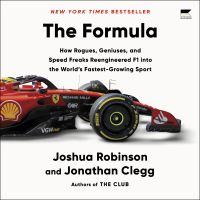
The FormulaJoshua Robinson, Jonathan Clegg10h 41m4.4 (6.9K)$29 · $0.00

Let Them LeadJohn U. Bacon7h 10m4.5 (1.4K)$24 · $0.00
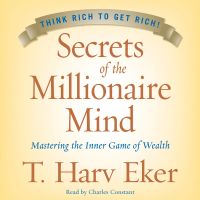
Secrets of the Millionaire MindT. Harv Eker5h 11m4.4 (301.4K)$24 · $0.00

The Person You Mean to BeDolly Chugh9h 6m4.4 (7.2K)$29 · $0.00
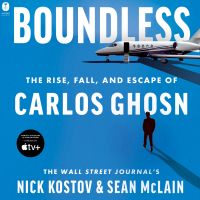
BoundlessNick Kostov, Sean McLain9h 17m4.5 (1.1K)$29 · $0.00
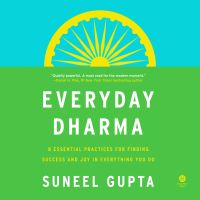
Everyday DharmaSuneel Gupta5h 2m4.5 (761)$20 · $0.00

Let's Talk Mutual FundsMonika Halan7h 5m4.4 (2.4K)$16 · $0.00

Secret PowerDwight Lyman Moody3h 7m4.4 (1.4K)$1.20 · $0.00
The Law of Success in Sixteen LessonsNapoleon Hill2h 39m4.4 (17.2K)$2 · $0.00
Barbarians at the GateBryan Burrough, John Helyar3h 3m4.4 (52.7K)$18 · $0.00

That Bird Has My WingsJarvis Jay Masters9h 49m4.4 (13.7K)$29 · $0.00

Tâo Teh KingLaozi2h 34m4.4 (230.9K)$2 · $0.00

SymposiumPlato3h 26m4.4 (97.9K)$1.20 · $0.00

Buddhist Boot CampTimber Hawkeye2h 39m4.4 (8.4K)$18 · $0.00

Enchiridion & The Discourses of Epictetus (Annotated)Arrian Epictetus18h 9m4.4 (3.5K)$2 · $0.00

The Meditations of the Emperor Marcus Aurelius AntoninusEmperor of Rome Marcus Aurelius5h 41m4.4 (1.8M)$1 · $0.00

Crime and PunishmentFyodor Dostoevsky23h 11m4.4 (1.3M)$12 · $0.00

MeditationsMarcus Aurelius5h 52m4.4 (433.7K)$1 · $0.00
Everyday DharmaSuneel Gupta5h 2m4.5 (761)$20 · $0.00

The Joyful Wisdom ("La Gaya Scienza")Friedrich Wilhelm Nietzsche11h 37m4.4 (26.6K)$1 · $0.00
The Art of LivingEpictetus, Sharon Lebell3h 16m4.4 (50.1K)$18 · $0.00

MeditationsEmperor Of Rome Marcus Aurelius7h 23m4.3 (477.5K)$1.20 · $0.00

The Imitation of ChristThomas à Kempis6h 27m4.3 (84.6K)$21 · $0.00

Sadhana: the realisation of lifeRabindranath Tagore3h 49m4.4 (8.6K)$6 · $0.00

SapiensYuval Noah Harari15h 18m4.3 (1.4M) · 1205$33 · $0.00

You BelongSebene Selassie8h 35m4.4 (2.7K)$26 · $0.00

The Song Celestial; Or, Bhagavad-Gîtâ (from the Mahâbhârata)Anonymous2h 18m4.4 (3.2K)$2 · $0.00

The KybalionThe Three Initiates3h 47m4.3 (58.7K)$20 · $0.00

Chuang Tzu: Mystic, Moralist, and Social ReformerZhuangzi14h 42m4.4 (1.2K)$1 · $0.00

High-RisersBen Austen13h 33m4.4 (2.8K)$33 · $0.00
You may also like
Why We Did ItTim Miller8h 15m4.0 (9.3K)$26 · $0.00

Grace CanceledDana Loesch6h 2m4.4 (334)$17 · $0.00
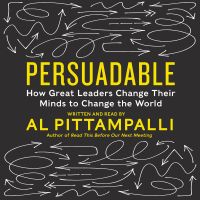
PersuadableAl Pittampalli7h 3m4.2 (296)$24 · $0.00

Lies My Therapist Told MeGreg E. Gifford9h 3m4.6 (503)$29 · $0.00
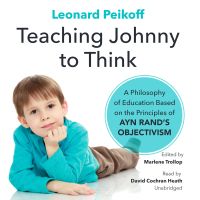
Teaching Johnny to ThinkLeonard Peikoff4h 19m4.3 (280)$15 · $0.00

Pastoral CarePope Gregory I8h 17m4.3 (1.4K)$1 · $0.00

The Spinoza ProblemIrvin D. Yalom MD14h 1m4.3 (23.2K)$23 · $0.00

"The Kingdom of God Is Within You"Leo graf Tolstoy15h 8m4.2 (6.7K)$2 · $0.00

The Conservative HeartArthur C. Brooks8h 9m4.1 (2.1K)$20

The Indolence of the Filipino José Rizal1h 24m4.3 (544)Free
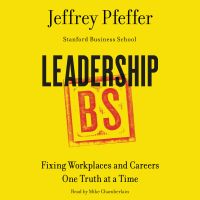
Leadership BSJeffrey Pfeffer7h 51m3.9 (2.1K)$26 · $0.00

The Pilgrim’s ProgressJohn Bunyan9h 21m4.2 (196.1K)$20
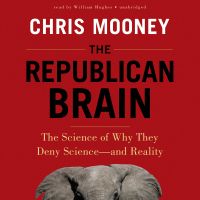
The Republican BrainChris Mooney10h 54m3.8 (1.8K)$23 · $0.00
Nicomachean Ethics (Annotated)Aristotle11h 24m4.2 (118.9K)$1.99 · $0.00

Anti-AmericanismJean-François Revel7h 20m4.0 (567)$17 · $0.00

LEVIATHAN (Complete Edition)Thomas Hobbes23h 49m3.9 (69.8K)$1.99 · $0.00

HereticAyaan Hirsi Ali8h 56m4.3 (7K)$29 · $0.00

What White People Can Do NextEmma Dabiri3h 12m4.4 (6K)$18 · $0.00
Nobody Knows My NameJames Baldwin5h 49m4.5 (5.2K)$17
Heidegger in 90 MinutesPaul Strathern1h 28m3.5 (1K)$7