

Adenoids and Diseased Tonsils: Their Effect on General Intelligence
Unveiling the Hidden Impact on Children's MindsBy Margaret Cobb Rogers


Length1h 29m
About this audiobook
In "Adenoids and Diseased Tonsils: Their Effect on General Intelligence," Margaret Cobb Rogers meticulously examines the often-overlooked relationship between chronic respiratory conditions and cognitive function in children. Employing a blend of clinical observations, contemporary studies, and a decidedly empirical approach, Rogers presents compelling evidence that adenoidal and tonsillar pathologies can significantly impair developmental milestones and intellectual capabilities. This work navigates the intricate intersections of health, education, and psychology, positioning itself within the broader discourse on childhood health and developmental neuroscience, making it essential reading for specialists in pediatric medicine and education alike. Margaret Cobb Rogers, an esteemed pediatrician with an extensive background in otolaryngology, became acutely aware of the implications of upper respiratory health on cognitive performance through her clinical practice. Her deep commitment to improving children's health led her to delve into the scientific literature, inspired by her interactions with affected families and her desire to advocate for early diagnosis and treatment. Rogers' insights are firmly grounded in her professional experiences, which enrich the discourse surrounding pediatric health. This book is an invaluable resource for educators, healthcare professionals, and parents alike. By illuminating the profound effects that seemingly minor health issues can have on a child's intellectual development, Rogers encourages a proactive approach to children's health. Readers will find herself empowered with knowledge that can influence both their personal and professional interactions with children struggling with these conditions.
Audiobook details
GenreHealth and Wellness
Length1 hr 29 mins
Narrated byListen with 1,000+ voices
FormateBook with Audio
Publish dateDec 20, 2019
LanguageEnglish
Table of contents
1TABLE B
2Table showing how time of improvement of "operated cases" compares with improvement among children at random.
3CHAPTER II.
4METHOD AND PROCEDURE
5A Statistical Study
Show all chaptersShow less
6A Study of Improvement After Treatment
7Selection of Cases
8The Tests
9CHAPTER III.
10DISCUSSION OF THE RESULTS
11Statistical Study
12TABLE I
13STUDY OF IMPROVEMENT AFTER OPERATION
14TABLE II. RESULTS OF TESTS
15TABLE II. RESULTS (Continued)
16TABLE III
17Gain in weight, 6 months, 21 pairs
18TABLE IV
19Gain in Height—6 Months, 19 Pairs
20TABLE V
21Showing change in per cent over or underweight for height and age, 18 pairs.
22TABLE VI
23Gain in Grip—6 Months— 16 Pairs
24TABLE VII
25Gain in number of taps in one-half minute, 21 pairs—right hand
26TABLE VIII
27Decrease in fatigue in tapping—Difference in rates of second half minute over first half minute. Sixteen pairs
28TABLE IX
29Improvement in I.Q., 28 Pairs
30TABLE X
31Improvement in Performance of Healy Test, 24 Pairs
32TABLE XI
33Showing percentile ratings of the members of the two groups at the beginning and end of the six months' interval
34TABLE XI (Continued)
35Showing percentile ratings of the two groups at the beginning and end of the six months' interval
36TABLE XII
37Showing gains in percentile rating for I.Q., and for a total of all the tests with I.Q. weighted by being counted twice.
38TABLE XIII
39Showing improvement in various tests of operative group over and above such improvement in control group. Expressed in Terms of P. E.
40CHAPTER IV
41MEASUREMENT OF IMPROVEMENT AFTER A SECOND INTERVAL OF SIX MONTHS
42TABLE XIV
43Results of the Tests after an Interval of from 10 to 17 Months
44TABLE XV
45Weight, Second Retests, 15 Pairs
46TABLE XVI
47Height, Second Retests, 13 Pairs
48TABLE XVII
49Height-Weight Relationship, Second Retests, 13 Pairs Showing changes in per cent over or underweight after 12 months' interval
50TABLE XVIII

Consent Laid BareChanel Contos7h 11m4.5 (1.7K)$24 · $0.00
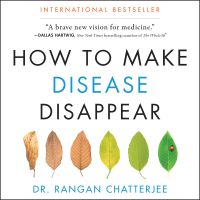
How to Make Disease DisappearRangan Chatterjee5h 26m4.5 (3.5K)$24 · $0.00

The Complete Herbal (Annotated)Nicholas Culpeper29h 8m4.5 (1.4K)$2 · $0.00

A Plague Upon Our HouseScott W. Atlas MD10h 37m4.5 (3.4K)$20 · $0.00

The Cancer CodeDr. Jason Fung10h 48m4.5 (5.3K)$29 · $0.00

The Gift of TherapyIrvin Yalom7h 39m4.5 (38.8K)$26 · $0.00

EarlySarah DiGregorio9h 47m4.5 (1.3K)$29 · $0.00

Bottle of LiesKatherine Eban14h 25m4.4 (12K)$33 · $0.00
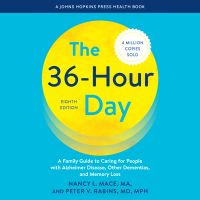
The 36-Hour DayNancy L. Mace, Peter V. Rabins17h 13m4.4 (9.2K)$28 · $0.00

FlooredSara Reardon10h 36m4.5 (1K)$29 · $0.00

Radical RemissionKelly A. Turner9h 26m4.4 (8.1K)$29 · $0.00
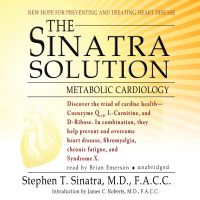
The Sinatra SolutionStephen T. Sinatra MD9h4.5 (899)$20 · $0.00

The Songaminute ManSimon McDermott6h 12m4.5 (280)$24 · $0.00
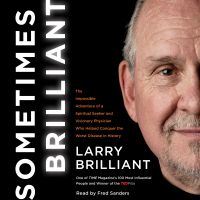
Sometimes BrilliantLarry Brilliant12h 27m4.5 (954)$29 · $0.00

Live Your LifeAmanda Kloots, Anna Kloots10h 54m4.4 (13.7K)$29 · $0.00

All in Her HeadElizabeth Comen13h 25m4.4 (18.2K)$33 · $0.00
The Wisdom of Your BodyHillary McBride9h 14m4.4 (6.7K)$29 · $0.00
The Alzheimer's SolutionDean Sherzai, Ayesha Sherzai9h 47m4.4 (1.9K)$29 · $0.00
Rewire Your MindsetBrian Keane6h 49m4.5 (896)$23 · $0.00

Tuning The Human Biofield: Healing With Vibrational MedicineCENTER FOR SOUND THERAPY13h 28m4.4 (2.5K)$35 · $0.00
You may also like

Fast Food GenocideJoel Fuhrman, Robert Phillips8h 8m4.1 (2.1K)$26 · $0.00
Extreme ProductivityRobert C. Pozen7h 39m3.7 (1.9K)$26 · $0.00

Decoding Your DogAmer. Coll. of Veterinary Behaviorists, Debra F. Horwitz12h 23m4.1 (7.1K)$29 · $0.00

Heart 411Marc Gillinov MD, Steven Nissen MD19h 52m4.3 (349)$30 · $0.00

The Surprising Impact of Parental Sleep on a Baby's Sleep QualityAurora Brooks51m$3.50 · $0.00

PsychotherapyHugo Münsterberg8h 29m3.6 (97)$2 · $0.00

The Perfect Nursery Rocking Chair for Nursing and BondingAurora Brooks1h 4m$3.50 · $0.00

Comprehensive Clinical Review and Examination Bank in Paediatrics: Child Health, Growth, Development, and Disease Management (1, #1)Othniel O. Ibrahim12h 33m$13 · $0.00
Getting Control, Third EditionLee Baer, PhD8h 18m4.0 (217)$20 · $0.00
The Gut-Brain ParadoxSteven R. Gundry, MD6h 40m3.3 (573)$24 · $0.00

Cannabis ControlWillow R. Stone3h 57m$4.10 · $0.00

Cannabinoid Abuse And Misuse: Its Connected Impact On Health And Well-BeingIbrahim Nugwa Abdulrazak1h 27m$17 · $0.00

House Training 101Samantha D. Thompson5h 43m$6.40 · $0.00

The Cocaine TrapMia R. Wellington1h 41m$2.40 · $0.00

The Nurturing HomeWyatt Q. Ashford8h 36m$4.10 · $0.00

Why Does My Cat Attack Me?Imad Muratspahic3h 53m$11 · $0.00

The Secret to Raising a Great Sleeper- Start EarlyAurora Brooks1h 2m$3.50 · $0.00

Animal Relaxation SubliminalMiss Smilla1h$2 · $0.00

Preconception and Hormones- Balancing Your Body for ConceptionAurora Brooks1h 11m$3.50 · $0.00

The Truth About Sleep Regression- What Every Parent Should KnowAurora Brooks1h 11m$3.50 · $0.00