
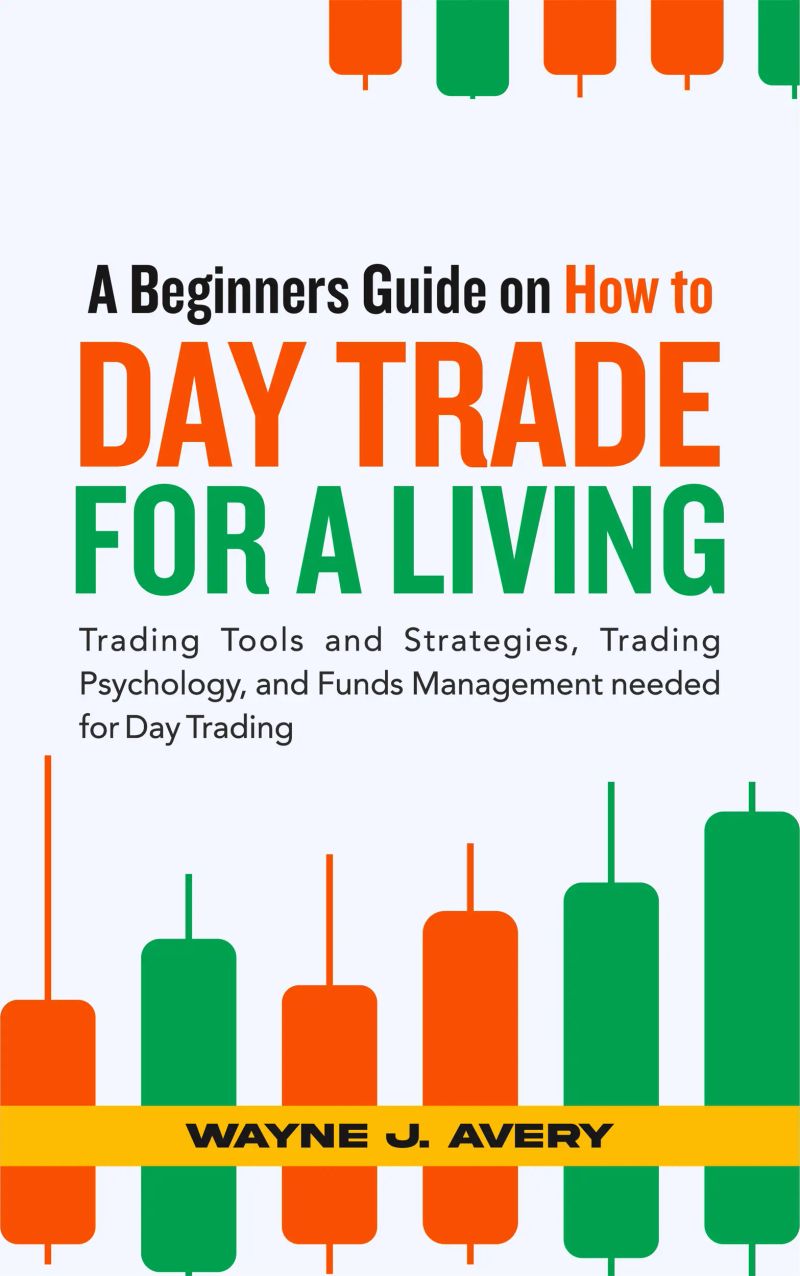
A Beginners Guide on How to Day Trade for a Living
By Wayne J. Avery


Length2h 37m
About this audiobook
You must have been hearing about the term Day Trading;
What does it mean?
What is the process of Day Trading all about?
What skill set do you need to have to be able to Day Trade for a living or as a side gig?
Do you need to be involved in the day-to-day running of your account?
How much funds should you invest in Day Trading?
Day Trading is a process in which an individual buys and sells stocks, options, cryptocurrency, foreign currencies, etc typically within a window of 24 hours.
Traditionally, day traders have deep pockets and vast experiences with the financial markets; they also employ the use of short-term options, leverages, and sophisticated trading platforms with signals and alerts to scalp tiny changes in the markets. Day Traders provide a continuous amount of highly needed liquidity for the smooth flow of the market and they also supply arbitrage.
This guide has been structured to help you as a beginner understand the fundamentals of Day Trading and grasp how it operates and what it entails in setting up profitable trading strategies based on several factors at any point in time.
With the right approach to Day Trading, you can make a sustainable amount; well-funded and educated Day Traders are most likely to make millions of dollars in profits annually which will most certainly get you out of the rat race if you can attain this feat.
Financial independence is the goal and it is not a far-flung dream as Day Trading puts you firmly in the driving seat of your affairs and how your day or life eventually turns out.
Author and financial expert, Wayne J. Avery guides you on a journey into the world of Day Trading with easy-to-understand principles to set a solid foundation for you. He will show you detailed trading strategies and how to hit the ground running with simple winning formulas.
You will learn basic trading principles that you can build on which will aid your trading success; also to be learned are risk management and discipline mentality to be employed in all your trades.
In “A Beginners Guide on How to Day Trade for a Living”, look out for the following and much more;
How to get started with day trading
Hidden secrets of day trading exposed
Money management skills
Day Trading technical terms
Chart types
Compounding your profits
Employing risk management techniques
Easily applicable techniques to make profits and attain financial freedom in no time
Trading platforms, brokers, and markets to trade in
Developing a winning mindset for Day Trading
Basic technical analysis
And so much more!
Order your copy now and begin this exciting and profitable journey into the world of Day Trading Today!
Audiobook details
GenreOther
Length2 hrs 37 mins
Narrated byListen with 1,000+ voices
FormateBook with Audio
Publish dateSep 12, 2024
LanguageEnglish
Table of contents
1The Upsides of being a Day Trader
2Risks associated with Day Trading
3Chapter One
4Emotional Management
5Market Emotions; Types
Show all chaptersShow less
6Chapter Two
7Day Trading; How It Works
8Swing Trading Vs Day Trading
9What is Swing Trading?
10High-Frequency Trading
11Chapter Three
12Understanding Risk Management in Day Trading
13How much do you risk per trade?
14Create a Trading Strategy
15Set a Limit
16Trading Psychology; What is it?
17Trading Psychology Pitfalls
18What Is A Trading Bias?
19Taking Charge of Emotional Trading
20The Reasons Traders Lose Funds
21Chapter Four
22Hunting Stocks to Day Trade
23Characteristics to Look Out For
24Chapter Five
25Orders
26Buy Orders
27Limit Order
28Types of Limit Orders
29Order Costs
30Stop-Loss
31Limit Stop Order
32All or None limit
33Immediate or cancel (IOC)
34Fill or Kill (FOK)
35Good till Cancelled (GTC)
36Day Order
37Take Profit order
38Trading with demo Accounts
39Demo Account Is Devoid Of Emotional Trades
40Slippage
41Trade with less Capital
42True Feelings
43Selecting a Broker
44Study Your Investment Techniques
45Making a Decision on What to Trade
46Trade news or Shares
47Technical Analysis
48Expert Rating
49Company Earnings
50Emotions and Trade Positioning

Mere ChristianityC. S. Lewis7h 7m4.4 (519.7K)$24 · $0.00

Her Daily BreadKate Wood12h 57m4.6 (153)$33 · $0.00
The Holy Bible - 1 SamuelKing James2h 13m4.8 (1.6K)$3 · $0.00

The American Standard Bible — The Gospel of MatthewMatthew3h 56m4.7 (3K)$2 · $0.00

Bad Fat Black GirlSesali Bowen6h 32m4.7 (2.8K)$24 · $0.00

The King James Audio Bible New Testament CompleteChristopher Glyn20h 2m4.7 (2.6K)$12 · $0.00
Faiths CheckbookCharles Spurgeon12h 44m4.7 (3.2K)$11 · $0.00

Ten Things I Wish You Knew About Your Child's Mental HealthDr. Billy Garvey4h 53m4.7 (2.4K)$20 · $0.00

Designing Terry Pratchett’s DiscworldPaul Kidby3h 52m4.7 (343)$20 · $0.00

The Chosen Book OneAmanda Jenkins, Kristen Hendricks, Dallas Jenkins3h 8m4.6 (4.9K)$10 · $0.00
The Lives of BrianBrian Johnson9h 45m4.6 (3.5K)$29 · $0.00

Expository Thoughts on the Gospel of LukeJ.C. Ryle27h 13m4.7 (536)$18 · $0.00

CrossroadsKaleb Dahlgren7h 56m4.6 (4.9K)$26 · $0.00

Across the RiverKent Babb11h 40m4.6 (927)$29 · $0.00
Brain Training for RidersAndrea Monsarrat Waldo5h 56m4.7 (550)$19 · $0.00

My Effin' LifeGeddy Lee17h 11m4.6 (13.1K)$40 · $0.00
Kings and PawnsHoward Bryant10h 9m4.6 (678)$29 · $0.00

The Elementia Chronicles #2: The New OrderSean Fay Wolfe11h 17m4.6 (841)$29 · $0.00

The ActsLuke2h 55m4.6 (19.7K)$12 · $0.00

New Testament - Easy NavigationWorld English Bible19h 35m4.6 (1.3K)$1.30 · $0.00
You may also like
EndureAlexander Hutchinson11h 9m4.2 (27K)$8 · $0.00

The Bet, and Other StoriesAnton Pavlovich Chekhov6h 4m4.1 (2.3K)$2.30
Rookie SmartsLiz Wiseman7h 45m4.1 (1.1K)$26 · $0.00
Great by ChoiceJim Collins, Morten T. Hansen8h 45m4.2 (26.1K)$26 · $0.00
Personal Finance For DummiesEric Tyson3h 15m4.2 (3.4K)$18 · $0.00
Trading for DummiesMichael Griffis, Lita Epstein3h 13m3.9 (1.5K)$18 · $0.00

The Ordeal of Gilbert PinfoldEvelyn Waugh6h 31m3.9 (4.1K)$2 · $0.00

Clean GutAlejandro Junger5h 20m3.9 (4.5K)$24 · $0.00

The EnchiridionEpictetus0m4.4 (41.3K)$1 · $0.00
Sell It Today, Sell It NowTom Hopkins, Pat Leiby4h 38m4.1 (385)$75

Goodbye to InflammationSandra Monino5h 46m4.1 (3.3K)$24 · $0.00

Success Is Not Luck - It's RoutineSteffane Reis26m$8 · $0.00
Harvard Can't Teach What You Learn from the StreetsSam Liebman8h 59m4.4 (16)$35
The Motley Fool Million Dollar PortfolioDavid Gardner, Tom Gardner7h 48m3.8 (654)$26 · $0.00

THE UNBREAKABLE HUMANMahmoud Saber7h 35m5.0 (4)$9.99

The Knack of ManagingLewis K. Urquhart, Herbert Watson3h 5m$1 · $0.00
The Stocks & ETF Compass: A Guide to Wealth, High Standard of Living, and Secure Retirement through Intelligent Investment in the Stock Market and Passive Income – Including Starter GuideJens Hattermann4h 9m4.9 (41)$20 · $0.00
Day Trading StrategiesSamuel Feron1h 46m4.2 (19) Only with Ultra
100 Timeless Mental Models for Entrepreneurs Sagar Nepal1h 46m5.0 (2) Only with Ultra

Secrets of a Creativity CoachEric Maisel6h 41m3.9 (46)$17